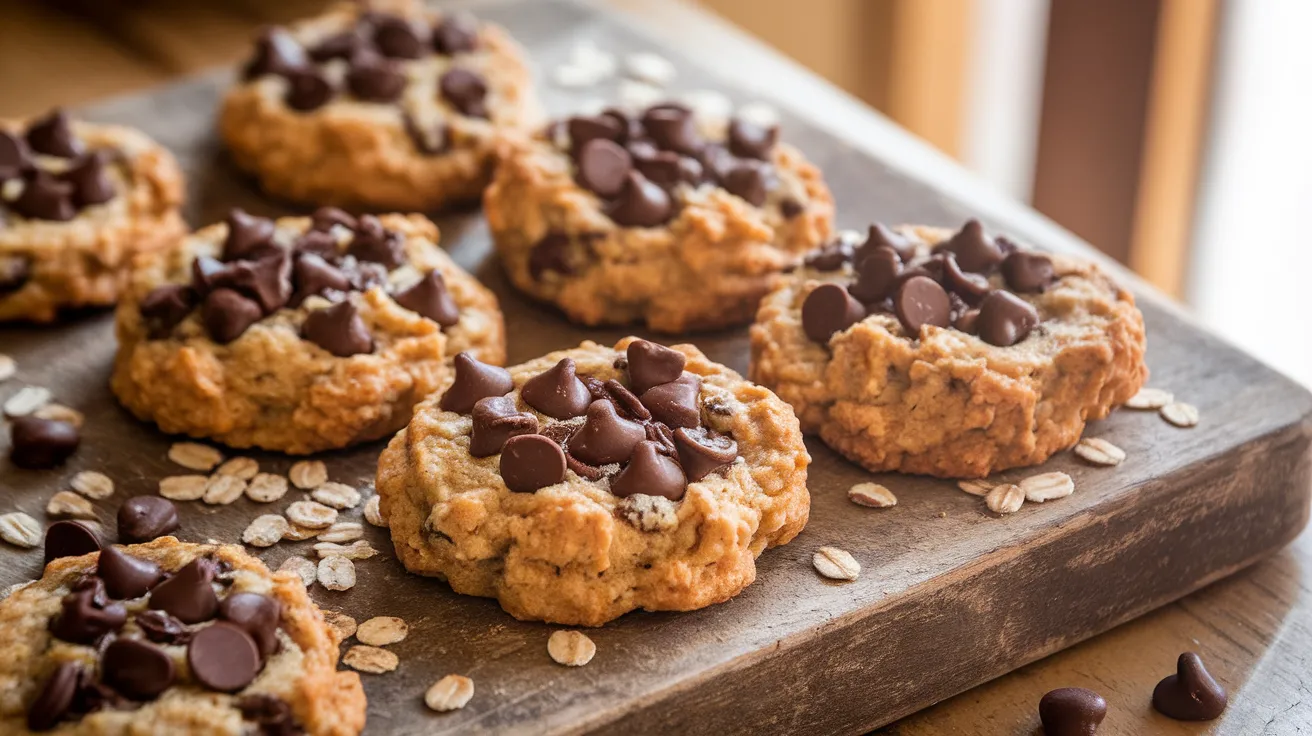
These soft, chewy vegan cookies prove that plant-based treats can be just as indulgent as traditional recipes. Made with simple pantry staples, these vegan cookies deliver rich flavor and perfect texture without any dairy or eggs. Whether you’re following a plant-based lifestyle or simply want a delicious cookie that everyone can enjoy, this recipe creates bakery-quality vegan cookies every time.
SERVES: 4 | PREP: 20 MIN | COOK: 25 MIN | TOTAL: 45 MIN
Ingredients for Perfect Vegan Cookies
Dry Ingredients
| Ingredient | Amount |
|---|---|
| All-purpose flour | 2 cups |
| Baking soda | 1 teaspoon |
| Salt | 1/2 teaspoon |
| Ground cinnamon | 1/2 teaspoon |
Wet Ingredients
| Ingredient | Amount |
|---|---|
| Coconut oil, melted | 1/2 cup |
| Brown sugar, packed | 3/4 cup |
| Granulated sugar | 1/4 cup |
| Vanilla extract | 2 teaspoons |
| Non-dairy milk | 3 tablespoons |
Mix-ins
| Ingredient | Amount |
|---|---|
| Vegan chocolate chips | 1 cup |
| Chopped walnuts (optional) | 1/2 cup |
Step-by-Step Instructions for Beginner Vegan Cookies
Phase 1: Kitchen Setup and Preparation (8 minutes)
1. Set your oven to preheat at 350°F (175°C). Turn the dial or press the buttons to reach this exact temperature. Wait for the preheat indicator light to turn off or for your oven to beep, signaling it’s ready. This usually takes 10-15 minutes, so start this first.
2. Find two large baking sheets. These should be flat metal pans, ideally 13×18 inches. If you only have one baking sheet, you’ll bake in two batches, which is perfectly fine for making great vegan cookies.
3. Line your baking sheets with parchment paper. Tear off pieces of parchment paper slightly larger than your baking sheets. Press the paper down so it lies flat against the pan. The paper should come up the sides slightly – this prevents your vegan cookies from sticking and makes cleanup much easier.
4. Prepare your coconut oil carefully. Take 1/2 cup of solid coconut oil and place it in a microwave-safe bowl. Microwave for 30-45 seconds until it becomes liquid. Important: The oil should be melted but not hot to the touch. If it’s too hot, let it cool for 5 minutes before using.
5. Gather all your ingredients on the counter. Having everything within arm’s reach makes the process smoother and prevents mistakes. This is called “mise en place” in professional cooking.
Phase 2: Creating the Dry Ingredient Base (5 minutes)
6. Measure your flour correctly. Use a large spoon to gently fill your measuring cup with flour. Don’t pack it down or tap the cup. Level off the top with a knife. Incorrect flour measurement is the biggest mistake beginners make with vegan cookies.
7. Combine all dry ingredients in a large bowl. Add 2 cups flour, 1 teaspoon baking soda, 1/2 teaspoon salt, and 1/2 teaspoon cinnamon to your largest mixing bowl. The bowl should be big enough that ingredients won’t spill when you mix.
8. Whisk the dry ingredients thoroughly. Use a wire whisk and stir for 30-45 seconds until you see no separate pockets of baking soda or cinnamon. This ensures your vegan cookies will have even flavor and texture throughout.
9. Create a well in the center. Use your whisk or a spoon to push the flour mixture toward the edges of the bowl, creating a crater-like depression in the middle. This well will hold your wet ingredients and prevent overmixing later.
Phase 3: Mixing the Wet Ingredients (7 minutes)
10. Start with the sugars in a medium bowl. Measure 3/4 cup packed brown sugar by pressing it firmly into the measuring cup, then level it off. Add 1/4 cup granulated sugar. The brown sugar should look dark and moist – this creates the chewy texture in your vegan cookies.
11. Add the cooled coconut oil to sugars. Pour the melted coconut oil over the sugars. Test the oil temperature by touching the bowl – it should feel warm, not hot. If it’s too hot, it will make your sugars grainy.
12. Whisk sugars and oil vigorously. Stir continuously for 1-2 minutes until the mixture looks smooth and creamy. You shouldn’t see any oil sitting on top. The mixture should be light brown and well combined.
13. Add vanilla and non-dairy milk. Pour in 2 teaspoons vanilla extract and 3 tablespoons of your chosen non-dairy milk. Any type works – oat, almond, soy, or coconut milk all create delicious vegan cookies.
14. Whisk until completely smooth. Stir for another 30 seconds until no streaks of vanilla are visible and the mixture is uniform in color.
Phase 4: Combining Ingredients for Perfect Vegan Cookie Dough (6 minutes)
15. Pour wet ingredients into the flour well. Slowly pour your wet mixture into the crater you made in the dry ingredients. Pour steadily but not too fast – this prevents flour from flying everywhere.
16. Start mixing gently from the center. Use a wooden spoon or large spatula. Begin stirring in small circles in the center, gradually incorporating flour from the sides of the well. Move slowly and deliberately – aggressive mixing creates tough vegan cookies.
17. Stop mixing as soon as flour disappears. The moment you can’t see any dry flour streaks, stop stirring. The dough should look slightly rough and shaggy – this is perfect. Smooth dough means you’ve overmixed.
18. Check your dough consistency. The dough should hold together when you press it but not be sticky. If it’s too dry and crumbly, add 1 tablespoon more non-dairy milk. If it’s too wet and sticky, add 2 tablespoons flour.
19. Fold in chocolate chips and nuts. Add 1 cup vegan chocolate chips and 1/2 cup chopped walnuts (if using). Use a folding motion – lift the dough from the bottom and fold it over the mix-ins. Do this 8-10 times until evenly distributed.
Phase 5: Shaping Your Vegan Cookies (10 minutes)
20. Portion the dough evenly. You’ll make 16 cookies total. Use a cookie scoop if you have one, or use two spoons. Each portion should be about 2 tablespoons or roughly the size of a golf ball.
21. Roll each portion into a ball. Gently roll each piece of dough between your palms. Don’t squeeze hard – just shape them into round balls. If the dough sticks to your hands, lightly dampen your palms with water.
22. Place cookies on prepared baking sheets. Put 8 cookies on each baking sheet, spacing them 2-3 inches apart. Vegan cookies spread during baking, so they need room to expand without touching each other.
23. Flatten each cookie gently. Use your palm or the bottom of a glass to press each ball down to about 1/2-inch thick. Don’t press too hard – you want them flattened but still with some height for a chewy center.
24. Do a final check before baking. Make sure your oven has finished preheating and your cookies are evenly spaced. This is your last chance to adjust spacing or reshape any cookies.
Phase 6: Baking Perfect Vegan Cookies (15-18 minutes)
25. Place one sheet in the center of your oven. If baking one sheet at a time, use the center rack. This ensures even heating from all sides for perfectly baked vegan cookies.
26. Set your timer for 6 minutes for the first check. Don’t open the oven door yet – just set a timer. Opening too early can cause temperature fluctuations.
27. Rotate the pan at 6 minutes. Quickly turn the baking sheet 180 degrees so the back becomes the front. This compensates for any hot spots in your oven and ensures even browning.
28. Bake for 6-9 more minutes. Your total baking time will be 12-15 minutes. Start checking at 12 minutes. The cookies are done when the edges are lightly golden brown but the centers still look slightly soft and underbaked.
29. Look for the right visual cues. Perfectly baked vegan cookies have golden-brown edges, set sides that don’t jiggle when you gently shake the pan, but centers that still look a bit pale and soft.
30. Remove from oven and cool properly. Take the baking sheet out and place it on a wire rack or heat-safe surface. Don’t move the cookies yet – they’re very soft and will break. Let them cool on the pan for 5 full minutes.
31. Transfer to cooling rack. After 5 minutes, use a thin spatula to carefully move each cookie to a wire cooling rack. They should lift easily without breaking. If they stick, wait another 2 minutes.
Chef’s Notes for Perfect Vegan Cookies
• Coconut oil consistency matters: Use melted but cooled coconut oil. If it’s too hot, it will create an oily texture in your vegan cookies and may cause them to spread too much.
• Brown sugar creates chewiness: The molasses in brown sugar adds moisture and creates that perfect chewy texture we love in cookies. Don’t substitute all white sugar or your vegan cookies will be crispy instead of chewy.
• Don’t overbake: These vegan cookies continue cooking on the hot pan after removal. Slightly underbaked centers equal perfectly chewy cookies once they cool completely.
• Flour measurement tip: Spoon flour into measuring cups and level off. Packed flour creates dense, heavy cookies that won’t have the light, tender texture we want in great vegan cookies.
Nutrition Information for Vegan Cookies (Per Serving – 4 cookies)
- Calories: 485
- Protein: 6g
- Carbohydrates: 72g
- Fat: 21g
- Fiber: 3g
- Sugar: 38g
Delicious Vegan Cookies Variations
Double Chocolate Vegan Cookies
Replace 1/4 cup flour with cocoa powder and add extra chocolate chips. Perfect for chocolate lovers who want an even richer treat that rivals any traditional cookie.
Oatmeal Raisin Style
Substitute 1/2 cup flour with rolled oats and replace chocolate chips with raisins. Creates a heartier texture similar to our vegan breakfast casserole in wholesome appeal.
Peanut Butter Vegan Cookies
Add 3 tablespoons natural peanut butter to wet ingredients and reduce coconut oil to 1/3 cup. Mix in peanut butter chips instead of chocolate for incredible nutty flavor.
Spiced Holiday Version
Add 1/2 teaspoon each of nutmeg and ginger with the cinnamon. Include dried cranberries and chopped pecans for festive flair. These pair beautifully with our vegan chocolate chip cookies for a complete holiday spread.
Storage & Reheating Your Vegan Cookies
Room Temperature: Store in an airtight container for up to 5 days. Place parchment paper between layers to prevent sticking and maintain the perfect texture of your vegan cookies.
Freezing: Freeze baked cookies for up to 3 months in freezer-safe containers. Thaw at room temperature for 30 minutes before serving.
Dough Storage: Raw cookie dough keeps in the refrigerator for 3 days or frozen for 2 months. Freeze dough balls on trays, then transfer to bags for easy baking later.
Reheating: Warm cookies in a 300°F oven for 3-5 minutes to restore just-baked texture and melt chocolate chips slightly.
Troubleshooting Guide for Vegan Cookies
Cookies Spread Too Much
Your coconut oil was likely too warm, or you didn’t chill the dough. Next time, let melted oil cool completely and chill dough for 30 minutes if spreading occurs during baking.
Vegan Cookies Are Too Dense
This happens from overmixing or using packed flour measurements. Mix just until combined and spoon flour lightly into measuring cups for tender results.
Cookies Won’t Hold Together
Your dough may be too dry. Add non-dairy milk 1 tablespoon at a time until dough holds when pressed together firmly.
Uneven Baking Results
Rotate your pans halfway through baking time. Also ensure your oven is properly preheated and cookies are uniform in size for consistent vegan cookies.
Cookies Are Too Sweet/Not Sweet Enough
Adjust the granulated sugar by 2-3 tablespoons up or down. The brown sugar provides moisture, so keep that amount consistent for proper texture.
Equipment Essentials for Making Vegan Cookies
• Large mixing bowls (at least 2) • Measuring cups and spoons • Electric or wire whisk • Cookie scoop or large spoons • Baking sheets (2 recommended) • Parchment paper or silicone mats • Wire cooling racks • Wooden spoon for mixing
Shopping List for Vegan Cookies
Baking Aisle
- All-purpose flour
- Baking soda
- Vanilla extract
- Brown sugar
- Granulated sugar
- Ground cinnamon
- Vegan chocolate chips
Oils & Condiments
- Virgin coconut oil
Refrigerated Section
- Non-dairy milk (oat, almond, or soy)
Nuts & Snacks (Optional)
- Chopped walnuts
Spices & Salt
- Salt
Success Secrets for Perfect Vegan Cookies
1. Room temperature ingredients mix better: Take non-dairy milk out 30 minutes before baking for smoother blending with other wet ingredients in your vegan cookies.
2. Uniform sizing creates even baking: Use a cookie scoop to ensure all your vegan cookies bake at the same rate and look professional.
3. The press test works: Gently press cookie centers after baking. They should give slightly but not leave an indent – that’s the perfect doneness for chewy vegan cookies.
4. Quality chocolate makes a difference: Invest in good vegan chocolate chips. They’ll hold their shape better and provide richer flavor than cheaper alternatives.
5. Cool completely before storing: Warm cookies create condensation in containers, leading to soggy textures. Patience pays off with better texture and longer storage life.
These vegan cookies prove that plant-based baking can create incredibly satisfying treats. The combination of coconut oil and brown sugar creates the perfect chewy texture, while the simple ingredient list makes this recipe accessible for any home baker. Whether you’re new to baking or experienced with traditional cookies, these vegan cookies will become your go-to recipe for delicious, crowd-pleasing treats that everyone will love!