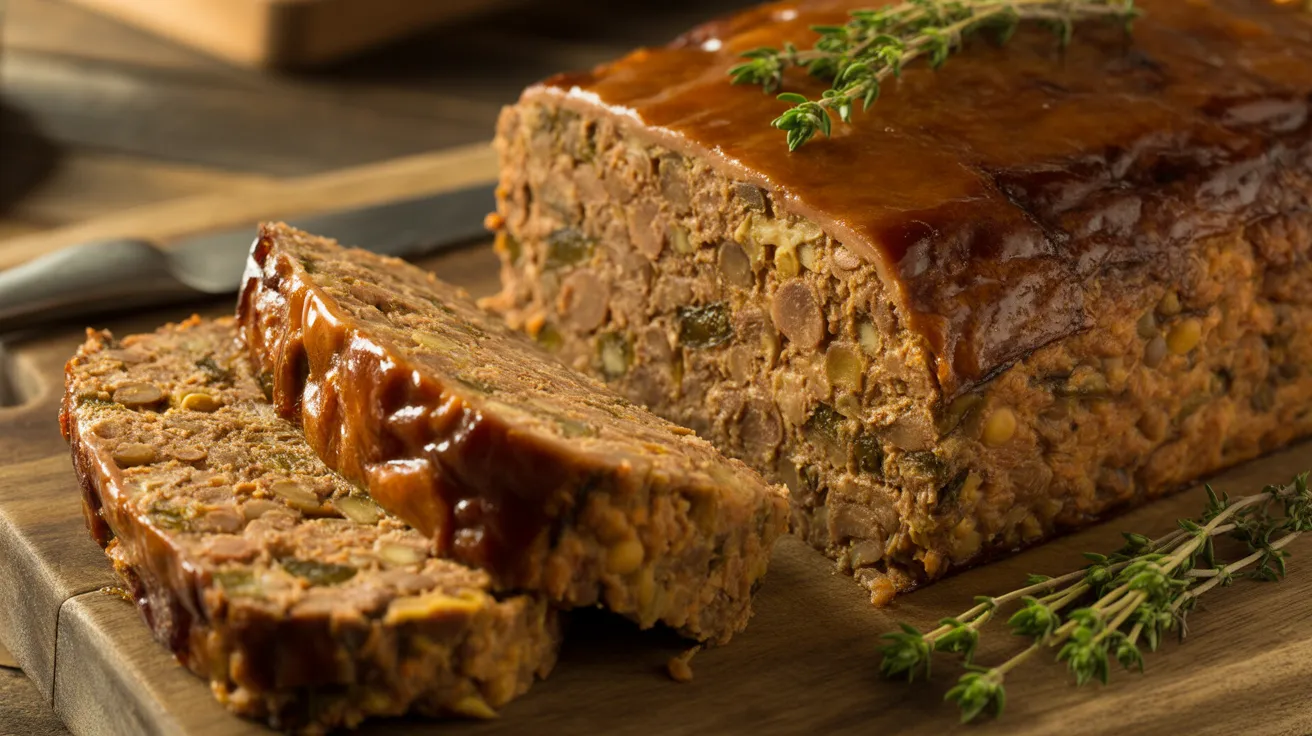
This foolproof vegan meatloaf transforms simple plant-based ingredients into a hearty, satisfying centerpiece that rivals any traditional recipe. Our beginner-friendly vegan meatloaf combines protein-packed lentils with savory mushrooms and aromatic herbs, creating a dish so delicious that even meat-lovers will ask for seconds. With detailed step-by-step guidance, this vegan meatloaf recipe ensures perfect results every single time.
Recipe Info Bar
SERVES: 4 | PREP: 25 MIN | COOK: 30 MIN | TOTAL: 55 MIN
Ingredients
Base Mixture
| Ingredient | Amount |
|---|---|
| Green lentils (cooked) | 1½ cups |
| Mushrooms (finely chopped) | 8 oz |
| Rolled oats | ¾ cup |
| Walnuts (chopped) | ½ cup |
| Yellow onion (diced) | 1 medium |
| Carrots (finely diced) | 2 medium |
| Celery (diced) | 2 stalks |
| Garlic cloves (minced) | 4 cloves |
Binding & Seasoning
| Ingredient | Amount |
|---|---|
| Ground flaxseed | 3 tablespoons |
| Water | 9 tablespoons |
| Tomato paste | 2 tablespoons |
| Soy sauce | 2 tablespoons |
| Nutritional yeast | ¼ cup |
| Fresh thyme | 1 tablespoon |
| Dried oregano | 1 teaspoon |
| Smoked paprika | 1 teaspoon |
| Salt | 1 teaspoon |
| Black pepper | ½ teaspoon |
| Olive oil | 2 tablespoons |
Glaze
| Ingredient | Amount |
|---|---|
| Ketchup | ¼ cup |
| Balsamic vinegar | 1 tablespoon |
| Maple syrup | 1 tablespoon |
Detailed Step-by-Step Vegan Meatloaf Instructions
Phase 1: Essential Preparation (10 minutes)
Step 1: Preheat and Prepare Your Pan Set your oven to 375°F (190°C) and allow it to fully preheat while you work. This usually takes 10-15 minutes. Take a standard 9×5-inch loaf pan and line it completely with parchment paper. Make sure the parchment paper hangs over the sides by about 2 inches – this creates handles that make removing your finished vegan meatloaf much easier. Lightly spray or brush the parchment with oil to prevent any sticking.
Step 2: Create Your Flax Egg Binding Agent In a small bowl, combine 3 tablespoons ground flaxseed with 9 tablespoons water (that’s about ½ cup plus 1 tablespoon). Stir this mixture thoroughly with a fork until completely combined. The mixture will look like brown, slightly thick water at first. Set this aside for exactly 5 minutes – during this time, the flaxseed will absorb the water and become gel-like, similar to beaten eggs. This “flax egg” is crucial for binding your vegan meatloaf together.
Step 3: Prepare Your Lentils (If Using Dried) If you’re starting with dried lentils, you’ll need to cook them first. Rinse 1 cup dried green lentils under cold water in a fine mesh strainer until the water runs clear. In a medium saucepan, combine the rinsed lentils with 3 cups water. Bring to a boil over high heat, then reduce heat to medium-low and simmer for 20-25 minutes. The lentils are done when they’re tender but still hold their shape – they shouldn’t be mushy. Drain thoroughly and set aside to cool slightly. If using pre-cooked lentils, simply measure out 1½ cups.
Phase 2: Preparing Your Vegetables (12 minutes)
Step 4: Heat Your Cooking Oil Properly Place a large skillet or frying pan over medium heat – not high heat, as this will burn your vegetables. Add 2 tablespoons olive oil and let it heat for about 30 seconds. You’ll know the oil is ready when it shimmers slightly and moves easily around the pan when you tilt it. The oil should not be smoking – if it is, lower the heat immediately.
Step 5: Cook the Onions to Perfection Add your diced onion to the heated oil. You should hear a gentle sizzling sound – if you don’t hear this, your oil isn’t hot enough yet. Stir the onions frequently with a wooden spoon or spatula. Cook for 3-4 minutes until the onions become translucent (you can see through them) and smell sweet and fragrant. They should not brown or caramelize at this stage – if they start browning, lower your heat.
Step 6: Add Aromatics and Hard Vegetables Add the minced garlic, diced carrots, and diced celery to the pan with the onions. Stir everything together so the vegetables are evenly distributed. Cook this mixture for 3-4 minutes, stirring frequently. The garlic should become very fragrant (you’ll smell it immediately), and the carrots should start to soften slightly. The celery will become brighter green and slightly tender. Be careful not to let the garlic burn – it will taste bitter if it does.
Step 7: Cook the Mushrooms Thoroughly Add the finely chopped mushrooms to your vegetable mixture. The pan will seem very full at first – this is normal. Stir everything together and cook for 4-5 minutes. The mushrooms will release their water and shrink significantly as they cook. Keep stirring occasionally to prevent sticking. You’ll know they’re done when they’ve reduced to about half their original size and no liquid remains in the pan. Season with a pinch of salt to help draw out the moisture faster.
Phase 3: Building Your Vegan Meatloaf Base (8 minutes)
Step 8: Process the Lentils to Perfect Texture Add your cooled cooked lentils to a food processor. Pulse the machine 6-8 times in short bursts – don’t run it continuously. You want to roughly chop the lentils, not turn them into a smooth paste. The goal is to have some lentils broken down while others remain whole, creating texture in your final vegan meatloaf. If you don’t have a food processor, you can mash about half the lentils with a fork or potato masher, leaving the rest whole.
Step 9: Create Your Oat Flour Binder Add ¾ cup rolled oats to the food processor with the lentils. Pulse 4-5 times until the oats are coarsely ground but not powdered. Some pieces should remain slightly chunky. This creates a binding agent that will help hold your vegan meatloaf together while adding texture. If you don’t have a food processor, you can use a blender or even put the oats in a sealed bag and crush them with a rolling pin.
Step 10: Combine Your Base Ingredients Transfer the lentil-oat mixture to a large mixing bowl – make sure it’s big enough to hold all your ingredients with room to mix. Add the cooked vegetable mixture and the chopped walnuts. The walnuts add richness and a slight crunch to your finished vegan meatloaf. Stir everything together gently with a large spoon or your hands until evenly distributed.
Phase 4: Binding and Seasoning Your Vegan Meatloaf (8 minutes)
Step 11: Check Your Flax Egg By now, your flax egg mixture should be thick and gel-like, similar to beaten chicken eggs. If it still looks watery, let it sit for 2-3 more minutes. When ready, it should coat the back of a spoon and hold together when stirred.
Step 12: Add All Seasonings and Binders Add the prepared flax egg, tomato paste, soy sauce, nutritional yeast, fresh thyme, dried oregano, smoked paprika, salt, and black pepper to your lentil mixture. The tomato paste adds moisture and umami flavor, while the nutritional yeast provides a subtle cheesy taste that enhances the overall flavor of your vegan meatloaf.
Step 13: Mix Thoroughly and Test Consistency Using your hands (this works better than a spoon), mix all ingredients thoroughly until everything is evenly distributed and the mixture holds together when squeezed. The mixture should feel like wet sand – it should hold its shape when pressed but not be soggy or wet. If it feels too wet and sticky, add 2-3 tablespoons more oats. If it feels too dry and crumbly, add 1-2 tablespoons vegetable broth or water.
Step 14: Taste and Adjust Seasoning Take a small spoonful of the mixture and taste it (it’s safe to eat raw). The mixture should be well-seasoned and flavorful. Add more salt, pepper, or herbs as needed. Remember, the flavors will concentrate slightly during baking, so it should taste good now.
Phase 5: Shaping Your Vegan Meatloaf (5 minutes)
Step 15: Transfer and Shape in the Pan Scoop all of your mixture into the prepared loaf pan. Using your hands, press the mixture down firmly and evenly, making sure to push it into all corners of the pan. Pay special attention to the corners and edges – press firmly to eliminate any air pockets, which could cause your vegan meatloaf to fall apart when sliced. The top should be smooth and even.
Step 16: Create the Perfect Glaze In a small bowl, whisk together ¼ cup ketchup, 1 tablespoon balsamic vinegar, and 1 tablespoon maple syrup until smooth. The vinegar adds tanginess while the maple syrup provides sweetness, creating a balanced glaze that caramelizes beautifully during baking.
Step 17: Apply the First Glaze Layer Using a pastry brush or the back of a spoon, spread half of the glaze mixture evenly over the top of your vegan meatloaf. Make sure to cover the entire surface. Reserve the remaining glaze for later in the cooking process.
Phase 6: Baking Your Vegan Meatloaf to Perfection (30 minutes)
Step 18: Initial Baking Phase Place your vegan meatloaf in the preheated 375°F oven on the center rack. Bake for exactly 20 minutes without opening the oven door. During this time, the edges will start to set and the top will begin to firm up.
Step 19: Apply Second Glaze and Finish Baking After 20 minutes, carefully remove the pan from the oven (use oven mitts!). Brush the remaining glaze over the top of the vegan meatloaf. The surface should look slightly set but not completely firm. Return to the oven and bake for an additional 10 minutes, or until the top is golden brown and firm to the touch.
Step 20: Test for Doneness and Rest Your vegan meatloaf is done when the top is golden brown and springs back lightly when touched. The internal temperature should reach 165°F if you have a meat thermometer. Remove from the oven and let it rest in the pan for 10 minutes – this is crucial! The resting time allows the vegan meatloaf to firm up and makes slicing much easier.
Step 21: Remove and Slice After resting, use the parchment paper overhangs as handles to lift the vegan meatloaf out of the pan onto a cutting board. Using a sharp knife, slice into 8 thick slices (2 slices per person). Clean your knife between cuts for the neatest slices.
Chef’s Professional Notes for Perfect Vegan Meatloaf
Texture Mastery: The secret to perfect vegan meatloaf texture lies in the balance of moisture and binding agents. Your mixture should hold together firmly when squeezed but never feel wet or sticky to the touch.
Flavor Development: Don’t rush the vegetable sautéing step. Properly caramelized vegetables create the flavor foundation that makes this vegan meatloaf taste rich and satisfying rather than bland.
Make-Ahead Magic: This vegan meatloaf actually improves in flavor when made a day ahead. The ingredients meld together beautifully, making it perfect for meal prep or entertaining.
Binding Success: The flax egg is your binding hero. Make sure it’s properly thickened before adding – this prevents a crumbly texture and ensures your vegan meatloaf holds together perfectly when sliced.
Nutrition Box (Per Serving)
- Calories: 295
- Protein: 14g
- Carbohydrates: 35g
- Fat: 12g
- Fiber: 9g
- Iron: 18% DV
- Folate: 22% DV
Creative Vegan Meatloaf Variations
Mediterranean Style Vegan Meatloaf
Replace walnuts with pine nuts and add sun-dried tomatoes, fresh basil, and dried oregano. Serve with our creamy vegan mashed potatoes for a complete Mediterranean feast that will transport your taste buds.
Spicy Mexican Vegan Meatloaf
Incorporate cumin, chili powder, diced jalapeños, and corn kernels into the base mixture. Top with fresh avocado slices and cilantro before serving for a south-of-the-border twist.
Holiday Herb Vegan Meatloaf
Add fresh sage, rosemary, dried cranberries, and chopped pecans for a festive version perfect for holiday gatherings. The cranberries add a sweet-tart flavor that complements the savory herbs beautifully.
Italian-Inspired Vegan Meatloaf
Mix in Italian seasoning, diced bell peppers, fresh parsley, and nutritional yeast for a Mediterranean flair. Consider making our vegan meatballs using similar Italian flavors for a complete themed meal.
Storage & Reheating Your Vegan Meatloaf
Refrigerator Storage
Store leftover vegan meatloaf wrapped tightly in plastic wrap or in an airtight container in the refrigerator for up to 5 days. The flavors actually improve after a day, making leftovers even more delicious.
Freezing Instructions
Wrap individual slices in parchment paper, then aluminum foil for double protection against freezer burn. Label with the date and freeze for up to 3 months. Thaw overnight in the refrigerator before reheating.
Reheating Methods
- Oven Method: Reheat slices at 350°F for 12-15 minutes until heated through
- Microwave Method: Heat individual slices for 90 seconds to 2 minutes, checking every 30 seconds
- Skillet Method: Pan-fry slices in a little oil for 3-4 minutes per side for crispy edges
Comprehensive Vegan Meatloaf Troubleshooting Guide
Problem: My Vegan Meatloaf Falls Apart When Slicing
Solution: This usually happens when the mixture was too dry or didn’t rest long enough. Ensure your flax eggs were properly thickened and always let the vegan meatloaf rest for 10 minutes after baking. Next time, add an extra tablespoon of flax egg mixture if the consistency seems dry.
Problem: The Texture is Too Mushy or Wet
Solution: Your lentils were likely overcooked or you added too much liquid. Make sure lentils are tender but still hold their shape. Add more ground oats to absorb excess moisture and ensure vegetables are properly sautéed to remove moisture.
Problem: The Flavor is Bland and Boring
Solution: Season more generously and always taste the raw mixture before baking. Make sure to properly sauté your vegetables until fragrant and caramelized. Don’t skip the nutritional yeast – it adds crucial umami flavor to vegan meatloaf.
Problem: The Outside is Dry but Inside is Undercooked
Solution: Your oven temperature may be too high. Reduce to 350°F and bake for a longer time. Cover with foil if the top browns too quickly while the inside finishes cooking.
Problem: The Glaze Won’t Stick or Caramelize
Solution: Apply the first glaze coat after 20 minutes of baking when the surface is slightly set. Make sure your glaze isn’t too thin – it should coat the back of a spoon. The sugar in the maple syrup needs heat to caramelize properly.
Essential Equipment for Vegan Meatloaf Success
Must-Have Tools
- 9×5-inch loaf pan (metal works better than glass)
- Food processor (or high-powered blender)
- Large mixing bowl (at least 4-quart capacity)
- Large skillet (12-inch preferred)
- Sharp chef’s knife for precise chopping
- Cutting board (preferably wood or bamboo)
Helpful Additions
- Measuring cups and spoons (both dry and liquid)
- Parchment paper for easy removal
- Pastry brush for glaze application
- Fine mesh strainer for rinsing lentils
- Small mixing bowls for prep work
- Meat thermometer for doneness testing
Organized Shopping List for Vegan Meatloaf
Fresh Produce Section
- Yellow onion (1 large)
- Carrots (2 large)
- Celery (1 bunch)
- Garlic (1 head)
- Fresh thyme (1 package)
- Button or cremini mushrooms (8 oz package)
Pantry & Dry Goods Aisle
- Green lentils (1 bag – you need 1 cup dried)
- Rolled oats (large container)
- Raw walnuts (1 bag)
- Ground flaxseed (1 bag)
- Nutritional yeast (1 container)
- Smoked paprika
- Dried oregano
Condiments & Sauces Section
- Tomato paste (1 small can)
- Low-sodium soy sauce
- Ketchup (for glaze)
- Balsamic vinegar
- Pure maple syrup
- Extra virgin olive oil
Five Essential Success Secrets for Perfect Vegan Meatloaf
1. Temperature Precision is Key Use an oven thermometer to ensure your temperature is exactly 375°F. Ovens often run hot or cold, and even a 25-degree difference can affect texture and cooking time. Consistent temperature ensures even cooking throughout your vegan meatloaf.
2. Master the Moisture Balance Your mixture should feel like damp sand that holds together when squeezed. Too wet and it won’t hold its shape; too dry and it will crumble. Add liquid or oats gradually until you achieve the perfect consistency.
3. Don’t Skip the Resting Time Always let your vegan meatloaf rest for 10 minutes after baking. This allows the proteins to set and makes slicing clean and easy. Cutting too early results in a crumbly mess.
4. Build Flavor in Layers Each step builds flavor – from properly sautéing vegetables to seasoning generously. Don’t rush the vegetable cooking phase, as this creates the flavor foundation for your entire vegan meatloaf.
5. Plan Ahead for Best Results Make your vegan meatloaf mixture the night before and refrigerate. The flavors develop and meld beautifully overnight, and the mixture becomes easier to handle and shape the next day.
This comprehensive vegan meatloaf recipe proves that plant-based cooking can be every bit as satisfying and delicious as traditional recipes. With detailed instructions designed specifically for beginners, you’ll create a hearty, protein-rich centerpiece that works perfectly for family dinners, meal prep, or impressing guests who are curious about plant-based cuisine. The combination of lentils, mushrooms, and aromatic seasonings creates a vegan meatloaf that even the most dedicated meat-eaters will find irresistible.