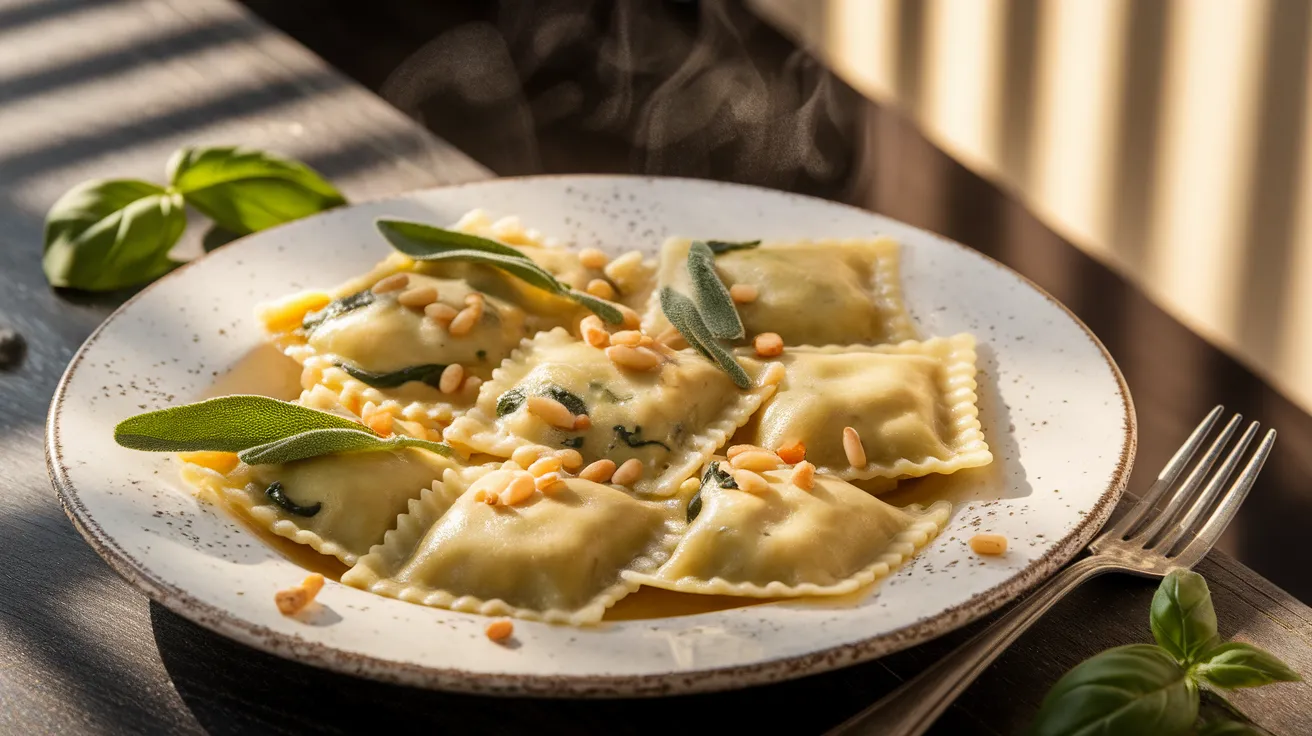
This vegan ravioli recipe transforms simple plant-based ingredients into restaurant-quality pasta that’s surprisingly easy to make at home. With a silky cashew-ricotta filling wrapped in tender homemade pasta, this vegan ravioli delivers all the comfort and satisfaction of traditional Italian ravioli without any dairy or eggs. Perfect for impressing dinner guests or treating your family to something special, this vegan ravioli proves that plant-based cooking can be both delicious and elegant.
SERVES: 4 | PREP: 45 MIN | COOK: 15 MIN | TOTAL: 60 MIN
Ingredients
For the Vegan Pasta Dough:
| Ingredient | Amount |
|---|---|
| All-purpose flour | 2½ cups |
| Semolina flour | ½ cup |
| Olive oil | 3 tablespoons |
| Warm water | ¾ cup |
| Sea salt | 1 teaspoon |
For the Cashew-Ricotta Filling:
| Ingredient | Amount |
|---|---|
| Raw cashews (soaked) | 1½ cups |
| Nutritional yeast | ¼ cup |
| Lemon juice | 2 tablespoons |
| Garlic cloves | 2 medium |
| Fresh basil | ¼ cup chopped |
| Sea salt | 1 teaspoon |
| Black pepper | ½ teaspoon |
| Spinach (chopped) | 1 cup |
For Serving:
| Ingredient | Amount |
|---|---|
| Vegan butter | 3 tablespoons |
| Fresh sage leaves | 8-10 leaves |
| Pine nuts | 2 tablespoons |
Step-by-Step Instructions
Phase 1: Preparing the Cashew Filling (15 minutes)
Step 1: Soak your raw cashews in hot water for 15 minutes to soften them completely. This crucial step ensures your vegan ravioli filling will be creamy and smooth, not grainy. Drain thoroughly before using.
Step 2: Add soaked cashews, nutritional yeast, lemon juice, and garlic to your food processor. Process for 2-3 minutes until completely smooth and creamy. The mixture should feel silky when rubbed between your fingers—this texture mimics traditional ricotta perfectly.
Step 3: Transfer the cashew mixture to a bowl and fold in chopped fresh basil, salt, pepper, and finely chopped spinach. The spinach adds beautiful green flecks and extra nutrients to your vegan ravioli filling. Set aside while you make the pasta dough.
Phase 2: Making the Pasta Dough (20 minutes)
Step 4: Combine both flours and salt in a large mixing bowl. Create a well in the center—this technique helps incorporate liquids evenly and prevents lumpy dough.
Step 5: Mix olive oil and warm water in a small bowl, then pour into the flour well. Using a fork, gradually incorporate flour from the edges into the liquid center. This prevents the dough from becoming too sticky too quickly.
Step 6: Once the mixture becomes too thick to stir, use your hands to bring the dough together. It will look shaggy at first—this is normal! Don’t add more liquid yet.
Step 7: Turn the dough onto a lightly floured surface and knead for 8-10 minutes until smooth and elastic. The dough should spring back when poked gently. If it feels too dry and cracks, add water one teaspoon at a time. If too sticky, add flour gradually.
Step 8: Wrap the dough tightly in plastic wrap and let rest for 20 minutes minimum. This resting period allows the gluten to relax, making your vegan ravioli much easier to roll out.
Phase 3: Rolling and Shaping the Ravioli (15 minutes)
Step 9: Divide the rested dough into 4 equal portions. Keep unused portions wrapped to prevent drying. Working with one piece at a time, roll the dough through a pasta machine starting at the widest setting, then gradually work down to setting 2 (not the thinnest setting—that’s too delicate for stuffed pasta).
Step 10: If using a rolling pin, roll each portion into a rectangle about 12 inches long and 4 inches wide. The dough should be thin enough to see your hand through it, but not so thin it tears easily.
Step 11: Place heaping teaspoons of filling about 2 inches apart along one half of the pasta sheet, leaving a 1-inch border around edges. Don’t overfill—too much filling will cause your vegan ravioli to burst during cooking.
Step 12: Lightly brush water around each mound of filling and along the edges. Fold the empty half of pasta over the filled half, pressing gently around each mound to remove air bubbles—trapped air causes ravioli to burst in the water.
Step 13: Use a ravioli cutter, pizza wheel, or sharp knife to cut between the mounds, creating individual squares. Press edges firmly with a fork to seal completely. Place finished vegan ravioli on a floured baking sheet, not touching each other.
Phase 4: Cooking the Ravioli (10 minutes)
Step 14: Bring a large pot of salted water to a gentle boil—aggressive bubbling can break delicate ravioli apart. The water should taste like mild seawater.
Step 15: Carefully add vegan ravioli to the water in batches to avoid overcrowding. Fresh ravioli cook quickly—they’re done when they float to the surface, usually 3-4 minutes.
Step 16: While ravioli cook, heat vegan butter in a large skillet over medium heat. Add sage leaves and pine nuts, cooking until butter is lightly browned and aromatic, about 2-3 minutes.
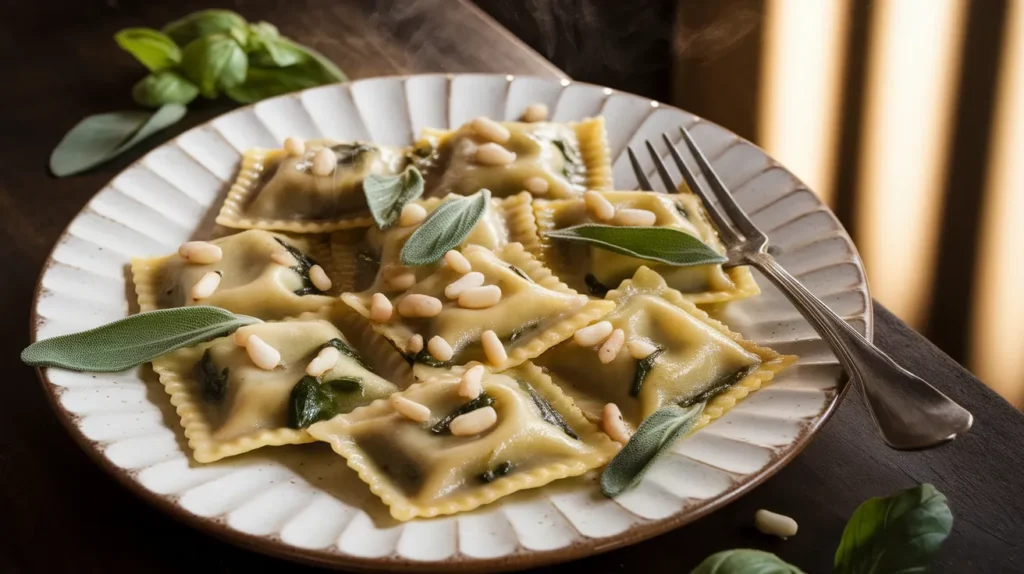
Step 17: Using a slotted spoon, transfer cooked vegan ravioli directly from the water to the butter sauce. The small amount of pasta water that clings helps bind the sauce. Gently toss to coat and serve immediately.
Chef’s Notes
Tip 1: For the smoothest vegan ravioli filling, ensure your cashews are completely soft before processing. If you’re short on time, use boiling water for soaking instead of warm water.
Tip 2: The pasta dough should feel slightly tacky but not sticky when properly hydrated. Humidity affects flour absorption, so adjust water gradually based on your environment.
Tip 3: Make extra vegan ravioli and freeze them on baking sheets before transferring to freezer bags. Cook frozen ravioli directly from frozen, adding 1-2 extra minutes to cooking time.
Tip 4: Fresh pasta water is key—save a cup before draining to adjust sauce consistency if needed. The starchy water helps bind everything together beautifully.
Nutrition Information (Per Serving)
- Calories: 485
- Protein: 18g
- Carbohydrates: 58g
- Fat: 22g
- Fiber: 4g
- Sodium: 620mg
Creative Variations
Mediterranean Vegan Ravioli: Replace spinach with sun-dried tomatoes and add fresh oregano to the cashew filling. Serve with a simple tomato basil sauce for authentic Italian flavors.
Mushroom Lovers Version: Sauté finely chopped mushrooms until golden and mix into the cashew filling. The umami from mushrooms adds incredible depth to your vegan ravioli.
Sweet Potato Variation: Blend roasted sweet potato into the cashew mixture for a gorgeous orange filling that pairs beautifully with sage butter. This autumn-inspired twist rivals any vegan pierogi for comfort food satisfaction.
Herb Garden Style: Mix fresh herbs like parsley, chives, and dill into the filling. Finish with a light lemon butter sauce instead of sage for bright, fresh flavors that complement any seasonal menu, including elegant desserts like vegan chocolate covered strawberries.
Storage & Reheating Guidelines
Fresh Storage: Uncooked vegan ravioli can be refrigerated for up to 2 days on a floured baking sheet, covered with plastic wrap.
Freezing Instructions: Freeze uncooked ravioli on baking sheets until solid, then transfer to freezer bags. They’ll keep for up to 3 months frozen.
Reheating Cooked Ravioli: Gently reheat in a skillet with a splash of plant milk or vegetable broth over low heat. Avoid microwaving, which can make the pasta tough.
Leftover Filling: Extra cashew-ricotta filling keeps refrigerated for 5 days and makes an excellent spread for crackers or sandwich filling.
Troubleshooting Common Issues
Problem 1: Ravioli burst during cooking Solution: Ensure edges are properly sealed and remove all air bubbles. Cook in gently simmering, not rapidly boiling, water.
Problem 2: Pasta dough tears when rolling Solution: Let the dough rest longer—gluten needs time to relax. Cover and wait another 15-20 minutes before attempting to roll again.
Problem 3: Filling is too wet and leaks out Solution: If your cashew mixture seems thin, add 1-2 tablespoons of fine breadcrumbs to absorb excess moisture without affecting flavor.
Problem 4: Dough is too sticky to work with Solution: Dust your work surface and rolling pin liberally with flour. Add flour to the dough gradually if it remains unmanageable.
Problem 5: Ravioli stick together after shaping Solution: Place shaped vegan ravioli on a well-floured surface and dust tops lightly with flour. Don’t let them touch each other while resting.
Equipment Essentials
- Food processor – Essential for smooth cashew filling
- Pasta machine or rolling pin – For even, thin pasta sheets
- Ravioli cutter or pizza wheel – Clean, sealed edges
- Large mixing bowls – Multiple sizes for different components
- Fine-mesh strainer – For draining cashews
- Large pot – Minimum 6-quart capacity for boiling
- Slotted spoon – Gentle ravioli removal from water
- Large skillet – For finishing sauce
Shopping List
Produce Section:
- Fresh basil (1 bunch)
- Fresh sage (1 package)
- Garlic (1 head)
- Lemons (2 medium)
- Fresh spinach (5 oz bag)
Pantry/Dry Goods:
- All-purpose flour
- Semolina flour
- Raw cashews (bulk bin)
- Nutritional yeast
- Pine nuts
- Sea salt
- Black pepper
Oils/Condiments:
- Extra virgin olive oil
- Vegan butter
Success Secrets
Secret 1: Temperature matters—use warm (not hot) water for the pasta dough. Hot water can start cooking the proteins in flour, creating tough pasta.
Secret 2: Don’t skip the semolina flour in your vegan ravioli dough. It provides structure and that authentic pasta texture that all-purpose flour alone cannot achieve.
Secret 3: Taste your cashew filling before assembling. The flavors should be slightly more pronounced than you want in the final dish, as the pasta will mellow the intensity.
Secret 4: Work quickly but don’t rush. Keep unused pasta sheets covered with damp towels to prevent drying while you fill and shape each batch.
Secret 5: The key to restaurant-quality vegan ravioli is the finishing touch—always toss the cooked pasta in the sauce rather than simply ladling sauce over top. This ensures every bite is perfectly coated and flavorful.