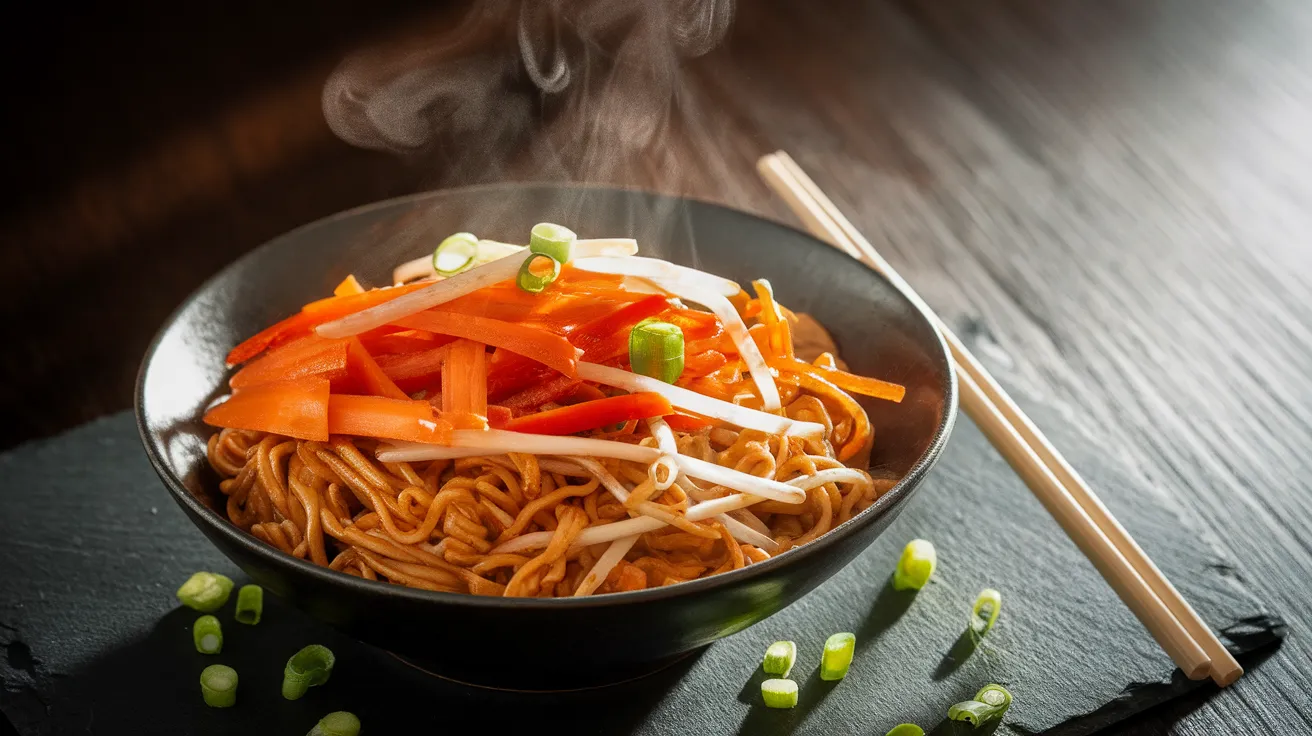
This vibrant vegan chow mein transforms simple vegetables and noodles into an irresistible stir-fry masterpiece. Packed with crispy vegetables, savory sauce, and perfectly cooked noodles, this vegan chow mein delivers all the flavors you crave from your favorite Chinese restaurant – but made fresh in your own kitchen. Whether you’re exploring plant-based cooking or simply want a healthier alternative to traditional chow mein, this recipe proves that vegan versions can be just as satisfying and delicious.
SERVES: 4 | PREP: 15 MIN | COOK: 12 MIN | TOTAL: 27 MIN
Ingredients
Noodles & Base
| Ingredient | Amount |
|---|---|
| Fresh chow mein noodles (or lo mein) | 12 oz |
| Vegetable oil | 3 tbsp |
| Sesame oil | 1 tbsp |
Vegetables
| Ingredient | Amount |
|---|---|
| Yellow onion, thinly sliced | 1 medium |
| Carrots, julienned | 2 medium |
| Red bell pepper, sliced thin | 1 large |
| Mushrooms, sliced | 8 oz |
| Bean sprouts | 2 cups |
| Garlic, minced | 4 cloves |
| Fresh ginger, minced | 1 tbsp |
| Green onions, chopped | 4 stalks |
Sauce
| Ingredient | Amount |
|---|---|
| Low-sodium soy sauce | 1/4 cup |
| Dark soy sauce | 2 tbsp |
| Rice vinegar | 1 tbsp |
| Brown sugar | 1 tsp |
| Cornstarch | 1 tsp |
| Water | 2 tbsp |
Step-by-Step Instructions
Phase 1: Noodle Preparation (8 minutes)
1. Fill a large pot with water and bring to a rolling boil over high heat. The water should bubble vigorously – this ensures your noodles cook evenly without becoming mushy.
2. Add the fresh chow mein noodles to the boiling water. Cook for exactly 2-3 minutes, stirring gently with chopsticks or a fork. Fresh noodles cook much faster than dried ones, so watch carefully to avoid overcooking.
3. Test a noodle by biting it – it should be tender but still have a slight bite (al dente). Immediately drain the noodles in a colander.
4. Rinse the drained noodles under cold running water for 30 seconds. This stops the cooking process and removes excess starch that could make your vegan chow mein gummy.
5. Shake the colander vigorously to remove excess water, then toss the noodles with 1 tablespoon of vegetable oil. This prevents sticking while you prepare the vegetables.
Phase 2: Sauce Mixing (2 minutes)
6. In a small bowl, whisk together soy sauce, dark soy sauce, rice vinegar, and brown sugar until the sugar completely dissolves. The dark soy sauce gives your vegan chow mein that authentic restaurant color.
7. In a separate tiny bowl, mix cornstarch with 2 tablespoons of water, stirring until completely smooth with no lumps. This slurry will thicken your sauce perfectly.
Phase 3: Vegetable Stir-Frying (7 minutes)
8. Heat your wok or largest skillet over high heat until it starts to smoke slightly. High heat is crucial for proper stir-frying – it creates that characteristic “wok hei” flavor.
9. Add 2 tablespoons of vegetable oil, swirling to coat the pan. The oil should shimmer and move freely when you tilt the pan.
10. Add minced garlic and ginger first, stir-frying for just 15 seconds until fragrant. Be careful not to burn them – they should sizzle immediately when they hit the oil.
11. Add sliced onions and stir-fry for 1 minute until they start to soften and become translucent around the edges.
12. Add carrots and bell peppers, stir-frying constantly for 2 minutes. The vegetables should still be crisp and bright in color – overcooking will make them soggy.
13. Add mushrooms and cook for 1 minute until they start to release their moisture. You’ll hear more sizzling as the mushrooms cook.
Phase 4: Final Assembly (5 minutes)
14. Push all vegetables to one side of the wok. Add the prepared noodles to the empty side of the pan.
15. Pour the sauce mixture over the noodles, then immediately add the cornstarch slurry. Toss everything together quickly using tongs or two large spoons.
16. Add bean sprouts and continue stir-frying for 1-2 minutes until the sauce coats everything evenly and thickens slightly. The bean sprouts should remain crunchy.
17. Remove from heat and drizzle with sesame oil. Toss once more, then immediately garnish with chopped green onions.
18. Taste and adjust seasoning with additional soy sauce if needed. Serve your vegan chow mein immediately while it’s still steaming hot.
Chef’s Notes
Noodle Selection: Fresh chow mein noodles give the best texture for this vegan chow mein, but dried lo mein or even spaghetti works in a pinch. Just adjust cooking times accordingly.
Heat Control: Keep your heat high throughout the stir-frying process. If your vegetables start to burn, add a splash of water rather than reducing heat.
Sauce Balance: The combination of light and dark soy sauce creates both flavor and color. Don’t skip the dark soy sauce – it’s what gives restaurant-style chow mein its signature look.
Vegetable Timing: Add vegetables in order of cooking time needed. Harder vegetables like carrots go in first, while delicate bean sprouts go in last to maintain their crunch.
Nutrition Information (Per Serving)
- Calories: 345
- Protein: 12g
- Carbohydrates: 58g
- Fat: 8g
- Fiber: 4g
- Sodium: 890mg
Delicious Variations
Protein-Packed Version: Add 1 cup of cubed extra-firm tofu, pan-fried until golden, or try some crispy vegan schnitzel pieces for extra protein and texture that pairs beautifully with Asian flavors.
Spicy Kick: Include 1-2 teaspoons of chili garlic sauce or sriracha in your sauce mixture for heat lovers.
Smoky Twist: Add 1 teaspoon of liquid smoke to the sauce for a subtle barbecue note that complements the stir-fried vegetables perfectly.
Cajun Fusion: For an unexpected flavor combination, try incorporating some of the bold spices from vegan jambalaya – a pinch of paprika and cayenne creates an interesting East-meets-South fusion dish.
Storage & Reheating
Refrigeration: Store leftover vegan chow mein in the refrigerator for up to 4 days in an airtight container.
Reheating: The best method is to reheat in a hot wok or skillet with a splash of oil, tossing constantly for 2-3 minutes. This revives the texture better than microwaving.
Freezing: While possible, frozen chow mein loses its ideal texture. If you must freeze, use within 2 months and expect softer noodles after thawing.
Make-Ahead Tip: Prep all vegetables and sauce up to 24 hours ahead, but cook the dish fresh for best results.
Troubleshooting Common Problems
1. Mushy Noodles: You’ve overcooked them. Fresh noodles need only 2-3 minutes in boiling water. Always rinse with cold water immediately after draining.
2. Bland Flavor: Your sauce ratio may be off, or you didn’t use dark soy sauce. Also, ensure your wok is hot enough – proper stir-frying develops deeper flavors.
3. Soggy Vegetables: Your heat wasn’t high enough, or you crowded the pan. Cook in batches if necessary, and keep vegetables moving constantly.
4. Sauce Won’t Thicken: Make sure your cornstarch slurry is completely smooth and add it while the pan is still very hot. Stir immediately after adding.
5. Noodles Clumping: Oil the noodles after cooking and before stir-frying. Also, ensure your wok is properly heated before adding noodles.
Equipment Essentials
- Large pot for boiling noodles
- Wok or large skillet (at least 12-inch diameter)
- Colander for draining
- Two small mixing bowls for sauce preparation
- Sharp knife and cutting board
- Whisk for sauce mixing
- Tongs or large spoons for stir-frying
Shopping List
Produce Section
- Yellow onion (1 medium)
- Carrots (2 medium)
- Red bell pepper (1 large)
- Mushrooms (8 oz)
- Bean sprouts (2 cups)
- Fresh garlic (1 bulb)
- Fresh ginger (1 piece)
- Green onions (1 bunch)
Asian/International Aisle
- Fresh chow mein noodles (12 oz)
- Low-sodium soy sauce
- Dark soy sauce
- Rice vinegar
- Sesame oil
Pantry Items
- Vegetable oil
- Brown sugar
- Cornstarch
Success Secrets
1. Prep Everything First: Stir-frying happens fast – have all ingredients chopped, measured, and ready before you heat the wok.
2. High Heat is Key: Your wok should be smoking hot before you add oil. This creates the perfect searing environment for authentic vegan chow mein.
3. Don’t Overcrowd: If doubling the recipe, cook in two batches rather than cramming everything into one pan.
4. Sauce Timing: Add sauce only when you’re ready to finish the dish – it thickens quickly and can burn if left too long.
5. Serve Immediately: Chow mein is best enjoyed straight from the wok while the vegetables still have their vibrant colors and crisp textures.
This vegan chow mein recipe proves that plant-based cooking doesn’t mean sacrificing flavor or satisfaction. With the right technique and fresh ingredients, you’ll create a dish that rivals any restaurant version – and you’ll know exactly what went into making it!