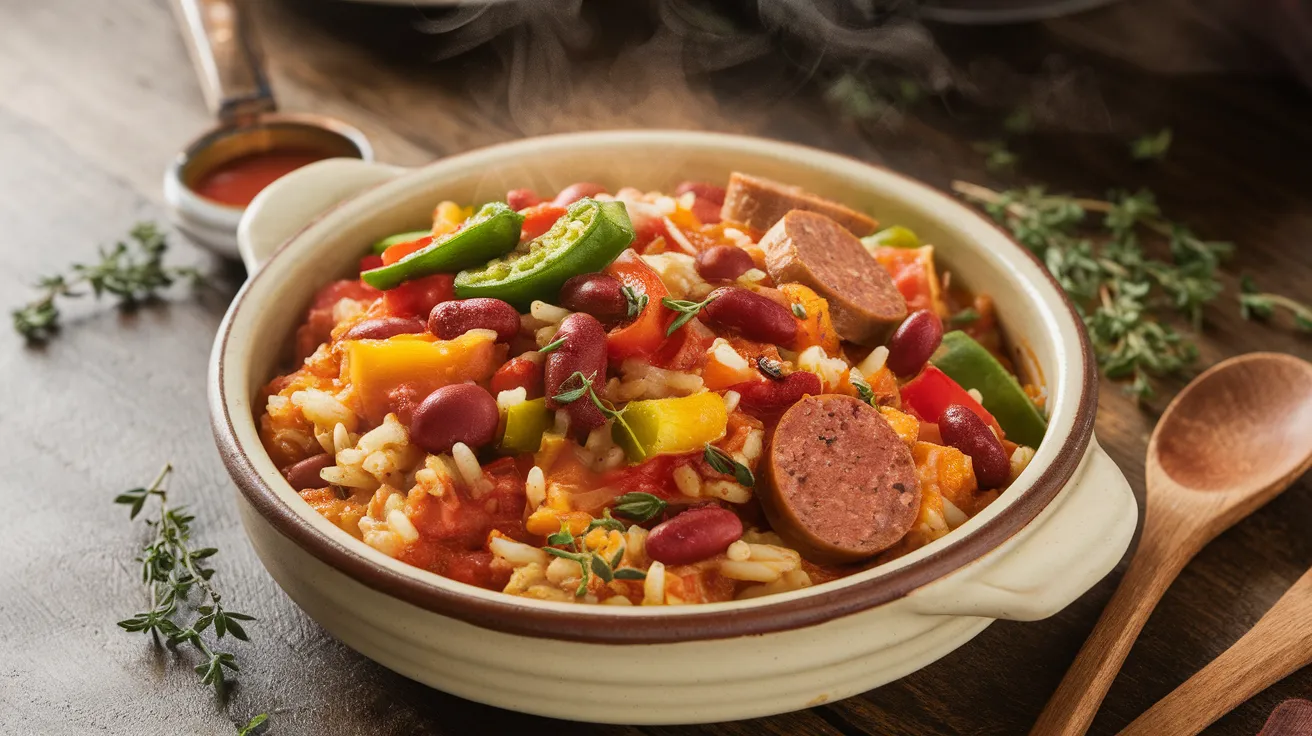
This hearty vegan jambalaya brings all the bold flavors of New Orleans to your kitchen without any animal products. Packed with smoky spices, tender vegetables, and protein-rich beans, this vegan jambalaya delivers the authentic taste you crave while keeping things completely plant-based. Perfect for weeknight dinners or weekend gatherings, this recipe proves that comfort food can be both delicious and compassionate.
SERVES: 4 | PREP: 20 MIN | COOK: 45 MIN | TOTAL: 65 MIN
Ingredients
Base Vegetables
| Ingredient | Amount |
|---|---|
| Yellow onion, diced | 1 large |
| Bell peppers (mix of colors), diced | 2 medium |
| Celery stalks, diced | 3 stalks |
| Garlic cloves, minced | 4 cloves |
Rice & Liquid
| Ingredient | Amount |
|---|---|
| Long-grain white rice | 1½ cups |
| Vegetable broth | 3 cups |
| Diced tomatoes (canned) | 1 (14oz) can |
| Tomato paste | 2 tablespoons |
Protein & Vegetables
| Ingredient | Amount |
|---|---|
| Kidney beans, drained | 1 (15oz) can |
| Vegan sausage, sliced | 12 oz |
| Okra, sliced (fresh or frozen) | 1 cup |
Seasonings
| Ingredient | Amount |
|---|---|
| Olive oil | 3 tablespoons |
| Cajun seasoning | 2 tablespoons |
| Paprika | 1 tablespoon |
| Dried thyme | 1 teaspoon |
| Bay leaves | 2 leaves |
| Hot sauce | 1-2 teaspoons |
| Salt | To taste |
| Black pepper | ½ teaspoon |
Step-by-Step Instructions
Phase 1: Building the Flavor Base (10 minutes)
Step 1: Heat olive oil in a large, heavy-bottomed pot or Dutch oven over medium-high heat. The oil should shimmer but not smoke – this indicates the perfect temperature for sautéing without burning.
Step 2: Add diced onions to the hot oil and cook for 3-4 minutes, stirring occasionally. The onions should become translucent and start to soften. This creates the aromatic foundation for your vegan jambalaya.
Step 3: Add bell peppers and celery to the pot. Cook for another 4-5 minutes, stirring frequently. The vegetables should start to soften and release their natural moisture. This combination is called the “holy trinity” in Cajun cooking.
Step 4: Stir in minced garlic and cook for 30 seconds until fragrant. Be careful not to let the garlic burn, as it will turn bitter and overpower the dish.
Phase 2: Spice Integration (3 minutes)
Step 5: Add tomato paste to the vegetable mixture and stir constantly for 1 minute. The tomato paste should darken slightly and become fragrant. This step concentrates the tomato flavor and adds depth to your vegan jambalaya.
Step 6: Sprinkle in Cajun seasoning, paprika, thyme, salt, and black pepper. Stir the spices with the vegetables for 1-2 minutes until everything is well-coated and aromatic. The spices should coat the vegetables evenly.
Phase 3: Rice and Liquid Addition (5 minutes)
Step 7: Add the uncooked rice to the pot and stir for 2-3 minutes until each grain is coated with the spice mixture. The rice should look glossy and smell toasted. This prevents the rice from becoming mushy later.
Step 8: Pour in the vegetable broth slowly while stirring continuously. Add the canned diced tomatoes with their juice. The liquid should just cover the rice by about ½ inch.
Step 9: Add bay leaves and bring the mixture to a rolling boil over high heat. You’ll hear bubbling and see steam rising from the surface.
Phase 4: Simmering and Protein Addition (25 minutes)
Step 10: Once boiling, reduce heat to low and cover the pot with a tight-fitting lid. Simmer for 15 minutes without lifting the lid. This allows the rice to absorb the liquid slowly and evenly.
Step 11: After 15 minutes, quickly add the sliced vegan sausage and kidney beans on top of the rice. Don’t stir yet – just distribute them evenly across the surface.
Step 12: Cover again and continue cooking for 8-10 more minutes. The rice should be tender and most liquid absorbed.
Phase 5: Final Assembly and Seasoning (7 minutes)
Step 13: Add the okra to the pot and gently stir everything together for the first time. The okra will add a traditional texture and help thicken the jambalaya slightly.
Step 14: Cook uncovered for 3-4 minutes, stirring occasionally. The okra should be tender but not slimy. If the mixture seems too dry, add a splash more vegetable broth.
Step 15: Remove bay leaves and taste for seasoning. Add hot sauce, additional salt, or Cajun seasoning as needed. The flavors should be bold and well-balanced.
Step 16: Let the vegan jambalaya rest off the heat for 5 minutes before serving. This allows the flavors to meld together and the rice to finish absorbing any remaining liquid.
Chef’s Notes
Spice Level Control: Start with less Cajun seasoning if you’re sensitive to heat. You can always add more, but you can’t take it away. The beauty of vegan jambalaya lies in finding your perfect spice balance.
Rice Texture: Don’t stir the rice during the initial cooking phase. Stirring releases starch and creates mushy rice instead of the distinct grains you want in authentic jambalaya.
Vegan Sausage Selection: Choose a high-quality vegan sausage with smoky flavors. Brands with herbs and spices work best for maintaining the traditional jambalaya taste profile.
Make-Ahead Tip: This vegan jambalaya actually tastes better the next day as flavors continue to develop. Store covered in the refrigerator and reheat with a splash of broth.
Nutrition Information (Per Serving)
- Calories: 485
- Protein: 18g
- Carbohydrates: 72g
- Fat: 14g
- Fiber: 8g
- Sodium: 1,240mg
Creative Variations
Seafood-Style Vegan Jambalaya: Add hearts of palm and kelp flakes for an ocean-like flavor. Marinate the hearts of palm in Old Bay seasoning for 30 minutes before adding.
Protein-Packed Version: Include extra beans like black-eyed peas or cannellini beans. For more variety in your plant-based meals, try this technique in other dishes like vegan fried rice for different flavor profiles.
Green Jambalaya: Add spinach, kale, or collard greens in the last 5 minutes of cooking for extra nutrition and color contrast against the rice.
Asian-Fusion Twist: Replace Cajun spices with ginger, soy sauce, and sesame oil for a unique take. This approach works wonderfully in vegan chow mein as well.
Storage & Reheating
Refrigerator Storage: Store leftover vegan jambalaya in airtight containers for up to 4 days. The flavors actually improve with time as the spices continue to meld.
Freezer Storage: Freeze portions in freezer-safe containers for up to 3 months. Leave some space at the top as the rice will expand slightly when frozen.
Reheating Instructions: Add 2-3 tablespoons of vegetable broth when reheating to restore moisture. Heat in microwave in 1-minute intervals, stirring between, or reheat gently on stovetop over low heat.
Portion Control: Divide into individual serving containers when meal prepping. This makes quick weekday lunches effortless.
Troubleshooting Common Issues
Problem: Rice is mushy or overcooked Solution: This usually happens from too much stirring or too high heat. Next time, keep the heat low and resist stirring until step 13. If it’s already mushy, serve over fresh greens to change the texture.
Problem: Rice is undercooked or crunchy Solution: Add ¼ cup more hot broth, cover, and cook 5 more minutes. Some rice varieties need extra liquid. Always taste-test before the final resting period.
Problem: Dish is too spicy Solution: Add a can of diced tomatoes (drained) or a dollop of vegan sour cream when serving. Serve with bread or over plain rice to dilute the heat.
Problem: Jambalaya seems too dry Solution: Add warm vegetable broth, ¼ cup at a time, until you reach desired consistency. The dish should be moist but not soupy.
Problem: Flavors taste flat or bland Solution: Increase salt first, then add acid (lemon juice or vinegar). If still flat, add more Cajun seasoning or hot sauce. Sometimes a pinch of sugar enhances all flavors.
Equipment Essentials
- Heavy-bottomed pot or Dutch oven (at least 4-quart capacity)
- Sharp chef’s knife for efficient chopping
- Large cutting board with enough space for prep
- Wooden spoon for stirring without scratching
- Measuring cups and spoons for accurate seasoning
- Can opener for tomatoes and beans
Shopping List
Produce Section
- 1 large yellow onion
- 2 bell peppers (mixed colors)
- 3 celery stalks
- 1 head garlic
- 1 cup fresh okra (or frozen)
Pantry/Dry Goods
- Long-grain white rice
- Cajun seasoning
- Paprika
- Dried thyme
- Bay leaves
- Hot sauce
Canned Goods
- Vegetable broth (32 oz)
- Diced tomatoes (14 oz can)
- Tomato paste
- Kidney beans (15 oz can)
Refrigerated Section
- Vegan sausage (12 oz package)
- Olive oil
Success Secrets
- Toast the rice before adding liquid for better texture and nutty flavor that enhances the overall vegan jambalaya experience.
- Layer your seasonings at different stages rather than adding everything at once for more complex, developed flavors.
- Use the right rice ratio – 1½ cups rice to 3 cups liquid creates the perfect consistency without mushiness.
- Don’t skip the resting time – those final 5 minutes off the heat allow everything to come together perfectly.
- Taste and adjust at the very end – jambalaya should be bold, spicy, and well-seasoned with each component distinct yet harmonious.
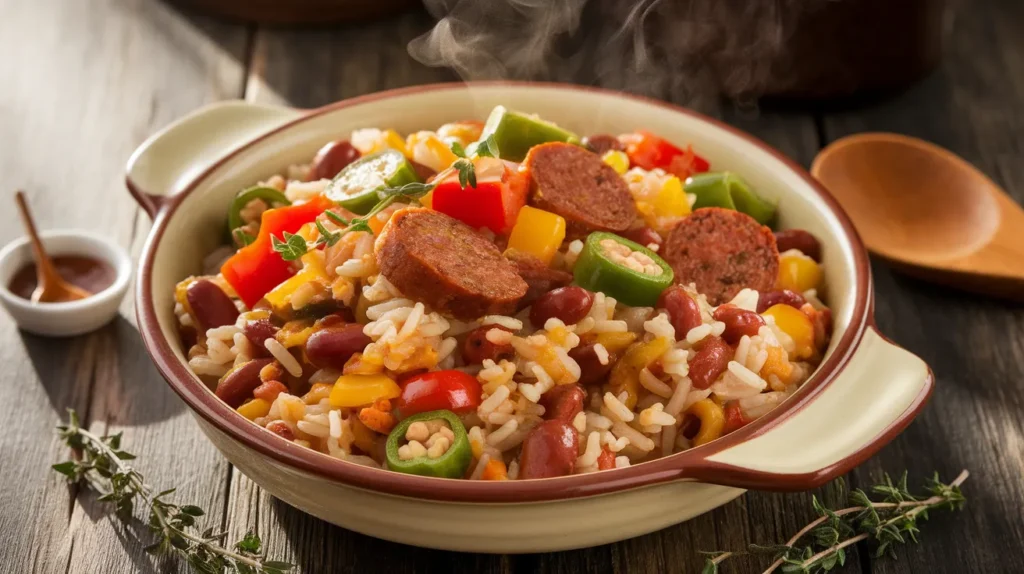
This vegan jambalaya recipe brings authentic New Orleans flavors to your table while keeping everything plant-based and beginner-friendly. The combination of aromatic vegetables, perfectly seasoned rice, and hearty beans creates a satisfying meal that even non-vegans will love. Serve with crusty bread and enjoy the taste of Louisiana in your own kitchen!