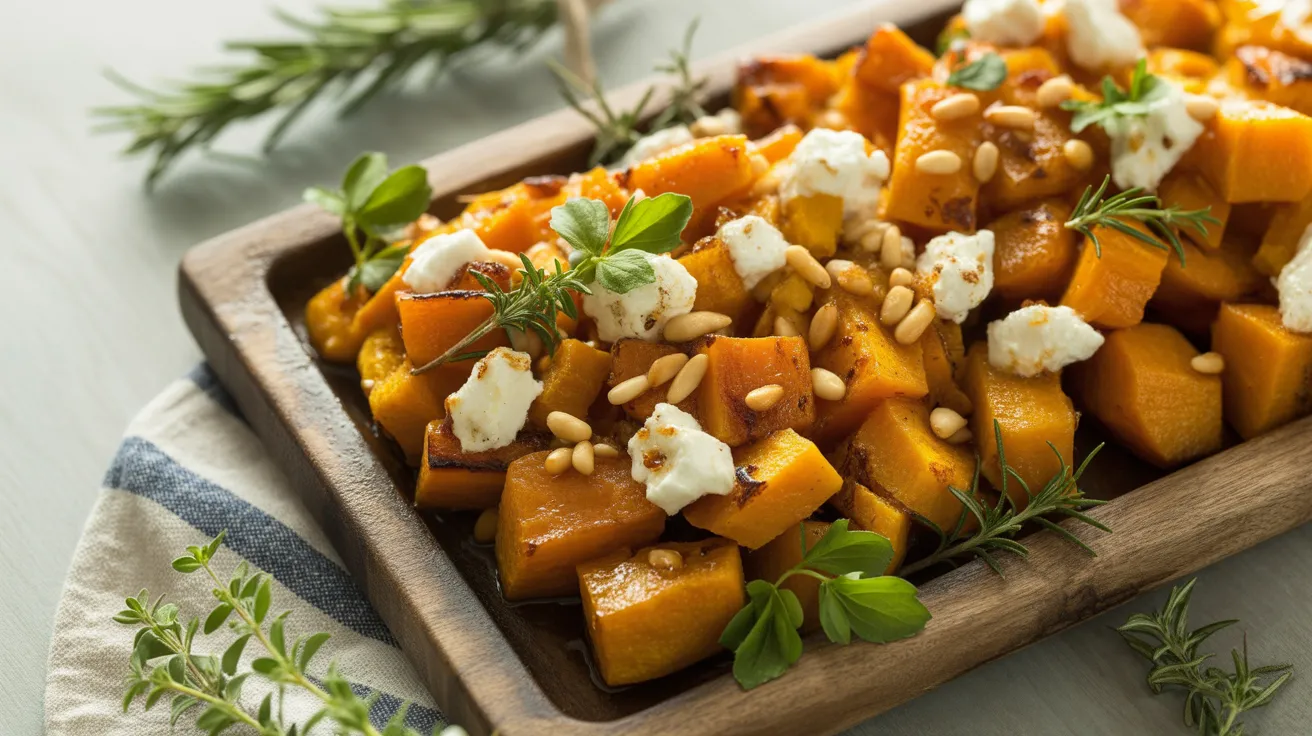
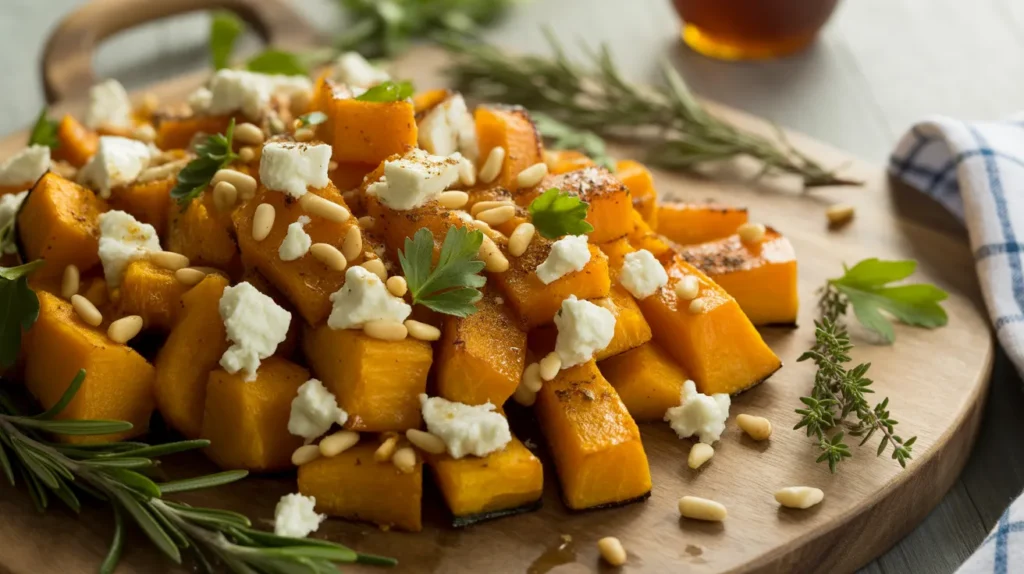
This Mediterranean honey roasted butternut squash combines tender caramelized squash with bold herbs, tangy feta, and sweet honey for a side dish that tastes like it came from a Greek taverna. The Mediterranean honey roasted butternut squash transforms humble winter squash into something special with just a handful of pantry ingredients.
SERVES: 4 | PREP: 15 MIN | COOK: 35 MIN | TOTAL: 50 MIN
Ingredients
For the Squash Base
| Ingredient | Measurement |
|---|---|
| Butternut squash, peeled and cubed | 3 pounds (about 1 medium squash) |
| Extra virgin olive oil | 3 tablespoons |
| Honey | 2 tablespoons |
| Garlic, minced | 3 cloves |
| Sea salt | 1 teaspoon |
| Black pepper | ½ teaspoon |
Mediterranean Aromatics
| Ingredient | Measurement |
|---|---|
| Fresh rosemary, chopped | 1 tablespoon |
| Fresh thyme leaves | 1 tablespoon |
| Dried oregano | 1 teaspoon |
| Red pepper flakes | ¼ teaspoon |
Finishing Touches
| Ingredient | Measurement |
|---|---|
| Crumbled feta cheese | ½ cup |
| Fresh lemon juice | 2 tablespoons |
| Toasted pine nuts | 3 tablespoons |
| Fresh parsley, chopped | 2 tablespoons |
Step-by-Step Instructions
Preparation Phase (10 minutes)
Step 1: Preheat your oven to 400°F (200°C) and position the rack in the center. Line a large rimmed baking sheet with parchment paper. This temperature creates the perfect balance between caramelization and tender texture without burning the honey.
Step 2: Cut the butternut squash in half lengthwise using a sharp chef’s knife. Scoop out the seeds and stringy pulp with a spoon. Peel the skin using a vegetable peeler, working from top to bottom in long strokes. The skin should come off easily once you get under that first layer.
Step 3: Cut the squash into 1-inch cubes as uniformly as possible. Consistent sizing means everything cooks at the same rate—you won’t end up with some pieces mushy while others stay hard. You should have about 6 cups of cubed squash.
Step 4: Place the cubed squash in a large mixing bowl. Pat the pieces dry with paper towels if they seem wet. Excess moisture prevents that beautiful caramelization we’re after.
Seasoning Phase (5 minutes)
Step 5: In a small bowl, whisk together the olive oil, honey, and minced garlic until the honey dissolves into the oil. This creates an emulsion that coats every piece evenly. The honey will feel thick at first but loosens as you whisk.
Step 6: Pour this honey-oil mixture over the butternut squash cubes. Use your hands or a large spoon to toss everything together, making sure each piece gets coated. The oil should glisten on every surface.
Step 7: Sprinkle the rosemary, thyme, oregano, salt, pepper, and red pepper flakes over the squash. Toss again until the herbs distribute evenly. You should smell that Mediterranean aroma already—earthy, slightly sweet, with a hint of heat.
Step 8: Spread the seasoned squash in a single layer on your prepared baking sheet. Don’t overlap the pieces or crowd them together. Crowded vegetables steam instead of roast, and we want crispy caramelized edges, not soggy squash.
Roasting Phase (35 minutes)
Step 9: Slide the baking sheet into the preheated oven on the center rack. Set a timer for 20 minutes. This first roasting period starts the caramelization process and begins softening the squash.
Step 10: After 20 minutes, remove the pan and use a metal spatula to flip each piece of squash. Check the undersides—they should show golden brown spots and caramelized edges. Return the pan to the oven and roast for another 15 minutes.
Step 11: Check for doneness by piercing a cube with a fork. It should slide in easily with just slight resistance, and the edges should look deeply golden with some charred spots. If they’re still too firm, give them another 5 minutes in the oven.
Step 12: Remove the pan from the oven and let the squash rest for 3 minutes on the baking sheet. This resting time lets the sugars finish caramelizing and the interior texture stabilizes.
Finishing Phase (2 minutes)
Step 13: Transfer the roasted squash to a serving platter or bowl using your spatula. Be gentle—the cubes are tender now and can break apart.
Step 14: Drizzle the fresh lemon juice over the warm squash. The acidity cuts through the sweetness and brightens all those herb flavors. Toss gently to distribute.
Step 15: Scatter the crumbled feta cheese over the top while the squash is still warm. The heat will slightly soften the cheese without melting it completely.
Step 16: Sprinkle with toasted pine nuts and fresh parsley. The nuts add crunch, and the parsley brings freshness. Serve immediately while still warm.
Chef’s Notes
Squash Selection: Choose butternut squash that feels heavy for its size with smooth, unblemished skin. The neck portion (the cylindrical part without seeds) gives you the most usable flesh and easiest cubing.
Honey Alternative: If your honey crystallized, warm it in the microwave for 10 seconds to liquefy. Raw honey works beautifully here and adds deeper flavor notes than processed honey.
Herb Flexibility: Fresh herbs deliver more vibrant flavor than dried, but dried works in a pinch. Use one-third the amount if substituting dried for fresh Mediterranean honey roasted butternut squash.
Make-Ahead Tip: Cube the butternut squash up to 2 days ahead and store in an airtight container in the fridge. Toss with oil and seasonings right before roasting for best results.
Nutrition Information (Per Serving)
- Calories: 285
- Protein: 6g
- Carbohydrates: 38g
- Fat: 14g
- Fiber: 5g
- Sugar: 12g
- Sodium: 485mg
Variations
Spicy Mediterranean Butternut: Add ½ teaspoon harissa paste to the honey-oil mixture for North African heat. The smoky, spicy notes play beautifully with the sweet squash, similar to how spicy maple butternut squash with Brussels and bacon balances sweet and heat.
Protein-Packed Version: Top with 1 cup cooked chickpeas during the last 10 minutes of roasting. They’ll get crispy on the outside while adding plant-based protein. You can also add ground meat like in this roasted butternut squash with ground turkey for a heartier meal.
Greek-Style with Olives: Toss in ½ cup sliced Kalamata olives and 2 tablespoons capers after roasting. The briny, salty elements create that classic Greek flavor profile.
Fall Harvest Version: Replace honey with maple syrup and swap feta for goat cheese. Add ½ cup dried cranberries during the last 5 minutes for a sweeter, autumn-inspired Mediterranean honey roasted butternut squash.
Storage & Reheating
Refrigerator Storage: Store cooled squash in an airtight container for up to 4 days. Keep the feta and pine nuts separate and add them fresh when serving to maintain their texture.
Freezing: Freeze the roasted squash without the cheese and nuts for up to 3 months. Spread cubes on a baking sheet to freeze individually first, then transfer to a freezer bag. This prevents them from clumping together.
Reheating: Spread refrigerated squash on a baking sheet and reheat at 350°F for 10-12 minutes. The oven method restores some of that crispy exterior. Microwave reheating works but makes the squash softer.
Serving Cold: This Mediterranean honey roasted butternut squash works beautifully as a cold salad component. Toss with arugula, quinoa, and extra lemon juice for a satisfying lunch.
Troubleshooting
Problem: Squash pieces are mushy and falling apart
Solution: You likely cut the cubes too small or roasted too long. Stick to 1-inch cubes and check at 30 minutes. Different squash varieties have different moisture contents—denser squash needs longer cooking.
Problem: Some pieces burned while others stayed undercooked
Solution: Uneven cube sizes are the culprit. Take extra time during prep to cut uniform pieces. Also check your oven hot spots by doing the bread test—place bread slices across a baking sheet and see which brown faster.
Problem: The honey burned and tastes bitter
Solution: Your oven runs hot, or you used too much honey. Reduce oven temperature to 375°F and use only 1½ tablespoons honey. Some ovens have temperature variations of 25 degrees or more.
Problem: Squash tastes bland and boring
Solution: You under-seasoned or the herbs were old. Fresh herbs make a huge difference—dried herbs lose potency after 6 months. Also, don’t skimp on salt. The 1 teaspoon called for is necessary to bring out the squash’s natural sweetness.
Problem: The feta turned rubbery or dried out
Solution: You added the cheese too early or reheated it. Feta should go on at the very end, after the squash comes out of the oven. When reheating leftovers, add fresh feta rather than heating the old cheese.
Equipment Essentials
- Large rimmed baking sheet (half-sheet pan works best)
- Parchment paper (prevents sticking and makes cleanup easy)
- Sharp chef’s knife (8-inch blade ideal for cutting squash)
- Vegetable peeler (Y-shaped peeler works faster than straight)
- Large mixing bowl (need room to toss everything)
- Small bowl (for mixing honey-oil blend)
- Whisk (helps emulsify honey and oil)
- Metal spatula (for flipping hot squash pieces)
Shopping List
Produce Section
- 1 medium butternut squash (3 pounds)
- 1 bunch fresh rosemary
- 1 bunch fresh thyme
- 1 lemon
- 1 bunch fresh parsley
- 1 head garlic
Dairy Section
- Feta cheese (buy block, not pre-crumbled for better texture)
Pantry Aisle
- Extra virgin olive oil
- Honey
- Dried oregano
- Red pepper flakes
- Sea salt
- Black pepper
- Pine nuts (sometimes in baking or international aisle)
Success Secrets
1. Toast the Pine Nuts Fresh: Buy raw pine nuts and toast them yourself in a dry skillet over medium heat for 3-4 minutes, shaking constantly. They go from perfect to burned in seconds, so watch them closely. The toasting releases oils that create that buttery, rich flavor.
2. Cut Away All the Strings: After scooping out seeds, use the edge of a spoon to scrape away every bit of stringy pulp from the cavity. Those strings turn tough and chewy when roasted and ruin the texture of your Mediterranean honey roasted butternut squash.
3. Don’t Skip the Parchment: Even with oil, honey can stick and burn onto bare metal. Parchment paper prevents this and makes cleanup effortless. Foil works but can react with acidic lemon juice.
4. Taste and Adjust Salt: After roasting, taste a piece before adding feta. The cheese adds saltiness, so you might need less than you think. You can always add more at the table but can’t take it away.
5. Serve in a Pre-Warmed Bowl: Run your serving bowl under hot water for a minute, then dry it completely. The warm bowl keeps the squash at serving temperature longer, especially important if people are serving themselves buffet-style.
This Mediterranean honey roasted butternut squash brings together the best of fall vegetables with sun-soaked Mediterranean flavors—perfect for weeknight dinners or holiday gatherings.