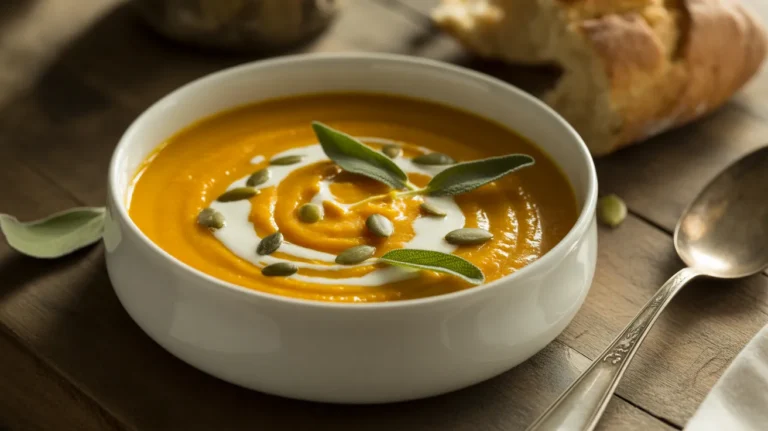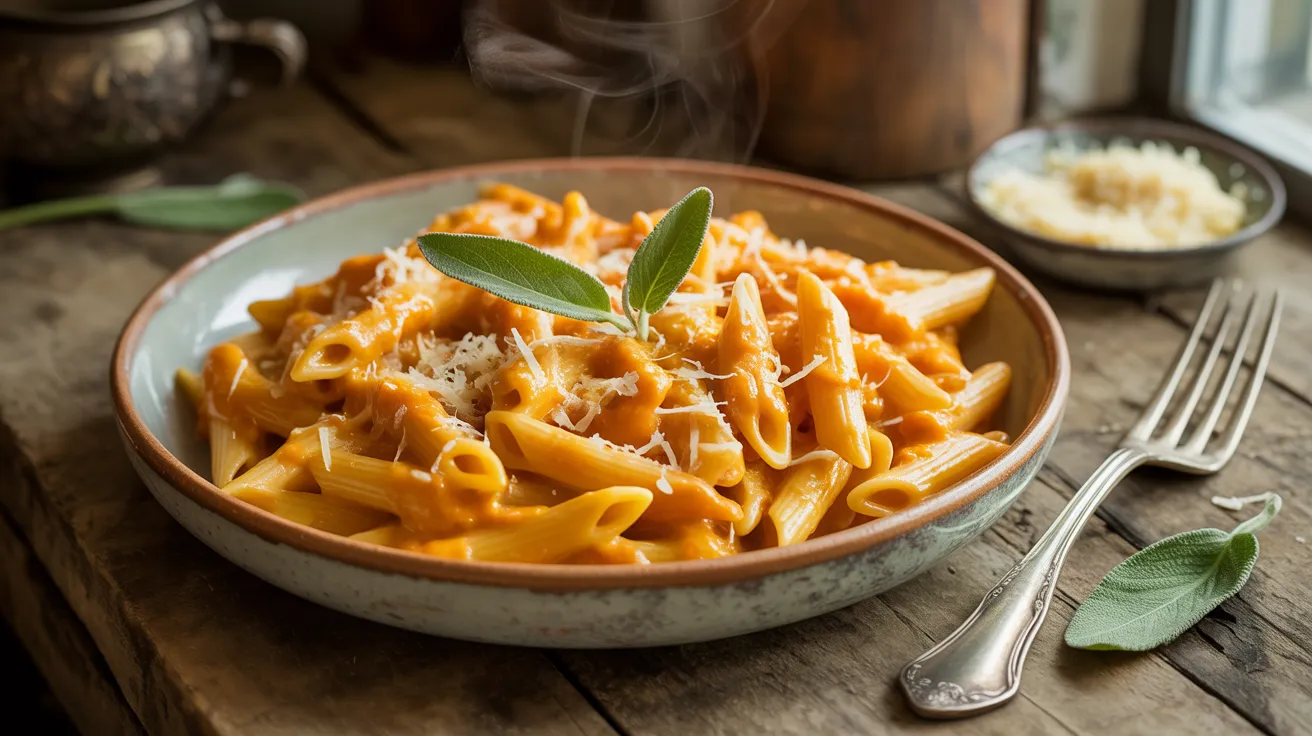
This butternut squash pasta sauce transforms sweet roasted squash into a silky, restaurant-quality sauce that clings to every strand of pasta. You’ll create a velvety butternut squash pasta sauce using simple ingredients, fresh herbs, and a secret ingredient that makes it irresistibly creamy without heavy cream.
SERVES: 4 | PREP: 15 MIN | COOK: 45 MIN | TOTAL: 60 MIN
Ingredients
For the Roasted Squash Base
| Ingredient | Amount |
|---|---|
| Butternut squash (peeled, cubed) | 3 cups |
| Olive oil | 2 tablespoons |
| Salt | 1/2 teaspoon |
| Black pepper | 1/4 teaspoon |
For the Sauce
| Ingredient | Amount |
|---|---|
| Unsalted butter | 3 tablespoons |
| Garlic cloves (minced) | 4 cloves |
| Fresh sage leaves | 8 leaves |
| Vegetable broth | 1 1/2 cups |
| Heavy cream | 1/2 cup |
| Parmesan cheese (grated) | 3/4 cup |
| Nutmeg (ground) | 1/4 teaspoon |
| Salt | to taste |
| Pasta (your choice) | 12 ounces |
Step-by-Step Instructions
Phase 1: Roasting the Squash (25 minutes)
Step 1: Preheat your oven to 400°F (200°C) and line a baking sheet with parchment paper. This prevents sticking and makes cleanup easier.
Step 2: Spread the 3 cups of cubed butternut squash on the prepared baking sheet in a single layer. Crowding causes steaming instead of roasting, which won’t give you the caramelized sweetness you want.
Step 3: Drizzle 2 tablespoons olive oil over the squash cubes, then sprinkle with 1/2 teaspoon salt and 1/4 teaspoon black pepper. Toss everything with your hands to coat evenly.
Step 4: Roast for 20-25 minutes, flipping the cubes halfway through with a spatula. The squash is ready when it’s fork-tender and has golden-brown edges. Those caramelized spots add deep, sweet flavor to your sauce.
Step 5: Remove from the oven and let the squash cool for 5 minutes while you prepare the sauce base. This slight cooling makes blending safer.
Phase 2: Building the Sauce Base (10 minutes)
Step 6: Heat 3 tablespoons butter in a large skillet over medium heat until it melts and starts to foam gently. Watch for the foam—that’s your signal the pan is ready.
Step 7: Add 4 minced garlic cloves to the melted butter and stir constantly for 45-60 seconds. The garlic should smell fragrant but not turn brown. Burnt garlic tastes bitter and ruins the sauce.
Step 8: Drop in 8 fresh sage leaves and let them sizzle in the butter for 30 seconds. The leaves will crisp slightly and release their earthy, peppery aroma. This step infuses the butter with incredible flavor.
Step 9: Pour in 1 1/2 cups vegetable broth and bring to a gentle simmer. Scrape up any browned bits from the bottom of the pan—that’s pure flavor you don’t want to waste.
Phase 3: Blending and Finishing (10 minutes)
Step 10: Transfer the roasted squash to a blender, then add the butter-sage-broth mixture from the skillet. Remove the sage leaves first if you want a completely smooth sauce, or leave them for a rustic texture.
Step 11: Add 1/2 cup heavy cream and 1/4 teaspoon ground nutmeg to the blender. The nutmeg is the secret ingredient that makes butternut squash pasta sauce taste like it came from an Italian restaurant.
Step 12: Blend on high speed for 60-90 seconds until the mixture is completely smooth and silky. Stop once and scrape down the sides to ensure everything blends evenly. The sauce should look like melted velvet.
Step 13: Pour the blended sauce back into your skillet over low heat. Stir in 3/4 cup grated Parmesan cheese gradually, whisking until it melts completely into the sauce. The cheese thickens the sauce and adds savory depth.
Step 14: Taste and adjust seasoning with salt if needed. Remember, the Parmesan adds saltiness, so taste before adding more.
Phase 4: Combining with Pasta (5 minutes)
Step 15: Cook 12 ounces of your favorite pasta according to package directions until al dente. Save 1 cup of pasta cooking water before draining—this starchy water is gold for adjusting sauce consistency.
Step 16: Add the drained pasta directly to the skillet with your butternut squash pasta sauce. Toss everything together over low heat for 1-2 minutes, allowing the pasta to absorb the sauce.
Step 17: If the sauce seems too thick, add reserved pasta water 2 tablespoons at a time until it reaches your desired consistency. The sauce should coat the pasta but still have some movement in the pan.
Step 18: Serve immediately, garnished with extra Parmesan cheese and fresh sage leaves if desired. The sauce thickens as it cools, so enjoy it hot for the silkiest texture.
Chef’s Notes
Squash Selection Matters: Choose a butternut squash that feels heavy for its size with smooth, unblemished skin. The neck portion has fewer seeds and more usable flesh, making prep easier.
Cream Alternatives: Swap heavy cream with full-fat coconut milk for a dairy-free version that’s equally rich. The slight coconut flavor complements the butternut squash pasta sauce beautifully.
Sage Substitute: Fresh thyme or rosemary work well if you can’t find sage. Use half the amount since they’re more potent—4 sprigs of fresh thyme or 1 tablespoon chopped rosemary.
Make It Vegan: Replace butter with olive oil, skip the Parmesan, and use nutritional yeast for a cheesy flavor. Add 3 tablespoons nutritional yeast when blending for the best results.
Nutrition Information (Per Serving)
| Nutrient | Amount |
|---|---|
| Calories | 485 |
| Protein | 16g |
| Carbohydrates | 58g |
| Fat | 22g |
| Fiber | 5g |
| Sugar | 6g |
Variations to Try
Spicy Kick: Add 1/2 teaspoon red pepper flakes when you sauté the garlic. The heat balances the natural sweetness of the squash and creates a more complex flavor profile.
Protein Addition: Toss in 2 cups of cooked, shredded chicken or pan-seared shrimp during the final tossing step. If you’re looking for more creative ways to use butternut squash, try these cheesy butternut squash fritters as a delicious side dish.
Mushroom Upgrade: Sauté 8 ounces of sliced mushrooms in butter before starting the sauce, then fold them in at the end. The earthy mushrooms complement the sweet squash perfectly.
Creamy Pasta Alternative: For a different take on butternut squash pasta, this creamy roasted butternut squash pasta offers a delicious variation with a slightly different flavor profile.
Storage & Reheating
Refrigerator Storage: Store leftover sauce in an airtight container for up to 4 days. The sauce thickens in the fridge, so you’ll need to thin it when reheating.
Reheating Method: Warm the sauce in a skillet over low heat, adding 2-4 tablespoons of vegetable broth or milk to restore the creamy consistency. Stir constantly to prevent scorching.
Freezer Storage: Freeze the sauce without pasta in freezer-safe containers for up to 3 months. Leave 1 inch of headspace since the sauce expands when frozen.
From Frozen: Thaw overnight in the refrigerator, then reheat gently on the stovetop. Freezing may cause slight texture separation, but whisking during reheating fixes this.
Troubleshooting Common Problems
Problem 1: Sauce Too Thick Your sauce turned paste-like instead of silky. Add warm vegetable broth or pasta water 1 tablespoon at a time while stirring over low heat. The starches will help emulsify everything back together.
Problem 2: Grainy Texture The cheese clumped instead of melting smoothly. This happens when you add cheese to sauce that’s too hot. Remove the pan from heat, let it cool for 2 minutes, then whisk in cheese gradually over very low heat.
Problem 3: Sauce Too Sweet Butternut squash can be sweeter than expected. Balance it by adding 1 tablespoon lemon juice or a pinch of cayenne pepper. The acidity or heat counteracts excessive sweetness.
Problem 4: Bland Flavor Your butternut squash pasta sauce tastes flat. Check your seasoning—you likely need more salt, or the Parmesan cheese you used wasn’t aged enough. Add 2 tablespoons extra Parmesan and 1/4 teaspoon salt, then taste again.
Problem 5: Watery Consistency The sauce won’t thicken despite cooking. Return it to the blender and add 2 tablespoons of grated Parmesan or 1 tablespoon of tomato paste. Both act as natural thickeners and boost flavor simultaneously.
Equipment Essentials

- Large baking sheet with parchment paper
- Sharp chef’s knife for squash prep
- Large skillet (12-inch works best)
- High-speed blender or food processor
- Large pot for cooking pasta
- Wooden spoon or silicone spatula
- Measuring cups and spoons
- Cheese grater for fresh Parmesan
Shopping List
Produce Section
- Butternut squash (1 medium, about 2 pounds)
- Fresh garlic
- Fresh sage leaves
Dairy Section
- Unsalted butter
- Heavy cream
- Parmesan cheese block (pre-grated won’t melt as smoothly)
Pantry Items
- Olive oil
- Vegetable broth
- Ground nutmeg
- Salt
- Black pepper
Pasta Aisle
- Your favorite pasta shape (penne, fettuccine, or rigatoni work best)
Success Secrets
1. Roast, Don’t Boil: Always roast your squash instead of boiling it. Roasting concentrates the natural sugars and creates caramelization that boiling can’t achieve. This makes your butternut squash pasta sauce taste restaurant-quality.
2. Fresh Parmesan Only: Pre-shredded cheese contains anti-caking agents that prevent smooth melting. Grate a block of real Parmigiano-Reggiano yourself for the silkiest sauce texture.
3. Reserve Pasta Water: That starchy cooking liquid is your secret weapon for adjusting sauce consistency. The starches help the sauce cling to pasta better than plain water or broth.
4. Low Heat for Cheese: Never add cheese to boiling liquid. The proteins seize up and create graininess. Keep your heat low and add cheese gradually while whisking constantly.
5. Taste Multiple Times: Season as you go, not just at the end. Taste after roasting the squash, after blending, and after adding cheese. This builds layers of flavor and prevents over-salting.
This butternut squash pasta sauce delivers restaurant elegance with home kitchen simplicity. The roasted squash creates natural sweetness that pairs perfectly with savory Parmesan and aromatic sage, while the creamy texture rivals any alfredo sauce you’ve ever tried.