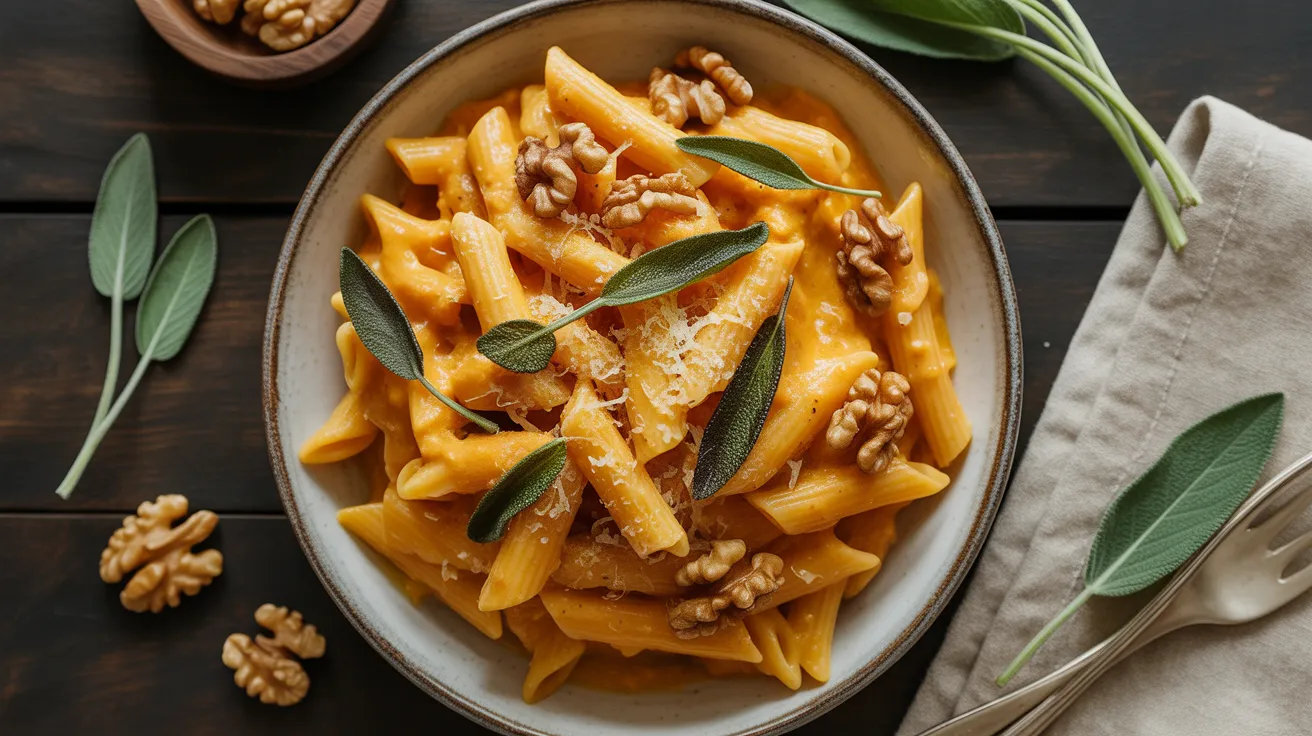
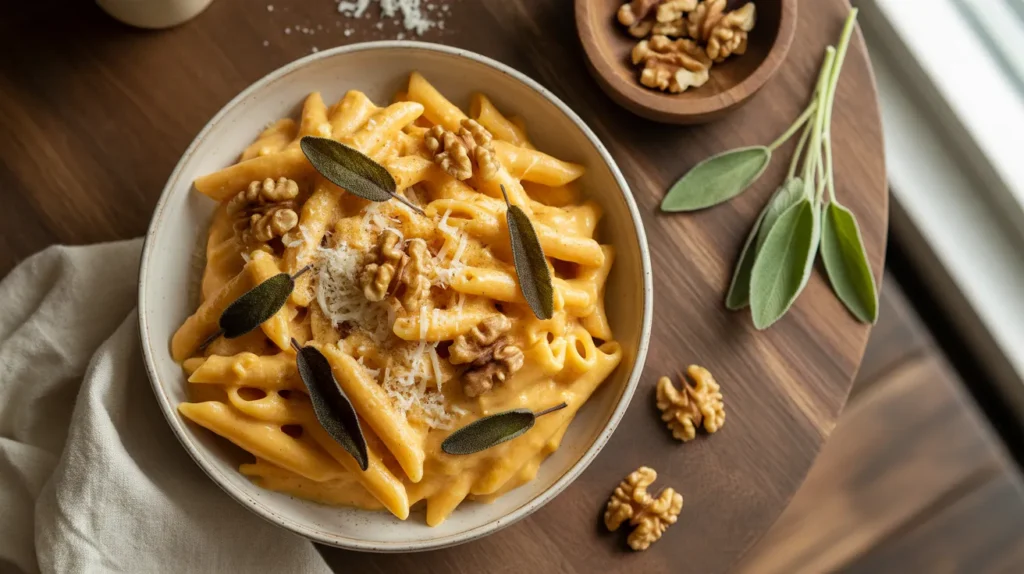
This creamy butternut squash pasta with sage and walnuts transforms simple fall ingredients into an elegant restaurant-quality dish. The roasted squash creates a silky sauce that clings to every strand of pasta, while crispy sage and toasted walnuts add texture and depth. Whether you’re cooking for a weeknight dinner or entertaining guests, this creamy butternut squash pasta with sage and walnuts delivers comfort and sophistication in every bite.
SERVES: 4 | PREP: 20 MIN | COOK: 35 MIN | TOTAL: 55 MIN
Ingredients
For the Butternut Squash Sauce
| Ingredient | Amount |
|---|---|
| Butternut squash (peeled, cubed) | 3 cups |
| Olive oil | 2 tablespoons |
| Garlic cloves (whole) | 4 cloves |
| Salt | 1 teaspoon |
| Black pepper | ½ teaspoon |
| Vegetable broth | 1½ cups |
| Heavy cream | ½ cup |
| Parmesan cheese (grated) | ½ cup |
| Nutmeg (ground) | ¼ teaspoon |
For the Pasta & Toppings
| Ingredient | Amount |
|---|---|
| Pasta (penne or rigatoni) | 12 ounces |
| Fresh sage leaves | 16 leaves |
| Walnuts (chopped) | ¾ cup |
| Butter | 3 tablespoons |
| Reserved pasta water | ½ cup |
| Extra Parmesan for serving | ¼ cup |
| Red pepper flakes (optional) | ¼ teaspoon |
Step-by-Step Instructions
Phase 1: Roasting the Butternut Squash (20 minutes)
Step 1: Preheat your oven to 400°F (200°C). Line a large baking sheet with parchment paper to prevent sticking and make cleanup easier.
Step 2: Spread the 3 cups butternut squash cubes in a single layer on the prepared baking sheet. Make sure the pieces aren’t touching—overcrowding causes steaming instead of roasting, which means you’ll miss out on that caramelized flavor.
Step 3: Toss the squash with 2 tablespoons olive oil, 4 whole garlic cloves, 1 teaspoon salt, and ½ teaspoon black pepper. Use your hands to coat everything evenly. The garlic will become sweet and buttery as it roasts.
Step 4: Roast for 25-30 minutes, flipping halfway through with a spatula. You’re looking for golden brown edges and fork-tender flesh. The squash should pierce easily and have caramelized spots—this sweetness is what makes your sauce incredible.
Phase 2: Creating the Creamy Sauce (10 minutes)
Step 5: Transfer the roasted squash and garlic to a blender. Add 1½ cups vegetable broth and blend on high speed for 60-90 seconds until completely smooth. The mixture should look like thick, silky soup with no chunks remaining.
Step 6: Pour the blended squash mixture into a large skillet over medium heat. Stir in ½ cup heavy cream, ½ cup grated Parmesan, and ¼ teaspoon nutmeg. The nutmeg enhances the natural sweetness of the squash without being noticeable—it’s a secret flavor booster.
Step 7: Simmer the sauce for 5 minutes, stirring occasionally. It will thicken slightly and become glossy. Taste and adjust the salt if needed. The sauce should coat the back of a spoon.
Phase 3: Cooking the Pasta (12 minutes)
Step 8: Bring a large pot of salted water to a rolling boil. Use 1 tablespoon salt per 4 quarts of water—the pasta should taste slightly salty on its own.
Step 9: Add 12 ounces pasta and cook according to package directions minus 1 minute. We’re aiming for just shy of al dente because the pasta will continue cooking in the sauce.
Step 10: Before draining, use a measuring cup to scoop out ½ cup pasta water. This starchy liquid is gold—it helps the sauce cling to the pasta and adjusts the consistency perfectly.
Phase 4: Preparing the Crispy Toppings (8 minutes)
Step 11: While the pasta cooks, heat 3 tablespoons butter in a small skillet over medium heat. When it starts foaming, add 16 fresh sage leaves. They’ll sizzle immediately—that’s good!
Step 12: Fry the sage for 2-3 minutes until crispy and dark green. Watch carefully; sage goes from perfect to burnt in seconds. Remove with a slotted spoon to a paper towel. They’ll crisp up more as they cool.
Step 13: In the same butter, toast ¾ cup chopped walnuts for 3-4 minutes, stirring constantly. They’re ready when fragrant and one shade darker. This step releases their oils and intensifies their flavor. If you’re preparing a simpler version, you might enjoy creamy roasted butternut squash pasta which uses fewer toppings.
Phase 5: Combining Everything (5 minutes)
Step 14: Drain the pasta and immediately add it to the skillet with the butternut squash sauce. Toss vigorously for 1 minute to coat every piece.
Step 15: Add ¼ cup of the reserved pasta water and continue tossing. The sauce should loosen and become glossy, not thick or gloppy. Add more pasta water 1 tablespoon at a time if needed.
Step 16: Crumble half the crispy sage leaves into the pasta and toss gently. Reserve the rest for garnish.
Step 17: Plate the pasta in four bowls. Top each serving with the remaining crispy sage, toasted walnuts, extra Parmesan, and a pinch of red pepper flakes if desired.
Chef’s Notes
Squash Selection Matters: Look for butternut squash that feels heavy for its size with a matte, not shiny, skin. Pre-cut squash from the produce section saves time, but fresh whole squash has better flavor and texture.
Sauce Consistency Control: The creamy butternut squash pasta with sage and walnuts should have a sauce that coats the pasta but doesn’t pool in the bottom of the bowl. Start with less pasta water and add more as needed—you can always thin the sauce but can’t thicken it easily.
Sage Substitute: If fresh sage isn’t available, use fresh thyme or rosemary. Dried sage doesn’t work well here because it lacks the crispy texture and bright flavor. Fresh herbs are key to this dish’s character.
Make It Vegan: Replace heavy cream with full-fat coconut milk or cashew cream, and swap Parmesan with nutritional yeast. The butternut squash provides enough richness that the dish still tastes indulgent.
Nutrition Information (Per Serving)
- Calories: 625
- Protein: 18g
- Carbohydrates: 72g
- Fat: 31g
- Fiber: 7g
- Sugar: 6g
- Sodium: 780mg
Variations to Try
Protein Addition: Stir in 1 pound cooked Italian sausage (crumbled) or 2 cups shredded rotisserie chicken in Step 15. The savory meat balances the sweet squash beautifully.
Spicy Version: Add ½ teaspoon red pepper flakes to the sauce in Step 6 and top with ¼ cup crispy pancetta. If you enjoy butternut squash with heat, try creamy butternut squash butter chicken for a completely different flavor profile.
Greens Boost: Toss in 3 cups fresh spinach or 2 cups kale (stems removed, chopped) in Step 15. The residual heat wilts the greens perfectly, adding nutrition and color.
Brown Butter Upgrade: Instead of regular butter for the sage, use browned butter. Cook the butter until it smells nutty and turns amber, then add the sage. This adds an incredible depth of flavor.
Storage & Reheating
Refrigerator Storage: Store leftover creamy butternut squash pasta with sage and walnuts in an airtight container for up to 3 days. Keep the crispy sage and walnuts separate in a small container at room temperature—they’ll stay crunchy.
Reheating: Add the pasta to a skillet with 2-3 tablespoons water or broth over medium heat. Stir gently until heated through, about 5 minutes. Don’t microwave—it makes the pasta gummy and the sauce separates.
Freezing: Freeze the sauce alone (before adding pasta) for up to 2 months. Thaw overnight in the refrigerator. Cook fresh pasta and toss with reheated sauce for best results. Cooked pasta doesn’t freeze well for this dish.
Make-Ahead Strategy: Roast the squash and make the sauce up to 2 days ahead. Store in the refrigerator. When ready to serve, cook the pasta fresh and reheat the sauce gently, then combine everything.
Troubleshooting Common Problems
Problem 1: Sauce is Too Thick Your sauce looks like paste instead of silky cream. Add warm pasta water 1 tablespoon at a time while stirring vigorously. The starch in the pasta water helps emulsify the sauce. If you’ve already plated the pasta, heat ¼ cup broth and drizzle it over each serving.
Problem 2: Sauce is Too Watery You added too much liquid and now the sauce won’t cling to the pasta. Return the entire mixture to the skillet over medium-high heat and cook uncovered for 3-4 minutes, stirring constantly. The excess moisture will evaporate, and the sauce will thicken. Sprinkle in 2 tablespoons extra Parmesan while cooking—the cheese helps bind everything.
Problem 3: Sage Burned or Tastes Bitter Burnt sage ruins the dish with a bitter, acrid flavor. If this happens, discard the burnt sage and start fresh with new leaves and butter. Watch the skillet constantly and reduce heat to medium-low if the butter starts browning too fast. Perfect crispy sage takes 2-3 minutes maximum.
Problem 4: Pasta is Gummy or Clumpy The pasta overcooked or sat too long without sauce. If caught early, immediately rinse under cold water to stop cooking, then toss with 1 tablespoon olive oil to separate. Reheat in the sauce. If the pasta is already mushy, unfortunately you’ll need to cook fresh pasta—overcooked pasta can’t be fixed.
Problem 5: Sauce Tastes Bland The natural sweetness of butternut squash is mild, so seasoning is crucial. Add ½ teaspoon salt to the sauce and taste again. Squeeze ½ lemon over the finished dish—acid brightens all the flavors. Top with extra Parmesan and black pepper. The nutmeg should be subtle; if you can’t taste complexity, add another pinch.
Equipment Essentials
- Large baking sheet with parchment paper
- High-speed blender or food processor
- Large skillet (12-inch) for sauce
- Large pot (6-quart) for pasta
- Small skillet (8-inch) for sage and walnuts
- Sharp vegetable peeler for squash
- Measuring cups and spoons
- Colander for draining pasta
- Slotted spoon for removing sage
- Wooden spoon or silicone spatula
Shopping List by Store Section
Produce Section:
- 1 medium butternut squash (about 2 pounds) or 3 cups pre-cut
- 1 package fresh sage (you need 16 leaves)
- 1 head garlic (you need 4 cloves)
Dairy Section:
- 1 cup heavy cream (only need ½ cup)
- 8 ounces Parmesan cheese (for ¾ cup grated)
- Butter (need 3 tablespoons)
Pasta & Grains Aisle:
- 12 ounces penne or rigatoni pasta
Baking Section:
- Raw walnut pieces (need ¾ cup)
Canned Goods:
- 1 can (14.5 oz) vegetable broth
Spices & Oils:
- Olive oil
- Ground nutmeg
- Red pepper flakes (optional)
- Salt and black pepper
Success Secrets
1. Room Temperature Cream: Take the heavy cream out of the refrigerator 30 minutes before cooking. Cold cream can cause the sauce to seize or become grainy when mixed with hot squash puree.
2. Cut Uniform Cubes: Dice the butternut squash into 1-inch cubes of similar size. Uneven pieces mean some will be mushy while others are undercooked, creating a lumpy sauce with an unpleasant texture.
3. Reserve Enough Pasta Water: Always reserve more pasta water than you think you’ll need. You can’t go back and get more once the pasta is drained. The starchy water is the secret to restaurant-quality sauce texture.
4. Toss, Don’t Stir: When combining pasta with sauce, use a tossing motion by lifting and flipping with tongs or two forks. This distributes the sauce evenly and creates a glossy coating. Stirring can break the pasta.
5. Serve Immediately: This dish is best within 10 minutes of plating. The crispy sage and walnuts lose their texture as they sit, and the sauce thickens and becomes less appealing. Warm your serving bowls in a 200°F oven for 5 minutes before plating—hot bowls keep the pasta warm longer.
This creamy butternut squash pasta with sage and walnuts proves that simple seasonal ingredients can create something extraordinary. The combination of velvety squash sauce, crispy sage, and crunchy walnuts delivers different textures and flavors in every forkful.