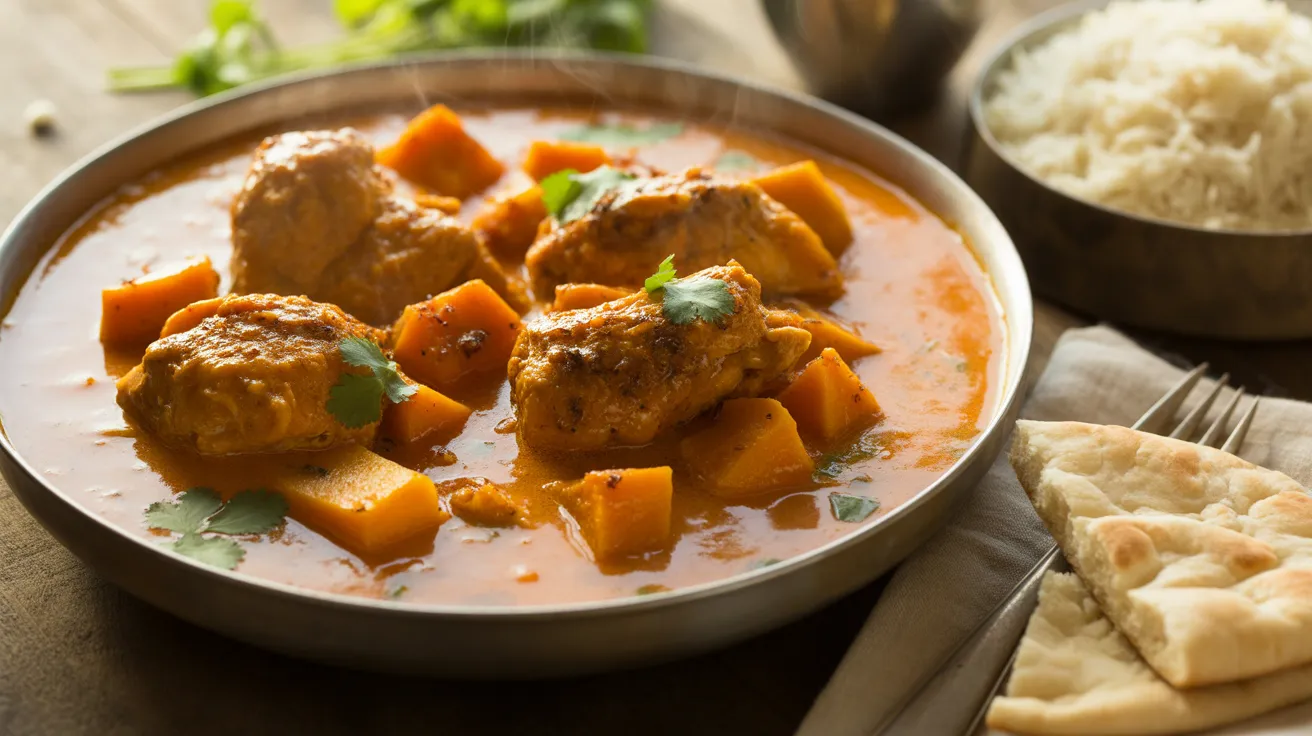
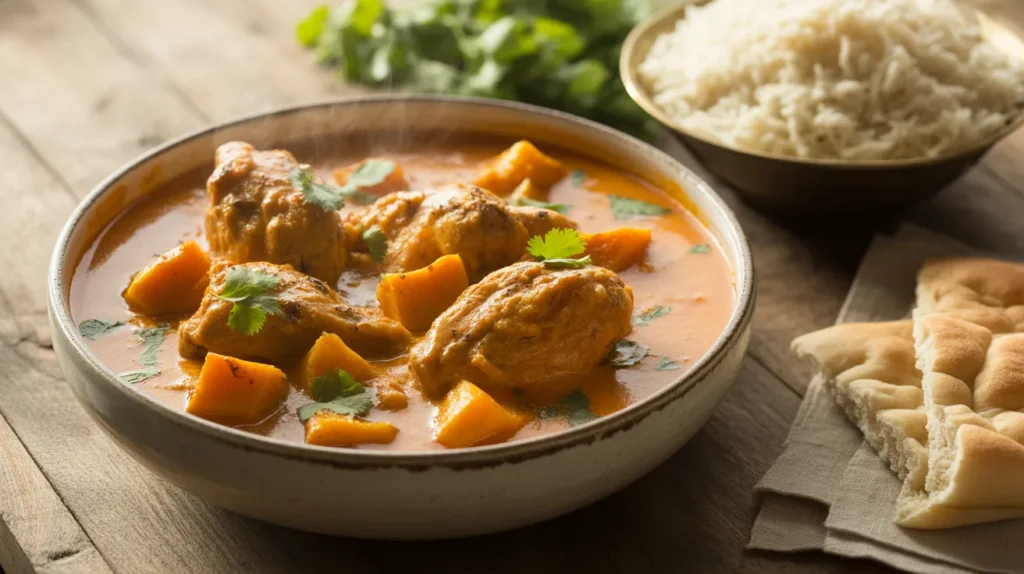
This creamy butternut squash butter chicken transforms traditional Indian butter chicken into a fall-inspired masterpiece that’s both comforting and elegant. Rich, velvety sauce meets tender chicken and sweet roasted squash in this creamy butternut squash butter chicken that’ll have your family asking for seconds every single time.
SERVES: 4 | PREP: 25 MIN | COOK: 45 MIN | TOTAL: 70 MIN
Ingredients
For the Chicken Marinade
| Ingredient | Amount |
|---|---|
| Boneless chicken thighs | 2 lbs, cut into 2-inch pieces |
| Plain yogurt | ½ cup |
| Garam masala | 1 tbsp |
| Ground cumin | 1 tsp |
| Paprika | 1 tsp |
| Salt | 1 tsp |
| Fresh ginger, grated | 1 tbsp |
| Garlic cloves, minced | 4 |
For the Butternut Squash
| Ingredient | Amount |
|---|---|
| Butternut squash, cubed | 3 cups (1-inch pieces) |
| Olive oil | 2 tbsp |
| Salt | ½ tsp |
| Black pepper | ¼ tsp |
For the Sauce
| Ingredient | Amount |
|---|---|
| Butter | 4 tbsp |
| Yellow onion, diced | 1 large |
| Garlic cloves, minced | 6 |
| Fresh ginger, grated | 2 tbsp |
| Tomato paste | 3 tbsp |
| Ground coriander | 2 tsp |
| Ground cumin | 1 tsp |
| Garam masala | 2 tsp |
| Cayenne pepper | ¼ tsp (adjust to taste) |
| Crushed tomatoes | 1 can (28 oz) |
| Heavy cream | 1 cup |
| Honey | 1 tbsp |
| Salt | 1 tsp (or to taste) |
| Fresh cilantro, chopped | ¼ cup (for garnish) |
Step-by-Step Instructions
Phase 1: Marinating the Chicken (10 minutes active, 15+ minutes resting)
Step 1: Combine ½ cup yogurt, 1 tbsp garam masala, 1 tsp cumin, 1 tsp paprika, 1 tsp salt, 1 tbsp grated ginger, and 4 minced garlic cloves in a large mixing bowl. Whisk everything together until the spices are completely blended into the yogurt and you have a smooth, rust-colored marinade. The yogurt acts as both a tenderizer and flavor carrier, so make sure every spice is well incorporated.
Step 2: Add your 2 lbs of chicken thigh pieces to the marinade. Use your hands or tongs to massage the marinade into every piece of chicken, ensuring complete coverage. The chicken should look completely coated with no bare spots visible. Cover the bowl with plastic wrap and refrigerate for at least 15 minutes, though 2-4 hours is ideal if you have time. The longer marination develops deeper flavors and ensures tender, juicy meat.
Phase 2: Roasting the Butternut Squash (25 minutes)
Step 3: Preheat your oven to 425°F. While it’s heating, line a large baking sheet with parchment paper or aluminum foil for easy cleanup. This high temperature is crucial for caramelizing the squash’s natural sugars and creating those delicious browned edges.
Step 4: Toss your 3 cups of cubed butternut squash with 2 tbsp olive oil, ½ tsp salt, and ¼ tsp black pepper in a bowl. Make sure every cube is lightly coated with oil—this ensures even browning and prevents sticking. Spread the squash in a single layer on your prepared baking sheet, leaving space between pieces so they roast rather than steam.
Step 5: Roast for 20-25 minutes, flipping the cubes halfway through at the 12-minute mark. You’re looking for tender pieces with golden-brown caramelized edges. A fork should pierce through easily, and you’ll see some darker spots where the natural sugars have caramelized. Set aside when done—we’ll add this to the sauce later for maximum flavor.
Phase 3: Searing the Chicken (10 minutes)
Step 6: Heat a large, deep skillet or Dutch oven over medium-high heat. Add 1 tbsp butter and let it melt completely, swirling to coat the bottom. The butter should sizzle but not turn brown—if it’s smoking, your heat is too high.
Step 7: Working in batches to avoid overcrowding, add the marinated chicken pieces in a single layer. You’ll hear an immediate sizzle when they hit the pan—that’s exactly what you want. Sear for 2-3 minutes per side until you see golden-brown color developing. You’re not cooking the chicken through yet, just creating that flavorful crust. Remove to a plate and repeat with remaining chicken, adding more butter if needed.
Phase 4: Building the Sauce (20 minutes)
Step 8: In the same pan (don’t clean it—all those browned bits are flavor gold), reduce heat to medium and add the remaining 3 tbsp butter. Once melted, add your diced onion and sauté for 5-7 minutes until soft and translucent. Stir frequently to prevent burning and to scrape up those delicious browned bits from the chicken.
Step 9: Add 6 minced garlic cloves and 2 tbsp grated ginger to the onions. Stir constantly for 1-2 minutes until incredibly fragrant. Your kitchen should smell amazing right now. Watch carefully here—garlic burns quickly and turns bitter, so keep it moving in the pan.
Step 10: Stir in 3 tbsp tomato paste, 2 tsp ground coriander, 1 tsp cumin, 2 tsp garam masala, and ¼ tsp cayenne pepper. Cook for 2 minutes, stirring constantly. This step “blooms” the spices in the fat, which intensifies their flavors dramatically. The tomato paste should darken slightly and start to stick to the bottom of the pan.
Step 11: Pour in the 28 oz can of crushed tomatoes and stir well, scraping the bottom of the pan to release any stuck-on bits. Bring to a simmer, then reduce heat to medium-low and let the sauce bubble gently for 8-10 minutes. This cooking time allows the raw tomato flavor to mellow and the sauce to thicken slightly.
Step 12: Use an immersion blender right in the pan to puree the sauce until completely smooth, or carefully transfer to a regular blender (working in batches if needed). A smooth sauce is the signature of great butter chicken. Return to the pan if you used a regular blender.
Phase 5: Final Assembly (10 minutes)
Step 13: Stir in 1 cup heavy cream and 1 tbsp honey until the sauce turns a beautiful coral-pink color. The cream adds richness while the honey balances the tomato’s acidity. Taste and add 1 tsp salt or more as needed—this is your moment to get the seasoning perfect.
Step 14: Return the seared chicken pieces to the sauce along with any accumulated juices. Nestle them into the sauce and bring to a gentle simmer. Cook for 8-10 minutes until the chicken is cooked through (internal temperature of 165°F). The sauce will reduce slightly and cling to the chicken beautifully.
Step 15: Gently fold in your roasted butternut squash cubes, being careful not to break them apart. Let everything simmer together for 2-3 minutes so the squash absorbs some of that incredible sauce. The squash adds natural sweetness and a gorgeous fall color to your creamy butternut squash butter chicken.
Step 16: Remove from heat and garnish with ¼ cup fresh chopped cilantro. Serve immediately over basmati rice or with warm naan bread for scooping up every bit of that luscious sauce.
Chef’s Notes
Chicken Choice Matters: I always use boneless chicken thighs for this creamy butternut squash butter chicken because they stay incredibly moist and tender during cooking. Chicken breasts work too, but reduce cooking time in Step 14 to 6-7 minutes to prevent drying out.
Make It Ahead: The sauce base (through Step 12) can be made 2 days ahead and refrigerated. When ready to serve, reheat the sauce, then continue with Steps 13-16. This actually improves the flavor as the spices have more time to meld.
Spice Level Control: The ¼ tsp cayenne gives gentle warmth, not heat. Double it if you like spicy food, or omit entirely for kid-friendly versions. You can always serve hot sauce on the side for those who want extra kick.
Squash Shortcut: No time to roast? You can sauté the cubed squash in butter for 8-10 minutes until tender, but you’ll miss those caramelized edges that add depth to the dish. If you’re already making creamy butternut squash pasta with sage, prep extra squash and roast it all at once.
Nutrition Information (Per Serving)
| Nutrient | Amount |
|---|---|
| Calories | 625 |
| Protein | 42g |
| Carbohydrates | 38g |
| Fat | 35g |
| Fiber | 6g |
| Sugar | 14g |
| Sodium | 890mg |
Variations to Try
Coconut Cream Version: Swap the heavy cream for full-fat coconut milk for a dairy-free twist that adds subtle tropical notes. The sauce becomes slightly thinner, so simmer an extra 3-4 minutes to thicken.
Sweet Potato Swap: Replace butternut squash with cubed sweet potatoes for a different flavor profile. They’re slightly denser, so roast for 30 minutes instead of 25. The earthier sweetness pairs beautifully with the warming spices.
Vegetarian Transformation: Skip the chicken and double the butternut squash to 6 cups, adding 2 cans of chickpeas (drained and rinsed) in Step 14. This creates a hearty vegetarian version that’s just as satisfying. Similar to how we use squash in this butternut squash quinoa salad, the vegetable becomes the star.
Spinach Addition: Stir in 4 cups fresh spinach during the last 2 minutes of cooking for added nutrition and color. The spinach wilts into the sauce and adds a subtle earthy note that complements the sweet squash.
Storage & Reheating
Refrigerator: Store leftover creamy butternut squash butter chicken in an airtight container for up to 4 days. The flavors actually deepen overnight, making this an excellent meal prep option.
Freezer: Freeze in portion-sized containers for up to 3 months. The squash may become slightly softer after thawing, but the flavor remains excellent. Let thaw overnight in the refrigerator before reheating.
Reheating: Warm gently on the stovetop over medium-low heat, stirring occasionally. Add a splash of cream or chicken broth if the sauce has thickened too much. Microwave reheating works too—use 50% power and stir every minute to prevent the cream from separating.
Make-Ahead Tip: This dish tastes even better the next day. Make it completely, refrigerate overnight, and simply reheat before serving. The spices meld beautifully and the chicken absorbs more of that incredible sauce.
Troubleshooting Common Issues
Problem: Sauce is too thin and watery
Solution: Simmer uncovered for an additional 5-10 minutes to reduce and thicken. You can also mix 1 tbsp cornstarch with 2 tbsp water and stir into the simmering sauce. Let it cook for 2 minutes—the sauce will thicken beautifully.
Problem: Chicken is dry and tough
Solution: You’ve overcooked it. Chicken thighs need just 8-10 minutes in the sauce at a gentle simmer, not a rolling boil. Always check internal temperature—pull it at 165°F exactly. Next time, marinate longer (up to 4 hours) for extra insurance against dryness.
Problem: Butternut squash cubes are falling apart
Solution: You’ve roasted them too long or stirred too vigorously. Cut larger cubes (1.5 inches instead of 1 inch) and fold them in very gently at the end. Some breaking apart is normal and actually makes the sauce thicker and more flavorful.
Problem: Sauce tastes too acidic or tomato-forward
Solution: Add another ½ tbsp honey or 1 tsp brown sugar to balance the acidity. Let it simmer for 2-3 more minutes. The sweetness from the squash helps, but sometimes tomatoes vary in acidity and need extra balancing.
Problem: Not enough spice flavor
Solution: Your spices may be old—ground spices lose potency after 6 months. Use fresh spices and remember to “bloom” them properly in Step 10. You can also add ½ tsp more garam masala at the very end for a flavor boost.
Equipment Essentials
- Large mixing bowl for marinating chicken
- Rimmed baking sheet for roasting squash
- Large deep skillet or Dutch oven (at least 12 inches) for cooking
- Immersion blender or regular blender for smooth sauce
- Sharp knife and cutting board for prep
- Measuring cups and spoons for accuracy
- Wooden spoon or silicone spatula for stirring
- Meat thermometer to check chicken doneness
- Tongs for flipping chicken and squash
Shopping List by Store Section
Produce:
- 1 medium butternut squash (about 2 lbs)
- 1 large yellow onion
- Fresh ginger root (about 3 inches)
- 2 heads garlic
- Fresh cilantro (1 bunch)
Meat:
- 2 lbs boneless, skinless chicken thighs
Dairy:
- Plain yogurt (at least ½ cup)
- Butter (1 stick)
- Heavy cream (1 cup)
Pantry:
- 1 can (28 oz) crushed tomatoes
- Tomato paste (small can)
- Olive oil
- Honey
Spices:
- Garam masala
- Ground cumin
- Ground coriander
- Paprika
- Cayenne pepper
- Salt and black pepper
Success Secrets
1. Don’t Skip the Marinade: Even 15 minutes makes a difference, but 2-4 hours transforms the chicken completely. The yogurt’s acidity breaks down proteins, creating incredibly tender meat that absorbs all those spice flavors deeply.
2. Roast Your Squash Properly: Those caramelized edges aren’t just pretty—they add a depth of sweetness and subtle nuttiness that makes this dish special. Single layer, high heat, and flipping halfway are non-negotiable steps.
3. Bloom Your Spices: Step 10 is where magic happens. Cooking the spices in butter for 2 minutes before adding liquid releases their essential oils and creates that restaurant-quality depth of flavor you can’t achieve by just stirring them into liquid.
4. Use Full-Fat Everything: This isn’t the time for low-fat yogurt or half-and-half. Full-fat yogurt prevents curdling during marinating, and heavy cream creates that signature silky texture. The richness is what makes butter chicken legendary.
5. Taste and Adjust at the End: Every batch of tomatoes is different, every palate is unique. After Step 13, taste your sauce and adjust—more salt, more honey for sweetness, more cayenne for heat, or more cream for richness. This final adjustment is what separates good from great.
Now you’re ready to create restaurant-quality creamy butternut squash butter chicken right in your own kitchen!