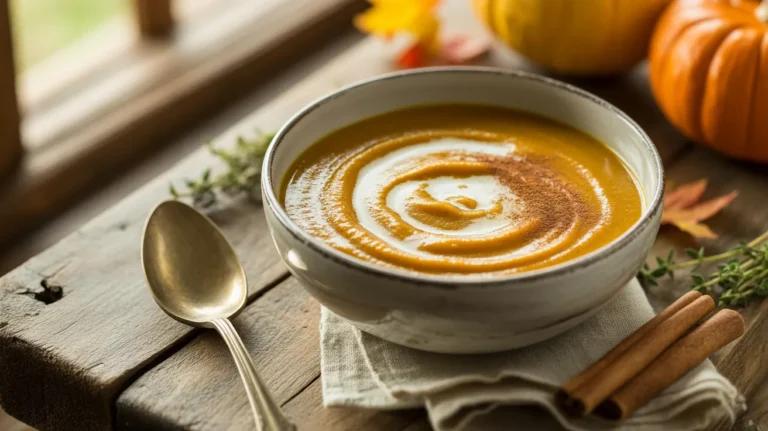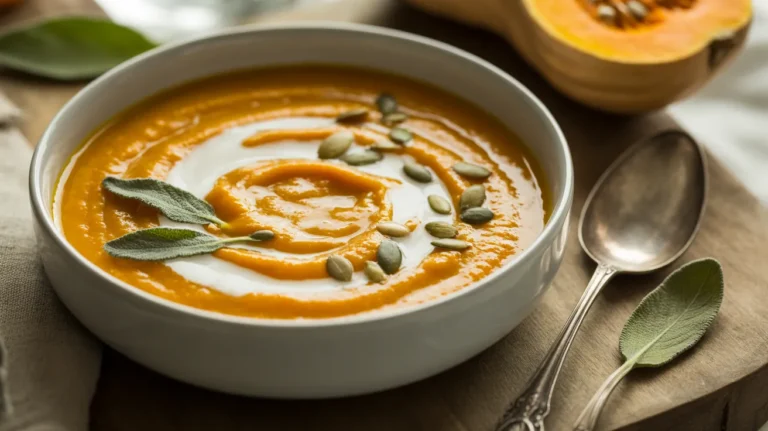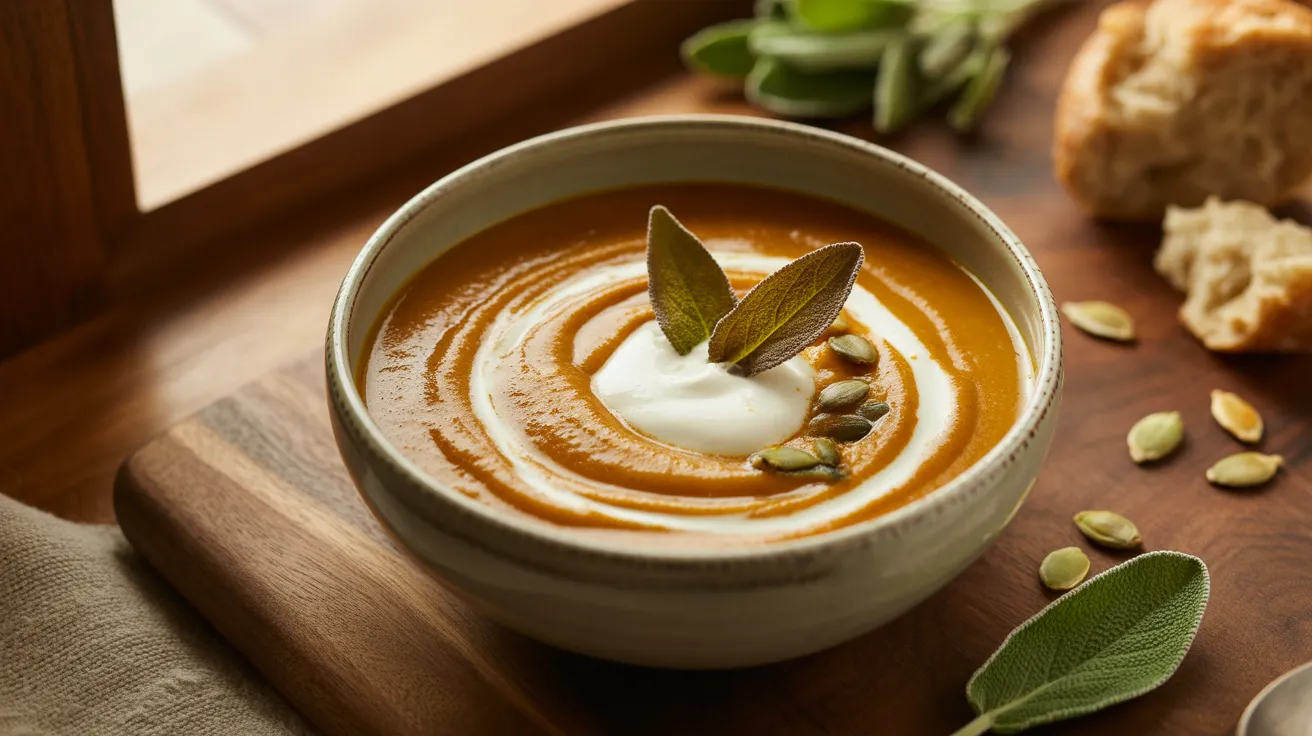
This pumpkin sage bisque brings together roasted pumpkin’s natural sweetness with fresh sage’s earthy warmth in a velvety-smooth bowl of comfort. Whether you’re hosting a fall dinner party or craving something cozy on a chilly evening, this pumpkin sage bisque delivers restaurant-quality results right from your own kitchen. I’ve tested this recipe dozens of times to get the texture just right—silky, luxurious, and full of flavor that’ll have everyone asking for seconds.
SERVES: 4 | PREP: 20 MIN | COOK: 45 MIN | TOTAL: 65 MIN
Ingredients
For the Roasted Pumpkin Base
| Ingredient | Amount |
|---|---|
| Sugar pumpkin (or pie pumpkin), peeled and cubed | 3 pounds |
| Olive oil | 2 tablespoons |
| Kosher salt | 1 teaspoon |
| Black pepper | ½ teaspoon |
For the Bisque
| Ingredient | Amount |
|---|---|
| Unsalted butter | 3 tablespoons |
| Yellow onion, diced | 1 medium |
| Garlic cloves, minced | 4 cloves |
| Fresh sage leaves | 12 leaves |
| Vegetable broth | 4 cups |
| Heavy cream | 1 cup |
| Maple syrup | 2 tablespoons |
| Ground nutmeg | ¼ teaspoon |
| Cayenne pepper | ⅛ teaspoon |
| Salt and pepper | to taste |
For Garnish
| Ingredient | Amount |
|---|---|
| Crème fraîche or sour cream | ¼ cup |
| Crispy sage leaves | 8 leaves |
| Toasted pumpkin seeds | 2 tablespoons |
Step-by-Step Instructions
Phase 1: Roasting the Pumpkin (25 minutes)
Step 1: Preheat your oven to 400°F and line a large baking sheet with parchment paper.
This prevents sticking and makes cleanup easier. The high heat caramelizes the pumpkin’s natural sugars, creating deeper flavor.
Step 2: Toss the 3 pounds of pumpkin cubes with 2 tablespoons olive oil, 1 teaspoon salt, and ½ teaspoon black pepper in a large bowl until every piece is coated.
Make sure your pumpkin pieces are roughly the same size (about 1-inch cubes) so they roast evenly. If some pieces are much larger, they’ll still be hard when the smaller ones are done.
Step 3: Spread the pumpkin in a single layer on the prepared baking sheet, making sure the pieces aren’t touching or overlapping.
Crowded pumpkin steams instead of roasts, and you’ll miss out on those delicious caramelized edges. Use two baking sheets if needed.
Step 4: Roast for 25-30 minutes, flipping the pieces halfway through, until the pumpkin is fork-tender and has golden-brown edges.
You’re looking for pieces that easily break apart when pressed with a fork. The browned spots add a slightly sweet, nutty flavor that makes this bisque special.
Phase 2: Building the Flavor Base (15 minutes)
Step 5: While the pumpkin roasts, melt 3 tablespoons butter in a large pot or Dutch oven over medium heat until it stops foaming.
The butter should sizzle gently but not brown. If it starts smoking, your heat is too high—reduce it immediately.
Step 6: Add the diced onion and cook for 5-7 minutes, stirring occasionally, until the onion turns translucent and soft.
You want the onion to soften and sweeten, not brown. If the edges start browning, lower your heat and add a splash of broth to cool things down.
Step 7: Stir in the 4 minced garlic cloves and cook for 1 minute until fragrant.
Garlic burns quickly, so keep stirring during this step. You’ll smell a wonderful aroma when it’s ready—sweet and pungent but not bitter.
Step 8: Add 10 fresh sage leaves (save 2 for later) and cook for 30 seconds, stirring constantly.
Fresh sage releases its oils when heated, creating that signature earthy, slightly peppery flavor. The leaves will darken slightly and become very fragrant.
Phase 3: Simmering and Blending (20 minutes)
Step 9: Add the roasted pumpkin to the pot, then pour in 4 cups vegetable broth.
Scrape up any browned bits from the bottom of the pot—those are pure flavor. If you’re working with a soup that has similar richness, like this vegan pumpkin wild rice soup, you’ll notice how the base ingredients create different textures.
Step 10: Bring the mixture to a boil over high heat, then reduce to a simmer and cook for 15 minutes to let the flavors blend together.
The pumpkin will start breaking down and the broth will reduce slightly. This step helps all the flavors marry together beautifully.
Step 11: Remove the pot from heat and use an immersion blender to puree the soup until completely smooth, about 2-3 minutes.
Work in a circular motion and move the blender up and down to catch all the chunks. If you don’t have an immersion blender, carefully transfer the hot soup in batches to a regular blender, filling it only halfway each time to prevent dangerous splatters.
Step 12: Return the pot to medium-low heat and stir in 1 cup heavy cream, 2 tablespoons maple syrup, ¼ teaspoon nutmeg, and ⅛ teaspoon cayenne pepper.
Add the cream slowly while stirring to prevent curdling. The maple syrup balances the earthiness of the sage, while the cayenne adds subtle warmth without making it spicy.
Step 13: Simmer gently for 5 minutes to let the cream fully incorporate, stirring occasionally.
Don’t let it boil once the cream is added, or you risk breaking the silky texture. Just gentle bubbles around the edges are perfect.
Step 14: Taste and adjust seasoning with salt and black pepper as needed.
Start with ½ teaspoon salt and add more gradually. The seasoning should enhance the pumpkin’s natural sweetness without overpowering it.
Phase 4: Finishing Touches (5 minutes)
Step 15: For the crispy sage garnish, heat 1 tablespoon butter in a small skillet over medium-high heat.
Watch the butter closely—it should foam and sizzle but not turn brown.
Step 16: Add the remaining 2 fresh sage leaves plus 6 more leaves and fry for 20-30 seconds per side until crispy but still green.
The leaves should curl and become translucent around the edges. Remove them immediately when they’re crispy but before they turn brown, or they’ll taste bitter.
Step 17: Drain the fried sage on a paper towel and sprinkle lightly with salt.
These crispy sage leaves add incredible texture contrast to the creamy bisque.
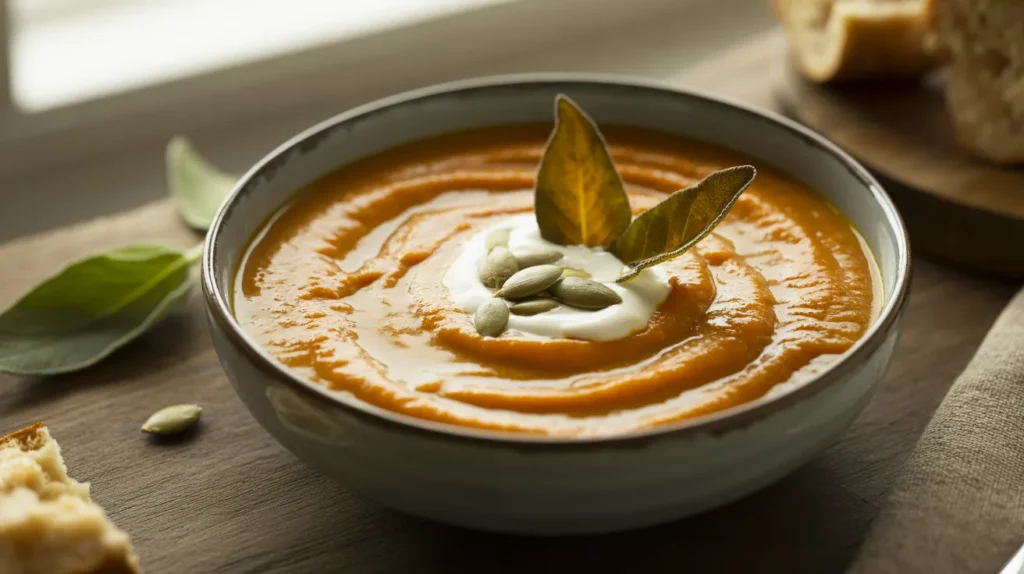
Step 18: Ladle the hot bisque into bowls and top each serving with a dollop of crème fraîche, 2 crispy sage leaves, and toasted pumpkin seeds.
Serve immediately while the bisque is steaming hot and the sage garnish is still crispy.
Chef’s Notes
Pumpkin Selection: Sugar pumpkins (also called pie pumpkins) are smaller and sweeter than carving pumpkins. They have denser flesh that creates a creamier bisque. You’ll find them at most grocery stores during fall, usually weighing 2-3 pounds each.
Fresh vs. Dried Sage: Fresh sage is non-negotiable for this pumpkin sage bisque recipe. Dried sage has a dusty, medicine-like flavor that won’t give you the same results. If you absolutely must substitute, use 1 teaspoon dried sage for every 8 fresh leaves, but expect a different flavor profile.
Cream Options: Heavy cream creates the richest texture, but you can use half-and-half for a lighter version. Avoid milk—it’s too thin and can curdle when simmered. For dairy-free, full-fat coconut cream works beautifully and adds a subtle tropical note.
Make-Ahead Secret: This bisque actually tastes better the next day after the flavors have had time to develop. Make it up to 3 days ahead, store it in the fridge, and gently reheat before serving.
Nutrition Information (Per Serving)
| Nutrient | Amount |
|---|---|
| Calories | 385 |
| Protein | 6g |
| Carbohydrates | 38g |
| Fat | 25g |
| Fiber | 5g |
| Sugar | 14g |
| Sodium | 890mg |
Delicious Variations
Spicy Southwest Version: Add 1 teaspoon cumin, ½ teaspoon smoked paprika, and 1 diced jalapeño with the onions. Top with cilantro and a squeeze of lime instead of crème fraîche. If you enjoy warming spices in soup, you might also love this cinnamon pumpkin soup that takes pumpkin in a sweet-spicy direction.
Harvest Apple Bisque: Replace 1 pound of pumpkin with 2 peeled, diced Granny Smith apples. The tartness balances beautifully with the sage’s earthiness and adds extra complexity to each spoonful.
Roasted Garlic Upgrade: Use 2 whole heads of roasted garlic instead of raw garlic. Squeeze the soft, caramelized cloves into the soup for a sweeter, mellower garlic flavor that won’t overpower the delicate pumpkin.
Smoky Bacon Bisque: Render 6 strips of chopped bacon before starting, use the bacon fat instead of butter, and crumble the cooked bacon on top. The smoky, salty pork adds incredible depth and makes this bisque more substantial.
Storage & Reheating
Refrigerator Storage: Let the bisque cool completely before transferring to an airtight container. It’ll keep for 4-5 days in the fridge. The flavors actually deepen over time, making leftovers even more delicious.
Freezing Instructions: This bisque freezes beautifully for up to 3 months. Store in freezer-safe containers, leaving 1 inch of headspace for expansion. Label with the date and reheat within three months for best quality.
Reheating Method: Reheat gently on the stovetop over medium-low heat, stirring frequently. Add a splash of broth or cream if it’s thickened too much. Don’t microwave—it can cause the cream to separate and create an unpleasant texture.
Garnish Fresh: Always make crispy sage and add garnishes right before serving. The fried sage leaves will get soggy if added too early, and you’ll lose that wonderful texture contrast.
Troubleshooting Common Problems
Problem 1: Bisque is too thick Add ¼ cup of vegetable broth at a time, stirring well between additions. The bisque thickens as it cools and after sitting overnight, so it’s better to make it slightly thinner than you think you need. You can always simmer it longer to reduce and thicken.
Problem 2: Cream curdled or separated This happens when the soup is too hot when you add the cream or if you boil it afterward. Unfortunately, there’s no fix once it curdles. Prevent this by reducing heat to low before adding cream and never letting it boil. If it happens, strain through a fine-mesh sieve to remove the curds, though the texture won’t be perfect.
Problem 3: Bisque tastes bland or one-dimensional You probably didn’t season enough or skipped roasting the pumpkin. Add salt 1 teaspoon at a time until the flavors pop. A squeeze of fresh lemon juice (1 tablespoon) can also brighten flat flavors. The roasting step is crucial—it concentrates the sugars and adds depth that steamed or boiled pumpkin can’t provide.
Problem 4: Sage flavor is too weak or too strong Fresh sage’s potency varies by season and source. If it’s too weak, fry a few more leaves and crumble them directly into the soup. If it’s too strong and almost medicinal, dilute with more cream and broth in equal parts (½ cup each) until balanced.
Problem 5: Bisque has grainy texture instead of silky smooth Your blender didn’t run long enough. Blend for a full 3-4 minutes, pausing occasionally to scrape down the sides. For ultra-smooth results, strain through a fine-mesh sieve after blending, pressing with a spatula to push everything through. Some pumpkin varieties have more fiber, which can create graininess no matter how long you blend.
Equipment Essentials
- Large baking sheet – For roasting pumpkin; rimmed edges prevent oil from dripping
- Parchment paper – Prevents sticking and makes cleanup effortless
- Large heavy-bottomed pot or Dutch oven (5-6 quarts) – Even heat distribution prevents scorching
- Immersion blender – Makes pureeing safer and easier; standard blender works but requires careful batch processing
- Sharp chef’s knife – For safely cutting through tough pumpkin skin
- Vegetable peeler – Removes pumpkin skin more efficiently than a knife
- Large mixing bowl – For tossing pumpkin with oil and seasonings
- Wooden spoon – Won’t scratch your pot and handles high heat
- Small skillet – For frying sage leaves to crispy perfection
- Fine-mesh strainer (optional) – For ultra-smooth texture if desired
- Ladle – For serving without splashing or dripping
Shopping List (Organized by Store Section)
Produce:
- Sugar pumpkin (3 pounds)
- Yellow onion (1 medium)
- Fresh garlic (1 head)
- Fresh sage (1 bunch, about 20 leaves)
Dairy:
- Unsalted butter (1 stick)
- Heavy cream (8 oz carton)
- Crème fraîche or sour cream (small container)
Pantry:
- Olive oil
- Vegetable broth (32 oz container)
- Maple syrup (pure, not pancake syrup)
- Ground nutmeg
- Cayenne pepper
- Kosher salt
- Black pepper
- Pumpkin seeds (toasted, from bulk bins or snack aisle)
Success Secrets
1. Don’t Skip Roasting: Roasting the pumpkin instead of boiling it concentrates the sugars and develops caramelization that creates deeper, more complex flavor. Boiled pumpkin makes watery, bland soup.
2. Temperature Control is Everything: Keep the heat at medium-low once the cream is added. High heat causes the cream to separate and creates an unappealing, grainy texture that ruins the luxurious mouthfeel.
3. Blend Longer Than You Think: Most people under-blend their bisque. Run your immersion blender for a full 3-4 minutes, moving it around the pot in circles. The extra time creates that restaurant-quality silky texture.
4. Season in Stages: Add salt after sautéing the onions, after adding the broth, and again after adding the cream. Layering your seasoning creates more balanced, developed flavor than adding it all at once.
5. Fresh Garnishes Matter: The crispy sage, crème fraîche, and pumpkin seeds aren’t just decoration—they provide crucial textural contrast and flavor brightness that make each spoonful interesting. Don’t skip them.