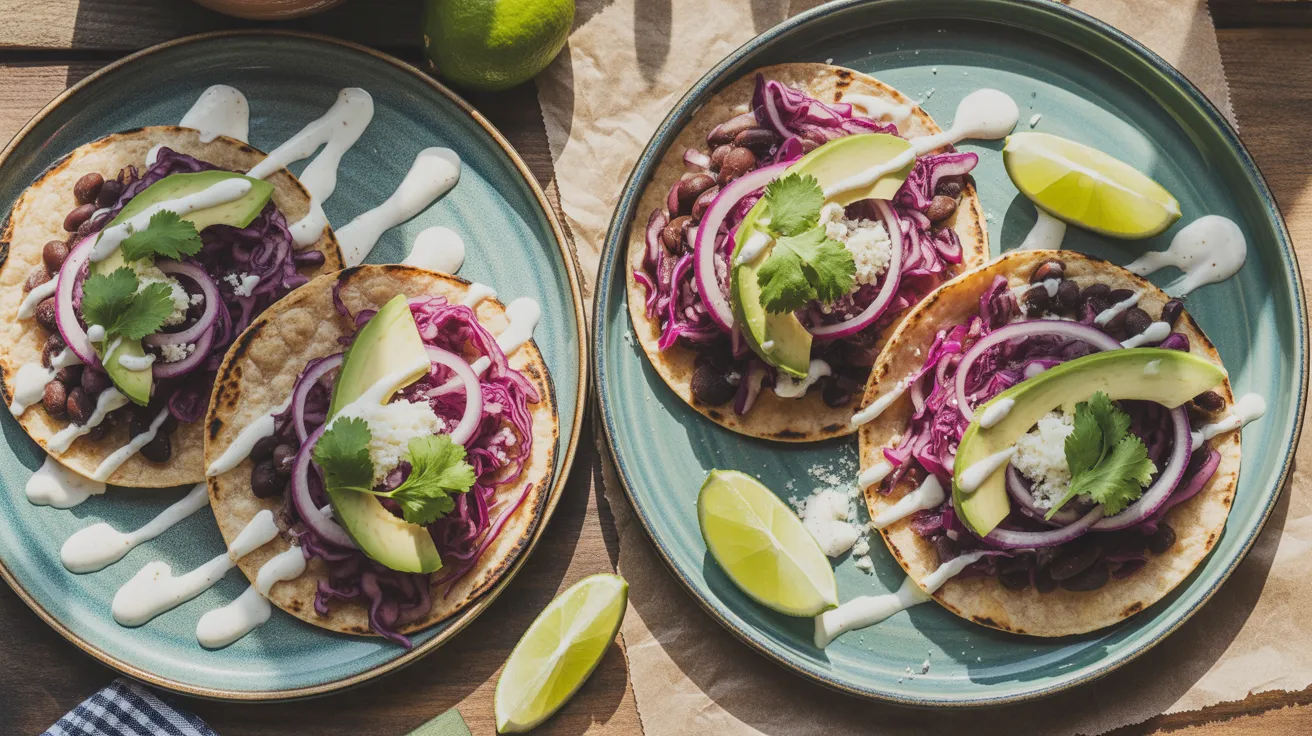
These fermented cabbage tacos bring tangy, probiotic-packed flavor to your dinner table with crispy tortillas, zingy sauerkraut-style cabbage, and a kick of spicy crema. I’ve been making fermented cabbage tacos for years, and they’ve become my go-to weeknight meal when I want something healthy, flavorful, and totally satisfying. The fermented cabbage adds that perfect sour punch while keeping things light and fresh.
SERVES: 4 | PREP: 25 MIN | COOK: 15 MIN | TOTAL: 40 MIN (plus 3-7 days fermentation)
Ingredients
For the Fermented Cabbage
| Ingredient | Amount |
|---|---|
| Green cabbage, shredded | 4 cups |
| Kosher salt | 2 tablespoons |
| Garlic cloves, minced | 3 cloves |
| Jalapeño, thinly sliced | 1 pepper |
| Caraway seeds | 1 teaspoon |
| Black peppercorns | 1/2 teaspoon |
For the Spicy Crema
| Ingredient | Amount |
|---|---|
| Sour cream | 1 cup |
| Chipotle peppers in adobo, minced | 2 peppers |
| Lime juice | 2 tablespoons |
| Garlic powder | 1/2 teaspoon |
| Salt | 1/4 teaspoon |
For Assembly
| Ingredient | Amount |
|---|---|
| Corn tortillas (6-inch) | 12 tortillas |
| Black beans, drained and rinsed | 1 can (15 oz) |
| Avocado, sliced | 2 avocados |
| Fresh cilantro, chopped | 1/2 cup |
| Red onion, thinly sliced | 1/2 onion |
| Lime wedges | 8 wedges |
| Cotija cheese, crumbled | 1/2 cup |
| Vegetable oil | 2 tablespoons |
Instructions
Phase 1: Fermenting the Cabbage (3-7 Days Before Serving)
Step 1: Place your shredded 4 cups cabbage in a large, clean glass or ceramic bowl. This is the foundation of your fermented cabbage tacos, so make sure your bowl is spotless to prevent unwanted bacteria growth.
Step 2: Sprinkle 2 tablespoons kosher salt over the cabbage and start massaging it aggressively with your hands for 5-7 minutes. You’ll notice the cabbage starting to release liquid and become softer—this is exactly what you want. The salt draws out moisture and creates the brine needed for fermentation.
Step 3: Add 3 minced garlic cloves, 1 sliced jalapeño, 1 teaspoon caraway seeds, and 1/2 teaspoon black peppercorns to the cabbage mixture. Mix everything thoroughly with your hands, making sure the seasonings are evenly distributed throughout.
Step 4: Pack the cabbage mixture tightly into a clean 1-quart mason jar or fermentation crock, pressing down firmly with your fist or a wooden spoon. You want to eliminate air pockets because oxygen can cause mold growth during fermentation.
Step 5: Pour any liquid that accumulated in the bowl over the packed cabbage. The cabbage should be completely submerged under its own brine—if it’s not, mix 1 cup water with 1 teaspoon salt and pour enough over to cover.
Step 6: Place a smaller jar filled with water on top of the cabbage to keep it submerged, or use a fermentation weight if you have one. Cover the jar loosely with a clean kitchen towel secured with a rubber band—never seal it tightly, as fermentation produces gas that needs to escape.
Step 7: Set the jar in a cool, dark place away from direct sunlight at 65-75°F room temperature. Check it daily, pressing down the cabbage if it floats above the brine, and skim off any white film that forms on top (this is harmless kahm yeast, not mold).
Step 8: Taste the fermented cabbage after 3 days—it should be tangy and slightly sour. Let it ferment up to 7 days for a stronger, more complex flavor. Once it reaches your preferred tanginess, cover it with a tight lid and refrigerate for up to 3 months.
Phase 2: Preparing the Spicy Crema (15 Minutes Before Serving)
Step 9: In a medium bowl, combine 1 cup sour cream, 2 minced chipotle peppers in adobo, 2 tablespoons lime juice, 1/2 teaspoon garlic powder, and 1/4 teaspoon salt. Whisk everything together until smooth and creamy.
Step 10: Taste the crema and adjust the heat level—if you want it spicier, add another minced chipotle pepper. If it’s too thick for drizzling, thin it with 1-2 tablespoons water until it reaches a pourable consistency. Set aside in the refrigerator while you prepare the other components.
Phase 3: Warming the Beans and Assembling Tacos (10 Minutes)
Step 11: Heat 2 tablespoons vegetable oil in a medium skillet over medium heat. Add your 15-ounce can of black beans and cook for 3-4 minutes, stirring occasionally, until they’re warmed through and slightly creamy. Mash about one-third of the beans with the back of your spoon to create a thicker consistency—this helps them cling to the tortillas better.
Step 12: Warm your 12 corn tortillas by placing them directly over a gas flame for 15-20 seconds per side until they’re lightly charred and pliable. If you don’t have a gas stove, heat them in a dry skillet over medium-high heat, flipping once until warm and slightly toasted. Stack them in a clean kitchen towel to keep them warm and soft.
Phase 4: Building Your Fermented Cabbage Tacos (5 Minutes)
Step 13: Lay out 3 tortillas per person on plates. Spread about 2 tablespoons warm black beans down the center of each tortilla, creating a base layer that prevents the fermented cabbage juices from making the tortilla soggy.
Step 14: Top each tortilla with a generous 1/3 cup fermented cabbage, letting the excess brine drip off first. The tangy, crunchy cabbage is what makes these fermented cabbage tacos special, so don’t be shy with it.
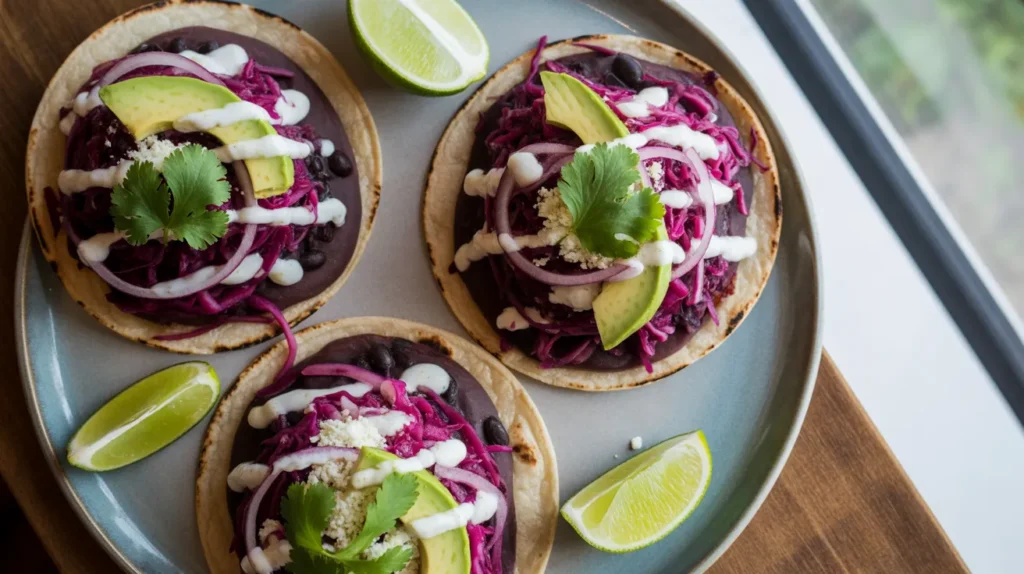
Step 15: Add 3-4 avocado slices, 2-3 red onion rings, and a sprinkle of fresh cilantro to each taco. Drizzle 1-2 tablespoons spicy crema over everything in a zigzag pattern.
Step 16: Finish with a sprinkle of crumbled cotija cheese and serve immediately with lime wedges on the side. Squeeze fresh lime juice over your tacos right before eating for an extra burst of brightness that complements the tangy fermented cabbage perfectly.
Chef’s Notes
Fermentation Temperature Matters: Keep your fermenting cabbage at 65-75°F for the best results. Warmer temperatures speed up fermentation but can create off-flavors, while cooler temperatures slow things down and produce a milder tang.
Taco Assembly Order: Always put the beans down first when building your fermented cabbage tacos—they create a barrier that prevents the tortilla from getting soggy from the cabbage brine. This professional technique keeps everything crispy and delicious.
Adjust Fermentation Time: Three days gives you a mild, crisp fermented cabbage similar to fresh sauerkraut, while seven days develops deeper, more complex sour notes. Start checking at three days and let your taste buds guide you.
Crema Consistency: Your spicy crema should be thin enough to drizzle but thick enough to cling to the ingredients. If it separates after sitting, just give it a quick whisk to bring it back together.
Nutrition Information (Per Serving – 3 Tacos)
Calories: 485 | Protein: 14g | Carbohydrates: 52g | Fat: 26g | Fiber: 13g | Sugar: 6g | Sodium: 890mg
Fermented cabbage is rich in probiotics, vitamin C, and vitamin K, making these tacos both delicious and gut-healthy.
Variations
Korean-Style Fermented Cabbage Tacos: Replace the caraway seeds with 1 tablespoon gochugaru (Korean red pepper flakes) and 1 tablespoon rice vinegar in your fermented cabbage. Top with kimchi mayo instead of spicy crema and add toasted sesame seeds. If you love bold Asian flavors, try my miso cabbage skewers for another cabbage creation with deep umami notes.
Smoky BBQ Fermented Cabbage Tacos: Add 1 teaspoon smoked paprika to your fermented cabbage during the fermentation process. Replace the black beans with pulled pork or jackfruit mixed with BBQ sauce, and swap the spicy crema for a tangy apple cider vinegar slaw dressing.
Mediterranean Fermented Cabbage Tacos: Mix 1 teaspoon dried oregano and 1/2 teaspoon red pepper flakes into your fermented cabbage. Top with hummus instead of beans, crumbled feta instead of cotija, and tzatziki sauce instead of spicy crema. For more Mediterranean-inspired cabbage dishes, check out my blistered cabbage steaks which have similar char and depth.
Breakfast Fermented Cabbage Tacos: Use your fermented cabbage as a topping for scrambled eggs and crispy bacon or chorizo. Replace the spicy crema with hollandaise sauce and add diced tomatoes and shredded cheddar cheese for a morning twist on these tangy tacos.
Storage & Reheating
Storing Fermented Cabbage: Keep your fermented cabbage in an airtight container in the refrigerator for up to 3 months. The flavor will continue to develop and become more sour over time, which is completely normal and safe.
Storing Spicy Crema: The spicy crema will last 5-7 days in an airtight container in the refrigerator. Give it a good stir before using, as it may separate slightly during storage.
Storing Assembled Tacos: Don’t store assembled fermented cabbage tacos—the tortillas will become soggy and unpleasant. Instead, store all components separately and assemble fresh tacos when you’re ready to eat.
Reheating Beans: Warm the black beans in a small pot over medium heat with a splash of water to loosen them up. They’ll be ready in 2-3 minutes.
Freezing Fermented Cabbage: While you technically can freeze fermented cabbage, I don’t recommend it—freezing kills the beneficial probiotics and changes the texture, making it mushy when thawed. It’s best enjoyed fresh from the refrigerator.
Troubleshooting Common Problems
Problem: My cabbage isn’t releasing enough liquid to cover itself. Solution: If after 10 minutes of massaging your cabbage still isn’t submerged in its own brine, you didn’t use enough salt or your cabbage was too dry. Make a quick brine by dissolving 1 tablespoon salt in 2 cups water and pour enough over the cabbage to cover it by 1 inch. This happens more often with older cabbage that has lost moisture.
Problem: White film appeared on top of my fermenting cabbage. Solution: This white film is kahm yeast, which is harmless but can make your fermented cabbage taste slightly off. Simply scrape it off with a clean spoon and make sure your cabbage stays submerged under the brine. Check your jar daily and press the cabbage down if it floats up. Kahm yeast thrives when cabbage is exposed to air.
Problem: My fermented cabbage tastes too salty. Solution: Rinse the fermented cabbage under cold water in a colander before using it in your tacos. This removes excess salt while keeping the tangy flavor intact. Next time, reduce the salt to 1.5 tablespoons for a milder brine. Remember, you can always add salt to your finished tacos, but you can’t take it away from over-salted fermented cabbage.
Problem: The tortillas are getting soggy in my fermented cabbage tacos. Solution: Always spread the beans first to create a moisture barrier, and shake off excess brine from the fermented cabbage before adding it to your tacos. Assemble your tacos right before serving rather than letting them sit, and use warm tortillas that have been toasted—the slight char creates a better barrier against moisture.
Problem: My fermented cabbage developed fuzzy mold. Solution: Unfortunately, fuzzy mold (usually pink, black, or green) means your batch is contaminated and should be discarded. This happens when the cabbage wasn’t kept submerged or when contaminated equipment was used. Start fresh with thoroughly cleaned jars and make sure to keep the cabbage under the brine at all times.
Equipment Essentials
- 1-quart wide-mouth mason jar or fermentation crock (glass or ceramic only—never metal)
- Fermentation weight or a smaller jar filled with water
- Large mixing bowl for massaging the cabbage
- Clean kitchen towel and rubber band for covering during fermentation
- Medium skillet for warming beans and tortillas
- Sharp knife and cutting board for prep work
- Box grater or mandoline for shredding cabbage thinly and evenly
- Serving plates and small bowls for toppings
- Whisk for making the spicy crema smooth
Shopping List
Produce Section
- Green cabbage (1 small head)
- Garlic (1 bulb)
- Jalapeño pepper (1)
- Avocados (2)
- Fresh cilantro (1 bunch)
- Red onion (1)
- Limes (3)
Dairy Section
- Sour cream (8 oz)
- Cotija cheese (4 oz)
Pantry/Canned Goods
- Kosher salt
- Black peppercorns
- Caraway seeds
- Garlic powder
- Corn tortillas (1 package)
- Black beans (1 can, 15 oz)
- Chipotle peppers in adobo sauce (1 can)
- Vegetable oil
Success Secrets
1. Master the Massage: Spend a full 7 minutes massaging the cabbage with salt—your hands should be tired, and the cabbage should be swimming in its own liquid. This step is crucial for creating enough brine to protect your fermented cabbage from spoilage.
2. Temperature Control: Keep your fermenting jar in the coolest room of your house, away from the stove or sunny windows. Consistent temperature produces consistent flavor—fluctuating temperatures create unpredictable results.
3. Taste as You Go: Start tasting your fermented cabbage at day 3 and every day after until it reaches your perfect level of tang. Everyone’s preference is different, and fermentation speed varies based on your kitchen temperature.
4. Toast Those Tortillas: Never skip warming and slightly charring your corn tortillas—this step adds smoky flavor and creates a sturdier base for your fermented cabbage tacos. Cold, untoasted tortillas fall apart and lack character.
5. Balance Your Flavors: The beauty of fermented cabbage tacos lies in the contrast between tangy cabbage, creamy avocado, spicy crema, and bright lime. Don’t skip any component—each one plays a role in creating the perfect bite.
