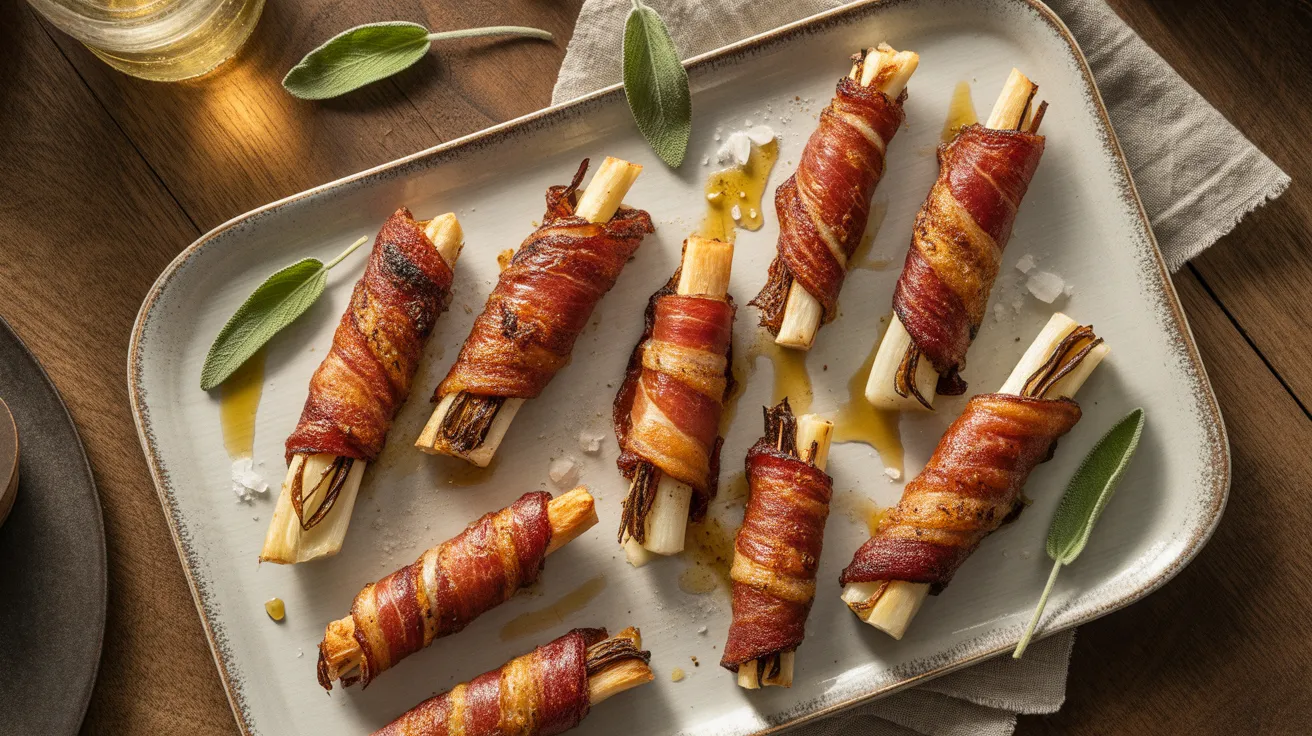
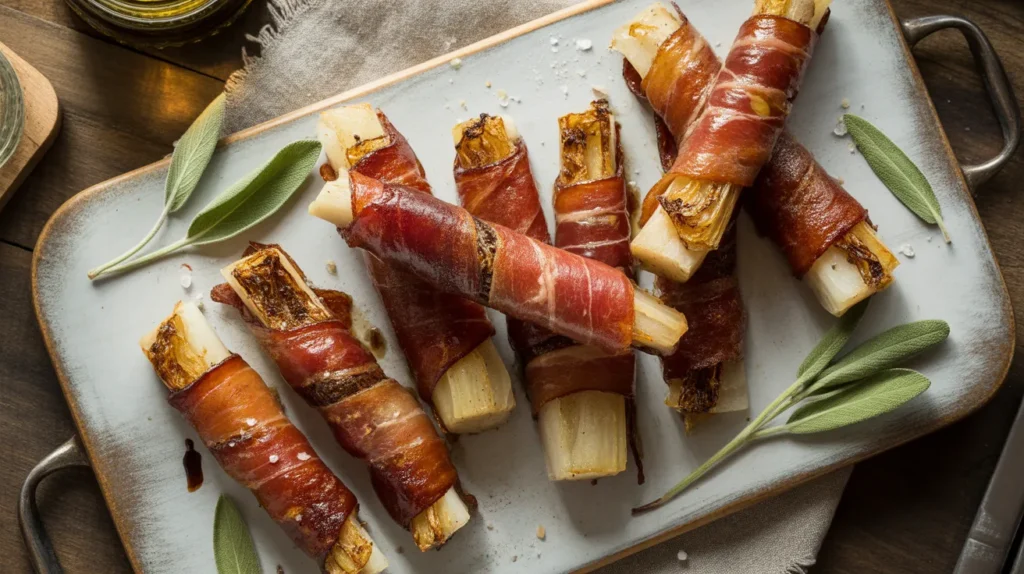
Crispy, golden prosciutto-wrapped sage and onion batons bring restaurant-quality elegance to your table with minimal effort. These savory bites combine sweet caramelized onions, fresh sage, and salty Italian ham into irresistible finger food that’ll disappear from your appetizer spread before you know it.
SERVES: 4 | PREP: 25 MIN | COOK: 35 MIN | TOTAL: 60 MIN
Ingredients
| Ingredient | Amount |
|---|---|
| Large yellow onions | 2 whole |
| Fresh sage leaves | 24 large leaves |
| Prosciutto di Parma slices | 12 thin slices |
| Olive oil | 3 tablespoons |
| Unsalted butter | 2 tablespoons |
| Balsamic vinegar | 1 tablespoon |
| Honey | 1 teaspoon |
| Black pepper | ½ teaspoon |
| Sea salt | ¼ teaspoon |
| Garlic powder | ¼ teaspoon |
Step-by-Step Instructions
Phase 1: Preparing the Onions (15 minutes)
Step 1: Peel both onions and cut off the root and stem ends completely. This creates stable surfaces for safe cutting and prevents the onion from rolling while you work.
Step 2: Slice each onion in half from top to bottom, cutting through where the root was. You’ll see the natural layers of the onion which help guide your next cuts.
Step 3: Place each onion half flat-side down on your cutting board. Cut each half into 3 thick wedges, keeping the layers together as much as possible. You want batons that are about 1 inch thick at the widest part. Thicker pieces hold together better during wrapping and cooking.
Step 4: Gently separate the layers of each wedge, but keep 2-3 layers together to form each baton. You should end up with 12 sturdy onion batons total. The multiple layers create the perfect thickness for wrapping and give you that satisfying bite.
Step 5: Pat each baton dry with paper towels. Removing surface moisture helps the prosciutto stick better and ensures crispier results. Wet onions create steam during cooking, which makes soggy wrappers instead of crispy ones.
Phase 2: Building the Batons (10 minutes)
Step 6: Lay one prosciutto slice flat on a clean work surface. Place 2 fresh sage leaves at one end of the prosciutto, positioned so they’ll spiral around the onion as you wrap.
Step 7: Take one onion baton and place it on top of the sage leaves at the edge of the prosciutto. The sage should be sandwiched between the prosciutto and onion, which protects the delicate leaves from burning.
Step 8: Roll the prosciutto tightly around the onion baton, overlapping the meat as you go. The prosciutto should wrap around the onion 1 to 1.5 times completely. Press gently to seal the seam against the onion. The natural fats in the meat will help it stick to itself.
Step 9: Repeat this process with the remaining 11 batons, using 2 sage leaves per baton. Work steadily but don’t rush—well-wrapped batons cook more evenly and look more professional on the plate.
Phase 3: Pan-Searing the Batons (20 minutes)
Step 10: Heat a large skillet over medium heat for 2 minutes. Add 2 tablespoons olive oil and 2 tablespoons butter, swirling the pan until the butter melts completely and stops foaming. The combination of oil and butter gives you the best of both worlds—high heat tolerance from the oil and rich flavor from the butter.
Step 11: Carefully place 6 batons in the pan, seam-side down first. This sears the seam closed and prevents unwrapping during cooking. Leave 1 inch of space between each baton so they brown instead of steam.
Step 12: Cook for 4 minutes without moving them. You’ll hear steady sizzling—that’s the prosciutto crisping up. If the sizzling becomes loud popping or you see smoke, reduce heat to medium-low immediately.
Step 13: Using tongs, gently turn each baton one-quarter turn to brown the next side. Cook another 3-4 minutes until golden brown. The prosciutto should look crispy and darker at the edges, similar to crispy bacon.
Step 14: Continue turning the batons every 3-4 minutes, browning all sides evenly. Total cooking time per baton is about 12-15 minutes. The onions inside should feel tender when you press gently with tongs, and the prosciutto should be deep golden brown.
Step 15: Transfer the cooked batons to a paper towel-lined plate. Add the remaining 1 tablespoon olive oil to the pan and repeat the cooking process with the second batch of 6 batons.
Phase 4: Glazing and Finishing (5 minutes)
Step 16: Once all batons are cooked, reduce heat to low. Return all 12 prosciutto-wrapped sage and onion batons to the pan in a single layer.
Step 17: Drizzle 1 tablespoon balsamic vinegar and 1 teaspoon honey over the batons. The vinegar will sizzle and reduce immediately, creating a glossy coating. Tilt the pan and use a spoon to baste the batons with the glaze for 30 seconds.
Step 18: Sprinkle with ½ teaspoon black pepper, ¼ teaspoon sea salt, and ¼ teaspoon garlic powder. Toss gently to coat all batons evenly in the glaze and seasonings.
Step 19: Remove from heat immediately. Transfer to a serving platter while still hot. The residual heat continues cooking the onions to perfect tenderness while the prosciutto stays crispy.
Step 20: Let rest for 2-3 minutes before serving. This brief resting period allows the flavors to settle and prevents anyone from burning their mouth on molten-hot onions.
Chef’s Notes
Prosciutto Selection: Use authentic Prosciutto di Parma or San Daniele for best results. These Italian varieties have the perfect fat-to-meat ratio and slice thin enough to wrap easily without tearing. Domestic prosciutto works but may be saltier—taste before adding extra salt.
Sage Freshness: Fresh sage is non-negotiable here. Dried sage tastes completely different and won’t give you those crispy, aromatic leaves. Look for sage with bright green leaves and no brown spots. Store extra sage wrapped in damp paper towels in the fridge.
Make-Ahead Strategy: You can assemble these prosciutto-wrapped sage and onion batons up to 6 hours ahead. Wrap the prepared uncooked batons in plastic wrap and refrigerate. Let them sit at room temperature for 15 minutes before cooking for even browning.
Temperature Control: If your prosciutto browns too fast, your heat is too high. The goal is slow rendering of the prosciutto fat while the onions caramelize inside. Rushing with high heat gives you burnt meat and raw onions.
Nutrition Information (Per Serving)
- Calories: 245
- Protein: 12g
- Carbohydrates: 15g
- Fat: 16g
- Fiber: 2g
- Sodium: 680mg
- Sugar: 8g
Creative Variations
Bacon-Wrapped Version: Swap prosciutto for thin-cut bacon and add fresh thyme instead of sage. The smokiness pairs beautifully with sharp white cheddar melted inside the onion layers. This heartier version works great for stuffing-stuffed potstickers with gravy dip on your appetizer table.
Mediterranean Twist: Use pancetta instead of prosciutto and add fresh oregano with the sage. Brush with lemon-infused olive oil during the last minute of cooking. Serve with tzatziki for dipping.
Sweet and Spicy: Mix 1 tablespoon maple syrup with ½ teaspoon red pepper flakes into your glaze. The sweetness balances the heat perfectly while complementing the salty prosciutto. Finish with crumbled blue cheese on top.
Holiday Elegance: Add dried cranberries inside the onion layers before wrapping. Use rosemary along with sage, and glaze with pomegranate molasses instead of balsamic. These pair wonderfully with individual oyster and champagne brioche cups for an upscale party spread.
Storage & Reheating
Refrigeration: Store cooled batons in an airtight container for up to 3 days. Layer parchment paper between batons to prevent sticking. The prosciutto will soften in the fridge but re-crisps beautifully when reheated.
Reheating Instructions: Place batons on a baking sheet in a 375°F oven for 8-10 minutes. Don’t use the microwave—it makes the prosciutto rubbery and steams the onions into mush. The oven method restores that crispy exterior perfectly.
Freezing: I don’t recommend freezing these. The onions release too much moisture when thawed, making the prosciutto soggy. They’re quick enough to make fresh that freezing doesn’t save meaningful time.
Make-Ahead Service: If serving for a party, keep cooked batons warm in a 200°F oven for up to 30 minutes. Place them on a wire rack over a baking sheet so air circulates and they stay crispy instead of getting soggy.
Troubleshooting Common Problems
Problem 1: Prosciutto Won’t Stay Wrapped
Your prosciutto might be too cold or too dry. Let it sit at room temperature for 10 minutes before wrapping—it becomes more pliable. Press firmly as you roll, and make sure you’re wrapping with the seam side down when cooking. The heat seals it naturally.
Problem 2: Onions Are Raw Inside
You’re cooking at too high heat or not long enough. The onions need 12-15 minutes of gentle cooking to soften properly. Cover the pan with a lid for the last 5 minutes of cooking to trap steam and finish softening the onions without burning the prosciutto.
Problem 3: Prosciutto Burns Before Onions Cook
Reduce heat to medium-low immediately. Your pan is too hot. The prosciutto should gradually turn golden brown, not blacken quickly. You can also add 1 tablespoon water to the pan and cover briefly to steam the onions while protecting the meat.
Problem 4: Batons Fall Apart
You’re separating too many onion layers. Keep 2-3 layers together for structural integrity. Single layers are too flimsy to handle the wrapping and cooking process. Think of it like building with blocks—you need enough layers for stability.
Problem 5: Glaze Is Too Thick or Thin
If your glaze is gummy and thick, you reduced it too much. Add 1 teaspoon water to loosen it. If it’s too watery, simmer the batons an extra 30 seconds to reduce the glaze further. The perfect consistency coats the back of a spoon lightly without dripping off immediately.
Equipment Essentials
- Large heavy-bottomed skillet (12-inch)
- Chef’s knife (8-inch)
- Cutting board (wood or plastic)
- Kitchen tongs (spring-loaded)
- Paper towels
- Measuring spoons
- Small mixing bowl
- Serving platter
- Basting spoon
Shopping List
Produce Section
- Large yellow onions (2)
- Fresh sage (1 bunch)
Deli Counter
- Prosciutto di Parma, thinly sliced (12 slices, about 6-8 ounces)
Baking/Condiments Aisle
- Olive oil
- Balsamic vinegar
- Honey
Dairy Section
- Unsalted butter
Spices/Seasonings Aisle
- Black pepper
- Sea salt
- Garlic powder
Success Secrets
1. Slice Consistency: Keep your onion batons roughly the same size so they cook evenly. Thin batons cook faster and may burn before thick ones finish. Aim for that 1-inch thickness throughout.
2. Temperature Patience: Don’t rush the cooking with high heat. Medium heat gives you crispy prosciutto and caramelized onions. High heat gives you burnt exteriors and crunchy onion centers that taste raw and harsh.
3. Sage Placement: Position sage leaves where they won’t directly touch the pan. They burn easily and turn bitter. Sandwiching them between prosciutto and onion protects them while they infuse their flavor.
4. Fat Management: If your pan accumulates too much rendered fat (more than 2 tablespoons), carefully pour some off between batches. Too much fat makes the batons greasy instead of crispy. Save that prosciutto fat—it’s liquid gold for cooking vegetables later.
5. Resting Time: Those final 2-3 minutes of resting aren’t optional. The batons are extremely hot inside, and this brief wait prevents burnt tongues while letting the juices redistribute evenly through the onions, making every bite perfect.
These prosciutto-wrapped sage and onion batons transform simple ingredients into show-stopping appetizers. The crispy, salty prosciutto contrasts beautifully with sweet caramelized onions and aromatic sage. Serve them at your next gathering and watch them become the star of your spread.