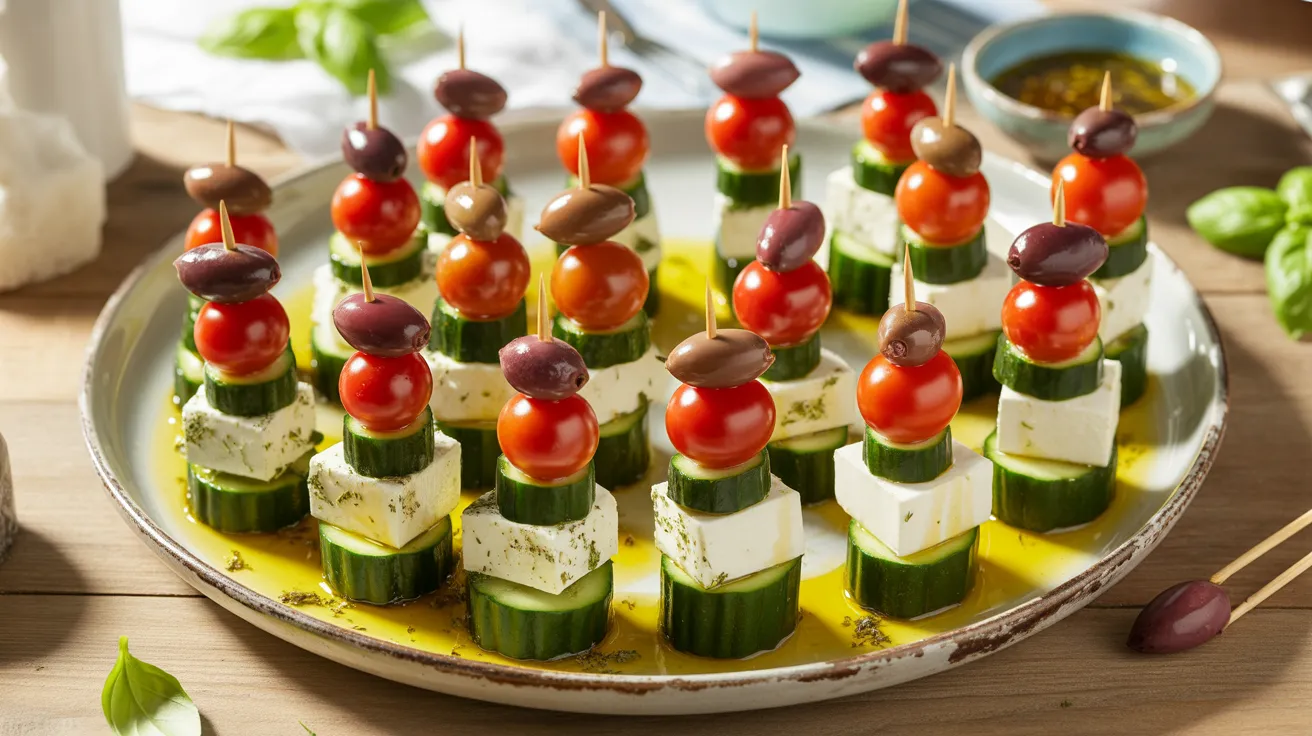
These feta and cucumber skewers are my favorite no-cook appetizer for summer parties and quick entertaining. I love how these Mediterranean-inspired feta and cucumber skewers come together in just minutes with fresh ingredients and bold flavors that everyone asks for the recipe.
SERVES: 4 | PREP: 15 MIN | COOK: 0 MIN | TOTAL: 15 MIN
Why You’ll Love This Recipe
This is hands-down the easiest appetizer you’ll ever make. There’s no cooking involved, which means your kitchen stays cool on hot days.
The combination of creamy feta, crisp cucumber, and briny olives creates the perfect bite. I reach for this recipe whenever I need something impressive that takes almost no effort.
Ingredients
For the Skewers
| Ingredient | Amount |
|---|---|
| English cucumber | 1 large (about 12 oz) |
| Feta cheese block | 8 oz |
| Cherry tomatoes | 16 pieces |
| Kalamata olives | 16 pieces (pitted) |
| Fresh basil leaves | 16 large leaves |
For the Marinade
| Ingredient | Amount |
|---|---|
| Extra virgin olive oil | 3 tablespoons |
| Red wine vinegar | 1 tablespoon |
| Fresh lemon juice | 1 tablespoon |
| Dried oregano | 1 teaspoon |
| Garlic powder | ½ teaspoon |
| Black pepper | ¼ teaspoon |
| Sea salt | ¼ teaspoon |
Step-by-Step Instructions
Phase 1: Preparing Your Ingredients (5 minutes)
Step 1: Wash the English cucumber under cold running water and pat it completely dry with paper towels. Any moisture left on the cucumber will dilute your marinade and make the skewers soggy, so take an extra minute here to get it really dry.
Step 2: Slice the cucumber into ¾-inch thick rounds. You want them thick enough to hold up on the skewer but not so thick that they’re difficult to bite through. Aim for 16 uniform pieces so each skewer looks consistent.
Step 3: Remove the feta from its brine and place it on a cutting board lined with paper towels. Pat the top and sides dry to remove excess moisture. This helps the marinade stick to the cheese instead of sliding right off.
Step 4: Cut the feta into ¾-inch cubes. I like to cut the block lengthwise first, then crosswise to create even cubes. You should get about 16 pieces from an 8-ounce block.
Step 5: Rinse the cherry tomatoes and Kalamata olives, then pat them dry. Check each tomato for soft spots or bruises and set aside the best-looking ones for your skewers.
Phase 2: Making the Marinade (2 minutes)
Step 6: In a small mixing bowl, combine 3 tablespoons olive oil, 1 tablespoon red wine vinegar, and 1 tablespoon fresh lemon juice. The acidity from the vinegar and lemon brightens all the flavors and helps balance the rich feta.
Step 7: Add 1 teaspoon dried oregano, ½ teaspoon garlic powder, ¼ teaspoon black pepper, and ¼ teaspoon sea salt. Whisk everything together vigorously for about 30 seconds until the mixture emulsifies and looks slightly creamy.
Step 8: Taste the marinade with a clean spoon. It should be tangy, garlicky, and well-seasoned. If it tastes too acidic, add another tablespoon of olive oil. If it needs more punch, add a pinch more salt.
Phase 3: Assembling the Skewers (6 minutes)
Step 9: Lay out 16 small wooden skewers or toothpicks on a clean cutting board. I prefer 6-inch bamboo skewers because they’re sturdy and look nice on a serving platter.
Step 10: Thread one cucumber round onto the skewer first, pushing it about halfway up. The cucumber creates a stable base and catches any marinade that drips down.
Step 11: Fold one basil leaf in half and thread it onto the skewer right above the cucumber. Folding the basil prevents it from tearing and releases more of its aromatic oils.
Step 12: Add one feta cube next, pushing it snugly against the basil. The creamy cheese will absorb the marinade beautifully and become even more flavorful as it sits.
Step 13: Thread one cherry tomato onto the skewer, placing it right after the feta. The tomato adds a burst of sweetness that complements the salty cheese perfectly.
Step 14: Finish each skewer with one Kalamata olive at the top. The olive’s briny flavor ties all the Mediterranean elements together and gives you that satisfying last bite.
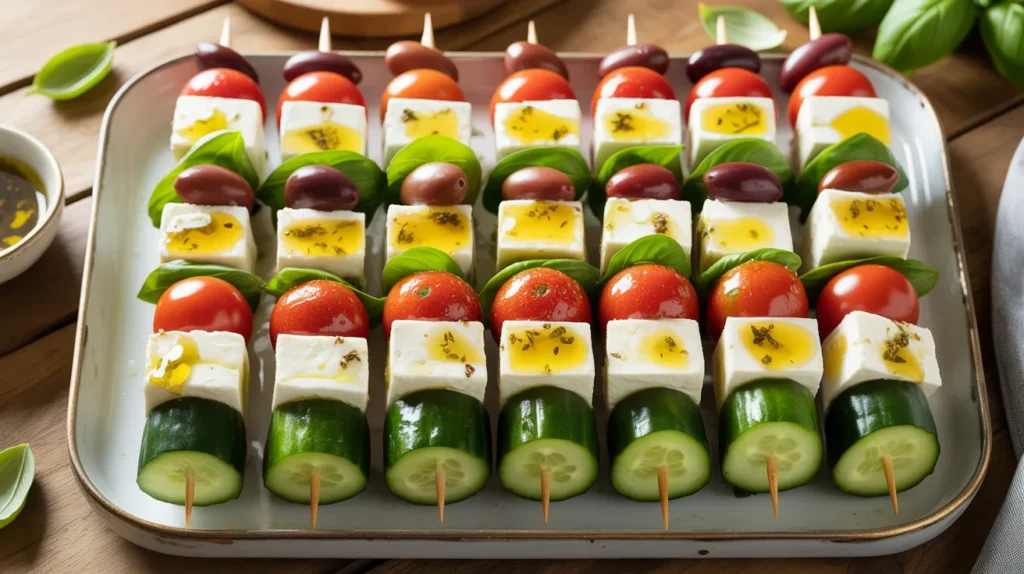
Step 15: Repeat this assembly process with the remaining 15 skewers, keeping the order consistent: cucumber, basil, feta, tomato, olive. This creates a beautiful pattern when you arrange them on your serving platter.
Phase 4: Marinating and Serving (2 minutes)
Step 16: Arrange all the assembled skewers in a single layer on a rimmed baking sheet or large serving platter. Make sure they’re not overlapping so each one gets coated evenly with marinade.
Step 17: Drizzle the prepared marinade over all the skewers, using a spoon to distribute it evenly. I like to go back and forth in a zigzag pattern to make sure every skewer gets some marinade.
Step 18: Let the feta and cucumber skewers sit at room temperature for 10-15 minutes before serving. This brief marinating time allows the flavors to meld and the feta to absorb the herbs and garlic. If you’re making these ahead, you can refrigerate them for up to 2 hours, but bring them back to room temperature before serving for the best flavor.
Chef’s Notes
Cucumber Choice Matters: I always use English cucumbers because they have fewer seeds and thinner skin than regular cucumbers. You don’t need to peel them, which saves time and adds nice color contrast to your skewers.
Feta Quality: Spend a bit more on good-quality feta cheese from a deli counter rather than pre-crumbled feta. The block feta from Greece or Bulgaria has a creamier texture and doesn’t crumble apart when you cut it into cubes for your feta and cucumber skewers.
Make-Ahead Strategy: I assemble these skewers up to 4 hours ahead but wait to drizzle the marinade until 30 minutes before serving. This prevents the cucumbers from releasing too much water and keeps everything crisp and fresh.
Serving Temperature: These taste best at room temperature, not cold. Cold feta is harder and less creamy, so plan your timing to let them warm up slightly after refrigeration.
Nutrition Information (Per Serving – 4 skewers)
Calories: 185
Protein: 7g
Carbohydrates: 6g
Fat: 15g
Fiber: 1g
Sodium: 485mg
Creative Variations
Greek-Style Skewers
Add red onion wedges and bell pepper chunks between the cucumber and feta for extra crunch and sweetness. The vegetables add volume and make these skewers more substantial as a light meal. If you love creative skewer combinations, check out my bang bang chicken skewers for another crowd-pleasing option.
Caprese-Inspired Version
Replace the Kalamata olives with mini mozzarella balls and use fresh mozzarella instead of feta for an Italian twist. Drizzle with balsamic glaze instead of the red wine vinegar marinade for a sweeter, tangier flavor profile.
Spicy Mediterranean Skewers
Add pepperoncini peppers to each skewer and mix red pepper flakes into your marinade for a spicy kick. The heat complements the cooling cucumber and makes these perfect for anyone who likes bold flavors.
Sweet and Savory Mix
Try pairing feta with fruit by adding watermelon cubes and substituting the tomatoes with fresh mint leaves. For more sweet-savory inspiration, my prosciutto and melon skewers offer a similar flavor balance that guests absolutely love.
Storage & Reheating
Refrigerator Storage: Store assembled but unmarinated skewers in an airtight container for up to 24 hours. Place a damp paper towel over them to prevent the ingredients from drying out, then cover tightly with plastic wrap.
Marinated Storage: Once you’ve added the marinade, these feta and cucumber skewers will stay fresh in the refrigerator for up to 6 hours. The cucumbers will start releasing water after that, making the skewers soggy.
Freezing: I don’t recommend freezing these skewers because the cucumber and tomatoes become mushy when thawed. The feta also changes texture and becomes grainy after freezing.
Serving from Cold: Remove the skewers from the refrigerator 20-30 minutes before serving. Room temperature brings out all the flavors and makes the feta creamier and more enjoyable to eat.
Troubleshooting Guide
Problem: Skewers keep falling apart when I pick them up
Solution: You’re likely cutting your ingredients too small or not pushing them close enough together on the skewer. Cut larger pieces (at least ¾-inch) and press each ingredient snugly against the next one. The compression creates friction that holds everything in place.
Problem: The feta cheese crumbles when I try to cut it
Solution: Your feta is either too soft or you’re using a dull knife. Place the feta in the freezer for 10 minutes before cutting to firm it up, then use a sharp, non-serrated knife. Wipe the blade clean between cuts to prevent cheese buildup.
Problem: The marinade pools at the bottom of my serving plate
Solution: You’re using too much marinade or drizzling it too far in advance. Use only 3-4 tablespoons total and apply it no more than 15 minutes before serving. You can also serve the extra marinade on the side as a dipping sauce.
Problem: My basil leaves turn brown quickly
Solution: Brown basil means you’re washing it too far ahead or storing it wet. Wash basil just before assembling the skewers and dry it completely with a salad spinner or paper towels. The leaves should be crisp and bright green.
Problem: The skewers taste bland even with the marinade
Solution: Your feta is likely too mild or you’re not using enough salt in the marinade. Taste your feta first—if it’s not very salty, add an extra ¼ teaspoon of salt to the marinade. You can also add ½ teaspoon of Dijon mustard to boost the flavor complexity.
Equipment Essentials
- Sharp chef’s knife (for clean cucumber and feta cuts)
- Cutting board (preferably separate ones for cheese and vegetables)
- Small mixing bowl (for whisking marinade)
- Whisk or fork (to emulsify the marinade)
- Measuring spoons (for accurate seasoning)
- 6-inch bamboo skewers (or decorative toothpicks)
- Rimmed baking sheet or serving platter (to catch marinade)
- Paper towels (for drying ingredients)
Shopping List
Produce Section
- 1 large English cucumber
- 16 cherry tomatoes
- 1 bunch fresh basil
- 1 lemon (for fresh juice)
Deli/Dairy Section
- 8 oz feta cheese block (not pre-crumbled)
International/Olive Bar
- 16 pitted Kalamata olives
Pantry/Oils Section
- Extra virgin olive oil
- Red wine vinegar
- Dried oregano
- Garlic powder
- Black pepper
- Sea salt
Success Secrets
1. Temperature is Everything
Serve these feta and cucumber skewers at room temperature, not straight from the fridge. The flavors bloom and the feta becomes creamier when it’s not cold. Pull them out 20-30 minutes before your guests arrive.
2. Pat Everything Dry
Moisture is the enemy of good skewers. Dry every ingredient thoroughly before assembly so the marinade sticks instead of sliding off. This simple step makes the difference between bland and boldly flavored skewers.
3. Use Block Feta, Not Crumbles
Block feta stays intact on skewers and has a creamier, richer flavor than pre-crumbled versions. The preservatives in crumbled feta also give it a slightly different taste that doesn’t work as well with the fresh vegetables.
4. Size Consistency Matters
Cut all your ingredients to the same size (about ¾-inch). This creates uniform skewers that look professional and cook (or marinate) evenly. It also makes them easier to eat in one or two bites.
5. Fresh is Best
These skewers shine when you use the freshest ingredients possible. Check your tomatoes for firmness, choose crisp cucumbers without soft spots, and use basil that’s bright green without any brown edges. Fresh ingredients need less seasoning and taste noticeably better.