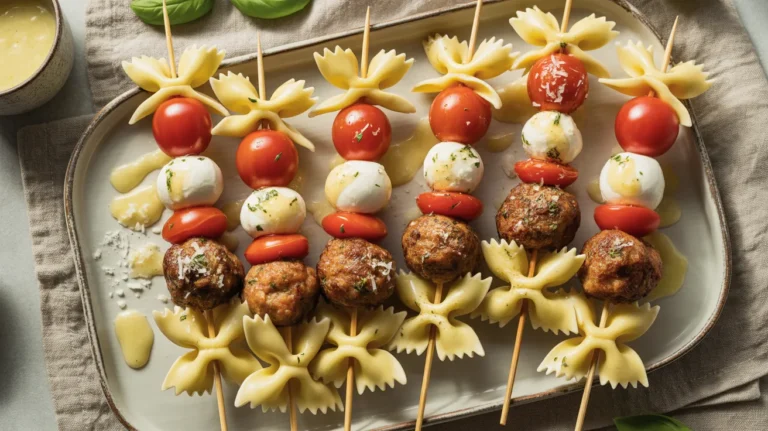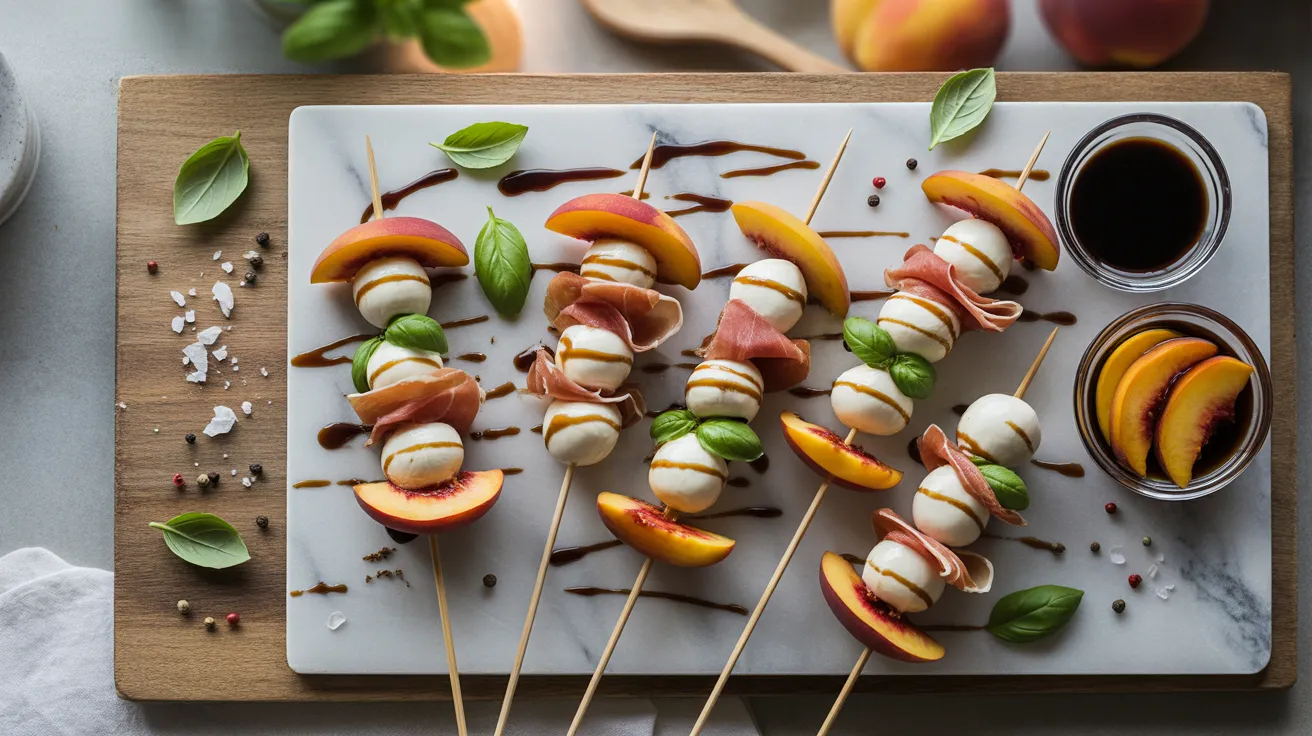
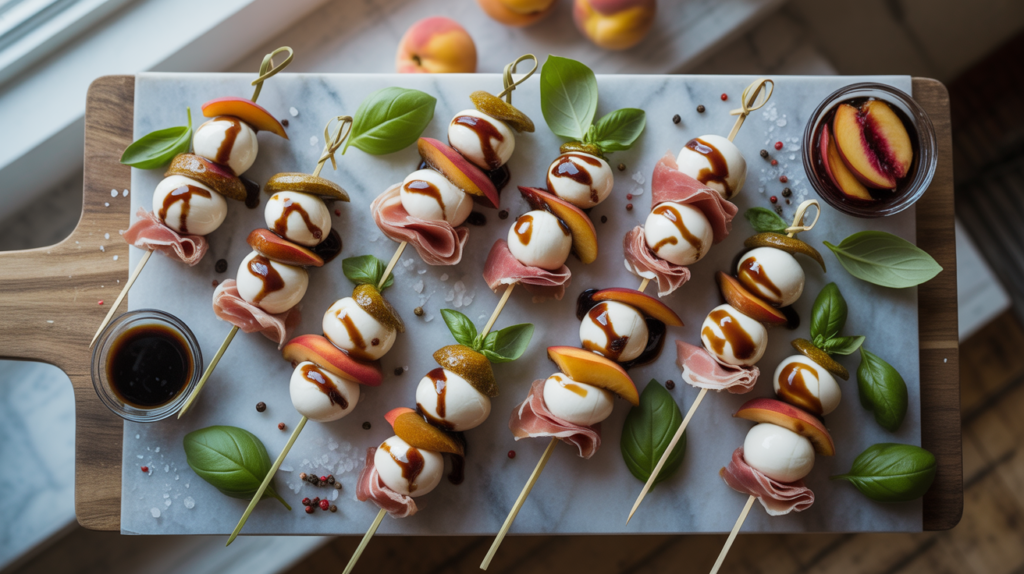
These elegant mozzarella, prosciutto, and pickled peach skewers bring together creamy cheese, salty Italian ham, and tangy-sweet pickled peaches for the perfect party appetizer. I’ve been making these mozzarella, prosciutto, and pickled peach skewers for years at dinner parties, and they disappear within minutes—the combination of textures and flavors makes them absolutely irresistible.
SERVES: 4 | PREP: 25 MIN | COOK: 10 MIN | TOTAL: 35 MIN
Why These Skewers Work
The magic of mozzarella, prosciutto, and pickled peach skewers lies in the balance of flavors. The creamy mozzarella provides a mild base that lets the salty prosciutto shine. The pickled peaches add a bright, tangy sweetness that cuts through the richness. When you drizzle everything with reduced balsamic, you get layers of flavor that taste way more complicated than the simple prep time suggests.
Ingredients
For the Pickled Peaches
| Ingredient | Amount |
|---|---|
| Ripe but firm peaches | 2 medium |
| White wine vinegar | 1/2 cup |
| Granulated sugar | 1/4 cup |
| Water | 1/4 cup |
| Whole black peppercorns | 1 teaspoon |
| Fresh thyme sprigs | 2 sprigs |
| Salt | 1/4 teaspoon |
For Assembly
| Ingredient | Amount |
|---|---|
| Fresh mozzarella balls (ciliegine) | 16 pieces (about 12 oz) |
| Prosciutto slices | 8 slices |
| Fresh basil leaves | 16 medium leaves |
| Balsamic vinegar | 1/2 cup |
| Honey | 1 tablespoon |
| Bamboo skewers (6-inch) | 16 skewers |
| Freshly cracked black pepper | to taste |
| Flaky sea salt | for finishing |
Step-by-Step Instructions
Phase 1: Pickling the Peaches (15 minutes active, plus cooling)
Step 1: Fill a medium pot with water and bring it to a rolling boil over high heat. Score an X on the bottom of each peach with a sharp paring knife—this makes peeling much easier after blanching.
Step 2: Drop the peaches into the boiling water for exactly 30-40 seconds. You’ll see the skin start to loosen and wrinkle slightly. This blanching step loosens the skin without cooking the flesh, which keeps your peaches firm for skewering.
Step 3: Use a slotted spoon to transfer the peaches immediately into a bowl of ice water. Let them sit for 2 minutes until completely cool. The thermal shock stops the cooking process instantly.
Step 4: Peel the skins off with your fingers—they should slip right off. If you encounter resistance, use the paring knife to help, but the blanching should have made this super easy. Pat the peaches dry with paper towels.
Step 5: Slice each peach into 8 wedges by cutting around the pit. You want wedges that are about 1/2 inch thick at the widest part—thick enough to hold their shape but thin enough to be bite-sized.
Step 6: Combine the vinegar, sugar, water, peppercorns, thyme, and salt in a small saucepan. Bring to a boil over medium-high heat, stirring occasionally to dissolve the sugar completely. You should see the liquid turn crystal clear when the sugar is fully dissolved.
Step 7: Remove the pickling liquid from heat and add the peach wedges immediately. Push them down gently with a spoon so they’re fully submerged. Let them steep at room temperature for 15 minutes minimum, or up to 2 hours if you have time—the longer they sit, the more pickled flavor they develop.
Phase 2: Preparing the Balsamic Reduction (8 minutes)
Step 8: Pour the balsamic vinegar and honey into a small saucepan. Bring to a gentle simmer over medium heat, stirring once to incorporate the honey. Don’t boil aggressively or you’ll create bitter flavors.
Step 9: Let the mixture simmer gently for 6-8 minutes, stirring every 2 minutes. You’re looking for the glaze to reduce by half and coat the back of a spoon without dripping off immediately. It should look thick and syrupy, like chocolate sauce consistency. The glaze will thicken more as it cools, so don’t overdo it.
Step 10: Remove from heat and let it cool for 5 minutes. The reduction needs to cool slightly so it doesn’t melt the mozzarella when you drizzle it later.
Phase 3: Assembly (12 minutes)
Step 11: Drain the pickled peach wedges in a colander, shaking gently to remove excess liquid. Pat them dry with paper towels—wet peaches will make your prosciutto soggy and won’t allow the glaze to stick properly.
Step 12: Cut each prosciutto slice in half lengthwise, creating 16 long strips. Prosciutto is delicate, so handle it gently to avoid tearing. If your slices are particularly thin (which good prosciutto often is), you can leave them whole.
Step 13: Take one mozzarella ball and wrap it with a basil leaf, then wrap the basil-covered cheese with a strip of prosciutto. The prosciutto should stick to itself naturally—just press gently. Don’t wrap too tightly or you’ll squeeze the soft cheese.
Step 14: Thread one wrapped mozzarella ball onto a skewer, followed by one pickled peach wedge. Push them about 3/4 of the way up the skewer, leaving enough room at the bottom to hold and enough at the top so nothing falls off.
Step 15: Repeat the wrapping and skewering process with the remaining ingredients. I like to work assembly-line style—wrap all the cheese balls first, then assemble all the skewers. Makes the process much faster.
Step 16: Arrange the completed mozzarella, prosciutto, and pickled peach skewers on a serving platter. I usually stand them upright in a shallow bowl filled with fresh herbs, but laying them flat works too.
Phase 4: Finishing Touches (2 minutes)
Step 17: Drizzle the cooled balsamic reduction over all the skewers using a spoon. Let it drip naturally over the ingredients. You can also serve the reduction on the side in a small bowl for dipping.
Step 18: Finish each skewer with a light sprinkle of flaky sea salt and freshly cracked black pepper. The salt enhances the sweetness of the peaches and the savory prosciutto. Serve immediately or refrigerate for up to 2 hours before serving.
Chef’s Notes
Mozzarella Temperature Matters: Always use mozzarella, prosciutto, and pickled peach skewers at room temperature for the best flavor. Cold cheese tastes bland and the prosciutto’s fat doesn’t melt on your tongue the same way. Pull everything from the fridge 30 minutes before assembly.
Peach Ripeness is Key: Choose peaches that are ripe but still firm when you press them gently. Overripe peaches will turn mushy during pickling and won’t hold on the skewers properly. The flesh should give slightly but not feel soft.
Prosciutto Quality Investment: Splurge on good Italian prosciutto di Parma or San Daniele for these skewers. The thin, delicate slices and sweet-salty flavor profile make a huge difference. Cheap deli “prosciutto” tastes more like ham and won’t have that melt-in-your-mouth texture.
Balsamic Reduction Rescue: If your balsamic reduction gets too thick and starts to harden, just warm it gently with 1 tablespoon of water stirred in. It’ll loosen right back up to drizzling consistency.
Nutrition Information (Per 4 Skewers)
- Calories: 285
- Protein: 18g
- Carbohydrates: 22g
- Fat: 14g
- Fiber: 1g
- Sugar: 19g
- Sodium: 680mg
Creative Variations
Grilled Peach Version: Skip the pickling and grill fresh peach wedges over medium-high heat for 2-3 minutes per side until you get nice char marks. The caramelized sugars taste incredible with the prosciutto. This technique also works beautifully with similar appetizers like caprese snowman skewers during winter months.
Spicy Kick Upgrade: Add 1/4 teaspoon red pepper flakes to your pickling liquid for a subtle heat that builds as you eat. You can also drizzle with hot honey instead of regular balsamic reduction.
Melon Ball Substitution: Replace the pickled peaches with fresh cantaloupe or honeydew balls during peak summer months when peaches aren’t in season. The sweet melon plays beautifully with salty prosciutto.
Wrapped Appetizer Style: Instead of skewering, wrap the prosciutto around the mozzarella and peach together to create bite-sized bundles. Secure with a toothpick and arrange on a platter, similar to how you’d present bacon wrapped asparagus for a passed appetizer.
Storage & Reheating
Refrigerator Storage: Assemble the mozzarella, prosciutto, and pickled peach skewers up to 6 hours ahead. Cover loosely with plastic wrap and refrigerate. Add the balsamic glaze and finishing salt right before serving to prevent sogginess.
Pickled Peach Storage: The pickled peaches keep in their liquid in an airtight container for up to 1 week in the fridge. This makes them perfect for meal prep—you can make a batch on Sunday and use them throughout the week.
Balsamic Reduction Storage: The glaze stores in a sealed jar at room temperature for up to 2 weeks. If it thickens too much, warm it gently in the microwave for 10 seconds and stir.
Not Freezer-Friendly: Don’t freeze these skewers. The mozzarella becomes grainy and watery when thawed, and the prosciutto loses its delicate texture. These are best made and enjoyed fresh.
Troubleshooting Common Problems
Problem: Peach skins won’t peel off easily The water wasn’t hot enough or you didn’t blanch long enough. Return them to boiling water for another 20 seconds. The skins should practically fall off with gentle rubbing.
Problem: Pickled peaches taste too vinegary You didn’t add enough sugar to balance the acid. Stir in an additional 2 tablespoons sugar and 1 tablespoon honey into the warm pickling liquid. Let the peaches steep for another 30 minutes to absorb the sweetness.
Problem: Mozzarella balls are leaking liquid everywhere Fresh mozzarella releases moisture when it sits. Drain the balls and pat them completely dry with paper towels before wrapping. Let them air dry on a plate for 10 minutes if they’re particularly wet.
Problem: Prosciutto tears when I try to wrap it Your prosciutto might be sliced too thin or you’re pulling too hard. Let the slices warm to room temperature first—they’re more pliable when not cold. Handle them gently and use the natural stickiness of the meat to adhere rather than stretching.
Problem: Balsamic reduction is too thin It needs more cooking time. Return it to the heat and simmer for another 3-4 minutes, watching carefully. It should coat a spoon thickly and leave a syrupy trail when you drizzle it. Remember it thickens as it cools.
Equipment Essentials
- Medium saucepan (for pickling and reduction)
- Small saucepan (for balsamic glaze)
- Large pot (for blanching peaches)
- Mixing bowls (various sizes)
- Sharp paring knife
- Slotted spoon
- Colander
- Paper towels
- 6-inch bamboo skewers (16 pieces)
- Serving platter
- Measuring cups and spoons
Shopping List
Produce Section
- 2 medium firm-ripe peaches
- 16 fresh basil leaves
- 2 fresh thyme sprigs
Deli Counter
- 8 slices prosciutto di Parma
- 12 oz fresh mozzarella balls (ciliegine)
Pantry/Baking Aisle
- White wine vinegar
- Balsamic vinegar
- Granulated sugar
- Honey
- Black peppercorns
- Flaky sea salt
Kitchen Supplies
- Bamboo skewers (6-inch)
Success Secrets
1. Quality Ingredients Make All the Difference: These mozzarella, prosciutto, and pickled peach skewers have so few ingredients that each one needs to shine. Buy the best fresh mozzarella you can find (look for balls packed in water, not vacuum-sealed), authentic Italian prosciutto, and ripe summer peaches from a farmers market if possible.
2. Temperature Control is Everything: Serve these skewers at room temperature, not straight from the fridge. Cold mozzarella is rubbery and flavorless, and cold prosciutto’s fat doesn’t melt on your tongue. Let everything sit out for 30 minutes before serving.
3. Don’t Skip the Pickling Step: Raw peaches are good, but pickled peaches are transcendent on these skewers. The tangy-sweet brine adds complexity that makes people ask “what IS that amazing flavor?” The quick pickle only takes 15 minutes of steeping time.
4. Prep Ahead for Easy Entertaining: Make the pickled peaches and balsamic reduction up to 3 days ahead. Wrap the mozzarella balls up to 6 hours ahead. Then you’re just threading skewers and drizzling glaze right before guests arrive.
5. Presentation Elevates Everything: Stand these skewers upright in a shallow bowl filled with fresh herb sprigs for height and visual interest. Or arrange them in a circular pattern on a round platter with the balsamic reduction in a small bowl in the center for dipping. People eat with their eyes first.