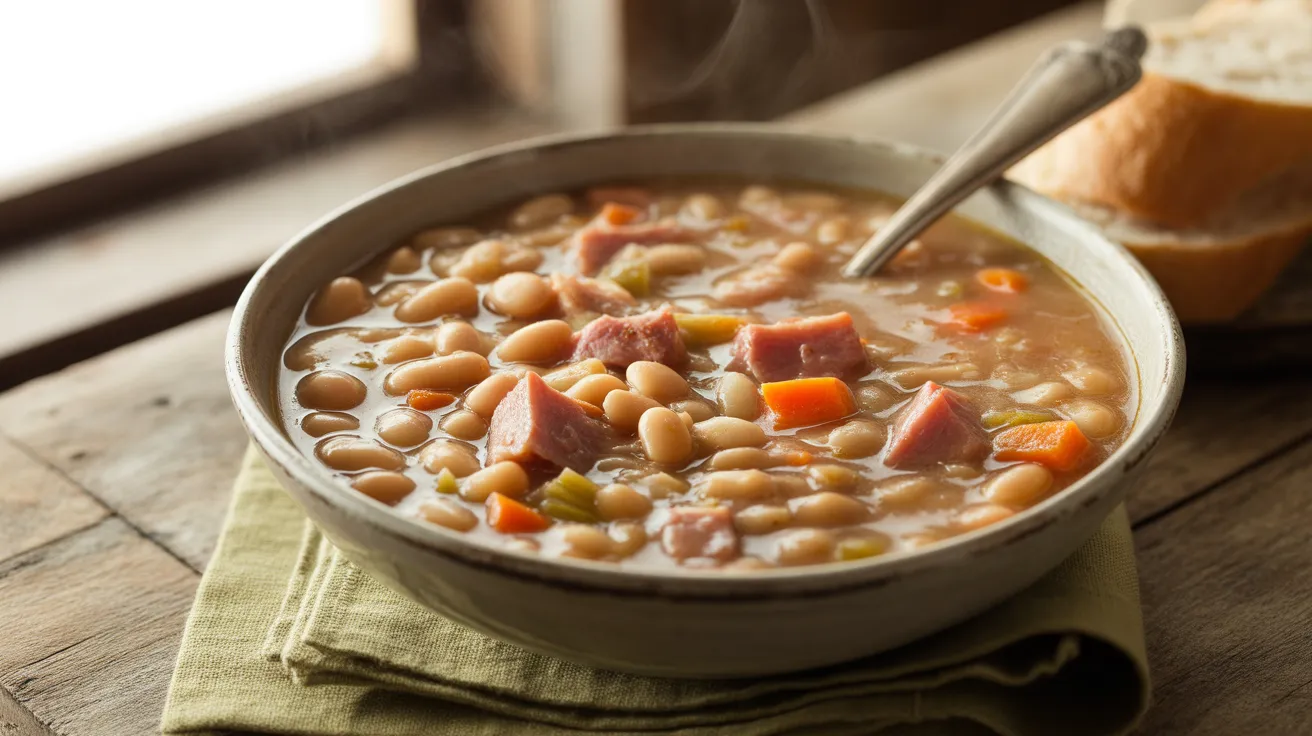
There’s something magical about turning yesterday’s holiday ham into today’s comfort food. This leftover ham and bean soup transforms your extra ham into a hearty, soul-warming meal that tastes like you spent hours in the kitchen. The combination of tender beans, smoky ham chunks, and aromatic vegetables creates a thick, satisfying soup that’s perfect for cold evenings when you want something filling without the fuss.
SERVES: 4 | PREP: 20 MIN | COOK: 90 MIN | TOTAL: 110 MIN
Why This Recipe Works
I’ve made countless versions of ham soup over the years, and this one hits every mark. The beans get creamy without turning to mush, the ham stays tender, and the broth develops this rich, smoky depth that makes you want to lick the bowl clean.
You’re not just using up leftovers here. You’re creating something better than the original meal.
Ingredients
Main Components
| Ingredient | Amount | Notes |
|---|---|---|
| Leftover ham, diced | 2 cups | Cut into ½-inch cubes |
| Dried navy beans | 1½ cups | Or great northern beans |
| Ham bone (optional) | 1 | Adds incredible flavor |
| Yellow onion, diced | 1 large | About 1½ cups |
| Carrots, diced | 2 medium | ½-inch pieces |
| Celery stalks, diced | 2 | Include some leaves |
| Garlic cloves, minced | 4 | Don’t skimp here |
Liquids & Seasonings
| Ingredient | Amount | Notes |
|---|---|---|
| Chicken broth | 6 cups | Low-sodium preferred |
| Water | 2 cups | Adjust for desired thickness |
| Bay leaves | 2 | Remove before serving |
| Dried thyme | 1 teaspoon | Or 1 tablespoon fresh |
| Black pepper | ½ teaspoon | Freshly ground |
| Smoked paprika | ½ teaspoon | Optional but recommended |
| Olive oil | 2 tablespoons | For sautéing |
| Salt | To taste | Add at the end |
Step-by-Step Instructions
Phase 1: Bean Preparation (10 minutes active, 60 minutes soaking)
Step 1: Rinse 1½ cups dried navy beans under cold water in a colander, picking through them to remove any debris or shriveled beans. This quick check prevents biting into something unpleasant later.
Step 2: Place the rinsed beans in a large bowl and cover with 4 cups cold water. Let them soak for 1 hour while you prep your vegetables. This softens the beans and cuts cooking time in half compared to skipping this step.
Quick-soak method: If you’re short on time, boil the beans in water for 2 minutes, then let them sit covered for 1 hour. Works just as well.
Phase 2: Vegetable Prep (10 minutes)
Step 3: Dice 1 large yellow onion into ½-inch pieces. I like them a bit chunky because they add texture and won’t disappear during the long simmer.
Step 4: Peel and dice 2 medium carrots into similar-sized pieces as your onion. Uniform sizing means everything cooks evenly, which is crucial for soup that sits on the stove for over an hour.
Step 5: Dice 2 celery stalks, including some of those flavorful leaves on top. The leaves add a subtle herbal note that complements the ham beautifully.
Step 6: Mince 4 garlic cloves finely. I usually smash them first with the flat side of my knife, which makes mincing easier and releases more flavor into your soup.
Step 7: Cut your leftover ham into ½-inch cubes. Try to get them relatively uniform so each spoonful has nice, meaty bites. If your ham has a fatty edge, keep some in—it adds richness.
Phase 3: Building the Base (15 minutes)
Step 8: Heat 2 tablespoons olive oil in a large, heavy-bottomed pot or Dutch oven over medium heat. The pot should be at least 6 quarts to give everything room to simmer without boiling over.
Step 9: Add the diced onion, carrots, and celery to the hot oil. Sauté for 5-7 minutes, stirring occasionally, until the onion turns translucent and the vegetables soften slightly. You’ll smell the sweetness developing—that’s what you want.
Step 10: Toss in your minced garlic and stir constantly for 30-45 seconds. Garlic burns quickly, so keep it moving. When it smells fragrant and amazing, you’re ready for the next step.
Phase 4: The Simmer (75 minutes)
Step 11: Drain your soaked beans and add them to the pot along with the diced ham. If you have a ham bone, nestle it right in there. That bone is liquid gold for flavor.
Step 12: Pour in 6 cups chicken broth and 2 cups water. Add 2 bay leaves, 1 teaspoon dried thyme, ½ teaspoon black pepper, and ½ teaspoon smoked paprika if using. Give everything a good stir.
Step 13: Bring the pot to a rolling boil over high heat, which takes about 8-10 minutes. Once it’s boiling hard, reduce the heat to low and partially cover the pot with the lid slightly askew. This lets steam escape while keeping moisture in.
Step 14: Simmer gently for 75 minutes, stirring every 20 minutes or so. The beans should be tender but not falling apart, and the broth will thicken naturally from the bean starches. If it gets too thick, add water ½ cup at a time.
Visual cue: Your soup is ready when you can easily smash a bean against the side of the pot with your spoon, but it still holds its shape.
Phase 5: Final Touches (5 minutes)
Step 15: Remove and discard the bay leaves and ham bone (if used). Shred any meat from the bone and return it to the pot—waste not, want not.
Step 16: Taste your soup and add salt ¼ teaspoon at a time. Ham varies wildly in saltiness, so you might need anywhere from none to a full teaspoon. Start conservatively.
Step 17: Let the soup rest off the heat for 5 minutes before serving. This allows the flavors to marry and the temperature to drop to a safe, enjoyable eating level.
Step 18: Ladle into bowls and serve immediately. I like to add a crack of fresh black pepper on top and maybe a small drizzle of good olive oil for richness.
Chef’s Notes
Leftover Ham Selection: The best leftover ham and bean soup comes from a bone-in ham with some fat still attached. Spiral-cut hams work great, but avoid honey-glazed versions that can make your soup too sweet. If you only have lean ham, add 1 tablespoon butter at the end for body.
Bean Varieties: While navy beans are traditional, great northern beans, cannellini beans, or even a mix of different beans create interesting texture. For a creamier result, try black beans and ham, which creates a darker, richer broth that’s equally delicious. You can find my black beans and ham recipe for another take on this classic combination.
Broth Matters: Using low-sodium broth gives you control over the salt level. If you only have regular broth, skip the salt until the very end. Ham releases salt as it cooks, so your soup might not need any additional seasoning at all.
Thickening Tricks: Want an even thicker soup? Remove 1 cup of beans and vegetables after cooking, blend until smooth, then stir back in. This creates a velvety texture without using flour or cream. The soup will also thicken as it cools and overnight in the fridge.
Nutrition Information (Per Serving)
- Calories: 385
- Protein: 32g
- Carbohydrates: 48g
- Fiber: 12g
- Fat: 8g
- Sodium: 890mg
- Potassium: 1,240mg
- Iron: 4.5mg
Nutrition calculated based on using lean ham and low-sodium broth. Values may vary based on your specific ham and added salt.
Recipe Variations
Smoky Southwest Version: Add 1 diced jalapeño, 1 teaspoon cumin, and ½ teaspoon chili powder with your garlic. Top with fresh cilantro, diced avocado, and a squeeze of lime. The heat plays beautifully with the smoky ham.
Creamy Comfort Style: Stir in ½ cup heavy cream or ¾ cup whole milk during the last 5 minutes of cooking. Add 2 cups baby spinach that wilts right in. This creates a lighter-colored, silkier soup that kids absolutely love.
Potato & Ham Double-Up: Add 2 cups diced russet potatoes during the last 30 minutes of cooking. The potatoes soak up all that hammy goodness and make the soup even more filling. If you love this idea, check out my leftover ham and potato soup for the full potato-forward version.
Vegetable Loaded: Toss in 1 cup green beans (cut into 1-inch pieces), 1 cup corn kernels, and 1 diced zucchini during the last 15 minutes. You’ll have a garden-fresh bowl that still showcases that beautiful ham flavor.
Storage & Reheating
Refrigerator: Store cooled soup in airtight containers for up to 5 days. The soup will thicken significantly as it sits. Add ½ cup water or broth when reheating to restore the consistency.
Freezer: This soup freezes beautifully for up to 3 months. Portion into 2-cup servings in freezer-safe containers, leaving 1 inch of headspace for expansion. Thaw overnight in the refrigerator before reheating.
Reheating: Warm on the stovetop over medium-low heat, stirring occasionally until heated through (about 8-10 minutes). Microwave individual portions on 50% power for 3-4 minutes, stirring halfway through. The gentle heat prevents the beans from breaking down.
Make-Ahead: Prepare through step 14, then cool and refrigerate. The flavors actually improve overnight as the beans absorb more of that smoky ham flavor. Reheat and add your final seasonings before serving.
Troubleshooting Common Problems
Beans Still Hard After Cooking? Old beans or hard water can be the culprit. If your beans aren’t tender after 75 minutes, add ½ cup more water and simmer for another 30 minutes. Next time, add ¼ teaspoon baking soda to the soaking water.
Soup Too Salty? Add 1 peeled, halved potato and simmer for 15 minutes—it absorbs excess salt. Remove before serving. Or, double your batch by adding more beans, vegetables, and unsalted broth to dilute the saltiness.
Soup Too Thin? Simmer uncovered for an extra 15-20 minutes to reduce the liquid. Or use my blending trick from the Chef’s Notes: blend 1 cup of the soup and stir it back in. You can also mash some beans against the pot side to release their starches.
Soup Too Thick? Thin with chicken broth ½ cup at a time until you reach your desired consistency. Water works too, but broth maintains the flavor intensity. Remember, the soup continues to thicken as it cools.
Beans Falling Apart? You probably overcooked them or stirred too vigorously. Next time, stir gently and check for doneness at 60 minutes. If they’re already mushy, embrace it—you’ve got a rustic, country-style soup that’s just as delicious.
Equipment Essentials
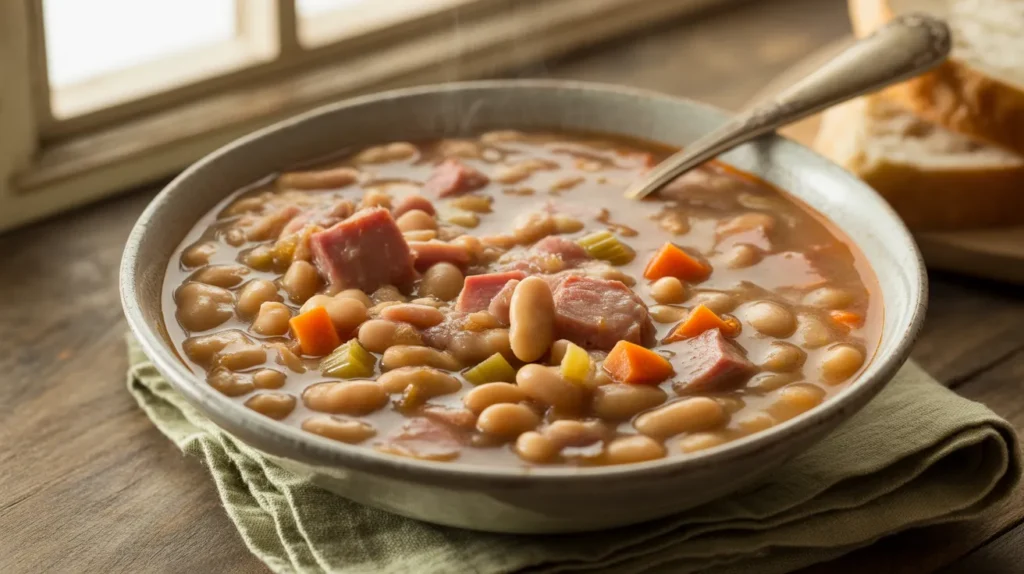
- 6-quart Dutch oven or heavy-bottomed pot (holds everything with room to simmer)
- Chef’s knife (for vegetable prep)
- Cutting board (preferably two—one for vegetables, one for ham)
- Large colander (for rinsing and draining beans)
- Wooden spoon or heat-resistant spatula (for stirring without scratching)
- Measuring cups and spoons (accuracy matters for seasonings)
- Ladle (for serving without making a mess)
- Large bowl (for soaking beans)
- Immersion blender (optional, for partial blending)
Shopping List by Store Section
Produce
- Yellow onion (1 large)
- Carrots (2 medium)
- Celery (2 stalks)
- Garlic (1 bulb)
Meat Department
- Leftover ham (you already have this!)
Pantry/Baking Aisle
- Dried navy beans (12 oz bag)
- Olive oil
- Dried thyme
- Bay leaves
- Black peppercorns
- Smoked paprika
- Salt
Canned Goods/Broth
- Low-sodium chicken broth (48 oz, or two 32 oz containers)
Success Secrets
1. Don’t Skip the Soak: Soaking beans cuts cooking time in half and helps them cook evenly. Beans that haven’t soaked can take 2+ hours to soften and might never get that perfect tender-but-whole texture you want in a good soup.
2. Layer Your Flavors: Sautéing the vegetables first creates a flavor foundation that raw vegetables dumped into broth can’t match. Those 5-7 minutes of cooking caramelize the natural sugars and develop complexity in every spoonful.
3. Low and Slow Wins: Aggressive boiling breaks down beans too fast and makes them mealy. A gentle simmer at low heat gives you perfectly tender beans with intact skins. You should see small bubbles occasionally breaking the surface, not a rolling boil.
4. Taste as You Go: Ham saltiness varies wildly between brands and preparation methods. Taste your soup at the 60-minute mark to gauge how much salt you’ll need. It’s easier to add salt than to fix an over-salted soup.
5. Let It Rest: Five minutes off the heat isn’t just about safety—it’s about chemistry. The residual heat finishes cooking the beans while the flavors blend and settle. Your first bite will be more balanced than if you served it straight from a rolling simmer.
This leftover ham and bean soup proves that simple ingredients and patient cooking create the most satisfying meals. Each bowl delivers protein-packed nutrition, warming comfort, and that classic combination of smoky ham with creamy beans that’s been feeding families for generations. Whether you’re using up holiday ham or grabbed a chunk from the deli specifically for this recipe, you’re making something special.