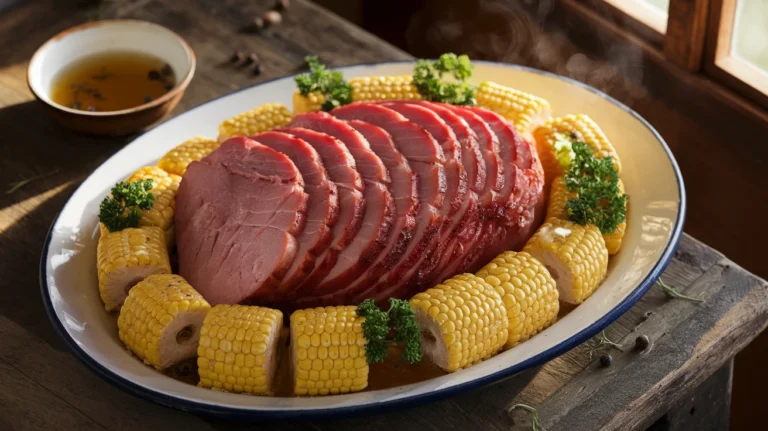
This leftover ham quiche turns your holiday ham into a restaurant-quality brunch dish that’s creamy, savory, and surprisingly easy to master. With a buttery crust, silky custard filling, and chunks of flavorful ham, this leftover ham quiche proves that the best meals often come from what’s already in your fridge.
SERVES: 4 | PREP: 20 MIN | COOK: 45 MIN | TOTAL: 65 MIN
Why This Leftover Ham Quiche Works
I’ve made this recipe dozens of times, and it’s become my go-to solution for post-holiday ham.
The secret is using cold butter in the crust and room temperature eggs in the filling. This creates the perfect contrast between a flaky shell and creamy center.
You’ll get a golden, crispy crust that doesn’t shrink during baking. The filling sets up firm enough to slice cleanly but stays tender and custardy inside.
Ingredients
For the Pie Crust
| Ingredient | Amount | Notes |
|---|---|---|
| All-purpose flour | 1½ cups | Spoon and level for accuracy |
| Unsalted butter, cold | ½ cup (8 tbsp) | Cut into small cubes |
| Salt | ½ tsp | Enhances flavor |
| Ice water | 3-4 tbsp | Add gradually |
For the Filling
| Ingredient | Amount | Notes |
|---|---|---|
| Leftover ham | 1½ cups | Diced into ½-inch pieces |
| Large eggs | 4 | Room temperature |
| Heavy cream | 1 cup | Or half-and-half |
| Whole milk | ½ cup | 2% works too |
| Shredded Gruyère cheese | 1 cup | Swiss is a good substitute |
| Sharp cheddar cheese | ½ cup | Adds tang |
| Fresh chives | 2 tbsp | Chopped fine |
| Dijon mustard | 1 tsp | Brightens flavors |
| Black pepper | ½ tsp | Freshly ground |
| Nutmeg | ¼ tsp | Freshly grated preferred |
| Salt | ¼ tsp | Adjust based on ham saltiness |
Step-by-Step Instructions
Phase 1: Making the Crust (15 minutes)
Step 1: Place 1½ cups flour and ½ tsp salt in a large mixing bowl. Whisk these together for about 30 seconds to distribute the salt evenly throughout the flour.
This step prevents salty pockets in your crust. I learned this the hard way when I skipped whisking and got uneven seasoning.
Step 2: Add your cold butter cubes to the flour mixture. Using a pastry cutter or two forks, work the butter into the flour until the mixture looks like coarse crumbs with some pea-sized pieces of butter remaining.
Those butter chunks are your secret weapon. They create steam pockets during baking that make your crust flaky instead of tough.
Step 3: Drizzle 3 tbsp ice water over the flour mixture. Use a fork to toss and mix gently, bringing the dough together. Add the remaining 1 tbsp water only if the dough seems dry and won’t hold together when pressed.
The dough should look shaggy, not wet. Too much water makes a tough crust, so add it carefully.
Step 4: Dump the dough onto your counter and press it together with your hands. Form it into a flat disk about 1 inch thick, wrap tightly in plastic wrap, and refrigerate for 30 minutes.
This rest period lets the gluten relax so your crust won’t shrink back when you roll it.
Phase 2: Preparing the Filling (10 minutes)
Step 5: While your dough chills, dice your leftover ham into ½-inch cubes. Keep them uniform in size so they distribute evenly and cook at the same rate.
I prefer cutting slightly smaller than you think. Large chunks can create air pockets that mess with the custard setting.
Step 6: Grate your Gruyère and cheddar cheese if you haven’t already. Pre-shredded cheese contains anti-caking agents that prevent smooth melting, so I always grate my own.
Room temperature cheese melts better, so pull it from the fridge while your crust is chilling.
Step 7: Crack 4 eggs into a large measuring cup or bowl. Let them sit at room temperature for about 15 minutes while you prep everything else.
Cold eggs don’t mix as smoothly with the cream and can create a grainy texture in your finished quiche.
Step 8: Chop 2 tbsp fresh chives finely. Fresh herbs make a huge difference here—dried chives lack the bright, oniony pop that balances the rich ham and cheese.
Phase 3: Assembling and Baking (45 minutes)
Step 9: Preheat your oven to 375°F and position a rack in the lower third of the oven. Place a baking sheet on the rack to preheat with the oven.
This preheated baking sheet conducts heat directly to the bottom of your crust, preventing a soggy bottom. It’s a game-changer.
Step 10: Roll out your chilled dough on a lightly floured surface into a 12-inch circle about ⅛-inch thick. Transfer it to a 9-inch pie pan by rolling it loosely around your rolling pin, then unrolling it over the pan.
Press the dough gently into the bottom and up the sides without stretching. Stretching causes shrinkage during baking.
Step 11: Trim the excess dough to leave a 1-inch overhang, then fold it under itself and crimp the edges decoratively with your fingers or a fork. Prick the bottom of the crust all over with a fork.
These fork holes let steam escape and prevent the bottom from puffing up during blind baking.
Step 12: Line your crust with parchment paper and fill it with pie weights or dried beans. Place it on your preheated baking sheet and bake for 15 minutes.
Remove the parchment and weights, then bake for another 5 minutes until the bottom looks dry but not browned. This partial baking ensures your crust stays crispy even under the wet filling.
Step 13: While the crust bakes, whisk together your 4 eggs, 1 cup heavy cream, ½ cup milk, 1 tsp Dijon mustard, ½ tsp black pepper, ¼ tsp nutmeg, and ¼ tsp salt until completely smooth.
Whisk vigorously for about 30 seconds to incorporate air. This makes your filling lighter and helps it rise slightly during baking.
Step 14: When your crust comes out of the oven, immediately sprinkle half the cheese (¾ cup total) evenly across the bottom. Layer your diced ham over the cheese, then top with the remaining cheese.
This cheese-ham-cheese layering prevents the ham from sinking and creates even distribution throughout every slice.
Step 15: Pour your egg mixture slowly over the ham and cheese, letting it settle into all the gaps. Stop pouring when the liquid reaches about ¼ inch below the rim of your crust.
Overfilling leads to spills in the oven and a filling that doesn’t set properly in the center.
Step 16: Carefully transfer the filled quiche to your preheated baking sheet in the oven. Bake at 375°F for 35-40 minutes until the edges are set but the center still jiggles slightly when you gently shake the pan.
The residual heat will finish cooking the center after you remove it from the oven. A perfectly cooked leftover ham quiche should wobble like soft-set Jell-O in the very center.
Step 17: Remove from the oven and immediately sprinkle your chopped chives over the top. Let the quiche rest at room temperature for 15 minutes before slicing.
This resting period is critical. Cut too soon and your filling will run all over the plate.
Chef’s Notes
Temperature Control Matters: Your eggs and dairy should be at room temperature before mixing. Cold ingredients create a dense, heavy custard instead of the silky texture you want in a leftover ham quiche.
Ham Saltiness Varies: Taste your leftover ham before adding the ¼ tsp salt to the custard. Some holiday hams are heavily brined and might need no additional salt at all. You can always add more at the table, but you can’t take it away.
Cheese Substitutions Work: While Gruyère provides traditional nutty sweetness, Swiss, Emmental, or even Monterey Jack all work beautifully. The key is using at least one cheese with good melting properties.
Blind Baking Prevents Sogginess: That pre-baking step with pie weights isn’t optional if you want a crispy bottom crust. Skipping it guarantees a soggy, undercooked bottom that ruins an otherwise perfect quiche.
Nutrition Information (Per Serving)
- Calories: 520
- Protein: 28g
- Carbohydrates: 26g
- Fat: 34g
- Saturated Fat: 18g
- Fiber: 1g
- Sodium: 780mg
- Calcium: 320mg
Nutritional values are approximate and calculated for one slice (¼ of the quiche)
Delicious Variations
Caramelized Onion Ham Quiche: Sauté 1 large sliced onion in 1 tbsp butter over low heat for 20 minutes until golden and sweet. Mix into your ham before adding to the crust. The sweet onions balance the salty ham beautifully.
Spinach and Ham Quiche: Squeeze 1 cup cooked frozen spinach completely dry, then mix with your ham. This adds color, nutrients, and a subtle earthy flavor. It’s perfect for sneaking vegetables past picky eaters.
Loaded Ham Quiche: Add ½ cup diced bell peppers and ¼ cup sliced mushrooms sautéed until their moisture evaporates. This transforms your simple quiche into a loaded breakfast powerhouse similar to our leftover ham pot pie.
Broccoli Cheddar Ham Quiche: Replace the Gruyère with all sharp cheddar and add 1 cup small broccoli florets blanched for 2 minutes. This gives you the classic broccoli-cheddar combination enhanced with smoky ham, making it as versatile as our leftover ham salad.
Storage and Reheating
Refrigerator Storage: Cover your cooled quiche tightly with plastic wrap or transfer slices to an airtight container. It keeps perfectly for 4-5 days in the refrigerator.
The flavors actually improve on day two as the herbs infuse throughout the custard.
Freezing Instructions: Wrap individual slices in plastic wrap, then aluminum foil. Freeze for up to 2 months. Thaw overnight in the refrigerator before reheating.
I don’t recommend freezing the whole quiche because it’s harder to reheat evenly without overcooking the edges.
Reheating Methods: For best results, reheat slices in a 350°F oven for 15-20 minutes until warmed through. Cover with foil if the top starts browning too much.
Microwave reheating works in a pinch (1-2 minutes on 50% power), but the crust loses its crispness.
Room Temperature Serving: This quiche is equally delicious at room temperature, making it perfect for brunch buffets or picnics. Just don’t leave it out longer than 2 hours for food safety.
Troubleshooting Common Problems
Problem: Soggy Bottom Crust
Your crust needs proper blind baking before adding the filling. Make sure your oven is fully preheated to 375°F, use pie weights or dried beans, and bake the empty crust for the full 15 minutes with weights, then 5 minutes without. Also confirm you’re baking on a preheated baking sheet in the lower third of the oven—this conducts direct heat to the bottom.
Problem: Rubbery or Tough Texture
You’ve overcooked your eggs. The center should still have a slight jiggle when you remove it from the oven—it continues cooking as it cools. Also check that you’re using the correct ratio of 4 eggs to 1½ cups total liquid. Too many eggs or too little dairy creates a rubbery texture.
Problem: Watery Filling That Won’t Set
This happens when you skip squeezing moisture from wet ingredients or add too much liquid. If using vegetables like spinach or mushrooms, they must be completely dry before adding. Also make sure your oven temperature is accurate—an oven running cool won’t properly set the custard.
Problem: Crust Shrinks During Baking
Your dough was either overworked or didn’t rest long enough. Gluten needs at least 30 minutes to relax in the refrigerator. Also avoid stretching the dough when fitting it into the pan—gently press it instead. Stretched dough contracts during baking like a rubber band.
Problem: Filling Spills Over the Edges
You overfilled your crust. The egg mixture should come to about ¼ inch below the crimped edge, never right to the top. The filling expands slightly as it bakes, so leave room. If you have extra filling, bake it separately in a small ramekin alongside the quiche.
Equipment Essentials

- 9-inch pie pan (metal or ceramic)
- Rolling pin for crust
- Pastry cutter or two forks
- Large mixing bowls (2-3)
- Measuring cups and spoons
- Whisk for custard
- Box grater for cheese
- Parchment paper for blind baking
- Pie weights or dried beans
- Baking sheet for oven placement
Shopping List
Dairy Section
- Unsalted butter
- Heavy cream
- Whole milk
- Large eggs
- Gruyère cheese
- Sharp cheddar cheese
Meat Department
- Leftover ham (or purchase deli ham)
Produce Section
- Fresh chives
Baking Aisle
- All-purpose flour
Pantry Staples
- Salt
- Black pepper
- Nutmeg
- Dijon mustard
Success Secrets
1. Temperature Is Everything
Bring your eggs and dairy to room temperature 30 minutes before starting. Cold ingredients don’t emulsify properly and create a grainy, separated custard. Room temperature ingredients blend into a silky, smooth filling.
2. Don’t Skip the Resting Time
That 15-minute rest after baking allows the custard to finish setting up. Cut into it immediately and you’ll have filling running everywhere. Patience gives you clean, professional slices.
3. Use a Light Hand With the Crust
Handle your dough gently and minimally. Overworking develops gluten, which makes your crust tough instead of tender and flaky. Mix just until the dough comes together, then stop.
4. Taste Your Ham First
Since you’re using leftover ham, you don’t know exactly how it was seasoned. Taste a piece before adding salt to your custard. Adjust the ¼ tsp salt up or down based on how salty your ham tastes.
5. Watch for the Jiggle
Your quiche is done when the edges are completely set and puffed, but the center 3-4 inches still jiggles slightly when you gently shake the pan. That wobble is exactly what you want—it means perfectly creamy custard that will set as it cools, not rubbery overcooked eggs.
This leftover ham quiche proves that simple ingredients become extraordinary when you understand proper technique. You’ll transform your holiday ham into a brunch dish that tastes like it came from a French bistro, not your Tuesday night dinner leftovers.