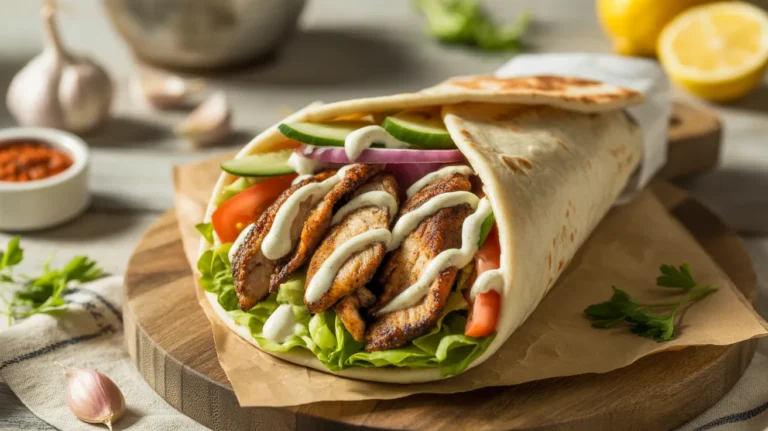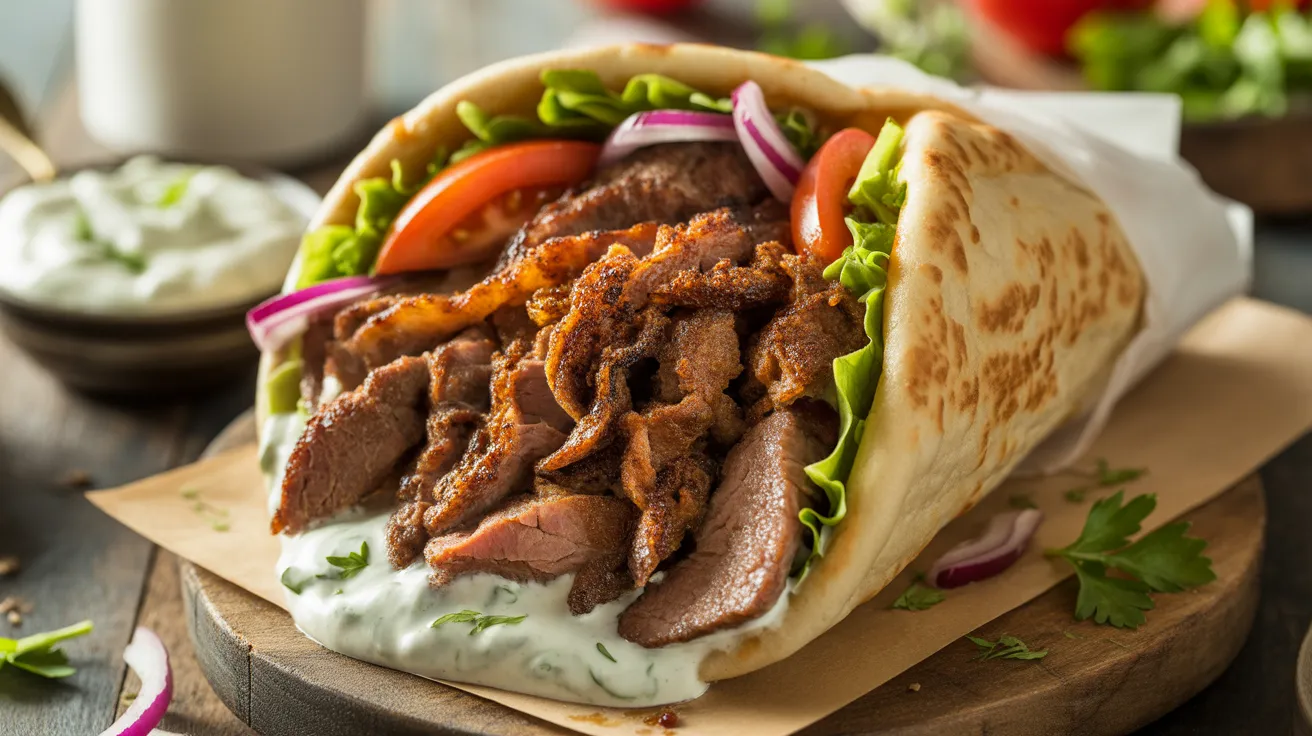
Making doner kebab the classic gyro at home sounds tricky, but I’m going to walk you through every step so you can skip the takeout line and create this iconic street food yourself. This doner kebab the classic gyro brings together perfectly seasoned meat, fresh vegetables, and creamy sauce wrapped in warm pita bread for a meal that’ll have everyone asking for seconds.
SERVES: 4 | PREP: 25 MIN | COOK: 20 MIN | TOTAL: 45 MIN
What Makes Doner Kebab the Classic Gyro Special
I’ve been perfecting this recipe for years, and the secret is in the spice blend and cooking technique.
Traditional doner kebab uses vertically stacked meat that rotates on a spit. We’re adapting that for your home kitchen using a skillet method that creates those same crispy, caramelized edges you crave.
The beauty of this classic gyro is how the spices penetrate the meat. You’re not just seasoning the outside—you’re building flavor throughout.
Ingredients
For the Meat
| Ingredient | Amount |
|---|---|
| Ground lamb | 1 lb |
| Ground beef (80/20) | 1 lb |
| Garlic (minced) | 4 cloves |
| Onion (grated) | 1 medium |
| Dried oregano | 2 tsp |
| Ground cumin | 2 tsp |
| Paprika | 1 tsp |
| Ground coriander | 1 tsp |
| Black pepper | 1 tsp |
| Salt | 1½ tsp |
| Cayenne pepper | ¼ tsp |
For the Tzatziki Sauce
| Ingredient | Amount |
|---|---|
| Greek yogurt (full-fat) | 1 cup |
| Cucumber (grated, drained) | ½ cup |
| Garlic (minced) | 2 cloves |
| Fresh dill (chopped) | 2 tbsp |
| Lemon juice | 1 tbsp |
| Olive oil | 1 tbsp |
| Salt | ½ tsp |
For Assembly
| Ingredient | Amount |
|---|---|
| Pita bread (large) | 4 pieces |
| Tomatoes (sliced thin) | 2 medium |
| Red onion (sliced thin) | 1 small |
| Lettuce (shredded) | 2 cups |
| Fresh parsley (chopped) | ¼ cup |
Step-by-Step Instructions
Phase 1: Preparing the Meat Mixture (10 minutes)
Step 1: Place the grated onion in a clean kitchen towel and squeeze out all the liquid over your sink.
This step prevents your meat from becoming watery. You want that onion flavor without the excess moisture that makes the texture mushy.
Step 2: In a large mixing bowl, combine 1 lb ground lamb and 1 lb ground beef with your hands.
I use a 50/50 blend because lamb provides authentic flavor while beef adds structure. The combination creates that perfect doner kebab taste without being too gamey.
Step 3: Add the squeezed onion, 4 cloves minced garlic, 2 tsp oregano, 2 tsp cumin, 1 tsp paprika, 1 tsp coriander, 1 tsp black pepper, 1½ tsp salt, and ¼ tsp cayenne to the meat.
Mix everything with your hands for 3-4 minutes until the mixture becomes sticky and pasty. This develops the proteins and creates that dense, sliceable texture you get at gyro shops.
Step 4: Form the meat into a tight loaf shape about 8 inches long and 3 inches thick.
Wrap this in plastic wrap and refrigerate for at least 15 minutes. The cold firms everything up so it slices cleanly later.
Phase 2: Making the Tzatziki (10 minutes)
Step 5: Grate ½ cucumber and place it in a fine-mesh strainer over a bowl.
Sprinkle with a pinch of salt and let it sit for 5 minutes. Then squeeze out every drop of liquid you can—watery tzatziki is the enemy of a good gyro.
Step 6: In a medium bowl, combine 1 cup Greek yogurt, the drained cucumber, 2 cloves minced garlic, 2 tbsp chopped dill, 1 tbsp lemon juice, 1 tbsp olive oil, and ½ tsp salt.
Stir until smooth and taste for seasoning. The sauce should be tangy, garlicky, and thick enough to cling to the meat without sliding off.
Step 7: Cover the tzatziki and refrigerate until you’re ready to assemble.
The flavors meld together as it sits, and the cold sauce against warm meat creates that perfect temperature contrast.
Phase 3: Cooking the Doner Kebab (15 minutes)
Step 8: Remove your meat loaf from the refrigerator and slice it into ¼-inch thick pieces.
You can cut them lengthwise to create long strips or crosswise for rounder pieces. I prefer long strips because they layer better in the pita.
Step 9: Heat a large cast-iron skillet or heavy-bottomed pan over medium-high heat for 2 minutes.
Don’t add oil yet—the meat has enough fat to prevent sticking. A properly heated pan creates those crispy edges that make doner kebab the classic gyro irresistible.
Step 10: Working in batches, add meat slices in a single layer without crowding.
Cook for 2-3 minutes on the first side without moving them. You’ll know they’re ready to flip when the edges turn dark brown and crispy.
Step 11: Flip each piece and cook another 2 minutes on the second side.
The goal is crispy, caramelized exterior with juicy interior. If your pan starts smoking, reduce the heat slightly—you want sizzle, not char.
Step 12: Transfer cooked meat to a plate and tent with foil to keep warm.
Repeat with remaining meat slices, adjusting heat as needed between batches.
Phase 4: Assembly (5 minutes)
Step 13: Warm your 4 pita breads in a dry skillet for 30 seconds per side or wrap in foil and heat in a 350°F oven for 5 minutes.
Warm pita is pliable and won’t crack when you fold it. Cold pita breaks and ruins the whole experience.
Step 14: Lay one pita flat and spread 2-3 tablespoons tzatziki down the center.
Leave about 1 inch on each end clear—this prevents sauce from squeezing out when you roll.
Step 15: Layer ¼ of your cooked meat over the sauce, then add sliced tomatoes, red onion, shredded lettuce, and fresh parsley.
Don’t overfill or you won’t be able to close it. I know it’s tempting, but restraint now means a gyro you can actually eat without it falling apart.
Step 16: Fold the bottom edge up about 1 inch, then fold one side over and roll tightly.
The bottom fold catches drips while the tight roll keeps everything together. If you’re serving immediately, wrap the bottom half in foil or parchment paper for easier handling.
Chef’s Notes
Meat Selection Matters: I tested this doner kebab the classic gyro with different meat ratios, and the 50/50 lamb-beef blend wins every time. All lamb can be too strong, while all beef lacks that authentic flavor.
Temperature Control: Your pan needs to be hot enough to sear but not so hot that the spices burn. If you see black spots forming immediately, pull back on the heat.
Make-Ahead Strategy: You can prepare the meat mixture up to 24 hours ahead and slice just before cooking. The flavors actually develop more overnight.
Authentic Touch: For even more traditional flavor, add 1 teaspoon of ground sumac to your meat mixture. It adds a subtle lemony tang that elevates everything.
Nutrition Information (Per Serving)
- Calories: 685
- Protein: 48g
- Carbohydrates: 42g
- Fat: 35g
- Fiber: 3g
- Sodium: 1,240mg
Creative Variations
Chicken Doner Gyro: Swap the lamb and beef for 2 lbs ground chicken thigh (never breast—too dry). Add 1 extra tablespoon of olive oil to the mixture since chicken is leaner. For more Mediterranean-inspired wraps, check out this German-style doner kebab that uses different spice combinations.
Spicy Version: Double the cayenne to ½ teaspoon and add 1 teaspoon red pepper flakes to your meat mixture. Mix 1 tablespoon harissa paste into your tzatziki for heat from both directions.
Low-Carb Option: Skip the pita and serve your meat over a bed of chopped romaine with all the toppings. Add ¼ cup crumbled feta cheese for extra richness.
Vegetarian Alternative: Replace meat with 2 lbs mashed chickpeas mixed with the same spices plus 2 tablespoons tahini for binding. Form into patties and pan-fry until crispy. If you’re interested in other Middle Eastern wraps, this chicken shawarma wrap offers similar flavors with different preparation.
Storage & Reheating
Refrigeration: Store cooked meat separately from vegetables and sauce in airtight containers for up to 4 days.
Keep everything separate because assembled gyros get soggy quickly. Raw meat mixture keeps for 2 days refrigerated or 3 months frozen.
Freezing: Freeze cooked meat slices in a single layer on a baking sheet, then transfer to freezer bags for up to 3 months.
Thaw overnight in the refrigerator. Frozen tzatziki separates when thawed, so always make this fresh.
Reheating: Warm meat in a skillet over medium heat for 3-4 minutes, adding a splash of water if it seems dry.
Microwave works in a pinch (1 minute on high), but you lose those crispy edges that make this special. Warm pita bread separately right before assembling.
Troubleshooting Common Problems
Problem 1: Meat mixture is too wet and won’t hold together
You didn’t squeeze enough liquid from the onion or cucumber. Drain your grated onion thoroughly and add 2 tablespoons breadcrumbs to absorb excess moisture. The mixture should be sticky but not soupy.
Problem 2: Meat tastes bland
You need to add more salt—ground meat requires generous seasoning. Taste your raw mixture (yes, it’s safe in small amounts) and adjust. Each batch of meat varies in fat content, which affects how much seasoning you need.
Problem 3: Tzatziki is runny and slides off the meat
Your cucumber wasn’t drained properly. Always squeeze grated cucumber in a clean towel until your hands hurt. Use full-fat Greek yogurt, never regular yogurt or low-fat versions.
Problem 4: Pita bread cracks when rolling
Your pita was too cold or too dry. Warm it properly and work quickly while it’s still pliable. If pitas are old and dry, sprinkle them lightly with water before warming.
Problem 5: Everything falls apart when eating
You overfilled your gyro or didn’t roll it tightly enough. Use less filling than you think you need and fold that bottom edge up first. The foil wrapper around the bottom half isn’t optional—it’s structural support.
Equipment Essentials

- Large mixing bowl (glass or stainless steel for mixing meat)
- Cast-iron skillet or heavy-bottomed pan (12-inch works best)
- Box grater (for onion and cucumber)
- Fine-mesh strainer (essential for draining cucumber)
- Clean kitchen towels (for squeezing moisture out)
- Sharp knife (for slicing meat loaf)
- Cutting board (large enough for slicing)
- Plastic wrap (for chilling meat mixture)
- Aluminum foil (for keeping meat warm and wrapping gyros)
Shopping List by Store Section
Meat Department
- Ground lamb (1 lb)
- Ground beef 80/20 (1 lb)
Produce Section
- Garlic (6 cloves total)
- Yellow onion (1 medium)
- Cucumber (1 large)
- Tomatoes (2 medium)
- Red onion (1 small)
- Romaine lettuce (1 head)
- Fresh parsley (1 bunch)
- Fresh dill (1 bunch)
- Lemon (1)
Dairy Section
- Greek yogurt, full-fat (1 cup)
Bakery Section
- Large pita bread (4 pieces)
Spice Aisle
- Dried oregano
- Ground cumin
- Paprika
- Ground coriander
- Black pepper
- Cayenne pepper
- Salt
Condiment/Oil Aisle
- Olive oil
Success Secrets
1. Temperature is everything. Your pan must be screaming hot before the first piece of meat hits it. Preheat for a full 2 minutes and test with a drop of water—it should sizzle and evaporate immediately.
2. Don’t skip the resting time. Chilling your meat mixture for 15 minutes isn’t optional. This firms up the proteins and makes slicing clean and easy. Rush this step and you’ll have crumbly, messy meat.
3. Layer strategically. Always spread sauce first, then meat, then vegetables. This order prevents the pita from getting soggy and keeps the meat warm against the sauce where it belongs.
4. Press while cooking. Use a spatula to press down gently on meat slices while they cook. This creates more surface contact with the pan, which means more of those crispy, caramelized bits everyone fights over.
5. Assemble at the last second. Everything can be prepped ahead, but don’t assemble your gyros until you’re ready to eat. A gyro sitting for even 10 minutes loses its magic as the pita absorbs moisture and gets soggy.
This doner kebab the classic gyro recipe proves you don’t need a vertical spit or restaurant equipment to create authentic street food at home. Master these techniques and you’ll never wait in line again.