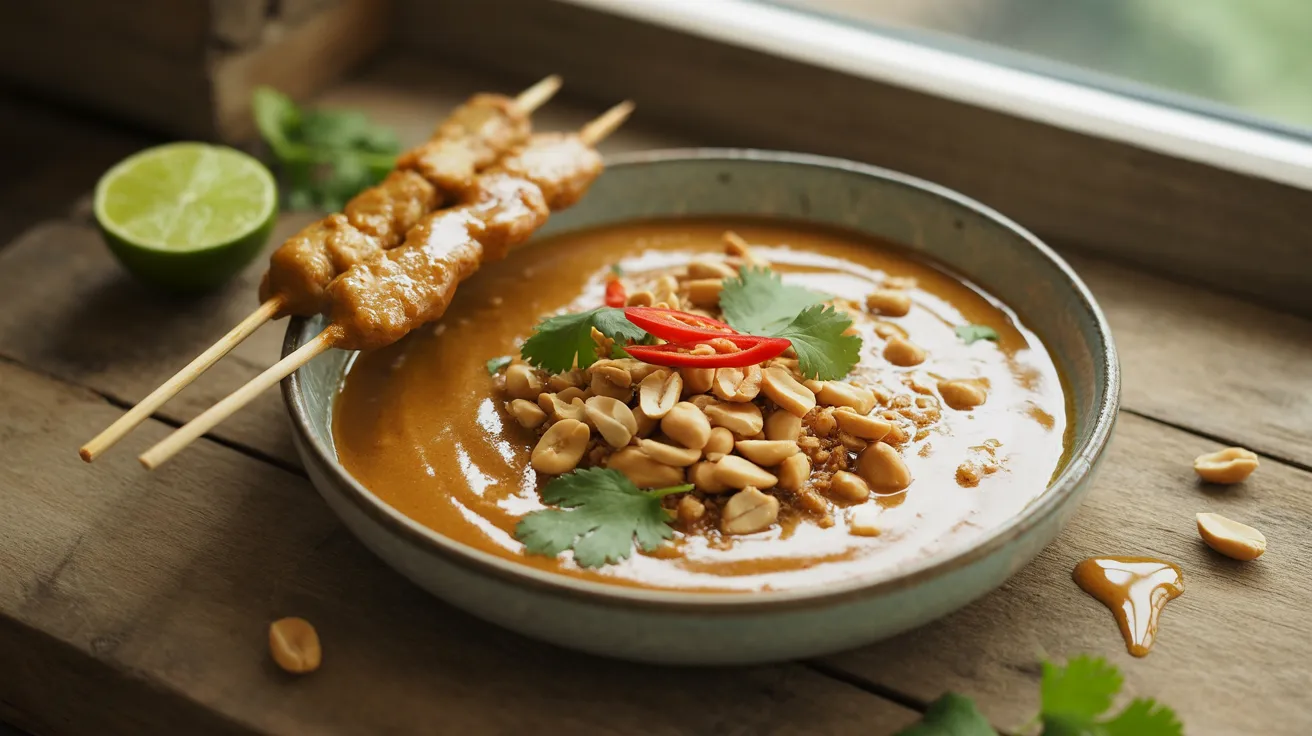
This Thai satay peanut sauce with coconut milk recipe is the one you will make again and again. Rich, creamy, and packed with real Thai flavor, this sauce comes together in just 15 minutes on the stove. Use it as a dipping sauce for grilled chicken skewers, drizzle it over noodles, or spoon it straight from the pot — no judgment here. This Thai satay peanut sauce with coconut milk is silky, savory, and just the right amount of spicy.
SERVES: 4 | PREP: 10 MIN | COOK: 15 MIN | TOTAL: 25 MIN
What Makes This Thai Satay Peanut Sauce With Coconut Milk Recipe So Good
Most store-bought peanut sauces taste flat and one-dimensional. This homemade version is layered with flavor — roasted peanuts, creamy coconut milk, savory fish sauce, and a hit of red curry paste that gives it that deep, slightly smoky Thai character.
It clings perfectly to chicken skewers. It also works beautifully as a noodle sauce, a salad dressing base, or a dipping sauce for spring rolls and fresh vegetables.
Once you make it from scratch, going back to the jar version is going to be very hard.
Ingredients for Thai Satay Peanut Sauce With Coconut Milk
Sauce Base
| Ingredient | Amount |
|---|---|
| Full-fat coconut milk | 1 cup (240 ml) |
| Creamy natural peanut butter | ½ cup (130 g) |
| Red curry paste | 2 tablespoons |
| Fish sauce | 2 tablespoons |
| Soy sauce | 1 tablespoon |
Flavor Builders
| Ingredient | Amount |
|---|---|
| Fresh lime juice | 2 tablespoons (about 1 large lime) |
| Brown sugar or palm sugar | 1 tablespoon |
| Garlic, minced | 2 cloves |
| Fresh ginger, grated | 1 teaspoon |
| Sesame oil | 1 teaspoon |
For Serving
| Ingredient | Amount |
|---|---|
| Roasted peanuts, roughly chopped | 2 tablespoons |
| Fresh cilantro, chopped | 2 tablespoons |
| Red chili flakes or sliced fresh chili | To taste |
| Lime wedges | 4 wedges |
How To Make Thai Satay Peanut Sauce With Coconut Milk — Step-by-Step Instructions
Phase 1: Prep Your Ingredients (5 Minutes)
Step 1: Measure everything before you turn on the heat.
This sauce moves fast once it hits the pan. Get all your ingredients measured and ready to go. Put the peanut butter, coconut milk, fish sauce, soy sauce, curry paste, sugar, sesame oil, lime juice, garlic, and ginger into separate small bowls or cups. Chefs call this “mise en place” — having everything in place before you start cooking. It stops you from scrambling mid-cook.
Step 2: Mince the garlic finely.
Use a sharp knife to peel 2 garlic cloves, then chop them as fine as you can. Bigger pieces of garlic will not blend smoothly into the sauce. Aim for pieces no bigger than a sesame seed. If you have a garlic press, now is a great time to use it.
Step 3: Grate the fresh ginger.
Peel a small knob of fresh ginger using the edge of a spoon — it peels cleanly without wasting much ginger. Then use a fine grater or microplane to grate 1 teaspoon of ginger. Fresh ginger has a brightness that ground ginger cannot replicate, so stick with fresh here if you can.
Step 4: Juice your lime.
Roll the lime firmly on the countertop before cutting — this breaks up the juice pockets inside and gets you more juice. Cut it in half and squeeze out 2 tablespoons of juice. Remove any seeds with a fork or your fingers.
Phase 2: Build the Sauce Base (5 Minutes)
Step 5: Heat a small saucepan over medium-low heat.
Place a small or medium saucepan on the stove over medium-low heat. You want gentle heat — not a ripping hot pan. High heat will cause the coconut milk to separate and the peanut butter to stick and scorch. Medium-low gives you control.
Step 6: Add the red curry paste and cook it briefly.
Add the 2 tablespoons of red curry paste directly to the dry pan. Let it sit undisturbed for about 30 seconds until you can smell the fragrance bloom. Then stir it around the pan for another 30 seconds. Toasting the curry paste this way wakes up the spices inside it and builds a deeper flavor base.
Safety tip: Stand back slightly when the curry paste first hits the pan — the chili oils can briefly irritate your eyes if you lean in close.
Step 7: Add the garlic and ginger.
Stir the minced garlic and grated ginger into the curry paste. Cook, stirring constantly, for 1 minute. The mixture will look chunky and dry — that is normal. You are building flavor here, not making a sauce yet. Watch the heat; if anything starts to brown too quickly, turn it down a notch.
Step 8: Pour in the coconut milk slowly.
Add the 1 cup of full-fat coconut milk to the pan in a slow, steady pour while stirring constantly. Keep stirring as you pour to help the curry paste and coconut milk combine smoothly. Full-fat coconut milk is important here — the lower-fat versions are too thin and will give you a watery sauce.
Step 9: Stir in the peanut butter.
Add the ½ cup of peanut butter and stir steadily until it fully melts into the coconut milk. This takes about 1–2 minutes of stirring. The sauce will thicken noticeably once the peanut butter is fully incorporated. Natural peanut butter (with only peanuts and salt as ingredients) works better than sweetened varieties because you control the sweetness yourself.
Phase 3: Season and Finish (5 Minutes)
Step 10: Add the fish sauce, soy sauce, and sugar.
Pour in the 2 tablespoons fish sauce, 1 tablespoon soy sauce, and 1 tablespoon brown sugar. Stir well to combine everything evenly. Fish sauce is very salty and deeply savory — it is the ingredient that makes this sauce taste authentically Thai. Do not skip it. If you are making a vegetarian version, swap it for an equal amount of soy sauce or tamari.
Step 11: Taste the sauce and adjust the balance.
This is the most important step. Dip a clean spoon in and taste carefully. Good Thai satay peanut sauce with coconut milk should have four flavors in balance: savory, sweet, sour, and spicy. Ask yourself:
- Is it salty enough? Add a touch more fish sauce or soy sauce.
- Is it sweet enough? Add a pinch more sugar.
- Does it need brightness? Add more lime juice, a little at a time.
- Not spicy enough? Add a pinch of red chili flakes.
Adjust slowly — add a little of one thing, stir, taste again.
Step 12: Add the lime juice and sesame oil.
Once the seasoning is balanced, stir in the 2 tablespoons of fresh lime juice and the 1 teaspoon of sesame oil. Add these off the heat or right at the end — both lose their brightness if cooked too long. The lime juice cuts through the richness of the peanut butter and coconut milk. The sesame oil adds a nutty, toasty finish that rounds out the sauce.
Step 13: Check the consistency.
Your Thai satay peanut sauce with coconut milk should coat the back of a spoon thickly but still pour slowly from a spoon. If it is too thick, whisk in 1–2 tablespoons of warm water until you reach the right texture. If it is too thin, let it simmer gently for another 2–3 minutes while stirring, and it will tighten up.
Phase 4: Serve and Garnish (2 Minutes)
Step 14: Pour into a serving bowl.
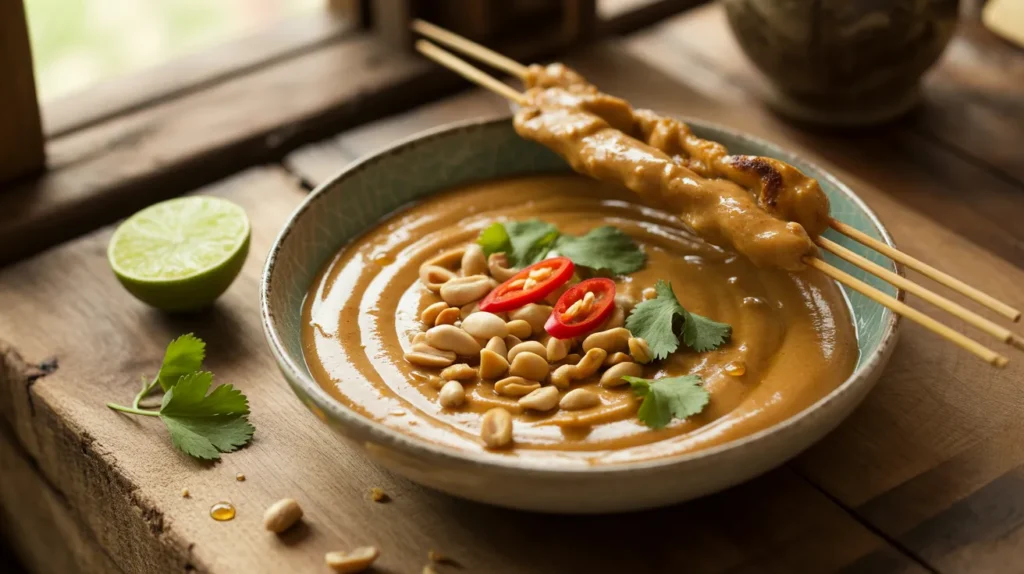
Transfer the warm sauce into a shallow serving bowl or pour it directly over plated chicken skewers. A wide, shallow bowl works best for dipping.
Step 15: Add your garnishes.
Scatter the 2 tablespoons of roughly chopped roasted peanuts over the top for crunch. Add the chopped fresh cilantro for color and freshness. Place sliced chili or chili flakes on top for heat, and tuck the lime wedges around the edge of the bowl. These garnishes do not just look good — the lime wedge is meant to be squeezed on just before eating for an extra pop of brightness.
Chef’s Notes
Use natural peanut butter, not Jif or Skippy. The sweetened, stabilized peanut butters make the sauce cloying. Natural peanut butter, even if it has separated in the jar, is far better here. Just stir it well before measuring.
Full-fat coconut milk only. Lite coconut milk is too watery and gives you a thin, flat sauce. The fat in full-fat coconut milk is what gives this Thai satay peanut sauce with coconut milk recipe its glossy, restaurant-style body.
Red curry paste is key. Different brands vary in spice level. Maesri and Aroy-D are widely available and reliably good. Start with 2 tablespoons and add more if you want more heat.
Make it ahead. This sauce actually tastes better after a few hours because the flavors have time to settle and deepen together. Make it the morning before a party and refrigerate it until needed.
Nutrition Information (Per Serving)
| Nutrient | Amount |
|---|---|
| Calories | 285 kcal |
| Total Fat | 23 g |
| Saturated Fat | 11 g |
| Carbohydrates | 13 g |
| Sugar | 6 g |
| Protein | 8 g |
| Sodium | 720 mg |
| Fiber | 2 g |
Nutrition calculated for sauce only, based on 4 equal servings. Does not include garnishes or served protein.
Variations of Thai Satay Peanut Sauce With Coconut Milk
1. Extra Spicy Version
Double the red curry paste to 4 tablespoons and add 1 teaspoon of sambal oelek (Indonesian chili paste) along with a pinch of cayenne. This version is seriously hot and works great for spice lovers who find the standard recipe too mild. Serve it with plenty of cucumber slices on the side to cool things down.
2. Lighter Almond Butter Version
Swap the peanut butter for natural almond butter in equal amounts. The flavor is slightly milder and nuttier, with less of the bold peanut punch. This version works well for anyone with a peanut sensitivity. Pair it with a grilled tofu skewer or fresh rice paper rolls for a lighter meal.
3. Noodle Sauce Version
Thin the finished sauce with ¼ cup of warm pasta or noodle cooking water and toss it with cooked rice noodles or soba noodles. Add shredded rotisserie chicken, sliced cucumber, shredded carrots, and a handful of bean sprouts. This turns your dipping sauce into a full weeknight dinner in under 10 minutes. For an equally bold base, try the bold flavors in this authentic Pad Thai sauce with tamarind and fish sauce for a noodle night rotation.
4. Grilled Vegetable Dipping Sauce
Keep the sauce exactly as written but serve it alongside a platter of grilled zucchini, bell peppers, eggplant, mushrooms, and broccoli. The smoky char from the grill against the creamy, savory sauce is a combination that works for any summer cookout or dinner party. This is also a great option for guests who do not eat meat.
Storage and Reheating
Refrigerator: Store leftover Thai satay peanut sauce with coconut milk in an airtight container for up to 5 days. The sauce will thicken significantly in the fridge as it cools — this is normal.
Freezer: This sauce freezes well. Pour it into a freezer-safe container or ice cube tray for single-serving portions. Freeze for up to 2 months. Thaw overnight in the refrigerator.
Reheating: Warm the sauce in a small saucepan over low heat, stirring constantly. Add 1–2 tablespoons of warm water to loosen it back to the right consistency. Do not microwave in the container directly — the sauce can splatter. If you do microwave, use 30-second intervals with stirring in between, covered with a paper towel.
Make-Ahead Tip: This sauce is an ideal meal-prep item. Make a double batch on Sunday and use it throughout the week on grilled meats, noodle bowls, and salads.
Troubleshooting
Problem 1: My sauce is too thick.
Fix: Whisk in warm water, 1 tablespoon at a time, over low heat. Do not add cold water straight from the tap — it can cause the sauce to seize. Warm or room-temperature water works better.
Problem 2: My sauce separated and looks oily.
Fix: This happens when the heat is too high and the fat in the coconut milk splits out. Take the pan off the heat. Whisk vigorously while adding 1–2 tablespoons of warm water — the sauce will usually come back together with enough stirring. Lower the heat for the next batch.
Problem 3: The sauce tastes flat or bland.
Fix: It needs more of one or more of the four Thai flavor pillars. Try adding more fish sauce (savory/salty), a tiny pinch of sugar (sweet), a squeeze of lime (sour), or more chili paste (spicy). Add each element a tiny bit at a time and taste as you go.
Problem 4: My sauce is too salty.
Fix: Add more lime juice and a touch more coconut milk. A pinch of sugar also helps balance excess salt. Fish sauce is very salty — if you added more than the recipe calls for, balance it out with the acid and sweetness.
Problem 5: The peanut butter won’t fully blend in.
Fix: The sauce is too cold. Turn the heat up slightly to medium and keep stirring steadily. Peanut butter loosens up and melts in once the temperature of the liquid rises. If it still looks clumpy, whisk it briskly — a small wire whisk works much better than a spoon for this step.
Equipment Essentials
- Small or medium saucepan (2–3 quart size)
- Wooden spoon or silicone spatula for stirring
- Small wire whisk — really helpful for blending the peanut butter in smoothly
- Microplane or fine grater for the ginger
- Measuring cups and spoons
- Citrus juicer (optional, but helpful for getting max lime juice)
- Airtight glass container for storage
No saucepan? You can make this in the microwave — combine all ingredients in a microwave-safe bowl and heat in 30-second intervals, stirring well between each, until the peanut butter is melted and the sauce is smooth. Takes about 2–3 minutes total.
Shopping List by Store Section
Produce
- [ ] 1 large lime
- [ ] 1 small knob fresh ginger
- [ ] 2 garlic cloves
- [ ] Fresh cilantro (small bunch)
- [ ] Fresh red chili (optional)
International / Asian Aisle
- [ ] Red curry paste (Maesri or Aroy-D brand recommended)
- [ ] Fish sauce
- [ ] Sesame oil
- [ ] Soy sauce or tamari
Canned Goods
- [ ] Full-fat coconut milk (1 can, 400 ml)
Nut Butters / Baking Aisle
- [ ] Natural creamy peanut butter (no added sugar or oil)
Baking Aisle / Pantry
- [ ] Brown sugar or palm sugar
Snack Aisle
- [ ] Roasted unsalted or lightly salted peanuts (for garnish)
5 Success Secrets for the Best Thai Satay Peanut Sauce With Coconut Milk
1. Toast the curry paste first. Those 60 seconds in the dry pan before adding any liquid make a huge flavor difference. Do not skip this step.
2. Taste as you go, not just at the end. The balance of salty, sweet, sour, and spicy is personal. Build it the way you like it — the recipe is a starting point, not a rigid rule.
3. Use room-temperature peanut butter. Cold peanut butter straight from the fridge is stiff and takes much longer to incorporate. Let it sit at room temperature for 20 minutes before cooking.
4. Keep the heat gentle the whole time. Medium-low heat from start to finish. This sauce does not need high heat — it just needs patience and steady stirring.
5. Make it at least an hour before serving. The flavors knit together beautifully as it sits. If you are serving this Thai satay peanut sauce with coconut milk recipe at a dinner party, make it that afternoon and gently reheat it right before guests arrive. For the full chicken skewer experience, check out this Thai peanut sauce for chicken satay to serve alongside.