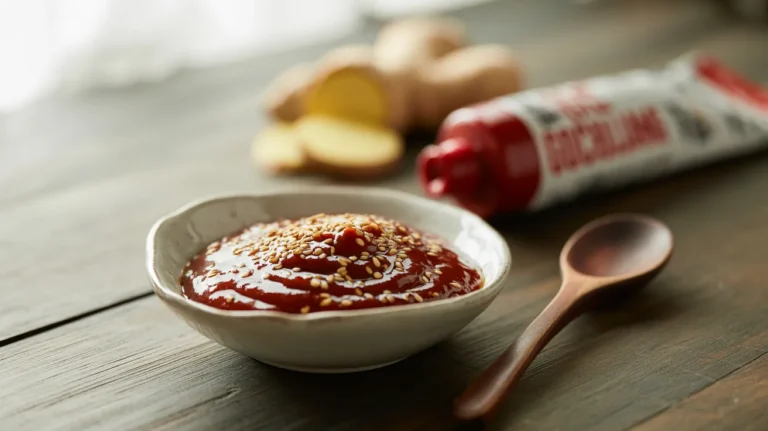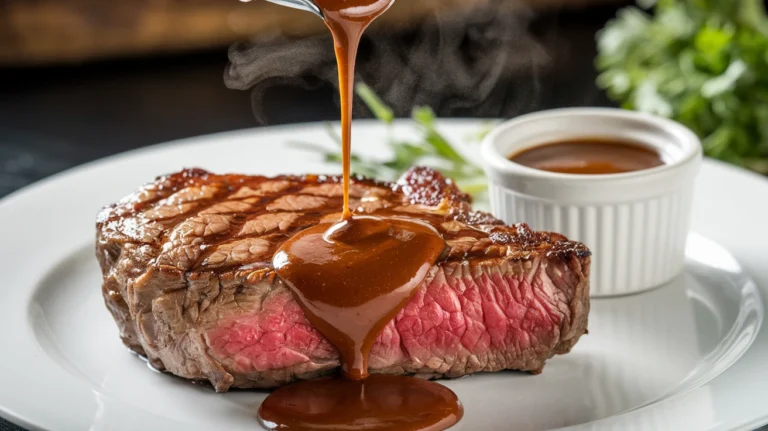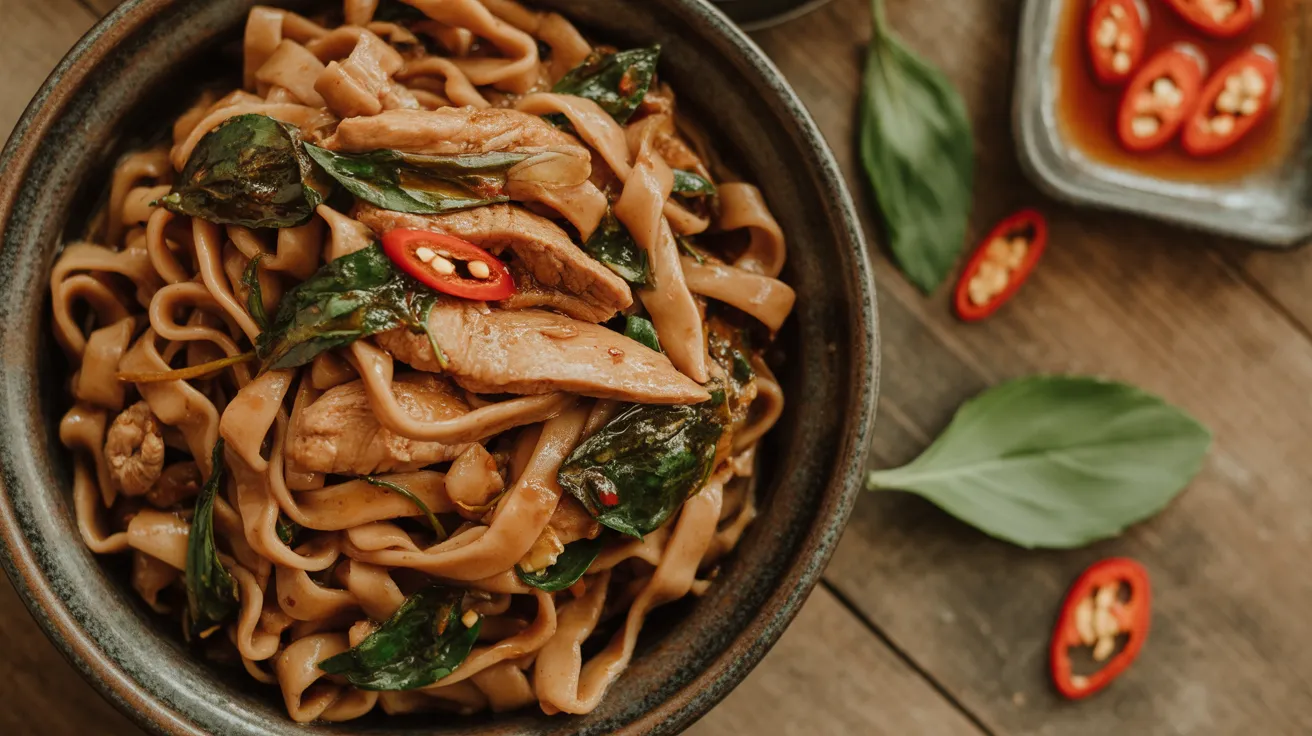
You only need one pan and 30 minutes to make this pad kee mao sauce Thai drunken noodles recipe at home. It’s bold, spicy, and packed with fresh Thai basil — and this pad kee mao sauce Thai drunken noodles recipe tastes just like the real thing from your favorite Thai restaurant.
SERVES: 4 | PREP: 15 MIN | COOK: 15 MIN | TOTAL: 30 MIN
What Is Pad Kee Mao?
Pad Kee Mao translates to “drunken noodles” in Thai. No, there’s no alcohol in it. The name likely comes from the idea that these spicy, bold noodles are perfect food after a night out.
This dish is all about the sauce. The pad kee mao sauce is a mix of savory, slightly sweet, and very spicy flavors. Wide rice noodles soak it all up perfectly.
Ingredients
The Noodles
| Ingredient | Amount |
|---|---|
| Wide rice noodles (fresh or dried) | 14 oz (400g) |
The Pad Kee Mao Sauce
| Ingredient | Amount |
|---|---|
| Oyster sauce | 3 tablespoons |
| Thai thin soy sauce (or regular soy sauce) | 2 tablespoons |
| Dark soy sauce | 1 tablespoon |
| Fish sauce | 1 tablespoon |
| Granulated sugar | 1 teaspoon |
| Water | 2 tablespoons |
The Stir-Fry
| Ingredient | Amount |
|---|---|
| Boneless chicken breast (thinly sliced) | 12 oz (340g) |
| Fresh Thai basil leaves | 1 cup (packed) |
| Thai bird’s eye chilies (or serrano), sliced | 3–5 (adjust to taste) |
| Garlic cloves, minced | 5 large cloves |
| Egg | 2 large |
| Neutral oil (vegetable or canola) | 3 tablespoons |
How to Make the Pad Kee Mao Sauce
Step 1 — Mix Your Sauce First
Get a small bowl. Add 3 tablespoons oyster sauce, 2 tablespoons thin soy sauce, 1 tablespoon dark soy sauce, 1 tablespoon fish sauce, 1 teaspoon sugar, and 2 tablespoons water.
Stir everything together until the sugar fully dissolves. Set the bowl right next to your stove. You’ll need it fast once the wok gets hot.
Why this matters: Stir-frying is fast. If your sauce isn’t ready before you start cooking, the noodles will burn while you measure things out.
How to Prepare the Noodles
Step 2 — Soak or Cook Your Noodles
If using dried wide rice noodles: Place them in a large bowl. Cover with room-temperature water. Soak for 30–45 minutes until they’re pliable but still slightly firm. They should bend without breaking. Drain and set aside.
If using fresh rice noodles: Gently separate them with your hands. If they’re cold from the fridge, run them under warm water for 30 seconds to loosen them up. Drain well.
Why this matters: Noodles that are too soft will turn mushy in the wok. You want them about 80% cooked before they hit the pan — the heat and sauce finish the job.
How to Prep the Chicken
Step 3 — Slice the Chicken Thin
Place your chicken breast on a cutting board. Slice it against the grain into pieces about ¼ inch thick. Aim for pieces roughly 2 inches long.
Pro tip: Pop the chicken in the freezer for 15 minutes before slicing. Cold chicken is much easier to cut thin.
Step 4 — Season the Chicken
Put the sliced chicken in a bowl. Add 1 teaspoon soy sauce and ½ teaspoon cornstarch. Toss it together with your hands or a spoon. Let it sit for 10 minutes.
Why this matters: The cornstarch creates a light coating that helps the chicken brown nicely and stay juicy.
The Stir-Fry: Step by Step
Step 5 — Heat the Wok Until Very Hot
Place a wok or your largest skillet on the stove over the highest heat setting. Let it heat for 2 full minutes before adding any oil.
The wok is ready when you hold your hand 6 inches above it and feel strong heat radiating up.
Safety tip: Keep a lid nearby in case of flare-ups. Never leave the stove once the heat is on high.
Step 6 — Add the Oil
Pour 3 tablespoons of neutral oil into the hot wok. Swirl it to coat the bottom and sides. The oil should shimmer immediately. If it smokes right away, turn the heat down slightly to medium-high.
Step 7 — Cook the Garlic and Chilies
Add the 5 minced garlic cloves and 3–5 sliced chilies to the oil. Stir constantly with a spatula or wooden spoon for 30 seconds.
The garlic should turn light golden and smell fragrant. Watch it closely — garlic burns in seconds and burned garlic turns bitter.
Adjusting heat: Use 3 chilies for medium spice, 5 for hot, or skip them entirely for mild. You can always add chili flakes later at the table.
Step 8 — Add the Chicken
Push the garlic and chilies to the side of the wok. Add the seasoned chicken in a single layer.
Let it sit untouched for 60 seconds before stirring. This gives it a good sear.
Then stir-fry the chicken for another 2–3 minutes, moving it constantly, until it’s cooked through with no pink showing inside.
Visual cue: The chicken should have some golden-brown edges and be fully white inside.
Step 9 — Push Chicken to the Side and Scramble the Eggs
Push all the chicken to one side of the wok. Crack 2 eggs into the empty space.
Use your spatula to scramble the eggs quickly. Once they’re about 70% set — still slightly wet — mix them into the chicken. This takes about 30 seconds.
Why not fully cooked? The eggs finish cooking when you add the noodles. Fully cooked eggs at this stage turn rubbery.
Step 10 — Add the Noodles
Add your drained noodles to the wok. Spread them out over the chicken and egg mixture.
Let the noodles sit untouched for 20 seconds to pick up some wok char on the bottom. Then toss everything together gently using tongs or two spatulas.
Be gentle: Wide rice noodles tear easily. Use a folding motion rather than aggressive stirring.
Step 11 — Pour in the Pad Kee Mao Sauce
Pour your pre-mixed pad kee mao sauce evenly over the noodles. Toss and fold everything together for 1–2 minutes.
Every noodle should be coated in the dark, glossy sauce. The noodles will deepen in color from the dark soy sauce.
Visual cue: The sauce should look sticky and glossy on the noodles, not watery or pooling at the bottom of the wok.
Step 12 — Taste and Adjust
Take a quick taste. The Thai drunken noodles should be:
- Savory from the soy and fish sauce
- Slightly sweet from the oyster sauce and sugar
- Spicy from the chilies
Need more salt? Add a tiny splash of fish sauce. Too salty? Add ½ teaspoon of sugar. Not spicy enough? Add sliced fresh chilies on top when serving.
Step 13 — Add the Thai Basil
Turn the heat off. Add 1 cup of packed Thai basil leaves to the wok. Toss everything together quickly.
The basil will wilt from the residual heat in about 15 seconds. You want it wilted but still green, not brown and soggy.
Can’t find Thai basil? Regular Italian basil works in a pinch. The flavor is slightly different — less anise-forward — but still delicious.
Step 14 — Plate and Serve Immediately
Divide the noodles between 4 plates or bowls. Serve right away while the noodles are hot and the sauce is glossy.
These Thai drunken noodles don’t wait well — eat them fresh off the wok.
Chef’s Notes
1. The Wok Makes the Difference High heat is the secret to great pad kee mao sauce Thai drunken noodles. A wok gets hotter than a flat skillet and creates “wok hei” — that slightly smoky, charred flavor you get at Thai restaurants. If you only have a skillet, cook in two small batches instead of one big one.
2. Fresh vs. Dried Noodles Fresh wide rice noodles give you the best texture for this pad kee mao sauce dish. Look for them in the refrigerated section of Asian grocery stores. Dried noodles work well too — just don’t over-soak them.
3. Don’t Skip the Dark Soy Sauce Dark soy sauce is what gives pad kee mao sauce Thai drunken noodles that deep brown color and slightly sweet, rich flavor. Regular soy sauce alone won’t give you the right result. Find it at any Asian grocery store for about $2–3.
4. Prep Everything Before You Cook Once the wok is hot, this dish moves fast — under 10 minutes from first ingredient to done. Have every ingredient measured, chopped, and sitting next to the stove before you turn on the heat.
Nutrition Information (Per Serving)
| Nutrient | Amount |
|---|---|
| Calories | 485 kcal |
| Protein | 32g |
| Carbohydrates | 58g |
| Fat | 12g |
| Saturated Fat | 2g |
| Sodium | 1,180mg |
| Fiber | 2g |
| Sugar | 4g |
Nutrition values are estimates based on ingredients listed. Actual values may vary depending on specific brands used.
4 Delicious Variations
1. Shrimp Pad Kee Mao
Swap the chicken for 12 oz of large shrimp, peeled and deveined. Shrimp cook in just 2 minutes — add them right before the noodles and pull them off the heat the moment they turn pink and curl into a C-shape.
2. Tofu Thai Drunken Noodles (Vegetarian)
Use 14 oz of firm tofu, pressed and cubed. Replace the fish sauce with extra soy sauce and the oyster sauce with vegetarian oyster sauce (made from mushrooms — available at most Asian grocery stores). Press the tofu well so it crisps up in the wok.
3. Beef Pad Kee Mao
Thinly sliced flank steak or skirt steak works beautifully with this pad kee mao sauce. Slice it against the grain, just like the chicken. Beef needs about 3–4 minutes in the wok.
4. Extra Veggie Version
Add 1 cup of baby bok choy, ½ cup of sliced bell peppers, and 1 cup of bean sprouts along with the noodles. This is also a great way to use up whatever vegetables you have in the fridge.
For another great Thai noodle sauce to keep in your weeknight rotation, check out this spicy Thai drunken noodle sauce with basil and chili — it’s a great companion to this dish.
If you love building Thai sauces from scratch, our Thai Pad Thai sauce recipe breaks down the sweet-sour balance in that classic dish too.
Storage and Reheating
Refrigerator: Store leftover pad kee mao sauce Thai drunken noodles in an airtight container for up to 3 days. The noodles will absorb the sauce overnight and may stick together slightly.
Freezer: Not recommended. Rice noodles turn mushy and grainy after freezing and thawing.
Reheating on the Stove (Best Method): Add the noodles to a hot skillet with 1 tablespoon of water or a tiny splash of soy sauce. Toss over medium-high heat for 2–3 minutes until heated through. The added moisture loosens the noodles back up.
Reheating in Microwave: Cover the container with a damp paper towel. Microwave on 60% power in 90-second intervals, tossing between each, until hot. Add a splash of water if the noodles seem dry.
Make-Ahead Tip: Mix the pad kee mao sauce up to 5 days ahead and store it in a jar in the fridge. This cuts your weeknight cooking time in half.
Troubleshooting: 5 Common Problems
Problem 1: Noodles Are Sticking Together
Why it happens: Noodles that are cold or over-soaked tend to clump in the wok. Fix: Before adding noodles to the wok, toss them with 1 teaspoon of oil to coat each strand. Also make sure your wok is fully hot before the noodles go in.
Problem 2: The Sauce Tastes Too Salty
Why it happens: Both soy sauce and fish sauce are high in sodium. Over-measuring either one throws off the balance. Fix: Add ½ teaspoon of sugar and a small squeeze of fresh lime juice. The sweetness and acid balance out the salt without diluting the flavor.
Problem 3: Noodles Are Mushy
Why it happens: Over-soaked dried noodles or fresh noodles that sat in water too long break down in the wok heat. Fix: For dried noodles, check them after 25 minutes of soaking. They should bend without snapping but still feel slightly firm. Pull them early — they finish cooking in the wok.
Problem 4: No Wok Char / Tastes Flat
Why it happens: The wok isn’t hot enough, or the pan is overcrowded. Fix: Cook in two batches if your pan is smaller than 14 inches across. An overcrowded wok steams the food instead of searing it. That sear is what creates the smoky depth in this Thai drunken noodles dish.
Problem 5: Basil Turned Brown and Bitter
Why it happens: Adding basil while the heat is still on too long wilts it past the point of no return. Fix: Turn the heat completely off before adding the basil. Toss quickly and get it to the plate fast. Residual wok heat is all you need to wilt the leaves perfectly.
Equipment Essentials
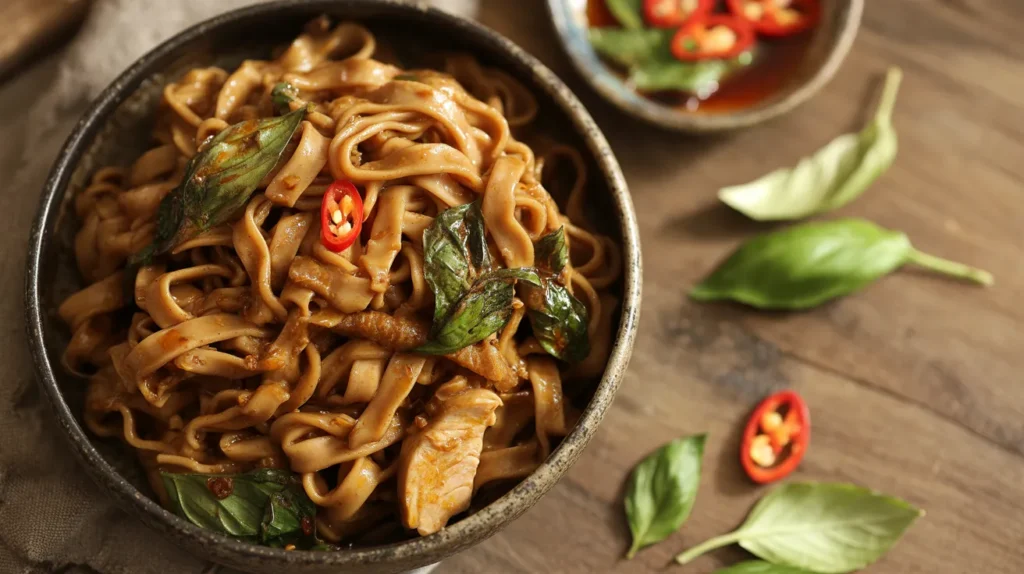
- Wok (14-inch or larger) — A flat-bottomed wok works on electric and gas stoves. This is the most important tool for this recipe.
- Wok spatula or tongs — For tossing noodles without tearing them.
- Cutting board and sharp knife — For slicing chicken and mincing garlic.
- Mixing bowls — One for the sauce, one for soaking noodles, one for the chicken.
- Measuring spoons — Accuracy matters with this sauce. Don’t eyeball it the first time.
No wok? A large cast iron skillet or the biggest stainless steel pan you own works. Just cook in two batches to keep the heat high.
Shopping List by Store Section
Produce
- Fresh Thai basil (1 bunch)
- Thai bird’s eye chilies or serrano peppers (1 small package)
- Garlic (1 head)
Meat / Seafood
- Boneless chicken breast (12 oz / 340g)
Dairy / Refrigerated
- Eggs (2 large)
International / Asian Aisle
- Wide rice noodles — fresh (refrigerated) or dried (14 oz)
- Oyster sauce (1 bottle)
- Thai thin soy sauce or regular soy sauce (1 bottle)
- Dark soy sauce (1 bottle)
- Fish sauce (1 bottle)
Pantry
- Neutral oil (vegetable or canola)
- Granulated sugar
- Cornstarch
5 Success Secrets for Perfect Pad Kee Mao Sauce Thai Drunken Noodles
1. Mix the sauce before you touch the stove. This single habit separates great results from burnt noodles. The whole stir-fry takes 8–10 minutes. There’s no time to measure mid-cook.
2. High heat is non-negotiable. Turn your burner to the highest setting. The smoky, slightly charred flavor in pad kee mao sauce Thai drunken noodles only happens at high heat. Medium heat gives you steamed noodles, not stir-fried ones.
3. Don’t rush the garlic sear. Those first 30 seconds of garlic and chili in hot oil build the flavor base for the entire dish. Let it get golden before moving on.
4. Fresh Thai basil is worth finding. It’s the ingredient that makes this dish taste authentic. Asian grocery stores almost always carry it, and a bunch costs under $2. The flavor is anise-forward and slightly peppery — very different from Italian basil.
5. Eat it immediately. This pad kee mao sauce dish is at its best the moment it comes off the wok. The noodles are glossy, the basil is fresh, and the edges have just a bit of char. It doesn’t improve with time — so call everyone to the table before you plate it.