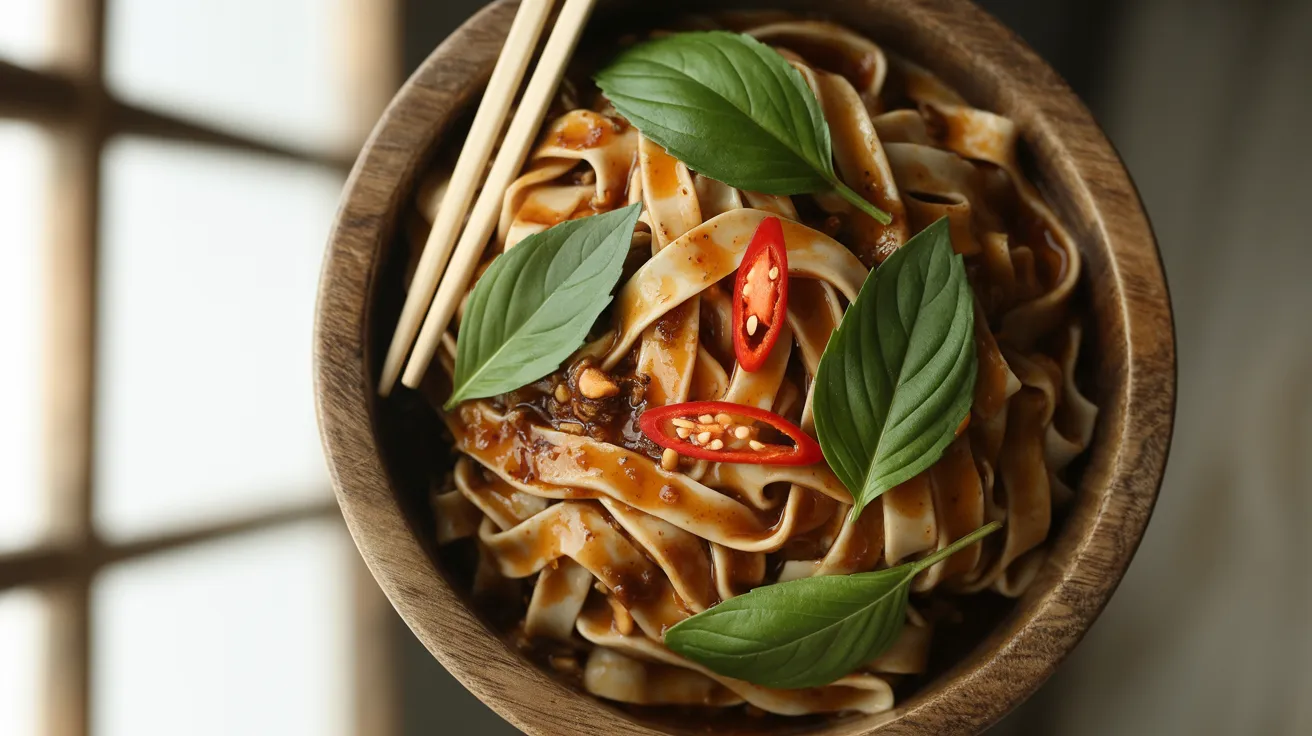
This spicy Thai drunken noodle sauce brings authentic street food flavor right to your kitchen with bold basil, fiery chilies, and savory umami notes that coat every strand of noodle perfectly. My spicy Thai drunken noodle sauce basil chili recipe creates that signature sweet-spicy-salty balance you crave from your favorite Thai restaurant, and it’s ready in just minutes with ingredients you can find at any Asian market.
SERVES: 4 | PREP: 10 MIN | COOK: 5 MIN | TOTAL: 15 MIN
Ingredients
Sauce Base
| Ingredient | Amount |
|---|---|
| Dark soy sauce | 3 tablespoons |
| Thin soy sauce (or regular soy sauce) | 2 tablespoons |
| Oyster sauce | 2 tablespoons |
| Fish sauce | 1 tablespoon |
| Brown sugar | 2 tablespoons |
| Water | 2 tablespoons |
Aromatics & Heat
| Ingredient | Amount |
|---|---|
| Fresh Thai bird’s eye chilies | 4-6 chilies, sliced |
| Garlic cloves | 6 cloves, minced |
| Fresh Thai basil leaves | 1 cup, packed |
| Shallots | 2 medium, thinly sliced |
Optional Additions
| Ingredient | Amount |
|---|---|
| White pepper | 1/4 teaspoon |
| MSG (optional) | 1/4 teaspoon |
| Cornstarch | 1 teaspoon |
Step-by-Step Instructions
Phase 1: Sauce Preparation (3 minutes)
Step 1: Combine 3 tablespoons dark soy sauce, 2 tablespoons thin soy sauce, 2 tablespoons oyster sauce, and 1 tablespoon fish sauce in a medium mixing bowl.
The dark soy sauce gives your spicy Thai drunken noodle sauce that signature deep color and slightly sweet molasses flavor. Don’t skip it or your sauce will look pale.
Step 2: Add 2 tablespoons brown sugar to the soy sauce mixture and whisk vigorously for 30 seconds until the sugar dissolves completely.
You shouldn’t see any sugar granules at the bottom of the bowl. The sugar balances the salty umami and creates that addictive sweet-savory contrast Thai food is famous for.
Step 3: Pour in 2 tablespoons water and stir to thin the sauce slightly.
This water prevents the sauce from becoming too thick and sticky when it hits the hot wok. Your final spicy Thai drunken noodle sauce should coat noodles without pooling at the bottom.
Step 4: If using cornstarch for a glossier finish, whisk 1 teaspoon cornstarch into the sauce until no lumps remain.
The cornstarch is optional but creates that restaurant-quality shine and helps the sauce cling to every noodle strand.
Phase 2: Aromatic Preparation (2 minutes)
Step 5: Mince 6 garlic cloves as finely as possible using a sharp knife or garlic press.
Finely minced garlic distributes better throughout your spicy Thai drunken noodle sauce and prevents bitter burnt chunks. I like to smash each clove with the flat of my knife first, then mince.
Step 6: Slice 2 medium shallots into thin rings about 1/8-inch thick.
Shallots add a sweet onion flavor that’s more delicate than regular onions. Cut them thin so they cook quickly and evenly in the hot oil.
Step 7: Slice 4-6 Thai bird’s eye chilies on the diagonal, keeping the seeds for maximum heat.
Start with 4 chilies if you’re heat-sensitive, or go up to 6 for authentic fire. The diagonal cut exposes more surface area and releases more capsaicin into your sauce.
Step 8: Pick 1 cup packed Thai basil leaves from their stems, discarding any bruised or discolored leaves.
Thai basil has a distinct anise-like flavor that regular Italian basil can’t replicate. It’s worth finding at an Asian market. Only add the basil at the very end to preserve its bright flavor and color.
Phase 3: Cooking the Sauce (5 minutes)
Step 9: Heat your wok or large skillet over high heat for 2 minutes until wisps of smoke appear.
A properly heated wok is essential for that smoky “wok hei” flavor that makes restaurant Thai food taste different from homemade. If water droplets dance and evaporate instantly, your wok is ready.
Step 10: Add 2 tablespoons neutral oil (vegetable or peanut) and swirl to coat the wok surface.
The oil should shimmer but not smoke. If it smokes, your heat is too high—reduce slightly.
Step 11: Toss in the minced garlic and sliced shallots, stirring constantly for 20-30 seconds until fragrant and just beginning to turn golden.
Watch carefully here. Garlic burns in seconds on high heat, turning bitter. Keep your spatula moving and work quickly.
Step 12: Add the sliced chilies and stir-fry for another 15 seconds to release their oils.
You’ll smell the heat rising from the wok. If you’re sensitive to spicy fumes, turn on your exhaust fan or open a window.
Step 13: Pour your prepared sauce mixture into the wok all at once and bring to a vigorous boil, stirring constantly.
The sauce will bubble up dramatically. Keep stirring to prevent scorching on the bottom. This high heat caramelizes the sugars and intensifies the flavors.
Step 14: Let the spicy Thai drunken noodle sauce boil for 1-2 minutes until it reduces slightly and thickens.
You’ll know it’s ready when the sauce coats the back of your spoon and doesn’t immediately drip off. The consistency should be like thin honey.
Step 15: Turn off the heat and immediately stir in the Thai basil leaves, tossing for 10 seconds until they wilt.
The residual heat is enough to wilt the basil without cooking it to death. You want bright green leaves with their fresh anise flavor intact, not dark, soggy basil.
Step 16: Taste your sauce and adjust seasonings if needed—add more fish sauce for saltiness, brown sugar for sweetness, or fresh chilies for extra heat.
Trust your palate. Every brand of soy sauce varies in saltiness. My spicy Thai drunken noodle sauce basil chili recipe is balanced for most palates, but feel free to tweak.
Chef’s Notes
Tip 1: The secret to authentic spicy Thai drunken noodle sauce is the ratio of dark to thin soy sauce. The dark soy adds color and subtle sweetness, while the thin soy brings pure saltiness. Using only one type makes the sauce taste flat.
Tip 2: Always make this sauce fresh when you’re ready to cook your noodles. The basil loses its vibrant color and flavor if the sauce sits too long. I prep all my ingredients first, then make the sauce right before tossing with noodles.
Tip 3: If you can’t find Thai bird’s eye chilies, substitute with 2-3 serrano peppers or 1-2 jalapeños. The flavor profile changes slightly, but you’ll still get good heat. Don’t use dried chili flakes—they won’t give you the fresh chili flavor this spicy Thai drunken noodle sauce needs.
Tip 4: The key to restaurant-quality sauce is that screaming-hot wok. Most home stoves can’t match restaurant wok burners, so crank your heat to maximum and preheat longer than you think necessary. That intense heat creates the smoky depth you’re after.
Nutrition Information (Per Serving)
- Calories: 85
- Protein: 2g
- Carbohydrates: 14g
- Fat: 3g
- Sodium: 1,240mg
- Sugar: 8g
- Fiber: 1g
Nutritional values are for sauce only, not including noodles or proteins
Creative Variations
Milder Family-Friendly Version: Cut the chilies down to just 1-2 and remove all the seeds for a sauce with flavor but minimal heat. I make this version when my kids want to join dinner. You still get the sweet-savory balance without the fire.
Extra Savory Umami Bomb: Add 1 tablespoon of black bean paste or fermented black beans to your sauce base. This creates a deeper, earthier flavor profile similar to pad kee mao sauce Thai drunken noodles recipe served at high-end Thai restaurants.
Holy Basil Swap: Replace Thai basil with holy basil (bai gra pao) for a completely different flavor experience with peppery, clove-like notes. This transforms your sauce into something closer to Thai basil stir fry sauce pad kra pao recipe territory—equally delicious but distinctly different.
Vegetarian/Vegan Adaptation: Swap oyster sauce for mushroom oyster sauce and replace fish sauce with additional soy sauce plus 1 teaspoon of miso paste. You lose a bit of that funky umami depth, but it’s still a great spicy Thai drunken noodle sauce.
Storage & Reheating
Refrigeration: This sauce keeps in an airtight container in the fridge for up to 3 days, but the basil will darken and lose its fresh flavor. I recommend making only what you need for one meal.
Freezing: Not recommended. The basil turns black and mushy when frozen, and the texture of the sauce separates when thawed. This spicy Thai drunken noodle sauce basil chili recipe really shines when made fresh.
Reheating: If you must reheat leftover sauce, do it gently in a small pan over medium-low heat, stirring constantly. Add a splash of water if it’s thickened too much. Toss in fresh basil at the end to revive the flavor.
Make-Ahead Tip: You can prep and combine all your liquid sauce ingredients up to 24 hours ahead and store them in the fridge. Keep your aromatics prepped separately. When ready to cook, let the sauce come to room temperature, then proceed with heating your wok and cooking as directed.
Troubleshooting Common Problems
Problem 1: My sauce tastes too salty
Solution: You likely used regular soy sauce instead of thin soy sauce, or your oyster sauce brand is extra salty. Next time, reduce the thin soy sauce to 1 tablespoon and add more gradually. For this batch, dilute with 1-2 tablespoons of water and add 1 teaspoon more brown sugar to balance the salt.
Problem 2: The garlic burned and tastes bitter
Solution: Your wok was too hot or you didn’t move the garlic fast enough. Burned garlic ruins the whole sauce—start over. Next time, add the garlic to medium-hot oil (not smoking hot), and keep it moving constantly. Have everything prepped and ready so you’re not scrambling while garlic burns.
Problem 3: The sauce is too thin and won’t coat the noodles
Solution: You either added too much water or didn’t reduce the sauce long enough. Put the sauce back on high heat and boil for another 1-2 minutes to evaporate excess liquid. The cornstarch slurry helps too—mix 1 teaspoon cornstarch with 1 tablespoon cold water and stir into the simmering sauce.
Problem 4: My spicy Thai drunken noodle sauce has no heat
Solution: You probably removed all the chili seeds (where most of the capsaicin lives) or used mild chilies. Thai bird’s eye chilies pack serious heat. Next time, keep all the seeds and membranes. You can also add 1/2 teaspoon of chili oil or sambal oelek to boost the heat without changing the flavor too much.
Problem 5: The basil turned black and tastes cooked
Solution: You added the basil while the wok was still on high heat or let it cook too long. Always turn off the heat completely before adding Thai basil. The residual heat from the sauce is plenty to wilt the leaves while keeping them bright green and aromatic.
Equipment Essentials
- Carbon steel wok or large stainless steel skillet: A 14-inch wok is ideal for getting that high heat and smoky flavor. If you don’t have a wok, use the largest skillet you own—you need space to toss ingredients without spilling.
- Long-handled spatula or wok spatula: Essential for stirring quickly without burning your hands over the high heat.
- Mixing bowls: One medium bowl for combining your sauce ingredients before cooking.
- Sharp chef’s knife: For mincing garlic finely and slicing shallots and chilies.
- Measuring spoons and cups: Thai cooking is about balance, so accurate measurements matter for this spicy Thai drunken noodle sauce basil chili recipe.
- Garlic press (optional): Speeds up the garlic prep if you’re making this sauce frequently.
Shopping List by Store Section
Asian Foods Aisle
- Dark soy sauce (look for Healthy Boy or Pearl River Bridge brands)
- Thin soy sauce or light soy sauce
- Oyster sauce (Lee Kum Kee is reliable)
- Fish sauce (Three Crabs or Red Boat brands)
- Thai bird’s eye chilies (often in the fresh produce section near Thai ingredients)
Produce Section
- Fresh Thai basil (look for narrow leaves with purple stems—different from Italian basil)
- Garlic bulbs
- Shallots
Baking Aisle
- Brown sugar
- Cornstarch (optional)
Oil & Condiments
- Neutral cooking oil (vegetable, canola, or peanut)
Spices
- White pepper (optional)
- MSG (optional, but authentic)
Success Secrets
Secret 1: Buy the best quality soy sauces you can afford. Cheap soy sauce tastes harsh and one-dimensional. I use Healthy Boy dark soy sauce and Golden Mountain thin soy sauce—they’re worth the extra couple dollars.
Secret 2: The “drunken” in drunken noodles doesn’t mean there’s alcohol in the sauce. It refers to the dish being so good you’d crave it while drunk, or spicy enough to make you seem drunk while eating it. Some cooks add 1 tablespoon of Shaoxing wine or dry sherry, but it’s not traditional for this spicy Thai drunken noodle sauce.
Secret 3: Fresh Thai basil makes or breaks this recipe. Italian basil tastes completely different (sweeter, less anise-like) and won’t give you authentic results. If you absolutely can’t find Thai basil, use a mix of Italian basil and fresh mint as a compromise.
Secret 4: Make this sauce in small batches. The recipe serves 4 perfectly, coating about 1 pound of fresh wide rice noodles. Don’t try to double or triple the batch in one wok—you’ll lower the temperature too much and end up with steamed aromatics instead of that essential seared, smoky flavor.
Secret 5: Taste as you go and trust your instincts. Every batch of spicy Thai drunken noodle sauce basil chili recipe will vary slightly based on your chili heat level, soy sauce brand, and personal preference. Start with my ratios, then adjust boldness to match your palate. That’s how you make this recipe truly yours.