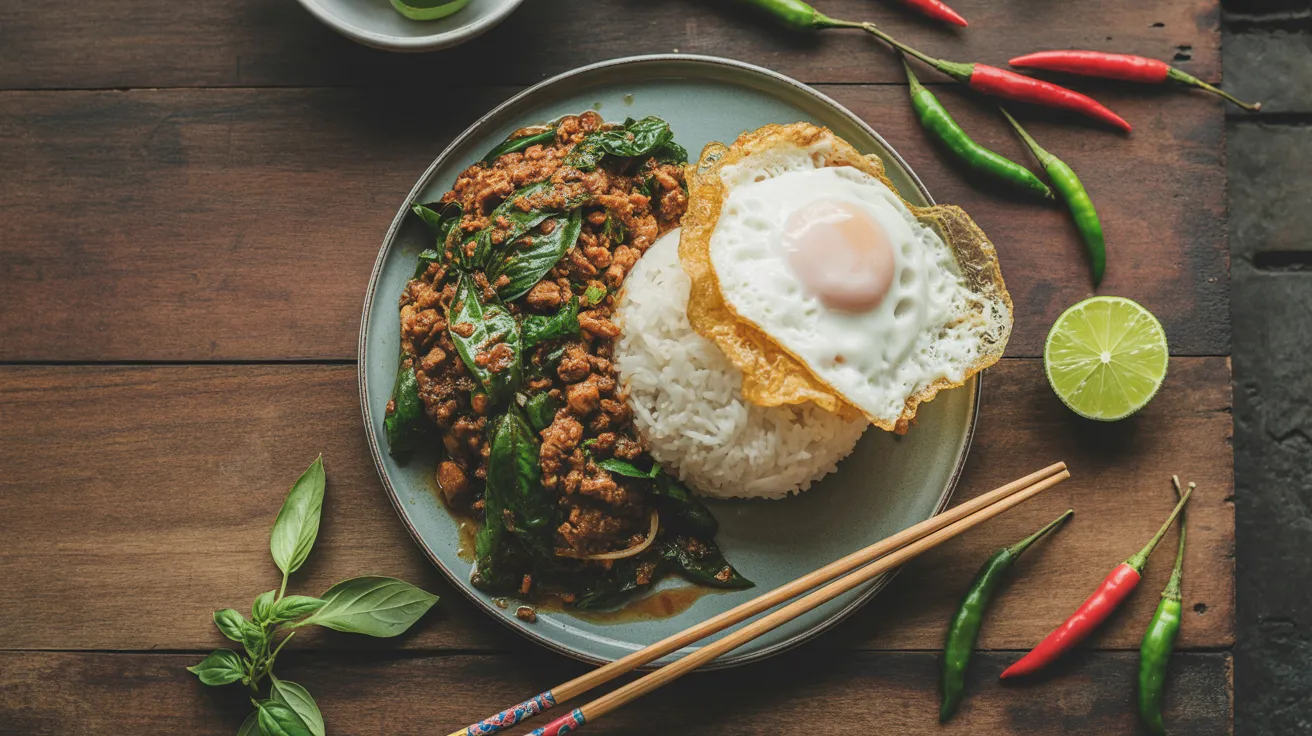
This Thai basil stir fry sauce pad kra pao recipe is the bold, spicy Thai street food dish you’ve been craving. With a punchy sauce built from oyster sauce, fish sauce, and fresh chilies, this Thai basil stir fry sauce pad kra pao recipe hits every note — savory, spicy, and a little sweet — all in under 20 minutes.
SERVES: 4 | PREP: 10 MIN | COOK: 10 MIN | TOTAL: 20 MIN
What Is Pad Kra Pao?
Pad Kra Pao is Thailand’s most popular street food. You’ll find it sizzling in woks at every market stall from Bangkok to Chiang Mai.
The name literally means “stir-fried holy basil.” The magic is in the sauce — a fast-cooking blend of aromatics and seasonings that coats every bite of meat.
Most Thai restaurants serve it over jasmine rice with a crispy fried egg on top. Once you try it at home, you’ll understand why Thai people eat this for breakfast, lunch, and dinner.
Ingredients
The Pad Kra Pao Sauce
| Ingredient | Amount |
|---|---|
| Oyster sauce | 2 tablespoons |
| Fish sauce | 1 tablespoon |
| Dark soy sauce | 1 teaspoon |
| Light soy sauce | 1 tablespoon |
| Sugar | 1 teaspoon |
| Water | 2 tablespoons |
The Stir Fry
| Ingredient | Amount |
|---|---|
| Ground pork or chicken | 500g (about 1.1 lbs) |
| Fresh Thai holy basil leaves | 1 cup, packed |
| Garlic cloves, minced | 6 large cloves |
| Thai bird’s eye chilies | 4–6 (adjust to taste) |
| Shallots, thinly sliced | 2 medium |
| Neutral oil (vegetable or canola) | 2 tablespoons |
To Serve
| Ingredient | Amount |
|---|---|
| Jasmine rice, cooked | 4 cups |
| Eggs | 4 large |
| Oil for frying eggs | 2 tablespoons |
| Lime wedges (optional) | 4 pieces |
Mix the Sauce First
Step 1: Combine All Sauce Ingredients
Grab a small bowl. Add 2 tablespoons oyster sauce, 1 tablespoon fish sauce, 1 tablespoon light soy sauce, 1 teaspoon dark soy sauce, 1 teaspoon sugar, and 2 tablespoons water.
Stir everything together with a spoon until the sugar fully dissolves. Taste it. It should be salty, savory, and slightly sweet. Set this bowl right next to your stove — you’ll need it fast.
Why pre-mix? Stir frying moves quickly. Having your sauce ready means you won’t burn your garlic while measuring.
Prep Your Aromatics
Step 2: Peel and Mince the Garlic
Peel 6 large garlic cloves. Lay them flat on your cutting board and crush them with the side of your knife. This loosens the skin and starts breaking the cells.
Now mince them finely. You want small, even pieces so they cook at the same rate. Pile them to one side.
Step 3: Prepare the Chilies
Use 4–6 Thai bird’s eye chilies for a medium-hot dish. For mild heat, use 2 chilies. For “Thai restaurant spicy,” use 8 or more.
Slice them into thin rounds. Leave the seeds in for max heat, or scrape them out for less fire. Warning: wash your hands immediately after touching chilies. Do not touch your eyes.
Step 4: Slice the Shallots
Peel 2 medium shallots and slice them thinly — about 2mm thick. Shallots add a mild sweetness that balances the salty sauce. Set aside with the garlic and chilies.
Step 5: Pick the Basil Leaves
Pull 1 cup of packed Thai holy basil leaves off the stems. Only use the leaves and very tender tops. Discard the thick stems — they won’t soften in time.
Can’t find Thai holy basil? Italian basil works in a pinch but tastes different. Thai sweet basil (the kind with purple stems) is the next best substitute. Look for holy basil at Asian grocery stores.
Cook the Stir Fry
Step 6: Heat Your Wok or Pan
Place your wok or largest skillet over high heat. Let it heat for 60–90 seconds until it just starts to smoke slightly.
Add 2 tablespoons of neutral oil and swirl it to coat the bottom and sides.
Why high heat? Pad kra pao needs intense heat to get that smoky “wok hei” flavor. If you cook it on medium, the meat will steam and turn gray instead of browning.
Step 7: Add the Aromatics
Add your minced garlic, sliced shallots, and chilies all at once to the hot oil.
Stir constantly with a spatula or wooden spoon. Cook for 30–45 seconds until fragrant and lightly golden. Watch closely — garlic burns fast on high heat and turns bitter.
You’ll know it’s ready when your kitchen smells amazing and the garlic edges just start to color.
Step 8: Add the Ground Meat
Add your 500g of ground pork or chicken directly into the wok.
Spread it out flat with your spatula. Let it sit untouched for 30 seconds so the bottom gets a good sear. Then break it apart into small crumbles and keep stirring.
Cook for 3–4 minutes total, breaking up any large clumps, until no pink remains.
Visual cue: The meat should look browned and slightly crispy on some edges, not pale or watery.
Step 9: Pour In the Sauce
Make sure all the meat is cooked through. Now pour your pre-mixed pad kra pao sauce over the meat.
Stir quickly to coat every piece. The sauce will sizzle and reduce fast. Keep stirring for 60–90 seconds until the sauce thickens slightly and clings to the meat.
The color should deepen to a rich brown. If the pan looks too dry, add 1 tablespoon of water and keep stirring.
Step 10: Add the Basil
Turn the heat off or drop it to low. Add your 1 cup of fresh holy basil leaves all at once.
Toss and stir for 15–20 seconds until the leaves wilt. Don’t overcook the basil — it should be bright green and just softened, not black and mushy.
Taste the stir fry. Add a splash more fish sauce if you want it saltier, or a pinch of sugar if it’s too sharp.
Your Thai basil stir fry sauce pad kra pao is ready. Keep it warm while you fry the eggs.
Fry the Eggs
Step 11: Heat Oil for the Eggs
In a separate small pan, heat 2 tablespoons of oil over medium-high heat for 45 seconds.
You need more oil than you think. The shallow pool of hot oil is what creates those crispy, lacy edges on a Thai-style fried egg.
Step 12: Crack and Fry Each Egg
Crack 1 egg carefully into the hot oil. It should sizzle loudly right away.
Tip the pan to pool the oil on one side, then spoon hot oil over the white to help it set. Cook for 90 seconds to 2 minutes until the white is fully set with crispy golden edges, but the yolk is still runny.
Slide it onto a plate. Repeat for the remaining 3 eggs.
Safety note: Hot oil can splatter. Crack the egg close to the pan, not from a height.
Plate and Serve
Step 13: Build Each Plate
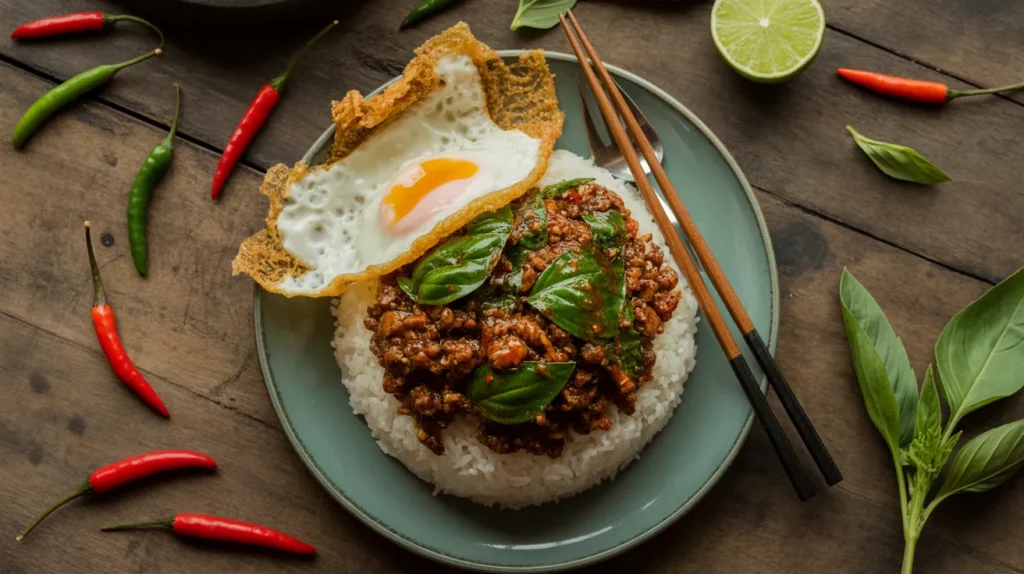
Scoop 1 cup of cooked jasmine rice onto each plate. Pile a generous portion of the Thai basil stir fry over the rice. Lay one crispy fried egg on top.
Add a lime wedge on the side if using. A squeeze of lime right before eating brightens the whole dish.
Serve immediately while everything is hot and the egg yolk is still runny.
Chef’s Notes
Use the right basil. Holy basil has a peppery, slightly clove-like flavor that you just can’t replicate. If you make this Thai basil stir fry sauce pad kra pao recipe with Italian basil, it’ll still taste good — but it won’t taste traditional.
Don’t skip the fried egg. Breaking that runny yolk into the spicy stir fry creates a sauce-within-a-sauce moment. It’s not optional in Thailand, and once you try it, you’ll understand why.
Go hotter than you think. Thai food is cooked on very high heat. If your pan isn’t smoking slightly when you add the oil, it’s not hot enough. A screaming-hot wok is the difference between great pad kra pao and a soggy stir fry.
Fresh garlic only. Pre-minced garlic from a jar adds a stale, acidic taste that fights with the clean flavors in this dish. Use fresh cloves every time.
Nutrition Information (Per Serving)
| Nutrient | Amount |
|---|---|
| Calories | 485 kcal |
| Protein | 32g |
| Carbohydrates | 42g |
| Fat | 18g |
| Sodium | 980mg |
| Sugar | 4g |
Based on ground pork, 1 cup jasmine rice, and 1 fried egg per serving.
Variations
Ground Beef Pad Kra Pao
Swap ground pork for 85% lean ground beef. Beef has a richer, meatier flavor that stands up well to the bold sauce. Use the exact same sauce and method. If you love big Thai flavors, check out this spicy Thai drunken noodle sauce with basil and chili — it uses a similar flavor base.
Tofu Pad Kra Pao (Vegan)
Use 400g firm tofu, pressed and crumbled into small pieces. Replace fish sauce with soy sauce and oyster sauce with vegetarian oyster sauce (widely available at Asian grocery stores). Cook the tofu until golden before adding the sauce.
Seafood Pad Kra Pao
Use 400g medium shrimp (peeled and deveined) or sliced squid. Reduce the cook time to just 2 minutes for the protein since seafood overcooks fast. The sauce quantities stay the same.
Double Basil Pad Kra Pao
Add 1/2 cup Thai sweet basil along with the holy basil at the end. This two-basil version has a deeper, more floral aroma. If you want a bold Thai dipping sauce to serve alongside, this nam pla prik Thai fish sauce chili lime dipping sauce is a perfect match on the table.
Storage & Reheating
Refrigerator: Store leftover stir fry (without the egg) in an airtight container for up to 3 days.
Freezer: Freeze the cooked meat and sauce in a sealed container for up to 2 months. Skip freezing with the basil — add fresh basil when you reheat it.
Reheating on the stove: Heat a pan over medium-high heat with a tiny splash of water or oil. Add the leftover pad kra pao and stir for 2–3 minutes until hot. The splash of water keeps it from drying out.
Reheating in the microwave: Cover loosely and heat on high for 90 seconds, stir, then heat for another 30–60 seconds. The texture won’t be as crispy, but it still tastes great.
Store rice separately from the stir fry to keep the textures right.
Troubleshooting
Problem 1: The stir fry is watery and pale. Your heat was too low. Water releases from the meat when it steams instead of sears. Fix: Always preheat the wok until it nearly smokes, and don’t crowd the pan. If your pan is small, cook the meat in two batches.
Problem 2: The garlic burned and tastes bitter. The garlic cooked too long before the meat went in. Fix: Have your ground meat measured and ready to add within 45 seconds of putting the garlic in. If the garlic burns, wipe the pan and start the aromatics over — burnt garlic ruins the whole dish.
Problem 3: The sauce is too salty. Different brands of oyster sauce and soy sauce vary wildly in saltiness. Fix: Add 1/2 teaspoon sugar and 1 tablespoon water to balance it. Taste and adjust before serving.
Problem 4: The basil turned black and slimy. It overcooked. Fix: Only add basil after you turn the heat off or drop it to low. The residual heat from the pan and the hot meat is enough to wilt it perfectly. 15–20 seconds is all it needs.
Problem 5: The fried egg stuck to the pan. The pan and oil weren’t hot enough before the egg went in. Fix: Test with a drop of water — if it immediately evaporates and sizzles, the oil is ready. Also, use a non-stick pan if your wok doesn’t have a good seasoned surface.
Equipment Essentials
- Wok or large skillet (12-inch or larger) — the bigger the surface area, the better the sear
- Wok spatula or wooden spoon — for fast stirring on high heat
- Small mixing bowl — for pre-mixing the sauce
- Cutting board and sharp knife
- Small non-stick frying pan — for the eggs
- Measuring spoons — the sauce ratios matter
No wok? A large stainless steel or cast iron skillet works well. Avoid non-stick for the stir fry itself — high heat can damage the coating.
Shopping List
Produce Section
- [ ] Fresh garlic (1 head)
- [ ] Thai bird’s eye chilies (small bag or loose)
- [ ] Shallots (2 medium)
- [ ] Thai holy basil (1 bunch)
- [ ] Lime (1–2)
Meat Section
- [ ] Ground pork or ground chicken (500g / 1.1 lbs)
Dairy / Refrigerated
- [ ] Eggs (4 large)
Asian Grocery / Condiments Aisle
- [ ] Oyster sauce
- [ ] Fish sauce
- [ ] Light soy sauce
- [ ] Dark soy sauce
Dry Goods / Grains
- [ ] Jasmine rice (enough for 4 cups cooked)
Pantry
- [ ] Granulated sugar
- [ ] Neutral oil (vegetable or canola)
5 Success Secrets for This Thai Basil Stir Fry Sauce Pad Kra Pao Recipe
1. Mix the sauce before you turn on the heat. Stir frying takes about 5 minutes total. If you’re measuring sauce ingredients mid-cook, the garlic will burn while you’re opening bottles.
2. Taste and adjust the sauce in the bowl first. Before it hits the hot pan, dip a spoon in. Too salty? Add more water. Too bland? Add a touch more fish sauce. Fix it cold, not hot.
3. Cook it on the highest heat your stove can give. This is the single biggest secret Thai street vendors know. Heat = flavor. Medium heat = gray, chewy meat in a watery sauce.
4. Use more garlic than feels right. Six cloves sounds like a lot. It’s not. Garlic is the foundation of pad kra pao — don’t be shy.
5. Eat it immediately. This Thai basil stir fry sauce pad kra pao recipe is at its best the moment it comes off the heat. The basil wilts, the rice absorbs the sauce, and the egg yolk mixes into everything. Don’t wait — sit down and eat it hot.