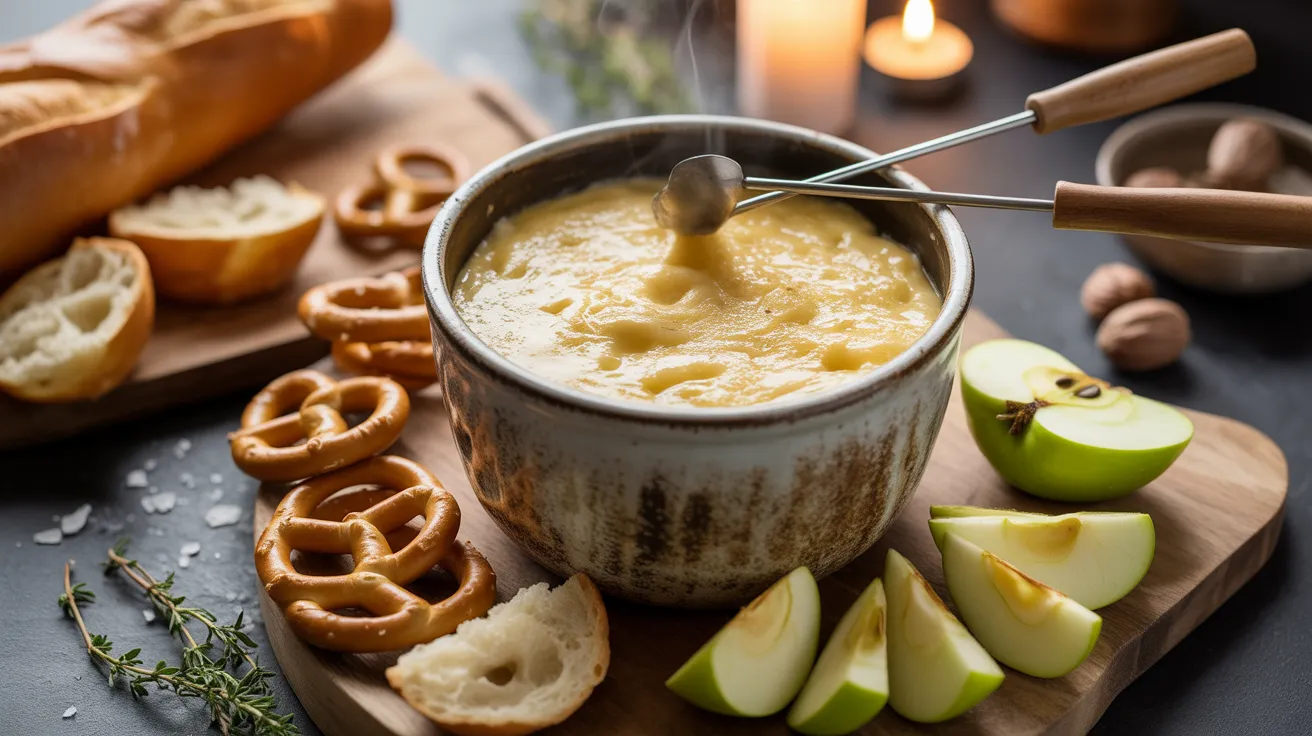
This apple cider fondue transforms your favorite fall drink into the ultimate melty cheese experience. I’m talking about bubbly, boozy Swiss and Gruyère swimming in hard cider with just enough garlic and nutmeg to make your taste buds do a happy dance. This apple cider fondue recipe serves four hungry dippers and comes together in about 20 minutes, making it perfect for game nights, cozy date nights, or whenever you need warm cheese in your life immediately.
SERVES: 4 | PREP: 10 MIN | COOK: 10 MIN | TOTAL: 20 MIN
Ingredients
Cheese Base
| Ingredient | Amount | Notes |
|---|---|---|
| Swiss cheese, shredded | 2 cups | Pre-shredded works but blocks melt smoother |
| Gruyère cheese, shredded | 2 cups | Essential for that nutty flavor |
| Cornstarch | 2 tablespoons | Prevents cheese from separating |
Liquid Components
| Ingredient | Amount | Notes |
|---|---|---|
| Hard apple cider | 1½ cups | Use a dry cider, not sweet |
| Apple cider vinegar | 1 tablespoon | Adds brightness |
| Fresh lemon juice | 1 teaspoon | Keeps it smooth |
Seasonings
| Ingredient | Amount | Notes |
|---|---|---|
| Garlic cloves, minced | 2 | Fresh only – no jarred stuff |
| Ground nutmeg | ¼ teaspoon | Fresh grated if you have it |
| Black pepper | ¼ teaspoon | Freshly ground preferred |
| Dijon mustard | 1 teaspoon | Adds tang and helps emulsify |
For Serving
| Ingredient | Amount | Notes |
|---|---|---|
| Soft pretzel bites | 1 pound | Store-bought or homemade |
| Granny Smith apple, cubed | 2 | Tart apples work best |
| Crusty bread, cubed | ½ loaf | Day-old bread is perfect |
Step-by-Step Instructions
Phase 1: Prep Your Cheese (5 Minutes)
Step 1: Toss both cheeses with cornstarch in a large bowl until every shred is lightly coated.
The cornstarch acts like a protective coating that prevents the cheese proteins from clumping together when they melt. This is the secret to fondue that stays smooth instead of turning into a greasy, separated mess.
Step 2: Let the coated cheese sit at room temperature for 5 minutes while you prep everything else.
Room temperature cheese melts way more evenly than cold cheese straight from the fridge. This waiting period is crucial for preventing lumps.
Phase 2: Build Your Flavor Base (3 Minutes)
Step 3: Pour the hard cider into your fondue pot or heavy-bottomed saucepan over medium heat.
You want a pot that conducts heat evenly. If you’re using a regular saucepan, you’ll transfer to a fondue pot later. The cider should start releasing its aroma but not bubble yet.
Step 4: Add the minced garlic and let it simmer gently for 2 minutes until fragrant.
You’ll know it’s ready when your kitchen smells amazing and the garlic has softened but not browned. Browned garlic turns bitter and will ruin your fondue’s flavor.
Step 5: Stir in the apple cider vinegar, lemon juice, Dijon mustard, nutmeg, and black pepper.
Give it a good whisk to combine everything. The vinegar and lemon juice create the acidic environment that helps keep the cheese smooth and prevents it from getting stringy.
Phase 3: Melt the Cheese (7 Minutes)
Step 6: Reduce heat to medium-low so the liquid is barely simmering with tiny bubbles around the edges.
This is critical. If your heat is too high, the cheese will break and separate into a greasy pool. You want gentle, patient heat here.
Step 7: Add the cheese one handful at a time, stirring in a figure-eight pattern after each addition.
Wait until each handful is completely melted and smooth before adding the next. This process takes patience but rushing it guarantees lumpy fondue. The figure-eight motion keeps the mixture moving without incorporating too much air.
Step 8: Continue adding cheese and stirring until all 4 cups are melted and the mixture is smooth and glossy.
The fondue should look like liquid velvet and coat the back of your spoon without running off immediately. If you see any oil separation, your heat was too high – reduce it further.
Step 9: Taste and adjust seasonings, adding more nutmeg, pepper, or a pinch of salt if needed.
The cheese is already salty, so go easy on additional salt. You’re looking for a balance where you can taste the apple cider, the nuttiness of the cheese, and just a hint of warm spice from the nutmeg.
Phase 4: Final Touches and Serving (2 Minutes)
Step 10: If your mixture seems too thick, whisk in additional hard cider one tablespoon at a time until you reach perfect dipping consistency.
You want it thick enough to cling to your dippers but thin enough to flow smoothly. Think warm honey rather than peanut butter.
Step 11: Transfer to your fondue pot if you haven’t been using one already, and set the burner to low.
The goal is to keep the fondue warm enough to stay liquid but not so hot that it continues cooking. Most fondue burners have a heat adjustment – start with the lowest setting.
Step 12: Arrange your pretzel bites, apple cubes, and bread cubes on a platter around the fondue pot.
Cut the apples right before serving and toss them with a tiny bit of lemon juice to prevent browning. Nobody wants to dip into brown, oxidized apple pieces.
Chef’s Notes
Temperature Control is Everything: The difference between silky apple cider fondue and a broken, greasy mess comes down to heat management. Keep your burner on medium-low during melting and low during serving. If you see the fondue separating (oil pooling on top), it’s too hot – remove from heat immediately and whisk vigorously to bring it back together.
Cider Selection Matters: Use a dry hard cider like Angry Orchard Crisp Apple or Woodchuck Amber. Sweet ciders make the fondue cloying and mess with the cheese’s flavor profile. The alcohol cooks off mostly, leaving behind pure apple essence that complements the nutty Gruyère beautifully.
Cheese Quality Pays Off: Pre-shredded cheese contains anti-caking agents that can make your fondue grainy. I know it’s more work, but buying blocks of Swiss and Gruyère and shredding them yourself gives you that restaurant-quality smooth texture. Use the large holes on your box grater for the easiest shredding.
Don’t Skip the Cornstarch: That cornstarch coating isn’t optional – it’s your insurance policy against broken fondue. The starch absorbs moisture and prevents the cheese proteins from bonding directly with each other, which is what causes that unappetizing separated, stringy texture that makes fondue fail.
Nutrition Information (Per Serving)
Calories: 520 | Protein: 28g | Carbohydrates: 18g | Fat: 32g | Saturated Fat: 19g | Fiber: 1g | Sugar: 6g | Sodium: 480mg | Calcium: 720mg
Nutrition values are approximate and don’t include dippers like pretzels, bread, or apples
Variations to Try
Beer-Braised Onion Apple Fondue: Caramelize 1 cup sliced onions in 2 tablespoons butter until deep golden brown (about 15 minutes), then proceed with the recipe using a dark beer instead of cider for a more savory take that pairs beautifully with beef or sausage dippers.
Spiced Maple Apple Fondue: Replace ½ cup of the cider with pure maple syrup and add ½ teaspoon cinnamon along with the nutmeg for a sweeter version that’s incredible with apple slices and pound cake cubes. This variation works especially well after a fall dinner party, similar to how pumpkin spice dip brings those cozy autumn flavors to the table.
Sharp Cheddar Apple Fondue: Swap 2 cups of the Swiss for extra-sharp white cheddar for a more pronounced cheese flavor that stands up beautifully to the cider. This creates a tangier, more robust fondue that’s perfect with heartier dippers like sausage and crusty sourdough.
Herb Garden Apple Fondue: Stir in 2 tablespoons fresh thyme leaves and 1 tablespoon fresh rosemary (finely minced) during the last minute of cooking for an herbaceous twist. Serve this version with vegetable dippers like roasted brussels sprouts or fingerling potatoes, or pair it with roasted grapes and whipped feta on the appetizer spread for a sophisticated cheese board experience.
Storage & Reheating
Refrigerating: Transfer cooled apple cider fondue to an airtight container and refrigerate for up to 3 days. The fondue will solidify completely when cold, which is totally normal.
Reheating on Stovetop: Place the solidified fondue in a saucepan over low heat with 2-3 tablespoons additional hard cider or regular apple cider. Stir constantly as it melts, adding more liquid if needed to restore that smooth, pourable consistency. This method gives you the most control and the best texture.
Reheating in Microwave: Transfer to a microwave-safe bowl and heat in 30-second intervals at 50% power, stirring thoroughly between each interval. Add 1 tablespoon cider per cup of fondue to help it come back together smoothly. Never microwave at full power or you’ll end up with separated, rubbery cheese.
Freezing Note: I don’t recommend freezing fondue because the cheese texture changes when frozen and thawed. The proteins break down and you’ll get grainy, separated fondue that’s impossible to fix. Just make smaller batches if you’re worried about leftovers.
Troubleshooting Common Problems
Fondue is Lumpy and Won’t Smooth Out: You probably added the cheese too quickly or your heat was too high. Remove from heat immediately and whisk in 1 tablespoon fresh lemon juice while stirring vigorously in a figure-eight pattern. If that doesn’t work, transfer to a blender and pulse on low speed for 10 seconds – the mechanical action will force the cheese to emulsify.
Fondue Separated into Cheese Solids and Grease: This happens when the temperature gets too high and the fat separates from the proteins. Remove from heat and whisk in 1 teaspoon cornstarch mixed with 2 tablespoons cold hard cider until you have a slurry, then whisk this into the broken fondue. Return to very low heat while whisking constantly until it comes back together.
Fondue is Too Thick and Gloppy: You need more liquid to thin it out. Whisk in hard cider one tablespoon at a time over low heat until you reach the right consistency. Don’t add it all at once or you’ll overcorrect. The fondue should flow smoothly off your spoon but still coat it with a thin layer.
Fondue Tastes Bland or One-Dimensional: Your seasoning balance is off. Add a pinch of salt first (the cheese may not have been salty enough), then taste again. If it still needs help, add another ¼ teaspoon nutmeg and a small squirt of Dijon mustard. The mustard adds complexity without making it taste mustardy.
Fondue Solidified Too Quickly While Eating: Your fondue pot burner isn’t hot enough. Increase the flame slightly – you want to see very gentle, occasional bubbles but no aggressive boiling. If you don’t have heat control, transfer back to the stovetop every 10 minutes to reheat gently, then return to the fondue pot.
Equipment Essentials
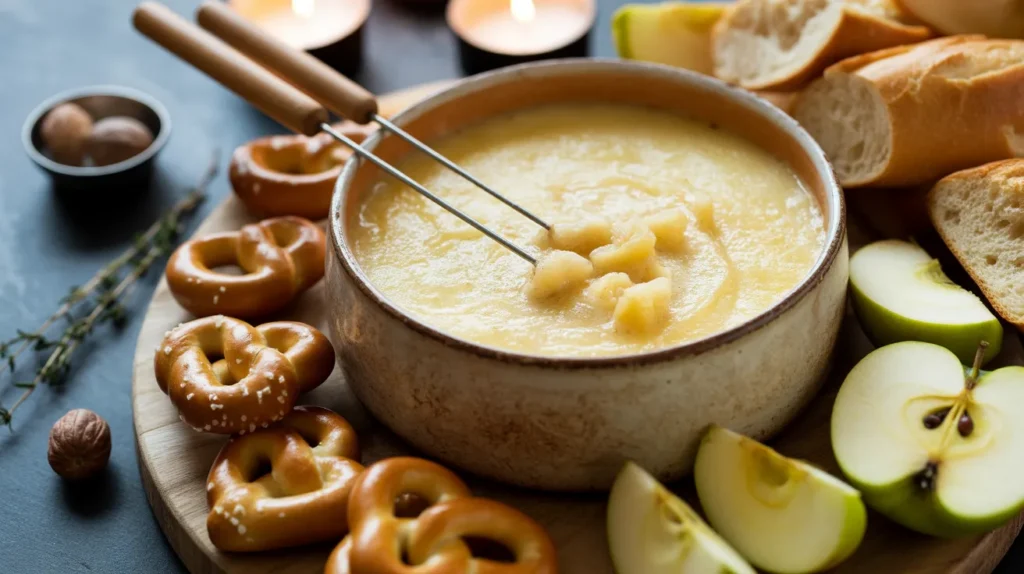
Fondue Pot with Burner: A ceramic or enamel pot works best for even heating. If you don’t have one, use a small slow cooker on the warm setting instead.
Heavy-Bottomed Saucepan: Essential for melting the cheese without scorching. Thin pots create hot spots that will ruin your fondue.
Box Grater: For shredding the cheese blocks. The large holes make quick work of it.
Long Fondue Forks or Skewers: You need something with about 6-8 inches of length to safely reach into the hot cheese.
Wire Whisk: A flat whisk works best for fondue because it gets into the pot’s corners and prevents sticking.
Sharp Knife: For cubing the bread and apples into 1-inch pieces that won’t fall off your forks.
Shopping List
Dairy Section
- Swiss cheese block (8 ounces)
- Gruyère cheese block (8 ounces)
Produce Section
- 2 Granny Smith apples
- Fresh garlic bulb
- Fresh lemon (for juice)
Alcohol Section
- 1 bottle hard apple cider (dry style, 12 ounces needed)
Bakery Section
- Soft pretzel bites (1 pound)
- Crusty bread loaf (French or sourdough)
Pantry/Baking Aisle
- Cornstarch
- Ground nutmeg
- Black pepper
- Dijon mustard
- Apple cider vinegar
Success Secrets
1. Shred Your Own Cheese: I can’t stress this enough – pre-shredded cheese contains cellulose (wood pulp!) that prevents clumping in the bag but also prevents smooth melting in your fondue. Spend the extra five minutes shredding blocks of Swiss and Gruyère for dramatically better results.
2. Room Temperature Everything: Take your cheese out of the fridge 30 minutes before you start cooking. Cold cheese hitting hot liquid = instant seizing and lumps. Room temperature cheese melts gradually and evenly, giving you that glossy, professional texture.
3. Low and Slow Wins the Race: Resist the urge to crank up the heat to make the cheese melt faster. High heat breaks the emulsion between fat and protein, causing separation. Keep it on medium-low while melting and low while serving, even if it feels painfully slow.
4. The Figure-Eight Stir: When adding cheese, stir in a figure-eight pattern instead of circles. This motion keeps the mixture moving constantly without whipping air into it (which creates bubbles) and ensures even heat distribution across the entire pot.
5. Acid is Your Friend: That combination of lemon juice and apple cider vinegar isn’t just for flavor – the acid prevents the calcium in the cheese from bonding too tightly, which is what creates stringy, separated fondue. If your fondue starts to misbehave, a small splash of acid often brings it back to life.
Your apple cider fondue is ready when it flows smoothly off your spoon, clings to your dippers without dripping excessively, and tastes like autumn in Switzerland. Keep that burner low, stir occasionally to prevent a skin from forming, and enjoy the fact that you just made restaurant-quality fondue at home.