When fall arrives and pumpkins are everywhere, there’s nothing quite like a bowl of warm Autumn-Spiced Roasted Pumpkin Soup to make your kitchen smell incredible. This Autumn-Spiced Roasted Pumpkin Soup combines the natural sweetness of roasted pumpkin with warming spices like cinnamon, nutmeg, and ginger for a soup that tastes like autumn in a bowl. I’ve been making this recipe for years, and it never fails to impress dinner guests or satisfy my family on chilly evenings.
SERVES: 4 | PREP: 20 MIN | COOK: 55 MIN | TOTAL: 1 HR 15 MIN
Ingredients
Main Ingredients
| Ingredient | Amount | Notes |
|---|---|---|
| Sugar pumpkin (or pie pumpkin) | 1 medium (3-4 lbs) | Cut into chunks |
| Olive oil | 3 tablespoons | Divided |
| Yellow onion | 1 large | Diced |
| Garlic cloves | 4 cloves | Minced |
| Fresh ginger | 1 tablespoon | Grated |
| Vegetable broth | 4 cups | Low-sodium |
| Heavy cream | ½ cup | Or coconut cream |
| Maple syrup | 2 tablespoons | Pure maple syrup |
Spices & Seasonings
| Ingredient | Amount | Notes |
|---|---|---|
| Ground cinnamon | 1 teaspoon | |
| Ground nutmeg | ½ teaspoon | Freshly grated is best |
| Ground ginger | ½ teaspoon | |
| Smoked paprika | ¼ teaspoon | Optional |
| Salt | 1½ teaspoons | To taste |
| Black pepper | ½ teaspoon | Freshly ground |
Garnish (Optional)
| Ingredient | Amount | Notes |
|---|---|---|
| Pumpkin seeds | ¼ cup | Toasted |
| Fresh sage leaves | 8 leaves | Fried in butter |
| Extra cream | 2 tablespoons | For drizzling |
Step-by-Step Instructions
Phase 1: Preparing and Roasting the Pumpkin (30 minutes)
Step 1: Preheat your oven to 400°F (200°C) and line a large baking sheet with parchment paper.
This temperature is perfect for caramelizing the pumpkin’s natural sugars without burning. The parchment paper prevents sticking and makes cleanup easier.
Step 2: Cut the pumpkin in half from top to bottom using a sharp chef’s knife.
Be careful here—pumpkins can be tough. If you’re struggling, microwave the whole pumpkin for 2-3 minutes to soften the skin slightly.
Step 3: Scoop out all the seeds and stringy pulp using a large spoon.
Save those seeds! You can roast them separately for a crunchy snack or soup garnish. Make sure you remove all the strings for a smooth soup texture.
Step 4: Cut the pumpkin halves into 2-inch chunks, keeping the skin on.
The skin will peel off easily after roasting. Uniform chunks ensure even cooking—you want everything tender at the same time.
Step 5: Toss the pumpkin chunks with 2 tablespoons olive oil, ½ teaspoon salt, and ¼ teaspoon black pepper on your baking sheet.
Get your hands in there and coat every piece. The oil helps the pumpkin caramelize beautifully and brings out those sweet, nutty flavors.
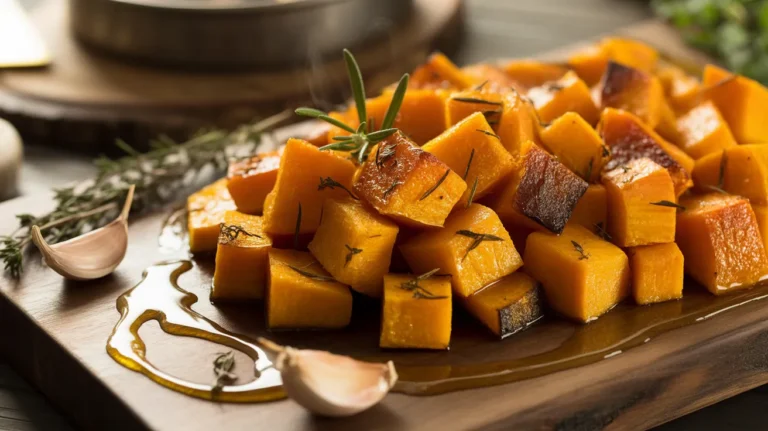
Step 6: Arrange the chunks in a single layer, cut side down, and roast for 25-30 minutes until fork-tender and lightly caramelized.
You’ll know it’s ready when you can easily pierce the flesh with a fork and the edges have golden-brown spots. This roasting step is what separates this soup from basic pumpkin soups—it creates depth and sweetness.
Phase 2: Building the Soup Base (15 minutes)
Step 7: While the pumpkin roasts, heat 1 tablespoon olive oil in a large soup pot or Dutch oven over medium heat.
A Dutch oven works best because it retains heat evenly and gives you plenty of room to blend later.
Step 8: Add the diced onion and cook for 5-7 minutes, stirring occasionally, until softened and translucent.
You’re not looking for color here—just soft, sweet onions. They should smell fragrant but not brown.
Step 9: Stir in the minced garlic and grated fresh ginger, cooking for 1-2 minutes until fragrant.
Watch carefully during this step. Garlic and ginger can burn quickly, which would make your soup taste bitter. You want them just golden and aromatic.
Step 10: Add all your spices (cinnamon, nutmeg, ground ginger, smoked paprika) and stir constantly for 30 seconds.
Toasting the spices in the oil releases their essential oils and intensifies their flavors. Your kitchen will smell amazing right about now.
Phase 3: Combining and Blending (10 minutes)
Step 11: Once your roasted pumpkin is done, let it cool for 5 minutes, then peel off and discard the skin.
The skin should peel away easily with your fingers or a knife. If it’s stuck, the pumpkin needs more roasting time.
Step 12: Add the roasted pumpkin flesh and 4 cups vegetable broth to your pot with the onion mixture.
Break up any large chunks with a wooden spoon. The pumpkin should be soft enough to mash easily against the side of the pot.
Step 13: Bring the soup to a gentle boil, then reduce heat and simmer for 10 minutes to let the flavors marry.
This simmering time allows all those beautiful spices to infuse throughout the soup. You’ll see the liquid start to take on a deeper orange color.
Step 14: Remove the pot from heat and use an immersion blender to puree the soup until completely smooth and creamy.
Blend for at least 2-3 minutes, moving the blender around to catch every chunk. If you don’t have an immersion blender, carefully transfer the soup in batches to a regular blender (never fill it more than halfway).
Phase 4: Finishing Touches (5 minutes)
Step 15: Stir in the heavy cream and maple syrup, then taste and adjust the seasoning.
The cream adds richness and balances the spices, while the maple syrup enhances the pumpkin’s natural sweetness. Start with these amounts and add more if needed.
Step 16: If your soup is too thick, add more broth or cream ¼ cup at a time until you reach your desired consistency.
The perfect consistency should coat the back of a spoon but still pour easily. Remember, the soup will thicken slightly as it cools.
Step 17: Return the pot to low heat for 2-3 minutes to warm through, but don’t let it boil.
Boiling can cause the cream to separate or curdle. You just want everything hot and ready to serve.
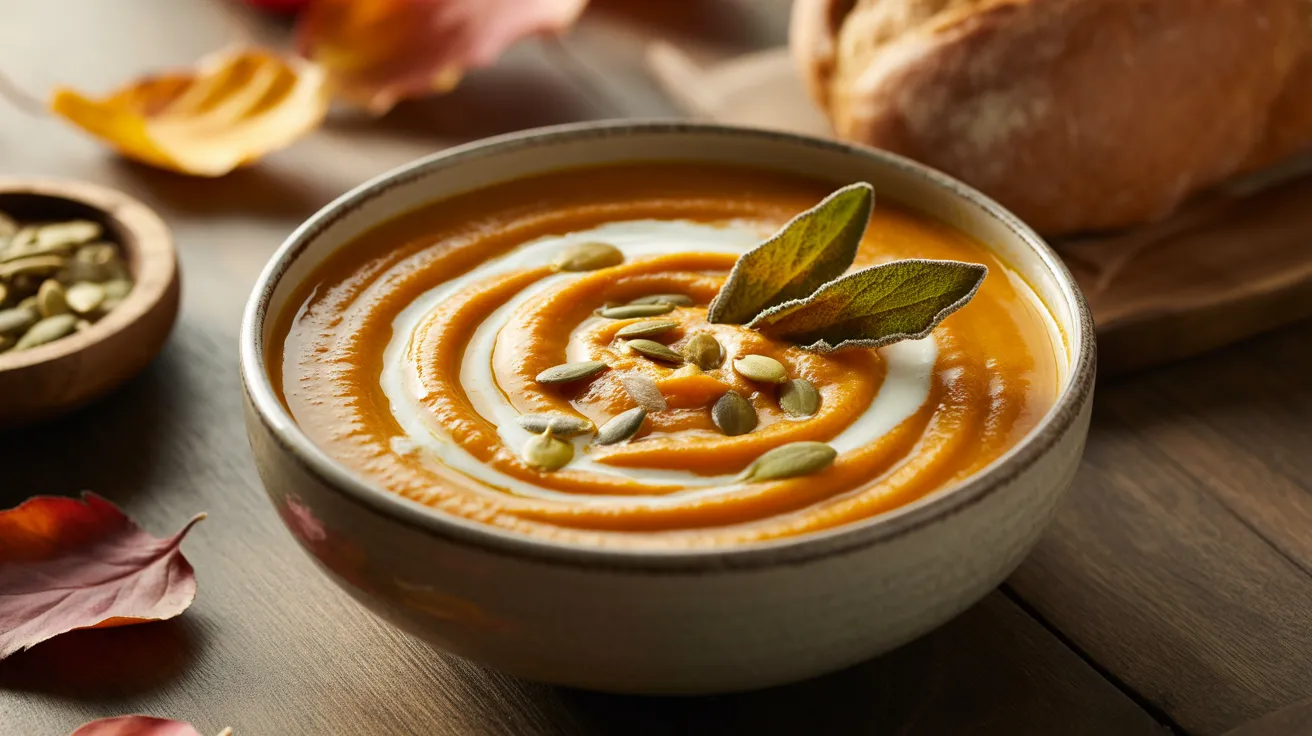
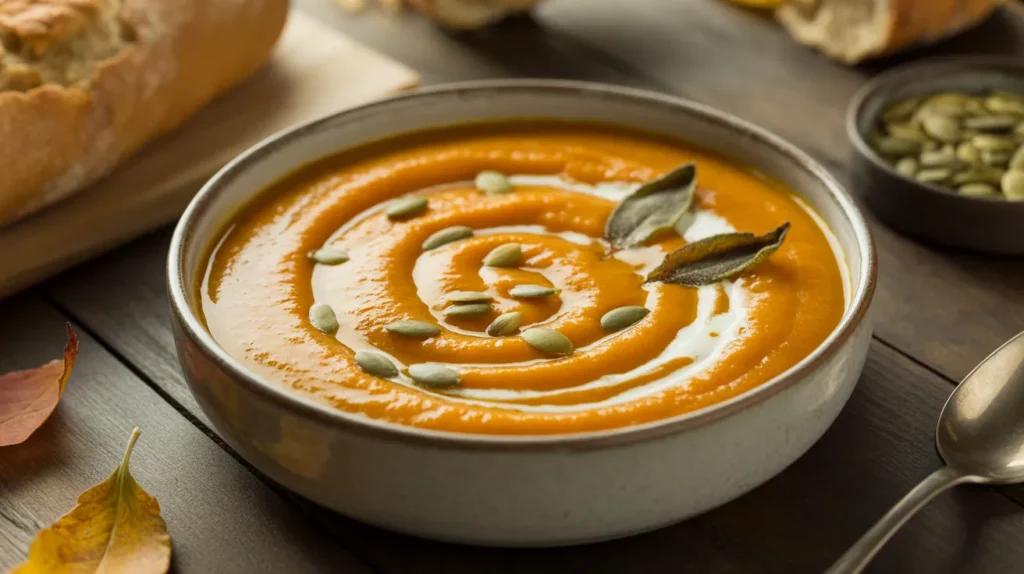
Step 18: Ladle the soup into bowls and garnish with toasted pumpkin seeds, fried sage leaves, and a drizzle of cream.
Presentation matters! A beautiful garnish makes this soup restaurant-quality and adds textural contrast to the creamy base.
Chef’s Notes
Pumpkin Selection: Sugar pumpkins (also called pie pumpkins) are smaller, sweeter, and less watery than carving pumpkins. They’re typically 3-5 pounds and have thicker, more flavorful flesh. If you can’t find them, butternut squash works beautifully in this autumn-spiced roasted pumpkin soup recipe.
Spice Balance: The key to perfect autumn spices is restraint—you want to taste the pumpkin first, with spices supporting in the background. If you love bold spice flavors, increase the cinnamon and ginger by ½ teaspoon each. For a spicier kick, add a pinch of cayenne pepper.
Make-Ahead Magic: This soup actually tastes better the next day as the flavors deepen and meld. Make it up to 3 days ahead, but wait to add the cream until you’re reheating to serve. The cream can separate when reheated multiple times.
Cream Alternatives: For a dairy-free version, coconut cream or cashew cream work wonderfully and add their own subtle flavor. Full-fat coconut milk creates a slightly tropical note that many people love with the autumn spices.
Nutrition Information (Per Serving)
Calories: 285 | Protein: 5g | Carbohydrates: 32g | Fat: 16g | Fiber: 6g | Sugar: 14g | Sodium: 780mg
Delicious Variations
Thai-Inspired Pumpkin Soup: Replace the cream with coconut milk, swap maple syrup for brown sugar, and add lemongrass, lime juice, and red curry paste. Top with fresh cilantro and chopped peanuts for an entirely different flavor profile that’s equally comforting.
Harvest Apple Pumpkin Soup: Add 2 diced Granny Smith apples when you’re roasting the pumpkin for a sweet-tart twist. The apples add brightness and complexity that pairs beautifully with the warm spices. If you love combining pumpkin with other fall flavors, check out this roasted pumpkin and tomato soup for another creative variation.
Smoky Chipotle Version: Add 1-2 chipotle peppers in adobo sauce during blending for a smoky, spicy kick. Garnish with pepitas, crumbled queso fresco, and a squeeze of lime. This version is perfect if you like a little heat with your sweetness.
Ultra-Creamy Luxe Soup: For a silky, restaurant-style texture similar to this creamy pumpkin soup, increase the cream to 1 cup and add 2 tablespoons butter when sautéing the onions. Finish with a swirl of truffle oil and crispy prosciutto for special occasions.
Storage & Reheating
Refrigerator Storage: Let your soup cool completely before transferring to airtight containers. It will keep for 4-5 days in the refrigerator. The flavors actually improve overnight, making this perfect for meal prep.
Freezer Storage: This soup freezes beautifully for up to 3 months. I recommend freezing it before adding the cream—just add fresh cream when you reheat. Freeze in portion-sized containers or freezer bags laid flat for easy stacking.
Reheating Instructions: Reheat gently on the stovetop over medium-low heat, stirring occasionally. Add a splash of broth or cream if the soup has thickened too much. Avoid high heat, which can cause the cream to separate and the bottom to scorch.
Batch Cooking Tip: Double this recipe and freeze half for those busy weeknights when you need something comforting fast. Just pull a container from the freezer in the morning, and it’ll be thawed and ready to heat by dinner.
Troubleshooting Common Problems
Problem 1: Soup is too thick and pasty Solution: This happens when there’s not enough liquid or the pumpkin was too dry. Thin the soup gradually with warm broth or cream, adding ¼ cup at a time while stirring. Heat gently and taste as you go—you don’t want to dilute the flavors too much.
Problem 2: Soup tastes bland or flat Solution: Roasted pumpkin can vary in sweetness, so you might need more seasoning. Add more salt first (it’s usually the culprit), then adjust maple syrup for sweetness and spices for depth. A squeeze of lemon juice can also brighten the entire flavor profile. Don’t forget—this soup needs adequate salt to bring out the pumpkin’s natural sweetness.
Problem 3: Soup is grainy or has chunks Solution: You didn’t blend long enough or your pumpkin wasn’t cooked tender enough. Blend for a full 3-4 minutes with an immersion blender, or work in smaller batches in a regular blender on high speed. If chunks remain, strain the soup through a fine-mesh sieve for silky perfection.
Problem 4: Cream separated or curdled Solution: This occurs when cream is added to boiling soup or reheated at too high a temperature. Always add cream off the heat or at the very end when the soup is just warm, not boiling. If it’s already curdled, try blending again—sometimes it’ll come back together.
Problem 5: Soup tastes too sweet Solution: Balance sweetness with acidity and salt. Add 1-2 teaspoons of apple cider vinegar or lemon juice, plus an extra pinch of salt. A dash of cayenne pepper can also cut through excessive sweetness while adding complexity. Remember, pumpkins vary in natural sugar content, so adjust the maple syrup accordingly.
Equipment Essentials
- Large baking sheet (18×13 inches)
- Sharp chef’s knife for cutting pumpkin
- Large soup pot or Dutch oven (6-8 quart capacity)
- Immersion blender (or regular blender)
- Wooden spoon for stirring
- Box grater for fresh ginger
- Measuring cups and spoons
- Ladle for serving
- Parchment paper for roasting
Shopping List by Store Section
Produce Section:
- 1 medium sugar pumpkin (3-4 lbs)
- 1 large yellow onion
- 4 garlic cloves
- 1 piece fresh ginger root
- Fresh sage leaves (optional garnish)
Dairy Section:
- Heavy cream (½ cup)
Pantry Aisle:
- Olive oil
- Ground cinnamon
- Ground nutmeg
- Ground ginger
- Smoked paprika
- Salt
- Black pepper
- Maple syrup (pure)
Soup/Broth Aisle:
- Vegetable broth (32 oz box)
Snack Aisle (Optional):
- Pumpkin seeds (pepitas)
Success Secrets
1. Roast, Don’t Boil: Roasting the pumpkin caramelizes the natural sugars and creates a deep, complex flavor that boiled pumpkin simply can’t match. Those golden-brown edges translate to richer, sweeter soup. This technique is what makes this autumn-spiced roasted pumpkin soup stand out from others.
2. Toast Your Spices: Those 30 seconds of toasting spices in oil might seem unnecessary, but they wake up dormant flavors and create aromatic compounds that make your soup smell incredible. Skip this step, and your soup will taste flat.
3. Don’t Rush the Blending: Blend for at least 3 full minutes for restaurant-quality smoothness. Most people under-blend their soups, leaving tiny chunks that affect the luxurious texture. Take your time here—it makes all the difference.
4. Temperature Matters for Cream: Always add cream when the soup is warm but not boiling. Too hot, and the cream curdles. Too cold, and you’ll need to reheat anyway. The sweet spot is around 160-180°F—hot enough to warm the cream instantly without breaking it.
5. Layer Your Garnishes: Don’t just dump toppings on your soup. Add toasted pumpkin seeds for crunch, a drizzle of cream for richness, and fried sage for aromatic complexity. Each garnish adds a different flavor and texture dimension that makes every spoonful interesting.
This autumn-spiced roasted pumpkin soup brings together everything I love about fall cooking. The roasting technique, warming spices, and creamy texture create a bowl of comfort that’s perfect for cozy dinners or impressive enough for holiday gatherings.