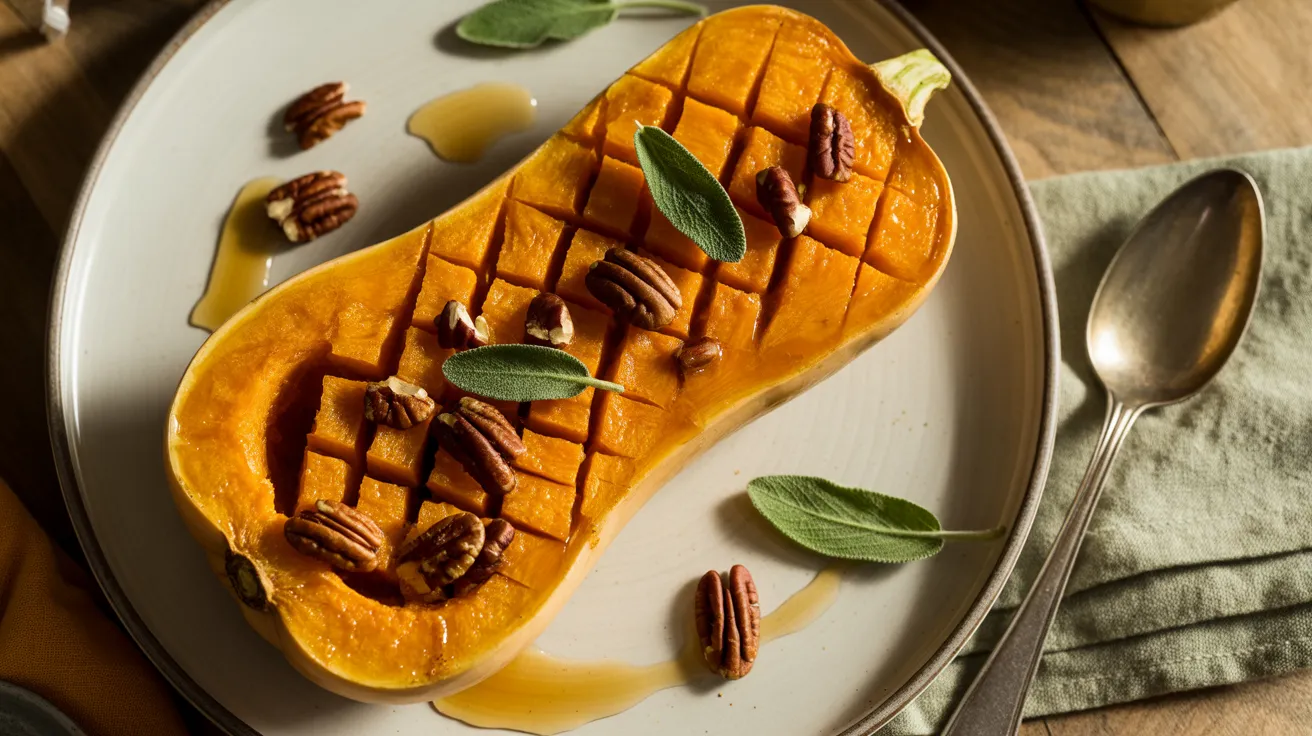
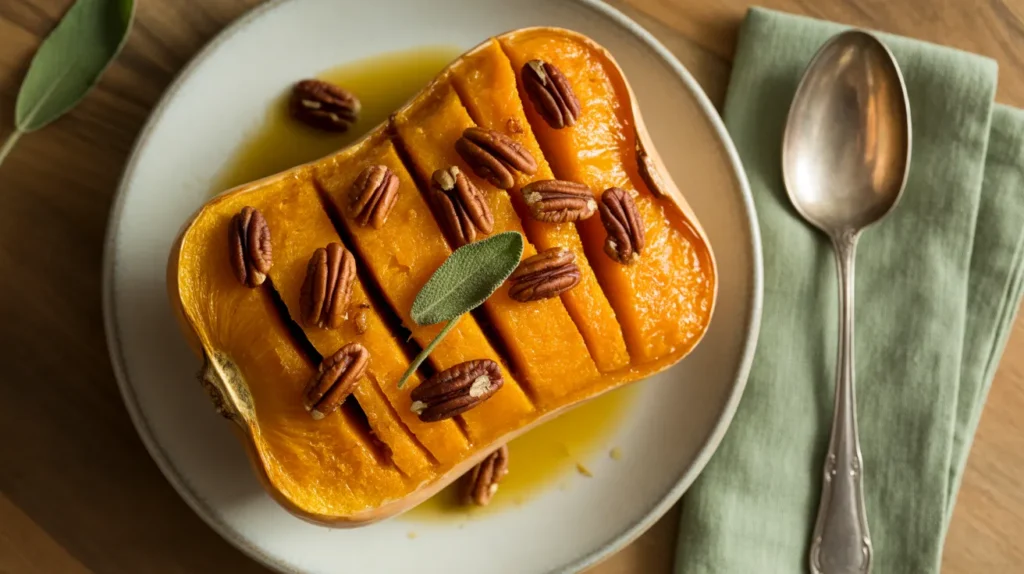
This baked butternut squash recipe transforms humble squash into caramelized perfection with a sweet honey glaze, toasted pecans, and fresh herbs. My baked butternut squash recipe delivers restaurant-quality results that make this autumn vegetable the star of your dinner table, and you’ll only need one pan to create this showstopping side dish.
SERVES: 4 | PREP: 15 MIN | COOK: 45 MIN | TOTAL: 60 MIN
Ingredients
Main Ingredients
| Ingredient | Amount |
|---|---|
| Butternut squash (medium) | 2 pounds (1 whole squash) |
| Olive oil | 3 tablespoons |
| Honey | 3 tablespoons |
| Fresh thyme leaves | 1 tablespoon |
| Fresh rosemary (chopped) | 1 teaspoon |
| Kosher salt | 1 teaspoon |
| Black pepper | ½ teaspoon |
Topping & Finishing
| Ingredient | Amount |
|---|---|
| Pecans (chopped) | ⅓ cup |
| Unsalted butter | 2 tablespoons |
| Fresh sage leaves | 8 leaves |
| Cinnamon | ¼ teaspoon |
How to Make This Baked Butternut Squash Recipe
Phase 1: Prep Work (10 minutes)
Step 1: Preheat your oven to 400°F (200°C). Line a large baking sheet with parchment paper or aluminum foil for easy cleanup. The parchment prevents sticking and makes your cleanup take just seconds.
Step 2: Wash the butternut squash under cool running water and pat it completely dry with paper towels. A dry surface helps the oil and seasonings stick better. Place the squash on a sturdy cutting board.
Step 3: Using a sharp chef’s knife, carefully cut off both ends of the squash (about ½ inch from each end). This creates flat, stable surfaces so your squash won’t roll while you’re working. Stand the squash upright on one flat end.
Step 4: Slice the squash in half lengthwise from top to bottom, cutting straight through the center. Apply steady, even pressure and let the knife do the work. You’ll cut through the narrow neck first, then through the wider bulb section that contains the seeds.
Step 5: Use a large metal spoon to scoop out all the seeds and stringy pulp from the center cavity of both halves. Scrape firmly against the flesh until the cavity is smooth and clean. You can save the seeds for roasting later if you want a bonus snack!
Step 6: Score the flesh of each squash half in a crosshatch pattern using a sharp knife. Make cuts about 1 inch apart, cutting down about ½ inch deep without piercing through the skin. This scoring helps the glaze penetrate and creates more caramelized edges. Think of it like making a diamond pattern across the orange flesh.
Phase 2: Seasoning & First Bake (25 minutes)
Step 7: In a small bowl, whisk together 2 tablespoons of olive oil, 2 tablespoons of honey, the chopped thyme, rosemary, salt, and black pepper. Whisk until the honey is fully incorporated and the mixture looks smooth and glossy. This is your flavor base.
Step 8: Brush the remaining 1 tablespoon of olive oil over the cut surfaces and the crosshatch cuts of both squash halves. Get the oil into all those little cuts you made. Place both halves cut-side up on your prepared baking sheet, leaving at least 2 inches between them for air circulation.
Step 9: Brush half of your honey-herb mixture generously over the cut surfaces of the squash, making sure to work it into the crosshatch cuts. The more it gets into those grooves, the more flavor you’ll have. Reserve the remaining glaze for later.
Step 10: Place the baking sheet on the middle oven rack and bake for 25 minutes. The squash should start becoming tender and the edges will begin turning golden brown. You’ll know it’s ready for the next step when a fork can pierce the flesh with slight resistance.
Phase 3: Glaze & Finish (20 minutes)
Step 11: While the squash bakes, prepare your topping. Melt the butter in a small skillet over medium heat. Add the chopped pecans and cook for 2-3 minutes, stirring constantly, until they smell toasty and turn one shade darker. Add the cinnamon and stir for 30 seconds. Remove from heat immediately to prevent burning.
Step 12: Remove the baking sheet from the oven (use oven mitts!). Brush the remaining honey-herb glaze over the partially-cooked squash. The surface will be hot and slightly caramelized already. Spoon the toasted pecans evenly over both halves, letting some fall into the crosshatch cuts.
Step 13: Tear the fresh sage leaves and scatter them over the top of both squash halves. Return the baking sheet to the oven and bake for an additional 20 minutes. The squash is done when a fork slides through the flesh easily and the top is deeply caramelized with dark golden-brown edges.
Step 14: Remove from the oven and let the squash rest for 5 minutes before serving. This resting time allows the glaze to set slightly and makes cutting easier. The flesh will be tender enough to scoop with a spoon but still hold its shape beautifully.
Chef’s Notes
Squash Selection: Choose a squash that feels heavy for its size with a matte (not shiny) skin and a tan color. Avoid any with soft spots or green patches. A 2-pound squash gives you the perfect amount for four people when prepared this way.
Honey Alternatives: If your honey has crystallized, warm it gently in the microwave for 15 seconds before mixing. You can substitute pure maple syrup for a deeper, earthier sweetness that pairs wonderfully with the butternut squash.
Make It Spicy: Add ¼ teaspoon of red pepper flakes to your honey glaze for a sweet-heat combination that cuts through the natural sweetness. The contrast makes each bite more interesting.
Nut-Free Option: Skip the pecans and add ¼ cup of dried cranberries during the last 10 minutes of baking for a burst of tart sweetness that complements this baked butternut squash recipe beautifully.
Nutrition Information (Per Serving)
- Calories: 285
- Protein: 3g
- Carbohydrates: 38g
- Fat: 15g
- Fiber: 5g
- Sugar: 14g
- Sodium: 590mg
Delicious Variations
Savory Parmesan Version: Skip the honey and cinnamon. Instead, brush with olive oil, sprinkle with ½ cup grated Parmesan cheese, and add minced garlic. This creates a completely different flavor profile that works perfectly as a side for roasted meats.
Mediterranean Style: Replace pecans with ¼ cup toasted pine nuts and add 2 tablespoons of crumbled feta cheese during the last 5 minutes of baking. Finish with a drizzle of balsamic glaze. For another Mediterranean-inspired dish, try my roasted butternut squash with ground turkey for a complete meal.
Breakfast Version: Cut the squash into rounds instead of halves, reduce honey to 1 tablespoon, and top with Greek yogurt, granola, and a drizzle of maple syrup after baking. This turns your side dish into a nutritious breakfast bowl.
Classic Simple Style: For a more traditional approach, check out my baked butternut squash recipe which uses minimal ingredients and lets the natural squash flavor shine through.
Storage & Reheating
Refrigerator Storage: Let the squash cool completely to room temperature (about 30 minutes). Store in an airtight container for up to 4 days. The glaze may become less shiny but the flavor remains excellent.
Freezing Instructions: This recipe doesn’t freeze well because the texture becomes watery and mushy when thawed. The honey glaze also separates. I recommend making this fresh each time.
Reheating Methods: Place squash cut-side up on a baking sheet and reheat at 350°F for 15-20 minutes until warmed through. The microwave works in a pinch (2-3 minutes on high) but you’ll lose that caramelized exterior texture.
Meal Prep Tip: You can prep through Step 6, wrap the scored squash halves tightly in plastic wrap, and refrigerate for up to 24 hours before continuing with the recipe.
Troubleshooting Common Problems
Problem: Squash is tough and won’t cut easily The squash skin is incredibly hard when raw. Microwave the whole squash for 2-3 minutes to soften slightly, making cutting safer and easier. Let it cool for 1 minute before cutting. Always use your sharpest knife and apply steady pressure rather than sawing back and forth.
Problem: Squash is cooking unevenly This happens when your squash halves are different sizes or your oven has hot spots. Rotate the baking sheet 180 degrees halfway through each baking phase. If one half is cooking faster, move it to a cooler spot on the pan or cover that half loosely with foil.
Problem: The glaze is burning on the edges Your oven might run hot. Reduce temperature to 375°F and extend cooking time by 5-10 minutes. You can also tent foil loosely over the squash during the last 10 minutes if the top is browning too quickly while the center still needs more time.
Problem: The flesh is mushy and falling apart You’ve overcooked it. Butternut squash should be tender but still hold its shape. Start checking for doneness at 40 minutes total cooking time. The fork should slide in easily but the flesh shouldn’t collapse.
Problem: Honey glaze is sliding off instead of sticking Make sure you’re applying the first layer of glaze to hot squash (after the first bake) rather than before. The heat helps the glaze set and caramelize. Also, make sure your squash was completely dry before the first oil application.
Equipment Essentials
- Large baking sheet (at least 13×18 inches)
- Sharp chef’s knife (8-10 inch blade)
- Sturdy cutting board (preferably with grip)
- Large metal spoon for scooping seeds
- Parchment paper or aluminum foil
- Small mixing bowl for glaze
- Pastry brush or silicone basting brush
- Small skillet for toasting nuts
- Oven mitts
- Measuring cups and spoons
Shopping List by Store Section
Produce Section:
- 1 butternut squash (2 pounds)
- Fresh thyme (small bunch)
- Fresh rosemary (small bunch)
- Fresh sage leaves (small package)
Baking Aisle:
- Honey (3 tablespoons needed)
- Pecans, chopped (⅓ cup)
- Ground cinnamon
Oils & Condiments:
- Olive oil
- Kosher salt
- Black pepper
Dairy Section:
- Unsalted butter
Success Secrets
1. Score Deep Enough: Don’t be timid with your crosshatch cuts. Going ½ inch deep creates pockets for the glaze to pool and caramelize. Shallow scoring means less flavor penetration and fewer crispy bits.
2. Use Room Temperature Honey: Cold honey doesn’t mix well and creates clumps in your glaze. Let it sit on the counter for 30 minutes before starting, or warm it gently for 10-15 seconds in the microwave.
3. Don’t Skip the Second Glaze: Applying glaze twice (before first bake and before second bake) builds layers of flavor and creates that gorgeous shiny, caramelized finish. The second application really makes this baked butternut squash recipe special.
4. Watch Your Pecans Closely: Nuts go from perfectly toasted to burnt in under 30 seconds. Stay at the stove, keep stirring, and remove them the moment you smell that toasty aroma.
5. Let It Rest: Those 5 minutes of resting time aren’t optional. The glaze sets slightly, the flesh firms up just enough for clean scooping, and the flavors meld beautifully. Cutting immediately makes everything slide around and look messy on the plate.