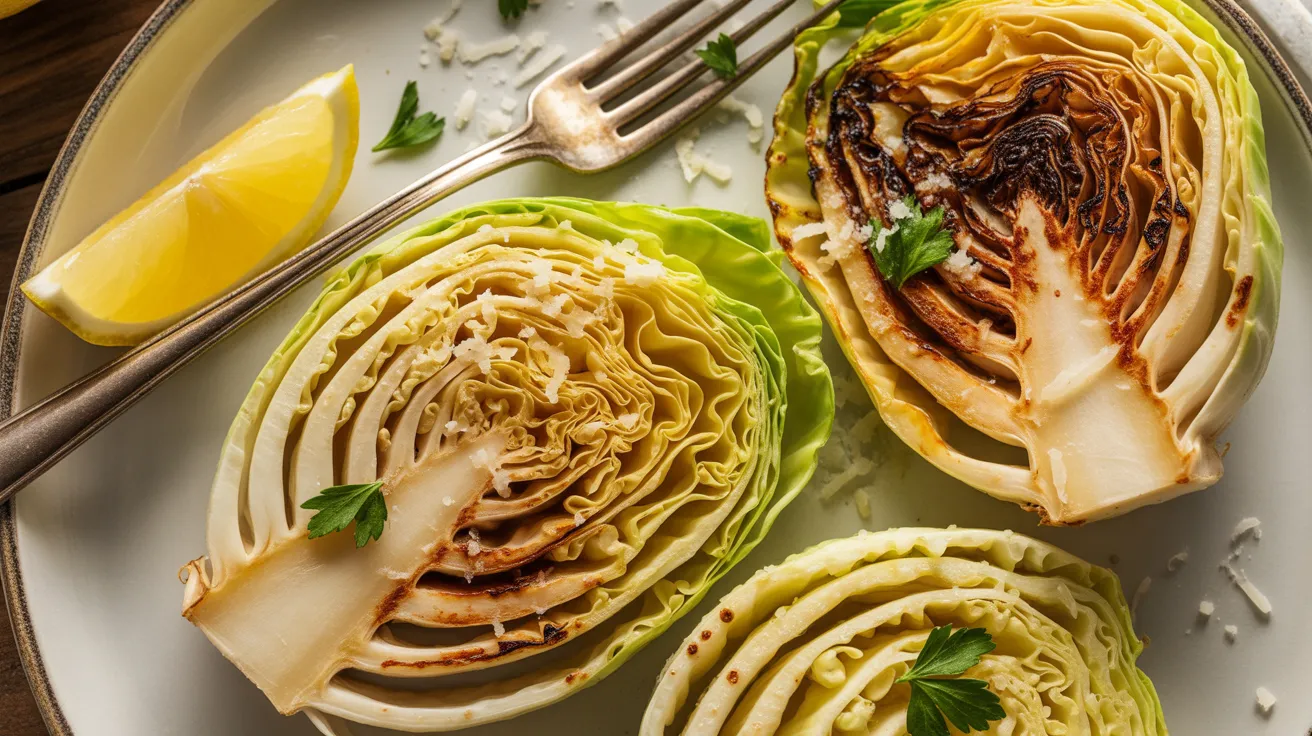
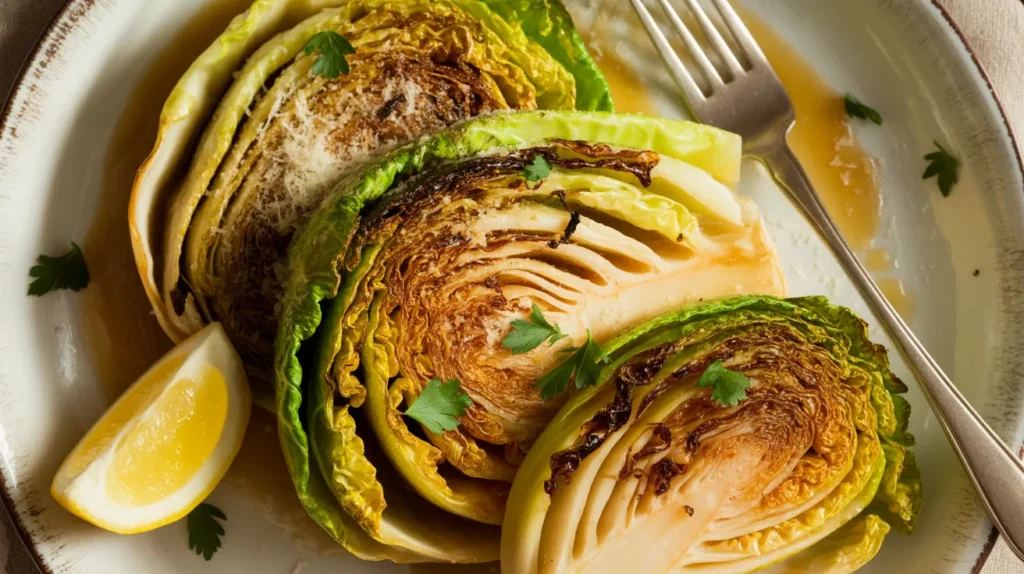
These blistered cabbage steaks transform humble cabbage into a showstopping side dish with crispy, caramelized edges and a tender center. I’ve been making these for years, and they’re my secret weapon when I want something impressive but incredibly simple. You’ll slice thick rounds of cabbage, season them generously, then cook them until they develop those gorgeous golden-brown spots that give blistered cabbage steaks their signature flavor. Trust me, even cabbage skeptics become instant fans.
SERVES: 4 | PREP: 10 MIN | COOK: 25 MIN | TOTAL: 35 MIN
Ingredients
Main Components
| Ingredient | Amount | Notes |
|---|---|---|
| Green cabbage | 1 large head (2-3 lbs) | Savoy or napa work too |
| Olive oil | ¼ cup | Extra virgin preferred |
| Garlic powder | 1½ teaspoons | Fresh garlic burns too quickly |
| Smoked paprika | 1 teaspoon | Regular paprika works in a pinch |
| Kosher salt | 1 teaspoon | Plus more to taste |
| Black pepper | ½ teaspoon | Freshly ground is best |
| Red pepper flakes | ¼ teaspoon | Optional, for heat |
Finishing Touches
| Ingredient | Amount | Notes |
|---|---|---|
| Fresh lemon juice | 2 tablespoons | Brightens the flavor |
| Fresh parsley | 2 tablespoons, chopped | Or cilantro if you prefer |
| Parmesan cheese | ¼ cup, grated | Optional but delicious |
Instructions
Phase 1: Preparation (5 minutes)
Step 1: Place your cabbage head on a cutting board with the core facing down. Using a sharp chef’s knife, slice straight down through the center to create two halves. This keeps the core intact, which is exactly what you want because it holds everything together.
Step 2: Take each half and cut it into 1-inch thick slices, moving from the outer edge toward the core. You should get about 4 perfect steaks from a large cabbage. The core running through each piece acts like a backbone, keeping all the layers connected during cooking.
Step 3: Pat each cabbage steak completely dry with paper towels. This step matters more than you think because any moisture will create steam instead of the blistering we’re after. Spend an extra minute here—it pays off.
Phase 2: Seasoning (3 minutes)
Step 4: Line a large baking sheet with parchment paper. This prevents sticking and makes cleanup easy. Arrange your cabbage steaks in a single layer with at least an inch of space between them.
Step 5: Drizzle 2 tablespoons of olive oil over the tops of all the steaks. Use a pastry brush or your fingers to spread it evenly across the surface, making sure every bit of cabbage gets coated. The oil helps with browning and carries the seasonings.
Step 6: In a small bowl, combine the garlic powder, smoked paprika, salt, black pepper, and red pepper flakes. Mix thoroughly with a spoon so the seasonings are evenly distributed.
Step 7: Sprinkle half of your seasoning mixture over the tops of the cabbage steaks. Use your fingers to gently press the spices into the surface so they stick. This creates a flavorful crust.
Phase 3: First Side Cooking (12 minutes)
Step 8: Preheat your oven to 425°F (220°C) with a rack positioned in the center. While it heats, let your seasoned cabbage sit at room temperature. This takes the chill off and helps them cook more evenly.
Step 9: Once the oven reaches temperature, slide your baking sheet onto the center rack. Set a timer for 12 minutes. During this time, the bottoms will start developing those characteristic blistered spots.
Step 10: After 12 minutes, open the oven and check the undersides by carefully lifting one edge with a spatula. You’re looking for deep golden-brown patches with some darker caramelized areas. If they’re still pale, give them another 2-3 minutes.
Phase 4: Flipping and Second Side (10 minutes)
Step 11: Remove the baking sheet from the oven and set it on a heat-safe surface. Using a large spatula, very carefully flip each blistered cabbage steak. Some outer leaves might separate—that’s fine, just leave them around the main steak.
Step 12: Drizzle the remaining 2 tablespoons of olive oil over the now-exposed sides. Brush it around to cover everything evenly.
Step 13: Sprinkle the remaining seasoning mixture over the second sides, again pressing gently so it adheres. This ensures both sides are equally flavorful.
Step 14: Return the baking sheet to the oven for another 10 minutes. The second side typically browns faster since the pan is already hot, so watch carefully during the last few minutes.
Phase 5: Finishing (2 minutes)
Step 15: After 10 minutes, check for doneness. The cabbage should be tender when you poke it with a fork, with crispy, deeply caramelized edges. The color should range from golden brown to dark brown in spots—those darker areas are where the best flavor lives.
Step 16: Remove from the oven and immediately squeeze fresh lemon juice over all the steaks while they’re still hot. The acid cuts through the richness and makes the flavors pop.
Step 17: Sprinkle with fresh parsley and Parmesan cheese if using. Transfer to individual plates and serve right away while they’re hot and crispy.
Chef’s Notes
Oil Temperature: The key to getting proper blistering on your cabbage steaks is a hot oven and enough oil. If your oven runs cool, bump it up to 450°F. You’ll know you’ve got it right when you hear a gentle sizzle when the pan goes in.
Core Importance: Never remove the core before cooking. It’s the structural support system that keeps everything together. Your guests can easily cut around it when eating.
Cabbage Selection: Choose a cabbage that feels heavy for its size with tightly packed leaves. Loose, lightweight heads have too much air space and won’t create nice solid steaks.
Make-Ahead Tip: You can slice and season your blistered cabbage steaks up to 4 hours ahead. Keep them covered in the refrigerator, then bring to room temperature for 15 minutes before roasting.
Nutrition Information (Per Serving)
- Calories: 185
- Protein: 3g
- Carbohydrates: 14g
- Fiber: 6g
- Fat: 14g
- Saturated Fat: 2g
- Sodium: 620mg
- Vitamin C: 95% DV
- Vitamin K: 140% DV
Variations
Asian-Style Cabbage Steaks: Replace the paprika and garlic powder with 2 tablespoons soy sauce, 1 tablespoon sesame oil, and 1 teaspoon ginger powder. After roasting, drizzle with sriracha mayo and sprinkle with toasted sesame seeds. If you love bold Asian flavors, try my fermented cabbage tacos for another cabbage transformation.
Mediterranean Cabbage Steaks: Swap the seasonings for 1 teaspoon dried oregano, 1 teaspoon dried basil, and ½ teaspoon dried thyme. Top the finished steaks with crumbled feta cheese, chopped Kalamata olives, and sun-dried tomatoes.
Spicy Buffalo Cabbage Steaks: After roasting, toss the cabbage steaks with ¼ cup buffalo sauce mixed with 2 tablespoons melted butter. Serve with ranch or blue cheese dressing for dipping. The crispy edges soak up the sauce perfectly.
Herb-Crusted Cabbage Steaks: Mix ½ cup panko breadcrumbs with the seasonings plus 2 tablespoons fresh thyme. Press this mixture onto both sides after brushing with oil. The breadcrumbs create an extra-crispy crust. For more creative side dish ideas, check out my sheet pan sourdough stuffing bark that uses similar roasting techniques.
Storage & Reheating
Refrigerator Storage: Let the cabbage steaks cool completely, then store them in an airtight container for up to 4 days. Place parchment paper between layers to prevent them from sticking together.
Reheating Instructions: The oven is your best friend here. Preheat to 375°F, place the steaks on a baking sheet, and heat for 8-10 minutes until warmed through and crispy again. A toaster oven works great for single servings. Avoid the microwave—it makes them soggy.
Freezing: These don’t freeze particularly well because cabbage releases water when thawed, making them mushy. I recommend making only what you’ll eat within a few days.
Troubleshooting
Problem: Steaks falling apart during flipping
Solution: Your slices might be too thin, or you accidentally cut through the core. Make sure each steak includes a section of the core running through it, and cut them a full inch thick. Use two spatulas when flipping to support the entire piece.
Problem: Edges burning before center is tender
Solution: Your oven is running too hot, or you’re using too high a rack position. Move the rack down one level and reduce temperature to 400°F. Cover the edges loosely with foil for the last 5 minutes if needed.
Problem: Not getting the blistered, caramelized look
Solution: There are three likely culprits here. First, you might not have dried the cabbage thoroughly—moisture prevents browning. Second, you might not be using enough oil. Third, your oven temperature could be too low. Try increasing to 450°F.
Problem: Steaks too bitter
Solution: You’ve likely overcooked them into the burnt zone. Those dark spots should be deep brown, not black. Also, older cabbages can be more bitter—choose fresh, firm heads. The lemon juice at the end helps balance any bitterness.
Problem: Uneven cooking with some parts raw
Solution: Your steaks are probably different thicknesses, or they’re overlapping on the pan. Measure carefully when cutting to ensure consistent 1-inch slices, and give each steak plenty of space. Rotate the pan halfway through cooking.
Equipment Essentials
- Large rimmed baking sheet (18×13 inches)
- Sharp chef’s knife (8-inch blade minimum)
- Cutting board (large, stable)
- Parchment paper (prevents sticking)
- Pastry brush (for even oil distribution)
- Wide metal spatula (for flipping without breaking)
- Small mixing bowl (for combining seasonings)
- Measuring spoons and cups
Shopping List
Produce Section
- 1 large green cabbage (2-3 lbs)
- 1 lemon
- Fresh parsley
Spice Aisle
- Garlic powder
- Smoked paprika
- Red pepper flakes
- Kosher salt
- Black pepper
Baking/Oil Section
- Extra virgin olive oil
- Parchment paper
Dairy (Optional)
- Parmesan cheese
Success Secrets
1. Thickness is Everything: Your cabbage steaks should be exactly 1 inch thick. Thinner and they’ll burn before cooking through. Thicker and the outside will char while the inside stays raw. Use a ruler the first few times until you develop an eye for it.
2. Don’t Skip the Pat-Down: Seriously, dry those steaks like your recipe depends on it—because it does. Grab a stack of paper towels and press firmly on both sides. Any surface moisture will steam instead of sear, and you’ll miss out on that crispy, blistered texture.
3. Space Matters: Crowding the pan creates steam, which is the enemy of crispiness. Each steak needs breathing room. If you’re making more than 4, use two baking sheets and swap their positions halfway through cooking.
4. Watch the Final Minutes: The difference between perfectly caramelized and burnt happens in about 60 seconds. Set a timer, but also peek through your oven window during the last 3 minutes. You want deep golden brown with dark spots, not charred black.
5. Serve Immediately: These blistered cabbage steaks are at their absolute best straight from the oven. The edges lose their crispiness as they sit, so time your cooking so they come out right when you’re ready to eat. If you must wait, keep them in a warm (200°F) oven uncovered rather than covering them, which creates steam.