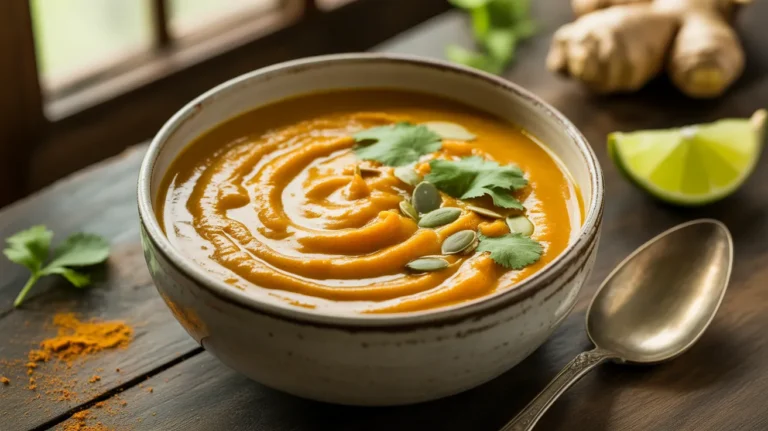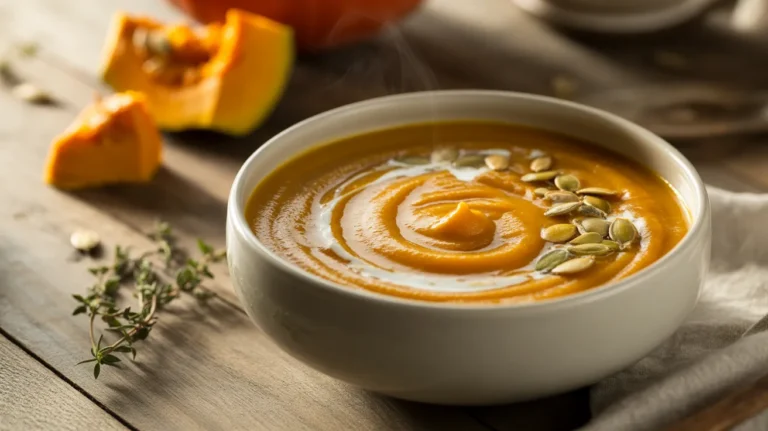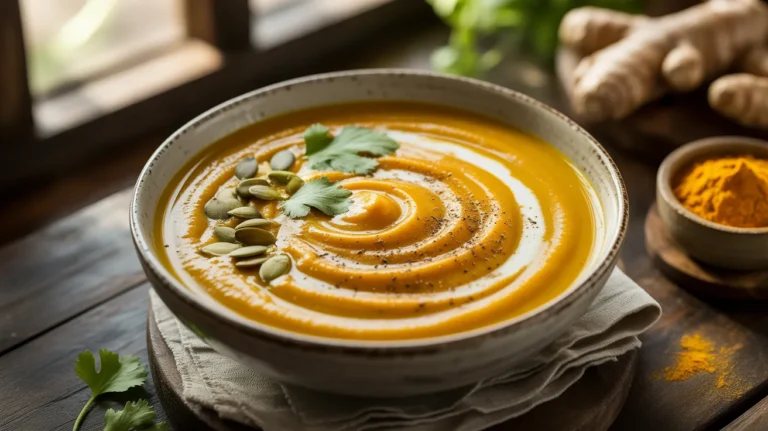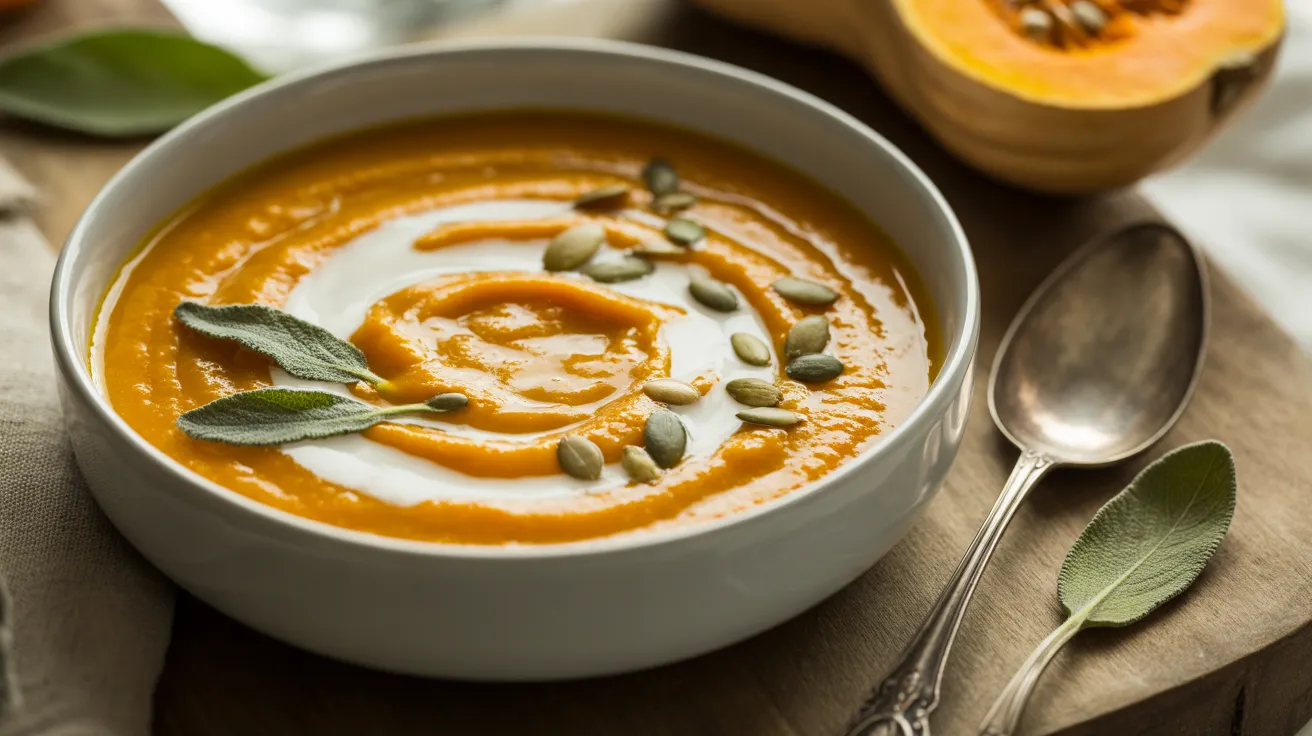
This butternut squash pumpkin soup combines two fall favorites into one incredibly creamy, naturally sweet bowl of comfort. I’ve perfected this butternut squash pumpkin soup recipe over countless autumn evenings, and it never fails to warm both body and soul with its velvety texture and perfectly balanced spices.
SERVES: 4 | PREP: 20 MIN | COOK: 45 MIN | TOTAL: 65 MIN
Ingredients
Main Vegetables
| Ingredient | Amount |
|---|---|
| Butternut squash (peeled, cubed) | 3 cups (about 1 medium squash) |
| Pumpkin puree (canned) | 1 cup |
| Yellow onion (diced) | 1 medium |
| Garlic cloves (minced) | 4 cloves |
| Fresh ginger (grated) | 1 tablespoon |
Liquids & Base
| Ingredient | Amount |
|---|---|
| Vegetable broth | 4 cups |
| Coconut milk (full-fat) | 1 cup |
| Olive oil | 2 tablespoons |
Seasonings
| Ingredient | Amount |
|---|---|
| Ground cinnamon | 1 teaspoon |
| Ground nutmeg | ½ teaspoon |
| Ground cumin | ½ teaspoon |
| Salt | 1½ teaspoons (adjust to taste) |
| Black pepper | ½ teaspoon |
| Maple syrup | 2 tablespoons |
Garnish (Optional)
| Ingredient | Amount |
|---|---|
| Pumpkin seeds (toasted) | ¼ cup |
| Fresh sage leaves | 8 leaves |
| Heavy cream or coconut cream | For drizzling |
Step-by-Step Instructions
Phase 1: Prep Work (10 minutes)
Step 1: Start by peeling your butternut squash using a sturdy Y-shaped vegetable peeler. Cut it in half lengthwise, scoop out the seeds with a spoon, then cut into 1-inch cubes. Uniform size ensures even cooking.
Step 2: Dice your onion into small, even pieces (about ½-inch). The smaller you dice, the faster it will soften and the smoother your final soup will be.
Step 3: Peel and mince your 4 garlic cloves finely. Crushing them with the flat side of your knife first makes mincing easier and releases more flavor.
Step 4: Grate your fresh ginger using a microplane or the small holes on a box grater. Fresh ginger adds a warming spiciness that dried just can’t match.
Phase 2: Building Flavor (15 minutes)
Step 5: Heat your 2 tablespoons olive oil in a large, heavy-bottomed pot over medium heat for about 2 minutes. The oil should shimmer but not smoke—this is your sweet spot for sautéing.
Step 6: Add your diced onion to the hot oil and stir immediately to coat. Cook for 5-7 minutes, stirring every minute or so, until the onions turn translucent and soft. You’ll know they’re ready when they’ve lost their raw crunch and smell sweet.
Step 7: Add your minced garlic and grated ginger to the pot. Stir constantly for 1-2 minutes until incredibly fragrant. Be careful not to let the garlic brown—it can turn bitter. If it starts browning, reduce your heat immediately.
Step 8: Sprinkle in your cinnamon, nutmeg, and cumin. Toast these spices for 30-60 seconds, stirring constantly. This step, called “blooming,” wakes up the spices and makes them more aromatic. Your kitchen should smell like fall heaven right now.
Phase 3: Cooking the Vegetables (25 minutes)
Step 9: Add your cubed butternut squash to the pot and stir well to coat every piece with the spiced oil mixture. This step helps the squash absorb all those delicious flavors. Cook for 3-4 minutes, stirring occasionally.
Step 10: Pour in your 1 cup pumpkin puree and stir until it’s completely combined with the squash and aromatics. The pumpkin adds depth and a beautiful orange color to your soup.
Step 11: Add your 4 cups vegetable broth, salt, and black pepper. Stir everything together, then increase heat to high and bring to a boil. This should take about 5 minutes.
Step 12: Once boiling, reduce heat to medium-low and cover the pot, leaving the lid slightly cracked to let steam escape. Simmer for 20-25 minutes until the butternut squash is fork-tender. Test by piercing a cube with a fork—it should slide in with zero resistance.
Phase 4: Creating Creaminess (10 minutes)
Step 13: Remove the pot from heat and let it cool for 3-5 minutes. This prevents dangerous splashing when you blend hot liquid. Safety first!
Step 14: Using an immersion blender, blend the soup directly in the pot until completely smooth and creamy, about 2-3 minutes. Move the blender around to catch any chunks hiding at the bottom. Alternatively, carefully transfer the soup in batches to a regular blender, filling it only halfway each time and holding the lid down with a towel.
Step 15: Return the pot to low heat and stir in your 1 cup coconut milk and 2 tablespoons maple syrup. The coconut milk adds luxurious creaminess while the maple syrup balances the earthiness of the squash. Heat gently for 3-4 minutes, stirring occasionally, until warmed through.
Step 16: Taste and adjust seasonings. Add more salt if it tastes flat, more maple syrup if you want it sweeter, or a pinch of cayenne pepper if you want some heat.
Phase 5: Finishing Touches (5 minutes)
Step 17: While your soup does its final warm-up, toast your pumpkin seeds in a dry skillet over medium heat for 2-3 minutes, shaking the pan frequently. They’re ready when they start popping and smell nutty.
Step 18: If using fresh sage, fry the leaves in 1 tablespoon olive oil over medium-high heat for 30-60 seconds until crispy. They should turn darker and curl slightly. Drain on a paper towel.
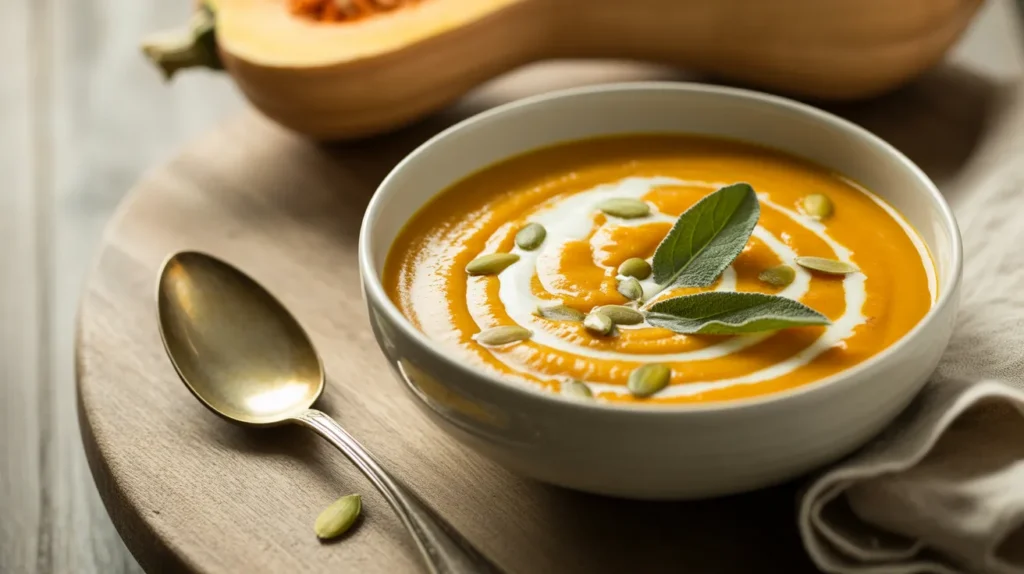
Step 19: Ladle your butternut squash pumpkin soup into bowls. Drizzle each serving with a swirl of heavy cream or coconut cream, sprinkle with toasted pumpkin seeds, and top with a crispy sage leaf if using.
Step 20: Serve immediately with crusty bread on the side for dipping. This soup is at its best when piping hot and freshly made.
Chef’s Notes
Squash Selection: Choose butternut squash that feels heavy for its size with a matte skin—shiny skin means it’s underripe. The deeper the orange color inside, the sweeter and more flavorful your butternut squash pumpkin soup will be.
Pumpkin Puree vs. Pie Filling: Make absolutely certain you’re using pure pumpkin puree, not pumpkin pie filling which contains added sugars and spices. Check the ingredients—it should only list pumpkin.
Coconut Milk Substitution: If you’re not a coconut fan, heavy cream works beautifully instead. Use the same amount and add it at the same time. The soup will be richer but equally delicious.
Make It Spicier: For those who like heat, add ½-1 teaspoon red pepper flakes when you toast your spices, or garnish with a drizzle of sriracha before serving.
Nutrition Information (Per Serving)
- Calories: 285
- Protein: 5g
- Carbohydrates: 38g
- Fat: 14g
- Fiber: 6g
- Sugar: 12g
- Sodium: 920mg
Creative Variations
Thai-Inspired Version: Replace the cinnamon and nutmeg with 1 tablespoon red curry paste and add 2 tablespoons fish sauce for an Asian twist. The combination of squash and Thai flavors is absolutely stunning. If you love creative soup combinations, check out this warm vegan pumpkin rice soup that takes comfort food in a completely different direction.
Roasted Version: Skip the stovetop sautéing and roast your cubed butternut squash with the onions at 425°F for 30-35 minutes until caramelized. Then proceed with the recipe from step 10. Roasting adds deep, sweet caramelized notes.
Apple Harvest Soup: Add 2 peeled, diced apples (Honeycrisp or Granny Smith work great) when you add the butternut squash. The apple sweetness complements the squash beautifully and adds another layer of fall flavor.
Sweet Potato Fusion: Swap 1 cup of the butternut squash for sweet potato cubes. This creates an even sweeter, more vibrant orange soup. For another sweet potato-based recipe that celebrates autumn flavors, try this pumpkin and sweet potato soup that’s equally comforting.
Storage & Reheating
Refrigerator Storage: Let your soup cool completely before transferring to airtight containers. It will keep beautifully in the fridge for 4-5 days. The flavors actually develop and deepen overnight, making leftovers even better than day one.
Freezer Storage: This soup freezes exceptionally well for up to 3 months. Freeze in individual portions using freezer-safe containers or heavy-duty freezer bags laid flat (they stack beautifully once frozen). Leave 1 inch of headspace as the soup will expand when frozen.
Reheating Instructions: For refrigerated soup, reheat gently on the stovetop over medium-low heat, stirring occasionally, for 8-10 minutes. Add a splash of broth or coconut milk if it’s thickened too much. For frozen soup, thaw overnight in the fridge first, then reheat. You can also microwave individual portions in 2-minute intervals, stirring between each, until steaming hot.
Texture Tips: If your soup separates after storage (the coconut milk may separate slightly), simply whisk vigorously while reheating to bring it back together. A quick buzz with an immersion blender also works perfectly.
Troubleshooting Guide
Problem 1: Soup Is Too Thick Your butternut squash pumpkin soup can thicken considerably as it sits, especially if you used a starchier squash. Simply thin it out by stirring in vegetable broth ¼ cup at a time while reheating until you reach your desired consistency. The soup should coat the back of a spoon but still pour easily.
Problem 2: Soup Tastes Bland Under-seasoning is the most common issue with pureed soups. Always taste before serving and be generous with salt—you may need more than you think since squash is naturally mild. Add salt ½ teaspoon at a time, stirring and tasting after each addition. A squeeze of fresh lemon juice can also brighten all the flavors instantly.
Problem 3: Soup Is Grainy or Lumpy This happens when the butternut squash isn’t cooked long enough before blending. The squash must be completely soft and falling apart. If you’ve already blended and notice graininess, return the soup to a simmer for 10 more minutes to soften any remaining chunks, then blend again. Straining through a fine-mesh sieve is your last resort for ultra-smooth texture.
Problem 4: Burned Bottom If you smell burning during cooking, immediately remove from heat and carefully transfer the soup to a clean pot, leaving the burned layer behind. Don’t scrape or stir the bottom. The burnt flavor will permeate everything if you mix it in. This usually happens from cooking on too high heat—keep it at medium-low during simmering.
Problem 5: Soup Is Too Sweet If you accidentally added too much maple syrup or your squash was particularly sweet, balance it with acidity and salt. Stir in 1-2 tablespoons of apple cider vinegar or lemon juice, and add an extra ¼ teaspoon salt. A pinch of cayenne pepper also helps cut through sweetness.
Equipment Essentials
- Large heavy-bottomed pot (5-6 quart capacity)
- Immersion blender (or regular blender)
- Chef’s knife and cutting board
- Vegetable peeler (Y-shaped works best)
- Wooden spoon or silicone spatula
- Measuring cups and spoons
- Ladle for serving
- Box grater or microplane (for ginger)
Shopping List by Store Section
Produce Section:
- 1 medium butternut squash
- 1 medium yellow onion
- 1 head garlic
- 1 knob fresh ginger
- Fresh sage (optional garnish)
Canned Goods Aisle:
- 1 can (15 oz) pure pumpkin puree
- 1 can (14 oz) full-fat coconut milk
- 1 container (32 oz) vegetable broth
Baking/Spice Aisle:
- Ground cinnamon
- Ground nutmeg
- Ground cumin
- Pumpkin seeds (for garnish)
- Maple syrup
Oils/Condiments:
- Olive oil
Dairy Section (Optional):
- Heavy cream (for drizzling)
Pantry Staples You Probably Have:
- Salt
- Black pepper
Success Secrets
1. Roast Your Squash for Deeper Flavor: While the recipe calls for sautéing, roasting the butternut squash cubes at 425°F for 25-30 minutes before adding to your soup creates incredible caramelization and intensifies the natural sweetness dramatically.
2. Toast Your Spices: Never skip step 8 where you toast the cinnamon, nutmeg, and cumin. This 30-60 second step transforms the spices from flat to phenomenally aromatic and makes your butternut squash pumpkin soup taste restaurant-quality.
3. Use Full-Fat Coconut Milk: Light coconut milk won’t give you that luxurious, creamy texture you want. The full-fat version creates a velvety mouthfeel that makes this soup feel indulgent without being heavy.
4. Don’t Rush the Simmer: Those 20-25 minutes of simmering aren’t just about cooking the squash—they allow all the flavors to meld together beautifully. Rushing this step results in a soup where you can taste individual ingredients rather than a harmonious blend.
5. Blend Until Impossibly Smooth: Take an extra minute with your immersion blender to make sure there isn’t a single lump remaining. A truly smooth butternut squash pumpkin soup should be silky enough to drink through a straw. The texture is what makes this soup special.
This butternut squash pumpkin soup brings together the best of fall in one gorgeous bowl. The natural sweetness of both squashes, the warmth of autumn spices, and that dreamy creamy texture make it perfect for everything from casual weeknight dinners to impressive holiday starters.