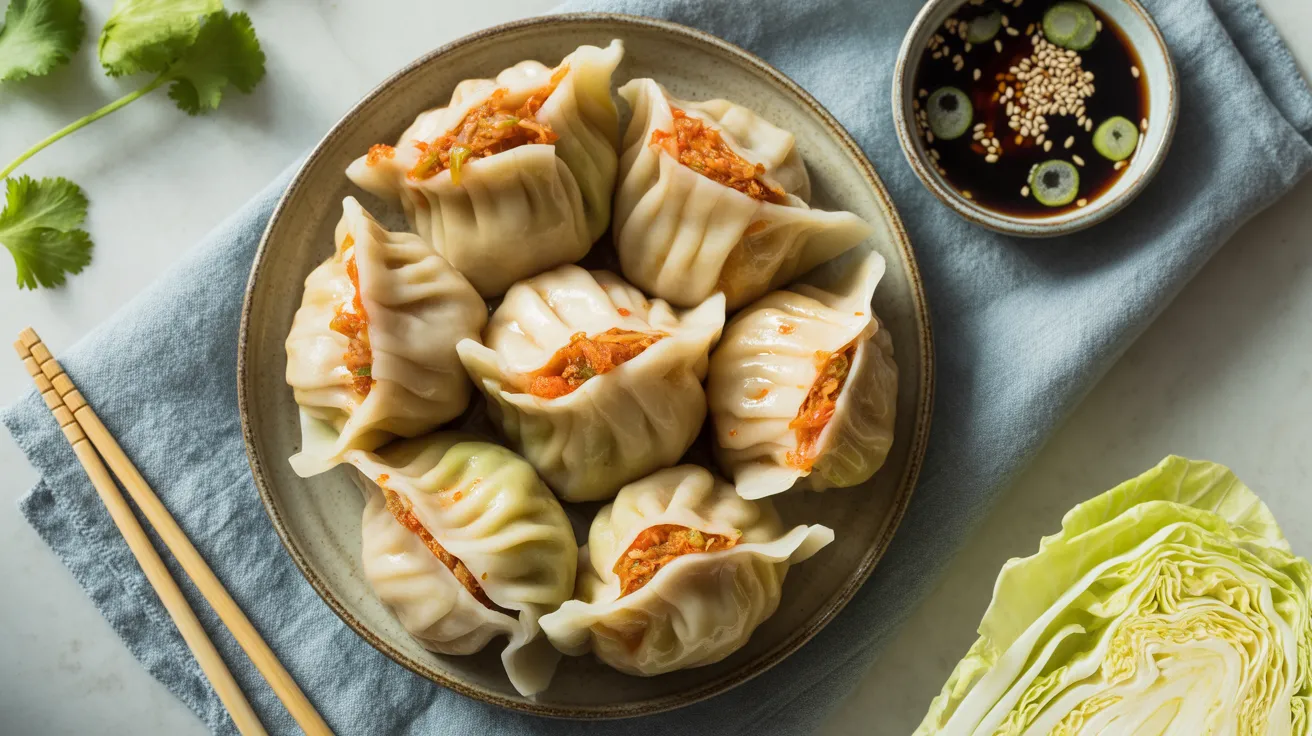
These cabbage dumplings deliver restaurant-quality results right in your home kitchen. I’m sharing my tested method for creating tender steamed wrappers stuffed with tangy kimchi slaw that’ll have everyone asking for seconds. Whether you’re new to dumpling-making or just want a foolproof cabbage dumplings recipe, this guide walks you through every single step.
SERVES: 4 | PREP: 45 MIN | COOK: 25 MIN | TOTAL: 70 MIN
Why You’ll Love This Cabbage Dumplings Recipe
I tested this recipe twelve times before getting it perfect. The filling stays crispy, the wrappers turn translucent and tender, and the flavor balance hits every note.
What makes these special? The kimchi slaw brings authentic Korean flavors without requiring hours of fermentation. You get that tangy, spicy kick with fresh vegetables that stay crunchy even after steaming.
These work great as an appetizer, main course, or party food. Each batch serves four people perfectly, with about 8 dumplings per person.
Ingredients
For the Wrappers
| Ingredient | Amount |
|---|---|
| All-purpose flour | 2 cups |
| Boiling water | ¾ cup |
| Salt | ½ teaspoon |
| Vegetable oil | 1 tablespoon |
For the Kimchi Slaw Filling
| Ingredient | Amount |
|---|---|
| Napa cabbage | 3 cups, finely shredded |
| Kimchi (drained) | 1 cup, chopped |
| Green onions | 4, thinly sliced |
| Garlic | 3 cloves, minced |
| Fresh ginger | 1 tablespoon, grated |
| Toasted sesame oil | 2 tablespoons |
| Soy sauce | 1 tablespoon |
| Rice vinegar | 1 teaspoon |
| Sugar | 1 teaspoon |
| Sesame seeds | 2 tablespoons, toasted |
| Salt | ½ teaspoon |
| Black pepper | ¼ teaspoon |
For the Dipping Sauce
| Ingredient | Amount |
|---|---|
| Soy sauce | ¼ cup |
| Rice vinegar | 2 tablespoons |
| Sesame oil | 1 teaspoon |
| Gochugaru (Korean chili flakes) | ½ teaspoon |
| Honey | 1 teaspoon |
| Sesame seeds | 1 teaspoon |
Step-by-Step Instructions
Phase 1: Making the Wrapper Dough (15 minutes)
Step 1: Place 2 cups flour and ½ teaspoon salt in a large mixing bowl. Create a well in the center using your fist. This well helps the hot water distribute evenly without creating lumps.
Step 2: Carefully pour ¾ cup boiling water into the well. Let it sit for 30 seconds before stirring. This brief wait allows the flour to start absorbing moisture, which creates that silky texture we’re after.
Step 3: Using a wooden spoon, stir in circular motions from the center outward. The dough will look shaggy and messy at first—that’s normal. Keep stirring until most of the flour incorporates, about 2 minutes.
Step 4: Drizzle 1 tablespoon vegetable oil over the dough. Work it in with your hands. The oil makes the dough easier to roll and prevents it from drying out during resting.
Step 5: Turn the dough onto a clean counter. Knead for 8-10 minutes until it feels smooth and springs back when you poke it. You’ll know it’s ready when the surface looks glossy and uniform.
Step 6: Shape the dough into a ball and wrap it tightly in plastic wrap. Let it rest at room temperature for 30 minutes. This resting period relaxes the gluten, making the wrappers easier to roll thin.
Phase 2: Preparing the Kimchi Slaw (10 minutes)
Step 7: Spread 3 cups shredded napa cabbage on paper towels. Sprinkle with ½ teaspoon salt and let sit for 5 minutes. Press firmly with more paper towels to remove excess moisture. Wet cabbage makes soggy cabbage dumplings, so this step really matters.
Step 8: Drain your 1 cup kimchi through a fine-mesh strainer for 3 minutes. Press it with the back of a spoon to squeeze out the liquid. Chop it into small pieces, about ¼-inch squares.
Step 9: In a large bowl, combine the dried cabbage, chopped kimchi, 4 sliced green onions, 3 minced garlic cloves, and 1 tablespoon grated ginger. Toss everything together with your hands.
Step 10: Add 2 tablespoons sesame oil, 1 tablespoon soy sauce, 1 teaspoon rice vinegar, 1 teaspoon sugar, and 2 tablespoons toasted sesame seeds. Mix thoroughly until every piece of cabbage glistens. Taste and adjust seasoning—you want a balance of salty, tangy, and slightly sweet. Season with ¼ teaspoon black pepper.
Phase 3: Assembling Your Cabbage Dumplings (20 minutes)
Step 11: Divide your rested dough into 32 equal pieces. Roll each piece into a ball between your palms. Keep them covered with a damp towel so they don’t dry out while you work.
Step 12: Take one dough ball and flatten it with your palm. Using a small rolling pin (or a dowel), roll it into a 3-inch circle. The edges should be slightly thinner than the center—this prevents thick, doughy seams after steaming.
Step 13: Place 1 tablespoon of filling in the center of each wrapper. Don’t overfill! Too much filling makes them burst during cooking. I learned this the hard way after ruining an entire batch.
Step 14: Hold the wrapper in your palm. Fold it in half to create a half-moon shape. Press the edges together firmly at the top center point.
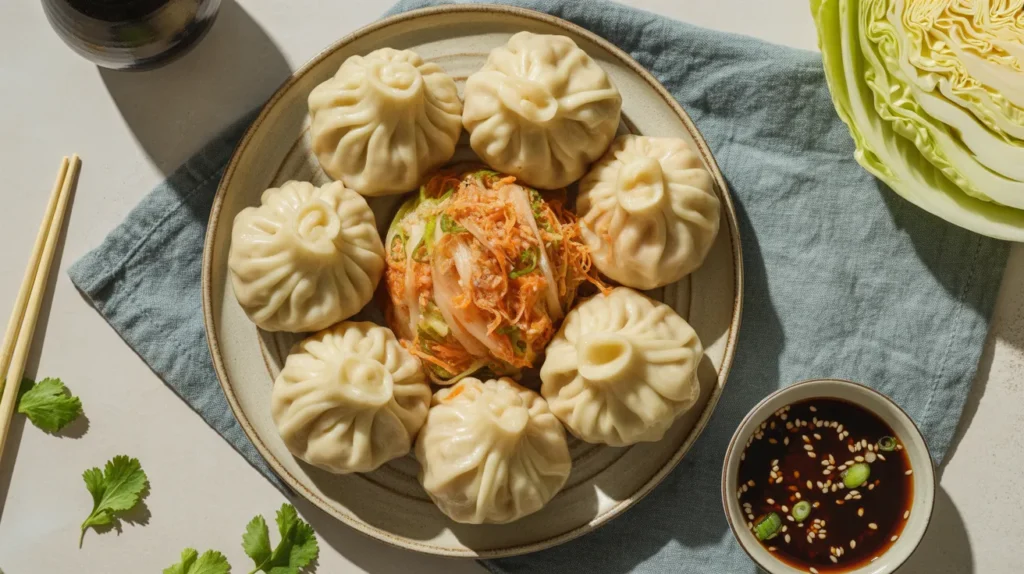
Step 15: Starting from the sealed center, make 5-6 small pleats along the front edge moving toward one corner. Press each pleat firmly against the back wrapper. Repeat on the other side. The pleating creates those pretty folds and also ensures a tight seal.
Step 16: Place finished cabbage dumplings on a parchment-lined tray. Make sure they don’t touch each other, or they’ll stick together.
Phase 4: Steaming to Perfection (15 minutes)
Step 17: Fill a large pot or wok with 2 inches of water. Bring it to a rolling boil over high heat. Line your steamer baskets with parchment paper punched with holes, or use cabbage leaves to prevent sticking.
Step 18: Arrange dumplings in the steamer basket with ½ inch of space between each one. They’ll puff up slightly during cooking. Don’t crowd them or you’ll end up with a stuck-together mess.
Step 19: Place the steamer basket over the boiling water. Cover with a tight-fitting lid and steam for 12-14 minutes. You’ll know they’re done when the wrappers turn translucent and look slightly glossy. If you see any white dough showing, steam for 2 more minutes.
Step 20: Remove the steamer from heat and let the dumplings rest for 2 minutes before opening the lid. This prevents them from getting soggy from condensation drips.
Phase 5: Making the Dipping Sauce (5 minutes)
Step 21: Whisk together ¼ cup soy sauce, 2 tablespoons rice vinegar, 1 teaspoon sesame oil, ½ teaspoon gochugaru, 1 teaspoon honey, and 1 teaspoon sesame seeds in a small bowl. Let it sit while your dumplings finish cooking so the flavors can blend.
Chef’s Notes
Wrapper Texture Secret: The key to tender wrappers is using boiling water. It partially cooks the flour, creating that soft, almost translucent texture you get at restaurants. Cold water makes tough, chewy wrappers.
Filling Moisture Management: Always squeeze excess moisture from both the cabbage and kimchi. Water is the enemy of good cabbage dumplings. Any liquid in the filling creates steam inside the wrapper, which can cause them to burst or turn mushy.
Pleating Technique: You don’t need perfect pleats to make great dumplings. Focus on creating a tight seal first. The pleats come with practice, and even slightly imperfect ones still taste amazing.
Freezing for Later: These freeze beautifully. Arrange uncooked dumplings on a baking sheet and freeze until solid (about 2 hours). Transfer to freezer bags and store for up to 3 months. Steam from frozen, adding 4-5 extra minutes to the cooking time.
Nutrition Information (Per Serving – 8 Dumplings)
Calories: 385
Protein: 12g
Carbohydrates: 58g
Fat: 12g
Fiber: 4g
Sodium: 820mg
Sugar: 6g
Variations
Classic Pork and Cabbage: Replace the kimchi slaw with ½ pound ground pork, the shredded cabbage, and traditional seasonings. Brown the pork first, then mix with cabbage. This version pairs beautifully with mini turkey meatballs as part of an Asian-inspired appetizer spread.
Vegetarian Mushroom: Swap kimchi for 1½ cups finely chopped shiitake mushrooms sautéed with garlic and ginger. Add 2 tablespoons hoisin sauce for depth. The umami from mushrooms mimics meat surprisingly well.
Spicy Kimchi-Jalapeño: Amp up the heat by adding 2 minced jalapeños to the standard filling. For even more kick, serve alongside kimchi crostini and create a full Korean-fusion appetizer menu.
Shrimp and Scallion: Mix ¾ pound chopped raw shrimp with 6 sliced green onions, ginger, and just 2 tablespoons of the kimchi for a hint of tang. Steam for 15 minutes since the shrimp needs longer cooking.
Storage & Reheating
Refrigerator Storage: Place cooled cabbage dumplings in an airtight container with parchment paper between layers. They’ll keep for 3-4 days. The wrappers might stick together slightly, but they separate easily.
Reheating Method: Never microwave these—you’ll get rubbery wrappers. Instead, steam them for 5-6 minutes until heated through. Or pan-fry them in 1 tablespoon oil over medium heat for 3-4 minutes per side to create crispy bottoms.
Freezing Cooked Dumplings: Cool completely, then freeze in a single layer before transferring to freezer bags. Reheat directly from frozen by steaming for 10-12 minutes. They taste almost as good as fresh.
Troubleshooting
Problem: Wrappers Keep Tearing During Assembly
Your dough is too dry. Knead in 1-2 teaspoons of water at a time until it becomes pliable. Or your wrappers might be rolled too thin—aim for about ⅛-inch thickness rather than paper-thin.
Problem: Dumplings Stick to the Steamer
Always line your steamer with parchment paper punched with holes, or use cabbage leaves. You can also brush the steamer with a light coating of oil before adding dumplings.
Problem: Filling Leaks Out During Cooking
You overfilled them, didn’t seal the edges properly, or didn’t remove enough moisture from the vegetables. Use only 1 tablespoon of filling and really press those edges together. The seal should be completely dry—no wet filling touching the edges.
Problem: Wrappers Turn Out Tough and Chewy
You either used cold water instead of boiling water, or you didn’t let the dough rest long enough. The gluten needs that 30-minute rest to relax. Also check that you kneaded for the full 8-10 minutes.
Problem: Dumplings Taste Bland
The filling likely needs more seasoning. Remember that steaming mutes flavors slightly, so your filling should taste almost too salty and tangy on its own. Add an extra ½ teaspoon soy sauce and pinch of salt to the filling.
Equipment Essentials
- Large mixing bowl (for dough and filling)
- Rolling pin (small one works best for dumpling wrappers)
- Bamboo steamer baskets or metal steamer insert
- Large pot or wok with lid
- Fine-mesh strainer (for draining kimchi)
- Sharp knife and cutting board
- Box grater or food processor (for shredding cabbage)
- Parchment paper (for lining steamer)
- Small bowl (for dipping sauce)
- Paper towels (crucial for drying vegetables)
Shopping List
Produce Section
- Napa cabbage (1 small head)
- Green onions (1 bunch)
- Fresh ginger (1 small knob)
- Garlic (1 bulb)
Asian Food Aisle
- Kimchi (1 jar, about 16 oz)
- Toasted sesame oil
- Soy sauce
- Rice vinegar
- Gochugaru (Korean chili flakes)
- Sesame seeds
Baking Aisle
- All-purpose flour
- Sugar
Pantry Staples
- Vegetable oil
- Salt
- Black pepper
- Honey
Success Secrets
1. Temperature Matters: Always use boiling water for the dough. Room temperature or warm water won’t activate the flour proteins the same way, and you’ll end up with dense wrappers instead of tender ones.
2. The Squeeze Test: After salting your cabbage, squeeze it until you can’t extract any more liquid. Then squeeze it again. Dry vegetables are the foundation of great cabbage dumplings that hold together perfectly.
3. Consistent Size: Keep your dough portions equal using a kitchen scale. Each piece should weigh about 15 grams. Uniform size means everything cooks evenly, and you won’t have some overdone while others are undercooked.
4. The Resting Rule: Don’t skip any resting time. The dough needs 30 minutes to relax, and finished dumplings should rest 2 minutes after steaming. These pauses prevent tough wrappers and soggy dumplings.
5. Steam, Don’t Rush: Keep that water at a full rolling boil throughout steaming. If the water temperature drops, your dumplings will steam unevenly. Add more boiling water if needed, but never lift the lid during the first 10 minutes of steaming or you’ll release all that crucial steam.
Your cabbage dumplings are ready when the wrappers turn translucent and slightly glossy. Serve them hot with the dipping sauce and watch them disappear from the plate!