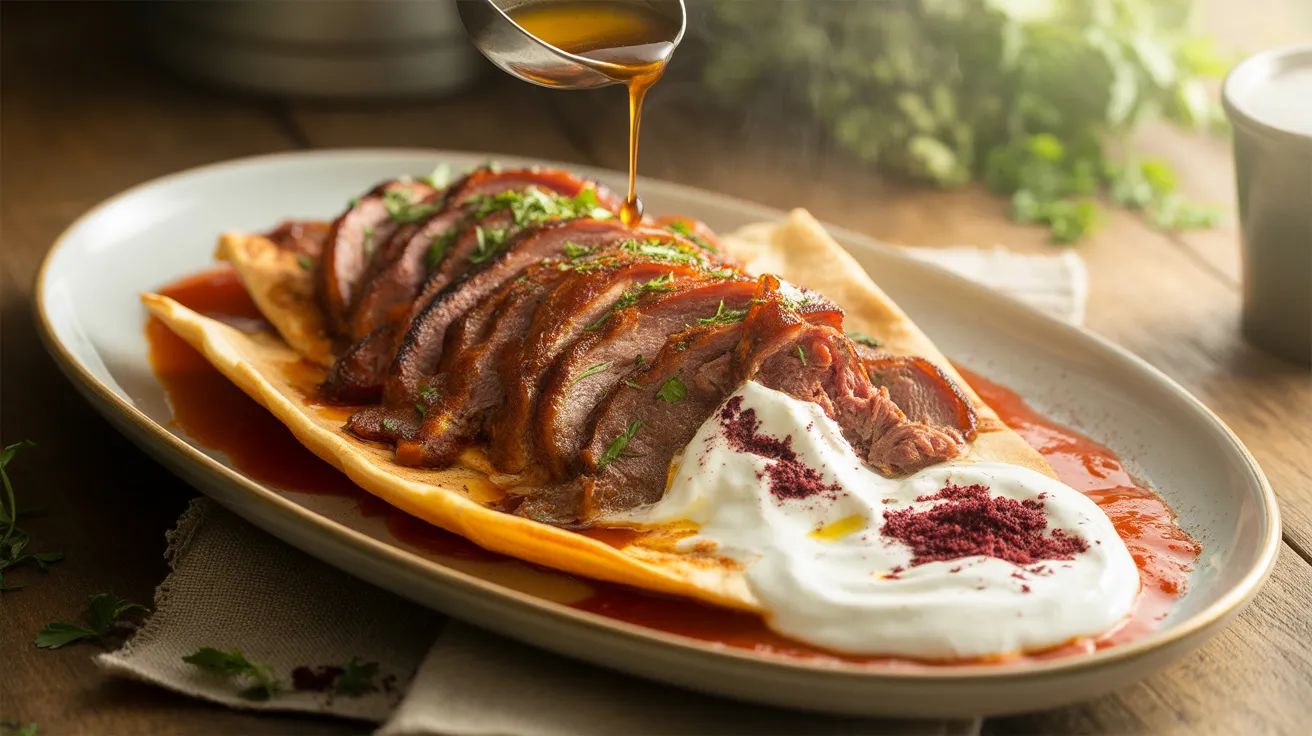
Crispy pita soaked in rich tomato sauce, topped with tender spiced lamb and drizzled with sizzling brown butter—this iskender kebab brings Turkey’s most famous dish to your kitchen. I’ve spent years perfecting this iskender kebab recipe that tastes just like the original from Bursa, and now you can master it too.
SERVES: 4 | PREP: 30 MIN | COOK: 25 MIN | TOTAL: 55 MIN
Ingredients
For the Marinated Lamb
| Ingredient | Amount |
|---|---|
| Lamb leg or shoulder, thinly sliced | 2 lbs |
| Plain yogurt | 1/2 cup |
| Olive oil | 3 tbsp |
| Garlic, minced | 4 cloves |
| Paprika | 2 tsp |
| Ground cumin | 1 tsp |
| Black pepper | 1 tsp |
| Salt | 1 1/2 tsp |
For the Tomato Sauce
| Ingredient | Amount |
|---|---|
| Crushed tomatoes | 2 cups |
| Tomato paste | 2 tbsp |
| Garlic, minced | 2 cloves |
| Olive oil | 2 tbsp |
| Red pepper flakes | 1/2 tsp |
| Sugar | 1 tsp |
| Salt | 1/2 tsp |
For Assembly
| Ingredient | Amount |
|---|---|
| Pita bread, cut into triangles | 4 large |
| Plain whole milk yogurt | 1 1/2 cups |
| Unsalted butter | 1/2 cup (1 stick) |
| Fresh parsley, chopped | 1/4 cup |
| Sumac (optional) | 1 tsp |
Step-by-Step Instructions
Phase 1: Marinating the Lamb (5 minutes active, 20 minutes resting)
Step 1: Place your thinly sliced lamb in a large mixing bowl. The slices should be about 1/4 inch thick for quick cooking and tender results.
Step 2: Add the yogurt, olive oil, minced garlic, paprika, cumin, black pepper, and salt directly to the lamb. Use your hands to massage the marinade into every piece—this hands-on approach ensures even coating.
Step 3: Cover the bowl with plastic wrap and let it sit at room temperature for 20 minutes. This brief marination tenderizes the meat without overwhelming the lamb’s natural flavor.
Phase 2: Making the Tomato Sauce (10 minutes)
Step 4: Heat 2 tablespoons olive oil in a medium saucepan over medium heat until it shimmers but doesn’t smoke. This takes about 1 minute.
Step 5: Add the minced garlic and cook for 30 seconds, stirring constantly. You’ll smell the garlic’s aroma change from raw to fragrant—that’s your cue to move forward.
Step 6: Stir in the tomato paste and cook for 2 minutes, stirring frequently. The paste will darken slightly and lose its raw, metallic taste.
Step 7: Pour in the crushed tomatoes, red pepper flakes, sugar, and salt. The sugar balances the tomatoes’ acidity—a trick Turkish chefs swear by.
Step 8: Bring the sauce to a gentle simmer, then reduce heat to low. Let it cook for 8 minutes, stirring occasionally. The sauce should thicken enough to coat the back of a spoon. Keep warm on the lowest setting.
Phase 3: Cooking the Lamb (8 minutes)
Step 9: Heat a large cast-iron skillet or grill pan over high heat for 3 minutes. You want this smoking hot—literally. A drop of water should sizzle and evaporate instantly.
Step 10: Working in two batches to avoid overcrowding, lay the marinated lamb slices in a single layer. Overcrowding creates steam instead of the crispy edges you want.
Step 11: Cook for 2 minutes without moving the meat. You’re looking for deep brown caramelization on the bottom—resist the urge to flip early.
Step 12: Flip each slice and cook for 1-2 minutes more. Lamb should reach an internal temperature of 145°F for medium-rare. The edges will crisp up beautifully while the center stays tender.
Step 13: Transfer cooked lamb to a cutting board and tent with foil. Repeat with the remaining batch. Let the meat rest for 5 minutes before slicing into bite-sized strips.
Phase 4: Assembly and Butter Drizzle (7 minutes)
Step 14: Arrange the pita triangles on four individual serving plates, creating a bed that covers the bottom of each plate. If your pita is stale, lightly toast it first for better texture.
Step 15: Spoon 1/2 cup of the warm tomato sauce over each pita bed, making sure every piece gets coated. The bread will soak up the sauce like a sponge.
Step 16: Pile the sliced lamb on top of the sauced pita, dividing it evenly among the four plates. The meat should slightly overlap for an authentic presentation.
Step 17: Add a generous dollop (about 1/3 cup) of plain yogurt to each plate, placing it on one side of the meat. The cool yogurt provides essential contrast to the hot, spiced lamb.
Step 18: In a small saucepan, melt the butter over medium heat. Keep cooking it for 3-4 minutes after melting, swirling the pan occasionally. The butter will foam, then the foam will subside, and you’ll see brown specks forming at the bottom. This is browned butter—nutty and aromatic.
Step 19: Immediately drizzle the hot brown butter over each plate of iskender kebab. You should hear it sizzle when it hits the meat—that’s the signature sound of this dish.
Step 20: Garnish with chopped fresh parsley and a light sprinkle of sumac if using. Serve immediately while the butter is still sizzling.
Chef’s Notes
Temperature Control: The key to restaurant-quality iskender kebab is cooking the lamb at extremely high heat. This creates the characteristic charred edges while keeping the interior juicy.
Butter Timing: The brown butter must be drizzled while actively hot and foaming. Once it cools, you lose that dramatic sizzle and the butter’s nutty flavor becomes less pronounced.
Yogurt Choice: Always use full-fat, plain yogurt for iskender kebab. Low-fat versions lack the richness this dish requires, and flavored yogurts will clash with the savory elements.
Bread Selection: Traditional iskender uses Turkish pide bread, but pita works beautifully. Cut it into triangles rather than leaving it whole—this maximizes the surface area for sauce absorption.
Nutrition Information (Per Serving)
- Calories: 680
- Protein: 45g
- Carbohydrates: 38g
- Fat: 38g
- Saturated Fat: 18g
- Fiber: 4g
- Sodium: 890mg
Creative Variations

Chicken Iskender Kebab
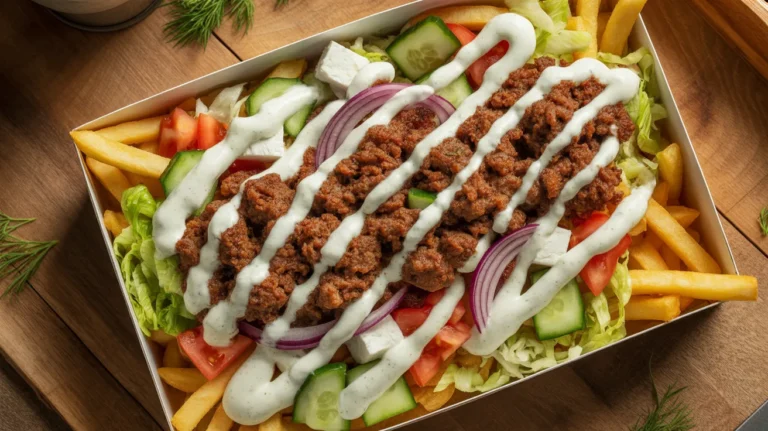
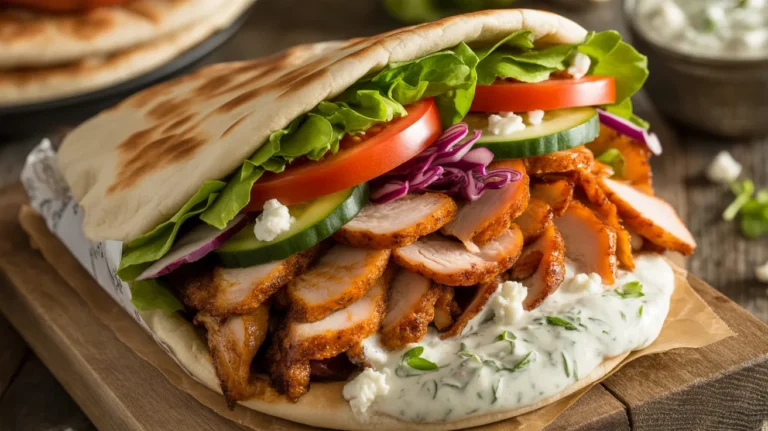
Replace the lamb with 2 lbs of thinly sliced chicken thighs. The cooking time remains the same, but chicken needs to reach 165°F internally. This lighter version still delivers incredible flavor while reducing the overall fat content. For more Middle Eastern chicken inspiration, check out this doner kebab mixed grill platter that showcases multiple protein options.
Beef Iskender Kebab
Swap lamb for thinly sliced sirloin or ribeye. The marbling in ribeye mimics lamb’s richness, though you’ll get a different flavor profile. Cook beef to 130°F for medium-rare perfection.
Vegetarian Iskender
Use thick slices of grilled eggplant and zucchini marinated in the same spice blend. Add chickpeas for protein and body. The brown butter still works magic, and you’ll appreciate how well vegetables absorb the tomato sauce.
Spicy Iskender with Harissa
Mix 2 tablespoons of harissa paste into your tomato sauce for North African heat. This variation pairs exceptionally well with extra yogurt to cool things down. If you love bold, spicy flavors, try this halal cart lamb over rice for another street-food-inspired experience.
Storage and Reheating
Refrigeration: Store components separately in airtight containers. The cooked lamb keeps for 3 days, tomato sauce for 5 days, and the yogurt up to 1 week. Don’t store assembled iskender kebab—the bread becomes soggy.
Freezing: The lamb and tomato sauce freeze well for up to 3 months. Freeze them in portion-sized containers for easy weeknight meals. Yogurt doesn’t freeze well, so always use fresh.
Reheating: Warm the lamb in a skillet over medium-high heat for 2-3 minutes. Heat the tomato sauce gently in a saucepan. Make fresh brown butter each time—it only takes 5 minutes and makes all the difference.
Make-Ahead Strategy: Marinate the lamb and prepare the tomato sauce up to 24 hours ahead. Store both in the fridge, then bring to room temperature 30 minutes before cooking.
Troubleshooting Guide
Problem 1: Lamb Turns Out Tough and Chewy
Solution: You likely overcooked the meat or cut it too thick. Lamb should be sliced no thicker than 1/4 inch against the grain. Cook each side for just 2 minutes maximum—the residual heat will finish the cooking while it rests.
Problem 2: Pita Bread Gets Too Soggy
Solution: This happens when the tomato sauce is too thin or you assemble too far in advance. Make sure your sauce has thickened to coat-the-spoon consistency. Assemble iskender kebab immediately before serving—never let it sit assembled for more than 2 minutes.
Problem 3: Butter Isn’t Sizzling When Drizzled
Solution: The butter cooled down too much. Brown butter needs to be drizzled while still actively bubbling and hot. If it’s cooled, reheat it briefly over medium heat until it foams again. Also ensure your lamb is hot from the pan—cold meat won’t create that signature sizzle.
Problem 4: Tomato Sauce Tastes Too Acidic
Solution: Not enough sugar to balance the tomatoes. Add an extra 1/2 teaspoon of sugar and simmer for 2 more minutes. Different tomato brands have varying acidity levels, so taste and adjust accordingly.
Problem 5: Meat Sticks to the Pan
Solution: Your pan wasn’t hot enough before adding the lamb. The skillet must be smoking hot—heat it for a full 3 minutes before adding meat. Also, don’t flip too early. Let the meat develop a proper crust for 2 full minutes before attempting to turn it.
Equipment Essentials
- Large cast-iron skillet or grill pan – Essential for achieving proper char on the lamb
- Medium saucepan – For making the tomato sauce
- Small saucepan – For browning the butter
- Sharp knife – Critical for slicing lamb thinly against the grain
- Cutting board – Preferably one designated for raw meat
- Mixing bowl – For marinating the lamb
- Meat thermometer – Takes the guesswork out of doneness
- Measuring cups and spoons – For accurate ingredient portions
- Wooden spoon – For stirring the tomato sauce
Shopping List
Meat Department
- Lamb leg or shoulder (2 lbs, sliced thin)
Dairy Section
- Plain yogurt (2 cups total)
- Unsalted butter (1/2 cup)
Produce
- Fresh garlic (1 head)
- Fresh parsley (1 bunch)
Canned Goods
- Crushed tomatoes (2 cups)
- Tomato paste (1 small can)
Bakery
- Pita bread (4 large rounds)
Spices & Pantry
- Paprika
- Ground cumin
- Black pepper
- Red pepper flakes
- Sugar
- Salt
- Olive oil
- Sumac (optional)
Success Secrets
1. Slice Against the Grain: Always cut your lamb perpendicular to the muscle fibers. This shortens the fibers and creates tender, easy-to-chew pieces. If you cut with the grain, even perfectly cooked lamb will seem tough.
2. Don’t Skip the Yogurt Marinade: The lactic acid in yogurt breaks down proteins, making the lamb incredibly tender. Even 20 minutes makes a noticeable difference—longer won’t hurt, but beyond 2 hours provides diminishing returns.
3. Use a Smoking-Hot Pan: The biggest mistake home cooks make with iskender kebab is using medium heat. You need high heat to create the caramelized crust that defines this dish. Your kitchen will get smoky—turn on the exhaust fan and embrace it.
4. Fresh Brown Butter Every Time: Never make brown butter in advance. It takes 5 minutes and transforms from ordinary to nutty-aromatic in front of your eyes. The hot butter hitting the meat creates that restaurant-quality sizzle that makes iskender kebab special.
5. Balance Your Plate: Each bite should include pita, tomato sauce, meat, and yogurt. The interplay between hot and cold, rich and tangy, soft and crispy makes iskender kebab unforgettable. Encourage your guests to get a little of everything on their fork.