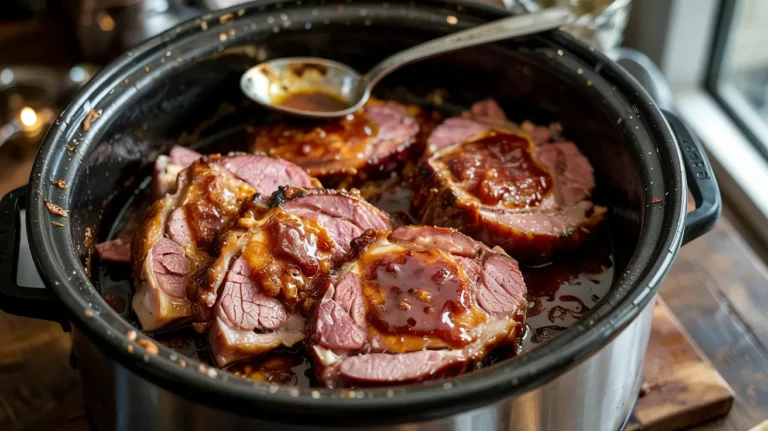
There’s nothing quite like transforming yesterday’s ham into a soul-warming bowl of leftover ham gumbo. This leftover ham gumbo brings together the smoky richness of ham with the holy trinity of Cajun cooking, a dark roux, and a blend of spices that’ll make your kitchen smell like New Orleans. I’ve been making this recipe for years whenever I have ham left from holidays, and it never fails to turn those leftovers into something my family requests over and over.
SERVES: 4 | PREP: 25 MIN | COOK: 75 MIN | TOTAL: 100 MIN
Ingredients
For the Roux
| Ingredient | Amount |
|---|---|
| All-purpose flour | ¾ cup |
| Vegetable oil | ¾ cup |
For the Holy Trinity
| Ingredient | Amount |
|---|---|
| Yellow onion, diced | 1 large |
| Green bell pepper, diced | 1 large |
| Celery stalks, diced | 3 medium |
| Garlic cloves, minced | 4 cloves |
Main Ingredients
| Ingredient | Amount |
|---|---|
| Leftover ham, cubed | 3 cups |
| Andouille sausage, sliced | 8 oz |
| Chicken stock | 6 cups |
| Diced tomatoes (14.5 oz can) | 1 can |
| Tomato paste | 2 tablespoons |
| Bay leaves | 2 leaves |
| Fresh thyme sprigs | 3 sprigs |
| Cajun seasoning | 2 tablespoons |
| Smoked paprika | 1 teaspoon |
| Cayenne pepper | ½ teaspoon |
| File powder | 1 teaspoon |
| Okra, sliced | 1 cup |
| Green onions, sliced | 4 stalks |
| Fresh parsley, chopped | ¼ cup |
| Cooked white rice | 4 cups |
| Kosher salt | To taste |
| Black pepper | To taste |
Step-by-Step Instructions
Phase 1: Building the Foundation (25-30 minutes)
Step 1: Heat your heaviest pot over medium heat and add the ¾ cup vegetable oil.
Let the oil warm for about 2 minutes until it shimmers but doesn’t smoke. You want the oil hot enough to cook the flour but not so hot that it burns.
Step 2: Whisk in the ¾ cup all-purpose flour all at once.
Start stirring immediately and don’t stop. This is where you’re making a roux, which is the backbone of any good gumbo. The mixture will be thick and paste-like at first.
Step 3: Continue stirring constantly for 20-25 minutes until the roux turns a deep chocolate brown color.
This is the most important step and requires patience. Keep the heat at medium and stir in a figure-eight pattern to prevent burning. The roux will go through stages: blonde, peanut butter, milk chocolate, then dark chocolate. You want that dark chocolate color. If you see black specks, you’ve burned it and need to start over. The roux will smell nutty and rich when it’s ready.
Step 4: The moment your roux reaches dark chocolate brown, add all the diced onion, bell pepper, and celery at once.
This stops the roux from cooking further and prevents burning. The vegetables will sizzle loudly—that’s exactly what you want. Stir well to coat everything in the roux.
Phase 2: Aromatics and Seasoning (10 minutes)
Step 5: Cook the vegetable mixture for 5-7 minutes, stirring frequently.
The vegetables will soften and release moisture, which cools down the roux. You’ll see the mixture become looser as the vegetables cook. Keep stirring to prevent any sticking.
Step 6: Add the 4 minced garlic cloves and cook for 1 minute while stirring.
You’ll smell the garlic immediately. Don’t cook it longer than a minute or it’ll turn bitter.
Step 7: Stir in the 2 tablespoons Cajun seasoning, 1 teaspoon smoked paprika, and ½ teaspoon cayenne pepper.
Mix the spices into the vegetable-roux mixture for 30 seconds. This blooms the spices and releases their oils, making them more flavorful. The mixture will be very aromatic now.
Step 8: Add the 2 tablespoons tomato paste and stir for 1 minute.
The tomato paste adds depth and a slight tang. Cooking it briefly removes any raw flavor and caramelizes it slightly.
Phase 3: Building the Gumbo Base (10 minutes)
Step 9: Pour in 1 cup of the chicken stock and stir vigorously to create a smooth paste.
This is called “loosening” the roux. The first cup of liquid creates a thick mixture that makes it easier to add the rest of the stock without lumps forming.
Step 10: Add the remaining 5 cups chicken stock gradually, stirring constantly.
Pour in about a cup at a time, stirring well between additions. This prevents lumps and creates a smooth, silky base for your gumbo.
Step 11: Add the can of diced tomatoes with their juices, 2 bay leaves, and 3 thyme sprigs.
Stir everything together. The tomatoes add brightness and acidity that balances the rich roux.
Step 12: Bring the mixture to a boil over medium-high heat, then reduce to a gentle simmer.
You’ll see bubbles breaking the surface occasionally, but it shouldn’t be a rolling boil. A gentle simmer allows flavors to meld without reducing the liquid too quickly.
Phase 4: Adding Proteins and Final Cooking (40 minutes)
Step 13: Add the 3 cups cubed ham and 8 oz sliced andouille sausage to the simmering gumbo.
Stir to distribute the meats evenly. The ham is already cooked, so you’re just heating it through and letting it absorb the gumbo flavors. The andouille adds a spicy, smoky note.
Step 14: Simmer uncovered for 30 minutes, stirring every 5-10 minutes.
This allows the flavors to blend and the gumbo to thicken slightly. You’ll notice the broth getting darker and richer as it cooks. Skim off any foam or fat that rises to the surface.
Step 15: Add the 1 cup sliced okra and cook for 10 more minutes.
Okra is traditional in gumbo and acts as a natural thickener. Some people don’t like okra’s texture, but cooking it this way keeps it from getting slimy. The okra will be tender but still hold its shape.
Step 16: Taste and adjust seasoning with salt and black pepper.
Every ham has different salt levels, so taste before adding salt. You might need ½ to 1 teaspoon salt depending on your ham and stock. Add ¼ teaspoon black pepper at a time until it tastes right to you.
Phase 5: Finishing Touches (5 minutes)
Step 17: Remove from heat and stir in the 1 teaspoon file powder.
File powder is made from ground sassafras leaves and adds an earthy, slightly floral flavor. Never add it while the pot is boiling or it will get stringy. Stir it in after you’ve removed the pot from the heat.
Step 18: Remove the bay leaves and thyme sprigs.
These have done their job flavoring the gumbo. Leaving them in isn’t dangerous, but they’re not pleasant to bite into.
Step 19: Stir in half of the sliced green onions and chopped parsley.
Save the other half for garnish. These fresh herbs brighten the rich, heavy gumbo and add color.
Step 20: Serve over white rice in bowls, topped with remaining green onions and parsley.
Place about 1 cup cooked rice in each bowl and ladle the gumbo over top. The rice soaks up the flavorful broth and makes the meal more filling.
Chef’s Notes
Roux patience pays off. I can’t stress enough how important that dark roux is for authentic leftover ham gumbo flavor. If you rush it, you’ll get a thin, less flavorful result.
Ham quality matters. Use ham that was baked or smoked, not deli ham or lunch meat. The better your leftover ham, the better your gumbo will taste.
Make it your heat level. Start with less cayenne if you’re sensitive to spice. You can always add hot sauce at the table, but you can’t take heat away once it’s in there.
Stock selection counts. Chicken stock works great, but if you saved the bone from your ham and made stock from it, use that for incredible depth. Mix half ham stock and half chicken stock for the best balance.
Nutrition Information (Per Serving)
Calories: 485 | Protein: 32g | Carbohydrates: 48g | Fat: 18g | Fiber: 4g | Sodium: 1,240mg | Sugar: 6g
Variations to Try
Seafood Ham Gumbo: Add ½ pound peeled shrimp and ½ pound lump crabmeat during the last 5 minutes of cooking. The seafood adds sweetness that balances the smoky ham beautifully. This version feels more special-occasion while still using your leftover ham.
Turkey and Ham Gumbo: If you have leftover turkey too, substitute 1½ cups turkey for 1½ cups of the ham. This is perfect after Thanksgiving when you’ve got both proteins in the fridge. The turkey adds a different texture and flavor that works wonderfully with the ham.
White Bean Ham Gumbo: Stir in 1 can (15 oz) drained cannellini beans with the okra. The beans make the gumbo heartier and add creaminess. This version is great when you want something more filling, similar to how leftover ham corn chowder uses beans to add body.
Vegetable-Heavy Gumbo: Add 1 cup diced zucchini and 1 cup chopped kale during the last 15 minutes. This increases the vegetable content without changing the core flavor. If you enjoy maximizing your ham leftovers with vegetables, you might also like trying leftover ham shepherd’s pie for another veggie-forward option.
Storage and Reheating
Refrigerator Storage: Cool the gumbo completely before transferring to airtight containers. Store for up to 4 days in the refrigerator. The flavors actually improve overnight as everything melds together.
Freezing Instructions: Freeze the gumbo without the rice for up to 3 months. Leave out the file powder if freezing—add it fresh when reheating. Cool completely, then transfer to freezer-safe containers, leaving 1 inch headspace for expansion.
Reheating from Refrigerator: Warm over medium-low heat on the stovetop, stirring occasionally, for 10-15 minutes. Add a splash of chicken stock if it’s thickened too much. Microwave individual portions on 50% power for 3-4 minutes, stirring halfway through.
Reheating from Frozen: Thaw overnight in the refrigerator, then reheat as directed above. You can also reheat from frozen over low heat for 25-30 minutes, breaking up the frozen block as it thaws and stirring frequently.
Troubleshooting Common Problems
Problem: Gumbo is too thin and watery
Your roux may not have been cooked long enough or dark enough. The darker the roux, the less thickening power it has, but it should still create body. Make a small batch of dark roux separately (equal parts flour and oil), cook it to the right color, and whisk 2-3 tablespoons into your simmering gumbo. Let it cook for 10 minutes to thicken. Alternatively, mash some of the okra against the side of the pot to release its natural thickening power.
Problem: Roux burned and tastes bitter
Unfortunately, there’s no fixing burned roux—you’ll taste it throughout your entire gumbo. Start over with fresh oil and flour. To prevent this next time, never walk away from your roux, keep the heat at true medium (not medium-high), and stir constantly. Some people add the flour to cold oil and heat them together, which gives you more control and is harder to burn.
Problem: Gumbo tastes flat or bland
This usually means you need more seasoning. Add 1 teaspoon Cajun seasoning at a time until it tastes right. Check if you forgot the file powder—it adds essential flavor. Also taste your ham—if it’s mild, add 1 tablespoon Worcestershire sauce and ½ teaspoon hot sauce for depth. Don’t forget salt; ham varies wildly in saltiness, so taste and adjust.
Problem: Okra became slimy and unpleasant
Okra releases a substance that can feel slimy when overcooked or cooked at too high a temperature. Make sure you’re adding it near the end and keeping the heat at a gentle simmer, not a boil. For future batches, try roasting the okra separately in a 400°F oven for 10 minutes before adding it to the gumbo. This reduces sliminess significantly.
Problem: Gumbo is too spicy
Cool down the heat by adding 1-2 tablespoons brown sugar or 1 tablespoon honey. This won’t make it sweet but balances the spice. Serve with extra rice, which absorbs heat. You can also stir in ½ cup heavy cream for richness that tames the spice, though this isn’t traditional. For future batches, reduce the cayenne to ¼ teaspoon or omit it entirely.
Equipment Essentials

Heavy-bottomed pot or Dutch oven (6-8 quart): Essential for even heat distribution while making the roux. Thin pots create hot spots that burn the roux.
Wooden spoon or heat-resistant silicone spatula: For constant stirring during roux-making. Metal spoons conduct too much heat.
Whisk: Needed to incorporate the flour smoothly into the oil and to add stock without lumps.
Chef’s knife and cutting board: For chopping all those vegetables. A sharp knife makes prep much faster.
Measuring cups and spoons: Accuracy matters for the roux ratio and seasonings.
Ladle: For serving the gumbo over rice without making a mess.
Shopping List by Store Section
Produce Section
- Yellow onion (1 large)
- Green bell pepper (1 large)
- Celery (3 stalks)
- Garlic (1 head)
- Okra (fresh or frozen, 1 cup)
- Green onions (1 bunch)
- Fresh parsley (1 bunch)
- Fresh thyme (1 package)
Meat Department
- Andouille sausage (8 oz)
- You already have leftover ham
Canned Goods/Pantry
- All-purpose flour
- Vegetable oil
- Chicken stock (48 oz)
- Diced tomatoes (14.5 oz can)
- Tomato paste (small can)
- Bay leaves
- Cajun seasoning
- Smoked paprika
- Cayenne pepper
- File powder (spice section or specialty aisle)
- White rice
- Kosher salt
- Black pepper
Success Secrets
1. Temperature control is everything. Keep your heat at steady medium while making the roux. Too high and you’ll burn it; too low and you’ll be there for an hour. The sweet spot gives you that chocolate-brown roux in 20-25 minutes.
2. Prep everything before you start. Have all your vegetables chopped and measured before you begin the roux. Once that roux hits the right color, you need to add vegetables immediately, and you won’t have time to chop.
3. Don’t skip the andouille. While this is a leftover ham gumbo, the andouille sausage adds crucial spice and smokiness. If you can’t find andouille, use any smoked sausage, but the flavor won’t be quite as authentic.
4. Let it rest before serving. Gumbo tastes better after sitting for 15-20 minutes off the heat. The flavors meld and the gumbo thickens slightly. If you’re making it ahead, it’s even better the next day.
5. Rice is your friend. Always serve gumbo over rice, never mixed in. The rice soaks up the broth and stretches the recipe further. Use long-grain white rice cooked just before serving for the best texture—leftover rice can be mushy.