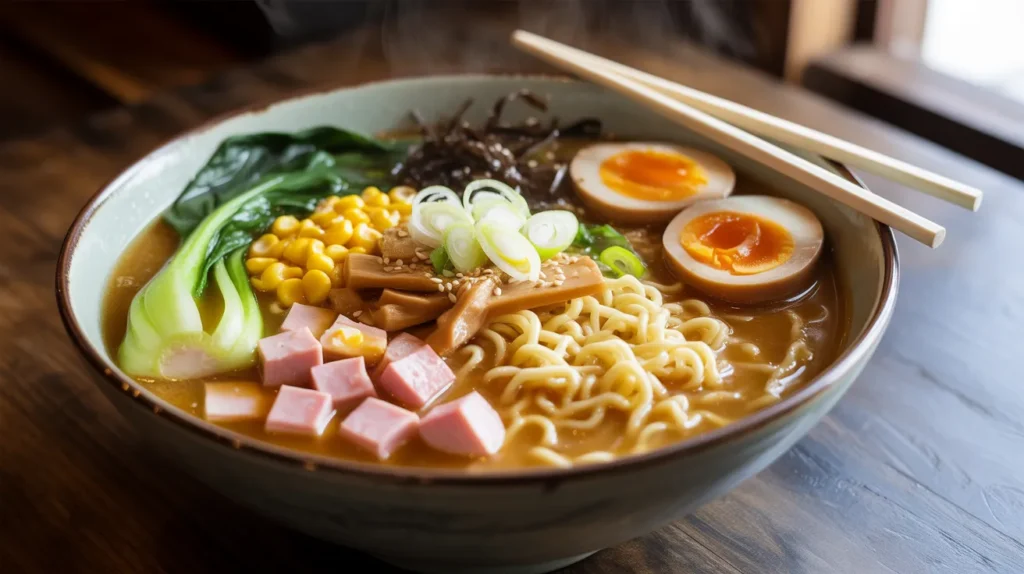
Transform your holiday ham into steaming bowls of leftover ham ramen that rivals your favorite noodle shop. This leftover ham ramen recipe combines rich broth, tender noodles, and savory ham in just 30 minutes—perfect when you’re craving comfort food but don’t want to order delivery.
SERVES: 4 | PREP: 10 MIN | COOK: 20 MIN | TOTAL: 30 MIN
Ingredients
For the Broth
| Ingredient | Amount |
|---|---|
| Chicken broth (low-sodium) | 6 cups |
| Soy sauce | 3 tablespoons |
| Sesame oil | 2 tablespoons |
| Fresh ginger (minced) | 2 tablespoons |
| Garlic cloves (minced) | 4 cloves |
| White miso paste | 2 tablespoons |
| Rice vinegar | 1 tablespoon |
For the Ramen
| Ingredient | Amount |
|---|---|
| Leftover ham (diced) | 2 cups |
| Fresh ramen noodles | 12 ounces |
| Soft-boiled eggs | 4 eggs |
| Baby bok choy (halved) | 2 cups |
| Green onions (sliced) | 4 stalks |
| Corn kernels (fresh or frozen) | 1 cup |
| Nori sheets (cut into strips) | 2 sheets |
| Sesame seeds | 2 tablespoons |
| Chili oil (optional) | to taste |
Step-by-Step Instructions
Phase 1: Broth Preparation (8 minutes)
Step 1: Heat 2 tablespoons sesame oil in a large pot over medium heat until it shimmers (about 1 minute). The oil should look wavy but not smoke—this ensures your aromatics won’t burn.
Step 2: Add 4 minced garlic cloves and 2 tablespoons minced ginger to the hot oil. Stir constantly for 30-45 seconds until fragrant. You’ll know it’s ready when the kitchen smells amazing and the garlic turns light golden.
Step 3: Pour in 6 cups chicken broth slowly to avoid splashing. The liquid will sizzle when it hits the hot aromatics—this is normal and creates deeper flavor.
Step 4: Whisk in 2 tablespoons white miso paste until completely dissolved. Break up any clumps with the whisk to ensure smooth, umami-rich broth. Miso adds incredible depth to your leftover ham ramen.
Step 5: Stir in 3 tablespoons soy sauce and 1 tablespoon rice vinegar. The vinegar brightens the broth and balances the salty-savory flavors perfectly.
Step 6: Bring the broth to a gentle boil, then reduce heat to low and simmer for 5 minutes. This allows all the flavors to marry together. Avoid boiling vigorously or the broth will become cloudy.
Phase 2: Egg and Vegetable Prep (6 minutes)
Step 7: While the broth simmers, bring a separate medium pot of water to a rolling boil for the eggs. Add 4 eggs gently using a slotted spoon to prevent cracking.
Step 8: Set a timer for exactly 6 minutes and 30 seconds for perfectly jammy soft-boiled eggs. This timing gives you set whites with golden, creamy yolks that ooze when you cut them.
Step 9: Prepare an ice bath in a large bowl while eggs cook. Fill it with cold water and plenty of ice cubes. This stops the cooking process immediately and makes peeling easier.
Step 10: When the timer goes off, transfer eggs to the ice bath using a slotted spoon. Let them sit for 3-4 minutes, then gently tap and peel under cold running water. The shells should slip right off.
Step 11: Add 2 cups halved baby bok choy and 1 cup corn kernels directly to the simmering broth. Cook for 2-3 minutes until the bok choy is bright green and tender-crisp. Don’t overcook or it becomes mushy.
Phase 3: Assembly (6 minutes)
Step 12: Add 2 cups diced leftover ham to the broth and heat through for 2 minutes. The ham is already cooked, so you’re just warming it up and infusing it with the broth flavors.
Step 13: Cook 12 ounces fresh ramen noodles according to package directions in a separate pot of boiling water. Fresh noodles typically take 2-3 minutes. Stir gently to prevent sticking.
Step 14: Drain the noodles in a colander and shake off excess water. Don’t rinse them—you want that starchy coating to help the broth cling to each strand.
Step 15: Divide the hot noodles among 4 deep bowls. Use tongs to create neat noodle nests in each bowl—presentation matters!
Step 16: Ladle the hot broth, ham, vegetables, and corn over the noodles, distributing ingredients evenly. Each bowl should get about 1.5 cups of broth.
Phase 4: Finishing Touches (2 minutes)
Step 17: Halve each soft-boiled egg lengthwise and place 2 halves in each bowl of leftover ham ramen. Position them on top so those gorgeous yolks are visible.
Step 18: Garnish each bowl with sliced green onions, nori strips, and sesame seeds. Add chili oil if you like heat—start with just a few drops and add more to taste.
Chef’s Notes
Broth Depth: For even richer leftover ham ramen, add the ham bone to the broth while it simmers. Remove it before serving—it adds incredible smoky depth.
Noodle Options: Can’t find fresh ramen? Dried ramen noodles work great too. Just cook them 1 minute less than package directions since they’ll continue cooking in the hot broth.
Ham Variations: Honey-glazed ham creates slightly sweeter ramen, while smoked ham adds a deeper, smokier profile. Both work beautifully in this recipe.
Make-Ahead Trick: Prepare the broth up to 2 days ahead and store it in the fridge. Reheat it gently and add fresh noodles and toppings when ready to serve.
Nutrition Information (Per Serving)
Calories: 485 | Protein: 32g | Carbohydrates: 48g | Fat: 18g | Fiber: 4g | Sodium: 1,240mg
Creative Variations
Spicy Korean-Style: Add 2 tablespoons gochugaru (Korean chili flakes) and 1 tablespoon gochujang to the broth for a spicy kick. Top with kimchi for extra tang.
Coconut Curry Ramen: Stir in 1 cup coconut milk and 1 tablespoon red curry paste during Step 6. This creates a creamy, Thai-inspired leftover ham ramen that’s absolutely addictive.
Mushroom Lovers: Add 2 cups sliced shiitake or cremini mushrooms in Step 11 along with the bok choy. If you enjoy mushrooms, try them in this leftover ham pizza too.
Italian-Inspired: Swap soy sauce for balsamic vinegar, add sun-dried tomatoes, and top with parmesan. For more Italian leftover ham ideas, check out this leftover ham stromboli.
Storage & Reheating
Refrigerator: Store broth and solid ingredients separately from noodles in airtight containers for up to 3 days. Noodles get mushy when stored in liquid.
Freezing: Freeze the broth (without noodles or eggs) for up to 3 months. Thaw overnight in the fridge before reheating.
Reheating: Warm the broth over medium heat until steaming. Cook fresh noodles and assemble new bowls—reheating noodles makes them soggy and unpleasant.
Best Practice: If meal prepping, portion out the ham and vegetables with broth, then cook noodles fresh each day. This keeps your leftover ham ramen tasting restaurant-quality.
Troubleshooting Common Problems
Problem: Broth tastes bland Add more soy sauce (1 teaspoon at a time) and a pinch of salt. Sometimes low-sodium broth needs extra seasoning. You can also add 1 teaspoon fish sauce for umami depth.
Problem: Eggs won’t peel cleanly Older eggs peel easier than fresh ones. If your eggs are very fresh, add 1 teaspoon baking soda to the boiling water—it raises the pH and makes peeling easier.
Problem: Noodles are gummy You likely overcooked them. Fresh ramen cooks fast—set a timer and test at 2 minutes. Rinse briefly in cold water if they’re slightly overcooked to stop the cooking process.
Problem: Broth is too salty Add 1-2 cups water or unsalted chicken broth to dilute. You can also add a peeled, halved potato to the broth for 10 minutes—it absorbs excess salt.
Problem: Vegetables are mushy Baby bok choy only needs 2-3 minutes in hot broth. If you prefer crunchier vegetables, add them to individual bowls raw and let the hot broth gently cook them.
Equipment Essentials
- Large pot (at least 6-quart capacity)
- Medium pot for eggs and noodles
- Whisk for dissolving miso
- Sharp knife for dicing ham
- Cutting board
- Slotted spoon for eggs
- Colander for draining noodles
- 4 deep ramen bowls
- Ladle for serving
- Measuring cups and spoons
Shopping List
Produce Section
- Fresh ginger root
- Garlic cloves
- Baby bok choy
- Green onions
Meat/Deli
- Leftover ham (or purchase deli ham if needed)
Dairy
- Eggs (large)
Asian Foods Aisle
- Fresh ramen noodles
- Soy sauce
- Sesame oil
- White miso paste
- Rice vinegar
- Nori sheets
- Sesame seeds
- Chili oil (optional)
Canned/Boxed Goods
- Low-sodium chicken broth
Frozen (if using)
- Corn kernels
Success Secrets
1. Quality Broth Matters: Using low-sodium chicken broth lets you control the salt level perfectly. Homemade broth takes this leftover ham ramen to the next level if you have time.
2. Fresh Noodles Win: Fresh ramen noodles have better texture than dried instant noodles. Find them in the refrigerated section near tofu. They’re worth the extra dollar.
3. Temperature Control: Keep the broth at a gentle simmer, not a rolling boil. Aggressive boiling makes the broth cloudy and breaks down the vegetables too quickly.
4. Egg Timing is Everything: Those 6.5 minutes create magic. Set a timer on your phone—even 30 seconds extra makes the yolk too firm.
5. Serve Immediately: Leftover ham ramen is best eaten right away while the noodles are hot and the eggs are warm. The texture changes as it sits, so gather everyone before you start plating.