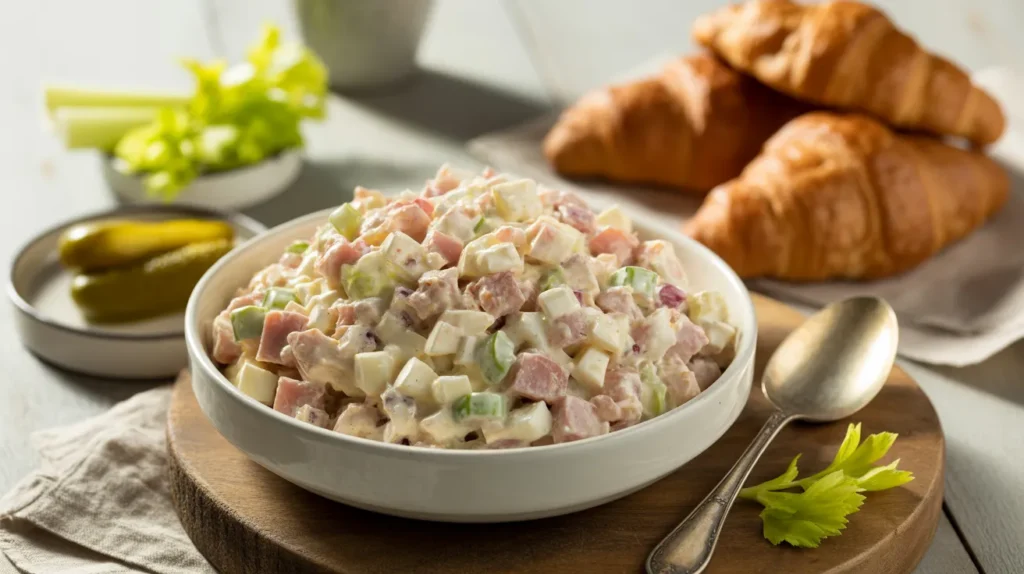
Turn your holiday ham into something fresh and delicious with this leftover ham salad recipe that transforms excess protein into a creamy, crunchy sandwich filling everyone will love. This leftover ham salad combines tender diced ham with crisp vegetables and a tangy dressing that’s perfect for quick lunches, picnics, or light dinners when you need something satisfying without the fuss.
SERVES: 4 | PREP: 10 MIN | COOK: 0 MIN | TOTAL: 10 MIN
Ingredients
Main Components
| Ingredient | Amount | Notes |
|---|---|---|
| Leftover cooked ham | 3 cups | Diced into ½-inch cubes |
| Celery | 1 cup | Finely chopped |
| Red onion | ¼ cup | Minced |
| Dill pickles | ½ cup | Finely chopped |
| Hard-boiled eggs | 2 large | Chopped |
Creamy Dressing
| Ingredient | Amount | Purpose |
|---|---|---|
| Mayonnaise | ½ cup | Base for creaminess |
| Dijon mustard | 2 tablespoons | Tangy flavor |
| Apple cider vinegar | 1 tablespoon | Brightness |
| Honey | 1 teaspoon | Balance acidity |
| Black pepper | ½ teaspoon | Seasoning |
| Garlic powder | ¼ teaspoon | Depth |
| Paprika | ¼ teaspoon | Color and warmth |
| Salt | To taste | Enhances flavors |
Optional Add-Ins
| Ingredient | Amount | Effect |
|---|---|---|
| Fresh parsley | 2 tablespoons | Freshness |
| Green onions | 2 tablespoons | Mild onion flavor |
| Sweet pickle relish | 2 tablespoons | Sweetness |
Step-by-Step Instructions
Phase 1: Prepare Your Ham (5 minutes)
Step 1: Remove your leftover ham from the refrigerator and place it on a clean cutting board.
Let the ham sit for 5 minutes to take the chill off. Cold ham is harder to cut cleanly and room-temperature ingredients blend better with the dressing.
Step 2: Trim away any large pieces of fat or overly dry edges from the ham.
You want lean, moist pieces for the best texture. Save trimmed pieces for soup stock if you like.
Step 3: Cut the ham into ½-inch cubes using a sharp chef’s knife.
Keep the pieces uniform so every bite has the same texture. Smaller cubes integrate better with the dressing, while larger pieces can make sandwiches lumpy.
Step 4: Transfer the 3 cups of diced ham to a large mixing bowl.
A bowl with at least 3-quart capacity gives you room to mix without spilling. Glass or stainless steel works best because they don’t absorb odors.
Phase 2: Prepare the Vegetables (3 minutes)
Step 5: Wash your celery stalks under cold running water and pat them completely dry with paper towels.
Excess water dilutes your dressing and makes the salad watery. Dry vegetables are essential for proper texture.
Step 6: Cut the celery into very fine dice, about ¼-inch pieces.
Celery adds crucial crunch to balance the soft ham. Fine dice distributes the crunch evenly throughout instead of giving you large stringy pieces.
Step 7: Peel and mince the red onion into very small pieces.
Red onion is milder than white or yellow varieties. If you’re sensitive to raw onion, soak the minced pieces in cold water for 5 minutes, then drain and pat dry before adding.
Step 8: Drain your dill pickles and chop them finely, then gently press them in paper towels to remove excess brine.
Too much pickle juice makes your salad soggy and overpowering. The pickles add tanginess and texture without turning everything into a watery mess.
Step 9: Add the celery, red onion, and pickles to the bowl with the ham.
Don’t mix yet—we’ll combine everything at once with the dressing for even distribution.
Phase 3: Prepare the Eggs (If using fresh eggs – 15 minutes, or use pre-made)
Step 10: If you need to hard-boil eggs, place 2 large eggs in a small saucepan and cover with cold water by 1 inch.
Bring to a rolling boil over high heat, then immediately remove from heat, cover, and let sit for 10 minutes. Transfer to an ice bath to stop cooking.
Step 11: Peel the cooled eggs and chop them into small pieces, about the same size as your ham cubes.
The eggs add protein and a creamy texture that complements the dressing. Some people love them, others skip them—both ways work great.
Step 12: Add the chopped eggs to your ham mixture.
Phase 4: Make the Dressing (2 minutes)
Step 13: In a separate medium bowl, combine ½ cup mayonnaise, 2 tablespoons Dijon mustard, 1 tablespoon apple cider vinegar, and 1 teaspoon honey.
The honey balances the vinegar’s sharpness and the mustard’s bite. This creates a well-rounded flavor instead of just “creamy and bland.”
Step 14: Add ½ teaspoon black pepper, ¼ teaspoon garlic powder, and ¼ teaspoon paprika to the mayonnaise mixture.
Whisk everything together vigorously for 30 seconds until completely smooth and the spices are evenly distributed. You shouldn’t see any streaks of mustard or honey.
Step 15: Taste the dressing and add salt as needed.
Your ham might already be salty, so start with just a pinch and adjust after mixing. You can always add more but you can’t take it away.
Phase 5: Combine and Chill (5 minutes active, plus chilling)
Step 16: Pour the dressing over your ham and vegetable mixture.
Use a large spoon or rubber spatula to fold everything together gently. You want to coat every piece evenly without mashing the ingredients.
Step 17: Mix thoroughly but gently for about 1-2 minutes until you don’t see any dry spots.
The ham should be completely coated and the vegetables evenly distributed. If it looks too dry, add 1-2 tablespoons more mayonnaise. If too wet, it needs more ham or vegetables.
Step 18: Cover the bowl tightly with plastic wrap or transfer to an airtight container.
Refrigerate for at least 30 minutes before serving. This chilling time lets the flavors blend and the vegetables release their aromatics into the dressing.
Step 19: Before serving, give the salad a quick stir and taste for seasoning.
Sometimes flavors mellow in the fridge and you might want to add a crack of fresh pepper or a squeeze of lemon juice to brighten things up.
Step 20: Serve your leftover ham salad on bread, crackers, lettuce cups, or stuffed into tomatoes or avocado halves.
The salad will keep improving for the first 24 hours as flavors meld, making it even better the next day.
Chef’s Notes
Tip 1: The quality of your leftover ham makes a huge difference in this recipe. Honey-glazed or spiral-cut hams create a sweeter salad, while smoked hams give you more savory depth. Match your dressing seasoning to complement your ham’s flavor profile.
Tip 2: Don’t skip the acid component—the apple cider vinegar or a squeeze of lemon juice prevents the salad from tasting flat and heavy. That brightness cuts through the richness of the mayonnaise and makes each bite more interesting.
Tip 3: For the best texture contrast, keep your celery pieces small and uniform. Large chunks overpower the delicate ham, while pieces that are too small disappear entirely and don’t provide that satisfying crunch.
Tip 4: This recipe works beautifully with different ham types, similar to how you’d repurpose leftovers in dishes like leftover ham quiche or even leftover ham carbonara—the key is using good-quality cooked ham with plenty of flavor and moisture.
Nutrition Information (Per Serving)
Calories: 385
Protein: 24g
Carbohydrates: 8g
Fat: 28g
Fiber: 1g
Sugar: 5g
Sodium: 1,240mg
Cholesterol: 135mg
Nutrition calculated based on standard ingredients for 4 servings. Your values may vary based on ham type and exact ingredient measurements.
Creative Variations
Variation 1: Southern-Style Sweet Ham Salad
Add 3 tablespoons sweet pickle relish and 2 tablespoons diced red bell pepper. Replace half the Dijon with yellow mustard and increase honey to 2 teaspoons. This version tastes like summer picnics and pairs perfectly with Hawaiian rolls.
Variation 2: Herbed Garden Ham Salad
Mix in ¼ cup fresh chopped parsley, 2 tablespoons fresh dill, and 1 tablespoon fresh chives. Add 1 teaspoon lemon zest to the dressing. The fresh herbs transform this into something restaurant-worthy.
Variation 3: Spicy Jalapeño Ham Salad
Stir in 2 tablespoons minced jalapeños and 1 teaspoon hot sauce. Replace regular paprika with smoked paprika and add a pinch of cayenne pepper. This version wakes up your taste buds and works great as a spicy sandwich spread.
Variation 4: Apple Walnut Ham Salad
Fold in ½ cup diced Granny Smith apple and ¼ cup toasted chopped walnuts just before serving. The apple adds sweetness and crunch while the walnuts provide a nutty richness that elevates the whole dish.
Storage & Reheating
Refrigerator Storage: Keep your ham salad in an airtight container in the refrigerator for up to 4 days. The flavor actually improves during the first day as everything melds together.
Press plastic wrap directly onto the surface before sealing to prevent oxidation and keep the top from drying out.
Make-Ahead Tips: You can prepare this salad up to 2 days ahead for parties or meal prep. Store the dressing separately and combine just before serving if you want maximum crunch from the vegetables.
The salad stays freshest when you add wet ingredients like tomatoes or cucumbers right before eating.
Freezing: This salad doesn’t freeze well because mayonnaise-based dressings separate when thawed, creating an unappetizing watery texture. Make only what you’ll eat within 4 days.
No Reheating Needed: This is a cold salad meant to be served chilled or at room temperature. Never heat mayonnaise-based dishes as they can separate and develop food safety issues.
Troubleshooting Common Problems
Problem 1: Salad is too watery or runny
Solution: Your vegetables likely weren’t dried properly before mixing. Drain the salad in a fine-mesh strainer for 10 minutes, then stir in 2-3 tablespoons more diced ham to absorb excess moisture. Next time, pat vegetables completely dry and squeeze pickles in paper towels before adding.
Problem 2: Salad tastes bland and boring
Solution: You need more acid and seasoning. Stir in 1 tablespoon fresh lemon juice or apple cider vinegar, ½ teaspoon Dijon mustard, and a generous crack of black pepper. Taste again and add salt if needed—remember that ham varies in saltiness.
Problem 3: Ham pieces are tough and chewy
Solution: Your ham was likely overcooked or too dry to begin with. Rescue the salad by adding 2 tablespoons mayonnaise and 1 tablespoon pickle juice to add moisture. The dressing will help soften the ham as it sits. Choose moister ham cuts next time.
Problem 4: Salad is too salty
Solution: Balance the salt by adding 1 teaspoon honey and 1 tablespoon apple cider vinegar to the mixture. You can also bulk up the salad with more chopped celery or lettuce to dilute the saltiness without wasting the batch.
Problem 5: Vegetables overpower the ham flavor
Solution: You have too much celery or onion compared to ham. Add another ½ cup diced ham to bring the ratio back into balance. Aim for roughly 3 parts ham to 1 part vegetables for the best flavor profile.
Equipment Essentials
Large Mixing Bowl (3-quart minimum): Glass or stainless steel works best for combining all ingredients without absorbing odors or flavors.
Sharp Chef’s Knife: Essential for clean, even cuts of ham and vegetables. Dull knives crush instead of cut, releasing excess moisture.
Cutting Board: Use separate boards for vegetables and cooked meat to maintain food safety, or thoroughly wash between uses.
Medium Bowl: For mixing the dressing separately before combining with the ham mixture.
Whisk: Blends the dressing ingredients smoothly and incorporates air for a lighter texture.
Rubber Spatula: Folds ingredients together gently without mashing the ham or vegetables.
Airtight Storage Container: A 1-quart container with tight-sealing lid keeps the salad fresh for up to 4 days.
Measuring Cups and Spoons: Accurate measurements ensure consistent results every time you make this recipe.
Shopping List by Store Section
Deli/Meat Department
- Leftover cooked ham (or 1 pound deli ham if you don’t have leftovers)
- Check for honey-glazed or smoked varieties based on your taste preference
Produce Section
- Celery stalks (2-3 large stalks)
- Red onion (1 small)
- Fresh parsley (optional, 1 small bunch)
- Lemon (optional, for brightness)
Refrigerated Section
- Mayonnaise (1 jar, approximately 30-ounce)
- Eggs (1 dozen if making hard-boiled eggs)
- Dijon mustard (1 jar, 8-ounce)
Condiments/Baking Aisle
- Dill pickles (1 jar, 16-ounce)
- Apple cider vinegar (1 bottle)
- Honey (1 jar)
- Black pepper
- Garlic powder
- Paprika
- Salt
Bread Aisle (for serving)
- Your choice: sandwich bread, croissants, crackers, or lettuce for wraps
Success Secrets
1. Temperature matters more than you think. Let your ham come to room temperature before dicing and mixing. Cold ingredients don’t blend as smoothly with the dressing, and you’ll end up with a separated, chunky texture instead of a cohesive salad.
2. Cut everything the same size. When your ham, celery, pickles, and eggs are all similar in dimension, you get perfect flavor in every single bite. Uneven pieces mean some bites are all ham while others are all vegetables.
3. Taste and adjust before serving. Ham saltiness varies wildly depending on the brand and preparation method. Always taste your finished salad and adjust the seasoning with more vinegar, honey, pepper, or salt as needed. Your palate is the best guide.
4. Let it rest in the fridge. The 30-minute chilling period isn’t optional—it’s when the magic happens. The vegetables release their flavors, the dressing penetrates the ham, and everything comes together into something greater than the sum of its parts.
5. Keep it simple but don’t skip steps. This recipe succeeds because of technique, not exotic ingredients. Taking time to properly dice, drain, and season makes the difference between an okay sandwich filling and something you’ll crave for lunch all week.
This leftover ham salad recipe proves that simple ingredients and good technique create something special. You’re turning surplus holiday ham into a versatile dish that works for quick weekday lunches, casual gatherings, or light dinners when you want protein without turning on the stove.
The creamy dressing coats tender ham while crisp vegetables add texture and brightness. Every element serves a purpose, from the tangy pickles to the aromatic onion to the richness of hard-boiled eggs.
Make a batch on Sunday and you’ve got lunch sorted for days. Serve it on toasted bread, stuff it into pita pockets, or pile it onto butter lettuce leaves for a low-carb option. However you serve this salad, you’ll wonder why you ever let leftover ham go to waste before.