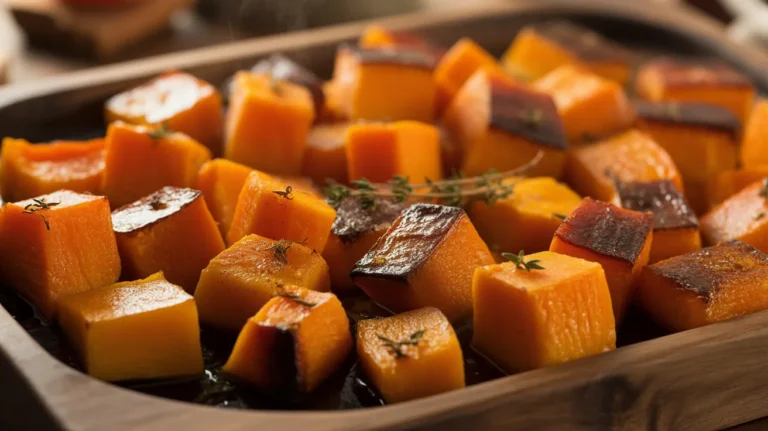
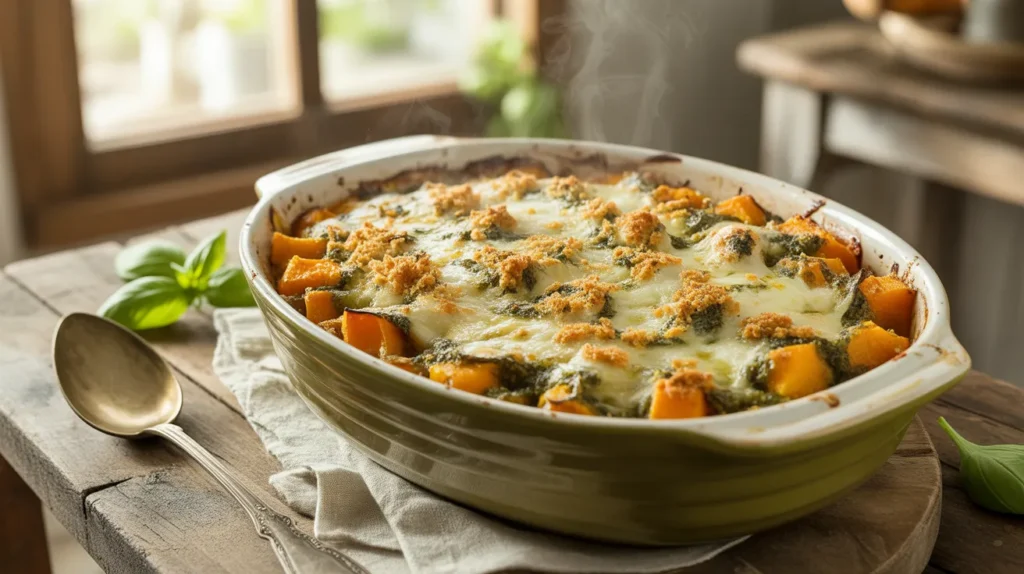
This pesto butternut squash bake transforms humble winter squash into a show-stopping side dish that’ll have everyone asking for seconds. The bright basil pesto cuts through the natural sweetness of the butternut squash while melted mozzarella creates irresistible golden edges. Whether you’re planning a cozy weeknight dinner or need an impressive dish for holiday gatherings, this pesto butternut squash bake delivers restaurant-quality results with surprisingly simple techniques.
SERVES: 4 | PREP: 20 MIN | COOK: 35 MIN | TOTAL: 55 MIN
Ingredients
For the Squash Base
| Ingredient | Amount |
|---|---|
| Butternut squash (peeled, cubed) | 3 cups (about 1 medium squash) |
| Olive oil | 2 tablespoons |
| Salt | 1/2 teaspoon |
| Black pepper | 1/4 teaspoon |
For the Pesto Layer
| Ingredient | Amount |
|---|---|
| Basil pesto (store-bought or homemade) | 1/2 cup |
| Garlic (minced) | 2 cloves |
| Heavy cream | 1/4 cup |
| Parmesan cheese (grated) | 1/3 cup |
For the Topping
| Ingredient | Amount |
|---|---|
| Mozzarella cheese (shredded) | 1 cup |
| Panko breadcrumbs | 1/3 cup |
| Fresh basil (chopped) | 2 tablespoons |
| Olive oil | 1 tablespoon |
Step-by-Step Instructions
Phase 1: Prepare the Squash (15 minutes)
Step 1: Preheat your oven to 400°F (200°C). This high temperature is crucial because it caramelizes the squash’s natural sugars while keeping the inside tender. Position your oven rack in the middle slot for even heat distribution.
Step 2: Cut your butternut squash in half lengthwise and scoop out all the seeds with a sturdy spoon. The stringy bits need to come out too—they won’t soften during cooking. Peel the skin using a sharp vegetable peeler, working in downward strokes.
Step 3: Cut the peeled squash into 1-inch cubes. Keeping them uniform ensures they cook at the same rate. Smaller pieces cook faster but can turn mushy, while larger chunks won’t cook through.
Step 4: Toss the cubed squash with 2 tablespoons olive oil, 1/2 teaspoon salt, and 1/4 teaspoon black pepper in a large mixing bowl. Make sure every piece gets coated—the oil helps prevent sticking and promotes browning.
Step 5: Spread the seasoned squash in a single layer in a 9×13-inch baking dish. Don’t pile them up or they’ll steam instead of roast. The pieces should barely touch each other.
Phase 2: Par-Roast the Squash (15 minutes)
Step 6: Roast the squash uncovered for 15 minutes. You’re looking for the edges to just start turning golden and a fork should pierce the cubes with slight resistance. They won’t be fully tender yet—that’s intentional.
Step 7: Remove the dish from the oven and let it sit for 2-3 minutes to cool slightly. This brief rest prevents the pesto from becoming too oily when you add it in the next phase.
Phase 3: Create the Pesto Sauce (5 minutes)
Step 8: In a medium bowl, whisk together 1/2 cup basil pesto, 2 cloves minced garlic, 1/4 cup heavy cream, and 1/3 cup grated Parmesan. The cream mellows the pesto’s intensity and helps it cling to the squash. Your mixture should be thick but pourable.
Step 9: Taste the pesto mixture and adjust seasoning if needed. If it tastes too sharp, add another tablespoon of cream. Too mild? A pinch of salt wakes it up.
Phase 4: Assemble the Bake (5 minutes)
Step 10: Pour the pesto mixture over the par-roasted squash cubes. Use a silicone spatula to gently toss everything together, making sure the sauce gets into all the nooks and crannies. Some squash pieces will break slightly—that’s fine and actually helps the sauce adhere better.
Step 11: Spread everything back into an even layer. If you’re working with a dish similar to a sage butternut squash gratin, you’ll notice how the creamy base creates pockets of flavor throughout.
Step 12: Sprinkle 1 cup shredded mozzarella evenly across the top. Don’t dump it all in one spot—distribute it so every serving gets that melty, golden cheese pull.
Phase 5: Create the Crunchy Topping (3 minutes)
Step 13: In a small bowl, mix 1/3 cup panko breadcrumbs with 1 tablespoon olive oil using a fork. The oil helps the panko brown and crisp up. Add 2 tablespoons chopped fresh basil to this mixture—the herbs stay vibrant on top.
Step 14: Scatter the breadcrumb mixture over the mozzarella layer. Focus on getting even coverage rather than thick clumps. The contrast between creamy squash and crunchy topping is what makes this pesto butternut squash bake special.
Phase 6: Final Bake (20 minutes)
Step 15: Return the dish to the 400°F oven for 18-20 minutes. You’re watching for three things: the cheese should be bubbling vigorously, the breadcrumbs should be deep golden brown, and the squash should be fork-tender.
Step 16: If the breadcrumbs brown too quickly (check at 15 minutes), tent the dish loosely with aluminum foil. This prevents burning while allowing the squash to finish cooking through.
Step 17: Remove from the oven and let the bake rest for 5 minutes before serving. This cooling period lets the sauce thicken slightly and makes serving much cleaner. The flavors also settle and deepen during this rest.
Chef’s Notes
Pesto Quality Matters: The pesto is the star here, so use a good-quality jarred version or make your own. Cheap pesto often tastes bitter or overly salty, which throws off the whole dish.
Squash Prep Shortcut: Many grocery stores sell pre-cubed butternut squash. It costs more but saves 10 minutes of knife work. Just check that the pieces are roughly 1-inch—smaller pieces cook too fast for this pesto butternut squash bake timing.
Cream Alternatives: Can’t do dairy? Use full-fat coconut cream instead of heavy cream. The pesto stays rich and the squash gets equally tender.
Make It Spicy: Add 1/4 teaspoon red pepper flakes to the pesto mixture if you want some heat. The spice plays beautifully against the sweet squash.
Nutrition Information (Per Serving)
- Calories: 385
- Protein: 14g
- Carbohydrates: 28g
- Fat: 26g
- Fiber: 4g
- Sugar: 5g
- Sodium: 680mg
Delicious Variations
Sun-Dried Tomato Version: Replace half the basil pesto with sun-dried tomato pesto for a deeper, tangier flavor. The tomatoes add umami that pairs wonderfully with the squash’s sweetness.
Fall Harvest Style: Mix in 1 cup cubed apple (Honeycrisp or Granny Smith work best) with the squash before the first roast. The apple chunks turn jammy and add natural sweetness, similar to this butternut squash apple bake.
Protein Addition: Toss in 1 cup cooked, shredded chicken or 1 cup white beans when you add the pesto sauce. This transforms the side dish into a complete meal.
Vegan Adaptation: Use nutritional yeast (1/2 cup) instead of Parmesan and cashew cream instead of dairy cream. Skip the mozzarella or use vegan cheese shreds.
Storage & Reheating
Refrigerator Storage: Cool the pesto butternut squash bake completely, then cover tightly with plastic wrap or transfer to an airtight container. It keeps for 4-5 days in the fridge.
Freezing: This dish freezes surprisingly well for up to 2 months. Portion it into individual servings in freezer-safe containers. Thaw overnight in the refrigerator before reheating.
Reheating: Preheat your oven to 350°F and reheat covered for 15-20 minutes until warmed through. Uncover for the last 5 minutes to re-crisp the breadcrumb topping. Microwaving works in a pinch but makes the topping soggy.
Make-Ahead Strategy: Complete through Step 14, cover with foil, and refrigerate for up to 24 hours. When ready to serve, add 5-10 extra minutes to the final baking time since you’re starting from cold.
Troubleshooting Common Problems
Problem: Squash is mushy and falling apart Cut your cubes larger next time (closer to 1.5 inches) or reduce the initial roasting time by 3-4 minutes. Overripe squash also breaks down faster—look for firm squash at the store.
Problem: Pesto sauce is oily and separated The cream and pesto didn’t emulsify properly. Next time, whisk more vigorously and make sure your squash cooled slightly before adding the sauce. Too much heat can break the emulsion.
Problem: Breadcrumbs are pale and soft Your oven might run cool, or you didn’t use enough oil in the breadcrumb mixture. Try broiling for the last 2 minutes (watch closely!) or increase oven temp to 425°F for the final bake.
Problem: Bottom is watery You added the pesto to squash that was too hot and steaming, releasing excess moisture. Always let the par-roasted squash rest for a few minutes. Also, make sure you’re using a true 9×13-inch dish, not something deeper.
Problem: Flavors taste flat You probably undersalted. Season in layers—salt the squash before roasting AND taste your pesto mixture before adding it. Butternut squash needs more salt than you think to bring out its natural sweetness.
Equipment Essentials
- 9×13-inch baking dish (ceramic or glass)
- Large mixing bowl for tossing squash
- Medium mixing bowl for pesto sauce
- Sharp vegetable peeler
- Chef’s knife and cutting board
- Measuring cups and spoons
- Silicone spatula for mixing
- Whisk for combining pesto sauce
- Small bowl for breadcrumb topping
Shopping List
Produce Section
- 1 medium butternut squash (about 2.5-3 lbs)
- 1 head fresh garlic
- 1 bunch fresh basil
Dairy Case
- Mozzarella cheese (shredded)
- Parmesan cheese (grated or block)
- Heavy cream
Pantry Items
- Olive oil (good quality)
- Panko breadcrumbs
- Salt and black pepper
Refrigerated Section
- Basil pesto (8 oz jar if buying prepared)
Success Secrets
1. Choose the Right Squash: Pick a butternut squash that feels heavy for its size with no soft spots. The neck portion (the long, seedless part) is easier to work with and has more usable flesh than the bulbous bottom.
2. Master the Two-Stage Cooking: The initial 15-minute roast concentrates the squash’s flavor through caramelization. The second bake with pesto keeps everything moist. Skipping straight to a single bake leaves you with either raw or mushy squash.
3. Don’t Skimp on the Par-Roast: That first roasting session isn’t optional. It removes excess moisture from the squash, preventing a watery casserole. Raw squash releases too much liquid when mixed with the creamy pesto.
4. Get Creative with Pesto: While basil pesto is classic, try kale pesto, arugula pesto, or even cilantro pesto. Each brings a unique personality to the dish while keeping the same satisfying texture.
5. Serve Immediately: This pesto butternut squash bake is best enjoyed hot from the oven when the cheese is still bubbling and the breadcrumbs are at peak crunchiness. Leftovers are tasty but never quite match that first serving’s textural contrast.