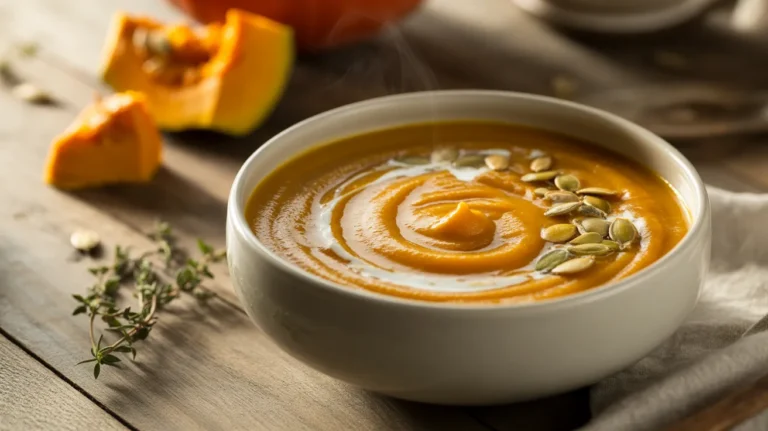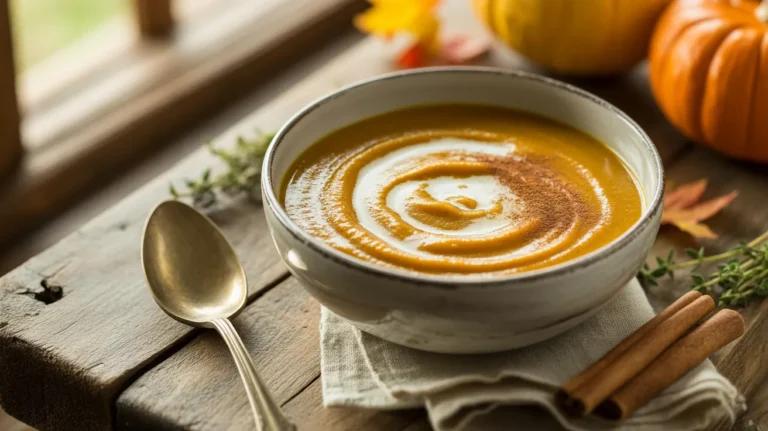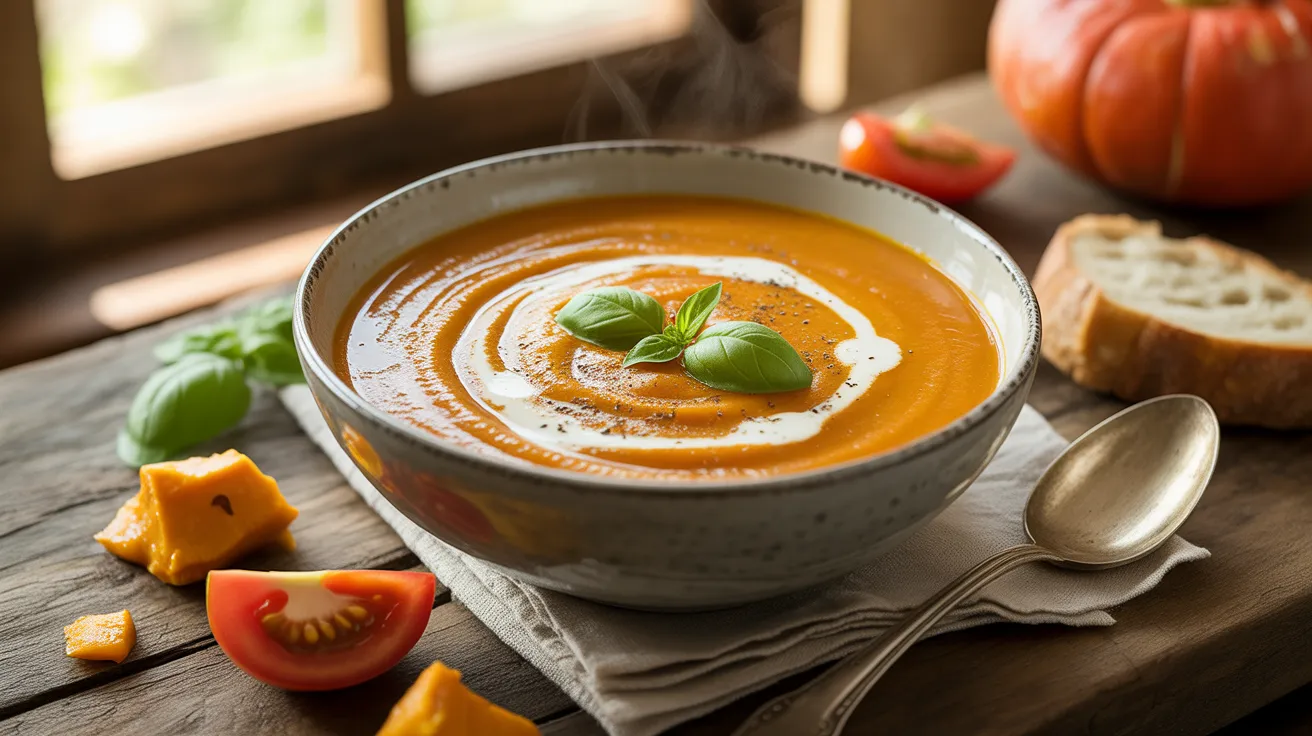
This roasted pumpkin and tomato soup transforms simple autumn ingredients into a velvety, restaurant-quality bowl of comfort. The secret? Roasting the vegetables first caramelizes their natural sugars, creating layers of sweet and savory flavors that canned soup just can’t match. I’ve made this roasted pumpkin and tomato soup countless times when the weather turns cool, and it never fails to impress.
SERVES: 4 | PREP: 20 MIN | COOK: 55 MIN | TOTAL: 1 HR 15 MIN
Why This Recipe Works
The magic happens in your oven, not on your stovetop. Roasting the pumpkin and tomatoes at high heat brings out sweetness you didn’t know was hiding in those vegetables.
Most soup recipes skip this step and boil everything together. That’s fine if you want boring soup. But we’re after something better—something with depth and character that makes people ask for the recipe.
Ingredients
For Roasting
| Ingredient | Amount | Notes |
|---|---|---|
| Sugar pumpkin or butternut squash | 2 lbs (about 1 small pumpkin) | Peeled, seeded, cut into 2-inch chunks |
| Roma tomatoes | 1 lb (about 6 medium) | Halved lengthwise |
| Yellow onion | 1 large | Quartered |
| Garlic cloves | 6 whole | Unpeeled |
| Olive oil | 3 tablespoons | Plus extra for drizzling |
| Kosher salt | 1½ teaspoons | Divided |
| Black pepper | ½ teaspoon | Freshly ground |
For the Soup
| Ingredient | Amount | Notes |
|---|---|---|
| Vegetable broth | 3 cups | Low-sodium preferred |
| Heavy cream | ½ cup | Or coconut cream for dairy-free |
| Fresh basil leaves | ¼ cup | Packed |
| Tomato paste | 2 tablespoons | Adds concentration |
| Smoked paprika | 1 teaspoon | Don’t skip this |
| Ground cumin | ½ teaspoon | Earthy warmth |
| Cayenne pepper | ¼ teaspoon | Optional, adjust to taste |
| Honey | 1 tablespoon | Balances acidity |
| Butter | 2 tablespoons | For richness |
Step-by-Step Instructions
Phase 1: Preparing Your Vegetables (10 minutes)
Step 1: Set your oven to 425°F and position the rack in the center. Line two large baking sheets with parchment paper—this prevents sticking and makes cleanup easier.
Step 2: Cut your pumpkin in half and scoop out all the seeds and stringy bits with a large spoon. Peel the skin off using a vegetable peeler or sharp knife. Cut the flesh into 2-inch chunks that are roughly the same size so they roast evenly.
Why this matters: Uniform pieces mean everything finishes cooking at the same time. Nobody wants raw pumpkin chunks mixed with mushy ones.
Step 3: Slice your tomatoes lengthwise (from stem to bottom) and lay them cut-side up. This positioning lets the juices concentrate instead of running off.
Step 4: Quarter your onion through the root end, leaving some root attached to each quarter. This keeps the layers together during roasting.
Phase 2: Roasting the Vegetables (40 minutes)
Step 5: Spread your pumpkin chunks on one baking sheet in a single layer. Don’t crowd them—leave at least ½ inch between pieces. Crowding creates steam instead of the crispy, caramelized edges we’re after.
Step 6: Arrange the tomatoes cut-side up on the second baking sheet along with the onion quarters and whole garlic cloves still in their papery skins.
Step 7: Drizzle 3 tablespoons of olive oil over everything. Sprinkle with 1 teaspoon of kosher salt and all the black pepper. Use your hands to toss the pumpkin pieces until they’re well-coated and glistening.
Step 8: Slide both pans into your preheated oven. Set a timer for 20 minutes.
Step 9: After 20 minutes, pull out the trays and flip the pumpkin chunks with a spatula. Rotate both pans 180 degrees (front to back) so everything browns evenly. Return to the oven for another 20 minutes.
Watch for this: The pumpkin edges should turn golden brown with some darker caramelized spots. The tomatoes will look shriveled and intensely red. The onions should have charred edges. This is exactly what you want.
Step 10: Remove from the oven when the pumpkin pieces feel tender when pierced with a fork and have those beautiful browned edges. Let everything cool for 5 minutes so you don’t burn your hands. Squeeze the garlic cloves out of their skins—they’ll pop right out and be soft and sweet.
Phase 3: Building the Soup (15 minutes)
Step 11: Heat a large Dutch oven or soup pot over medium heat. Add 2 tablespoons of butter and let it melt until it stops foaming.
Step 12: Stir in your tomato paste, smoked paprika, cumin, and cayenne pepper. Cook for 1-2 minutes, stirring constantly, until the mixture darkens slightly and smells toasty. This step is called blooming the spices—it wakes up their flavors.
Step 13: Add all your roasted vegetables (pumpkin, tomatoes, onions, and squeezed garlic) to the pot. Pour in 3 cups of vegetable broth. Tear your fresh basil leaves roughly and drop them in.
Step 14: Crank the heat to high and bring everything to a rolling boil. You’ll see big bubbles breaking the surface. Once it’s boiling, reduce the heat to medium-low until you have a gentle simmer—just a few lazy bubbles. Let it simmer for 10 minutes so all the flavors get friendly with each other.
Step 15: Turn off the heat and grab your immersion blender. Blend the soup right in the pot until it’s completely smooth and velvety—this takes about 2-3 minutes. No immersion blender? Transfer the soup in batches to a regular blender, but never fill it more than halfway (hot liquids expand). Hold the lid down with a towel.
Safety note: Hot soup can explode out of a blender if you’re not careful. Always start on the lowest speed and increase gradually.
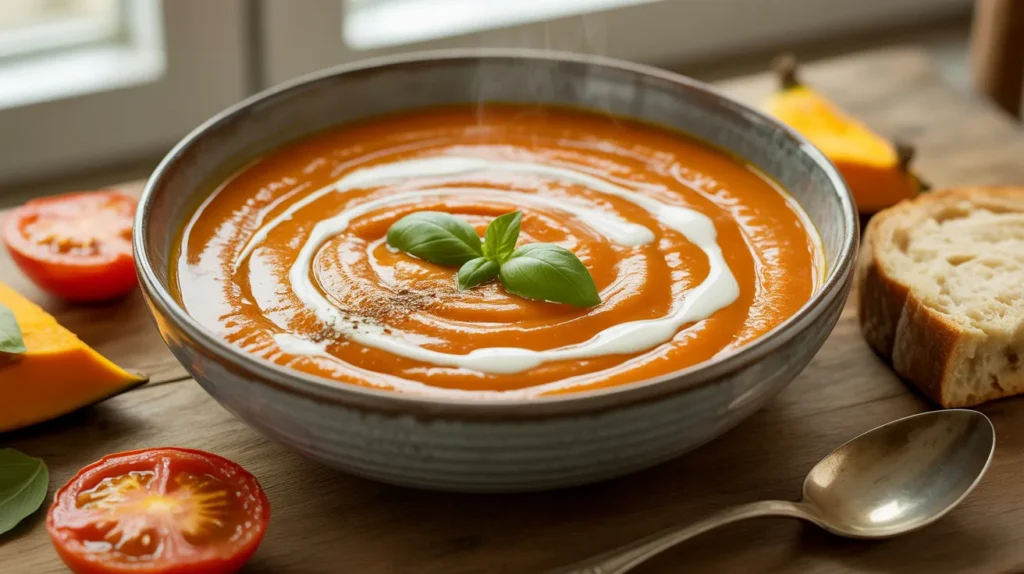
Step 16: Pour in your ½ cup of heavy cream and stir well. The soup will turn a gorgeous peachy-orange color.
Step 17: Taste your soup with a clean spoon. Add the remaining ½ teaspoon of salt if needed. Drizzle in 1 tablespoon of honey and stir. Taste again. The honey should balance the tomato acidity without making the soup taste sweet.
Step 18: Warm the soup over low heat for 2-3 minutes if it’s not hot enough. Don’t let it boil once you’ve added the cream—it can separate and look curdled.
Phase 4: Serving (5 minutes)
Step 19: Ladle the roasted pumpkin and tomato soup into four bowls. Each person gets about 1½ cups of soup.
Step 20: Drizzle each bowl with a little extra olive oil and a crack of fresh black pepper. I like to add a small dollop of sour cream and a few torn basil leaves on top, but that’s optional.
Chef’s Notes
The Roasting Game-Changer: Never skip roasting the vegetables. I tried making this roasted pumpkin and tomato soup by just simmering everything together once, and it tasted flat and one-dimensional. The 40 minutes of oven time is what separates this from ordinary soup.
Cream Alternatives: Coconut cream works beautifully if you’re avoiding dairy. Full-fat oat cream is another solid choice. Just avoid low-fat dairy substitutes—they make the soup taste thin.
The Pumpkin Question: Sugar pumpkins (also called pie pumpkins) are smaller and sweeter than carving pumpkins. You can also use butternut squash, which is easier to peel. In a pinch, use 2½ cups of cubed kabocha squash.
Make It Ahead: This soup actually tastes better the next day. The flavors meld and deepen overnight. Just reheat gently and add a splash of broth if it’s too thick.
Nutrition Information (Per Serving)
- Calories: 285
- Protein: 5g
- Carbohydrates: 28g
- Dietary Fiber: 5g
- Sugars: 12g
- Fat: 18g
- Saturated Fat: 8g
- Sodium: 620mg
- Vitamin A: 285% DV
- Vitamin C: 45% DV
Variations to Try
Spicy Roasted Pumpkin Soup: Double the cayenne pepper and add 1 diced jalapeño to the roasting vegetables. Top each bowl with crispy fried jalapeño slices for serious heat.
Curry-Spiced Version: Replace the cumin and paprika with 1 tablespoon of curry powder and add 1 teaspoon of freshly grated ginger. This version pairs incredibly well with the warm spices in my autumn spiced roasted pumpkin soup.
Mediterranean Style: Skip the cream entirely. Stir in 2 tablespoons of tahini and the juice of one lemon after blending. Top with toasted pine nuts and a drizzle of good olive oil.
Thai-Inspired Twist: Swap the cream for coconut milk and add 1 tablespoon of red curry paste with the spices. Finish with a squeeze of lime juice and fresh cilantro. If you enjoy ginger-forward soups, you’ll love my pumpkin turmeric and ginger soup which has similar bright, warming flavors.
Storage & Reheating
Refrigerator: Let the soup cool completely before transferring to an airtight container. It keeps for 5 days in the fridge. The flavors actually improve after the first day.
Freezer: This soup freezes beautifully for up to 3 months. Store in freezer-safe containers, leaving 1 inch of headspace for expansion. Write the date on the container—frozen soup all looks the same after a while.
Reheating: Thaw overnight in the refrigerator if frozen. Reheat gently on the stovetop over medium-low heat, stirring occasionally. Add a splash of broth or water if it’s too thick. Don’t microwave at full power—use 50% power in 2-minute intervals, stirring between each.
Texture Note: The soup may separate slightly after freezing and thawing. A quick stir or buzz with an immersion blender fixes this right up.
Troubleshooting Common Problems
Problem 1: My soup tastes bland. You probably under-salted or didn’t roast the vegetables long enough. Salt the vegetables generously before roasting—1½ teaspoons isn’t too much. Also, make sure those pumpkin edges are properly caramelized and brown before you take them out of the oven. No browning equals no flavor. Taste the finished soup and add salt ¼ teaspoon at a time until it tastes right.
Problem 2: The soup is too thick and gloopy. You need more liquid. Thin it out with extra vegetable broth or water, adding ¼ cup at a time until you reach the consistency you want. I aim for a texture that coats the back of a spoon but still pours easily. If you’re reheating leftovers, this is almost always the issue—the soup thickens as it sits.
Problem 3: The soup tastes too acidic or tomato-forward. The honey and cream should balance the tomato acidity, but sometimes you get extra-acidic tomatoes. Add another ½ tablespoon of honey and taste again. A tiny pinch of baking soda (like ⅛ teaspoon) can also neutralize acidity, but go easy—too much makes the soup taste soapy.
Problem 4: My vegetables burned before they got tender. Your oven runs hot, or you sliced the pumpkin too thin. Drop your temperature to 400°F and roast for an extra 10-15 minutes. Make sure you’re cutting 2-inch chunks, not thin slices. Also, check that your oven rack is in the center position, not too close to the top heating element.
Problem 5: The soup separated or looks curdled after adding cream. You either let the soup boil after adding cream, or your cream was too cold. Always add cream to hot (but not boiling) soup and stir it in off the heat. If it’s already separated, an immersion blender can usually save it. Next time, temper the cream by stirring a few spoonfuls of hot soup into the cream first, then pour that mixture back into the pot.
Equipment Essentials
- Two large rimmed baking sheets (at least 13×18 inches)
- Parchment paper or silicone baking mats
- Large Dutch oven or soup pot (5-6 quart capacity)
- Immersion blender (or regular blender)
- Sharp chef’s knife and cutting board
- Vegetable peeler for the pumpkin
- Large spoon for scooping seeds
- Measuring cups and spoons
- Wooden spoon or silicone spatula for stirring
- Ladle for serving
Shopping List by Store Section
Produce:
- 1 small sugar pumpkin (2 lbs) or butternut squash
- 6 medium Roma tomatoes (1 lb)
- 1 large yellow onion
- 1 head garlic (need 6 cloves)
- 1 bunch fresh basil
Pantry/Baking:
- Olive oil
- Kosher salt
- Black pepper
- Smoked paprika
- Ground cumin
- Cayenne pepper (optional)
- Honey
Canned Goods:
- 1 box vegetable broth (32 oz/4 cups)
- 1 small can tomato paste
Dairy:
- Heavy cream (½ pint)
- Butter
Success Secrets
1. Choose the Right Pumpkin Look for sugar pumpkins or pie pumpkins, not carving pumpkins. They’re smaller (3-5 pounds), darker orange, and have thicker, sweeter flesh. The label might say “sweet pumpkin” or “cooking pumpkin.” Butternut squash works just as well and is easier to peel.
2. Don’t Overcrowd Your Baking Sheets Vegetables need space to roast properly. If they’re touching, they’ll steam instead of caramelize. Use two baking sheets if needed. Those crispy, browned edges are where all the flavor lives.
3. Taste and Adjust at the End Soup is personal. Some people want it saltier, some prefer it sweeter. Start with my measurements, then taste with a clean spoon and adjust with small amounts of salt, honey, or cream until it’s perfect for you.
4. Temperature Control Matters High heat for roasting (425°F), medium-low for simmering. If your soup boils hard after adding the vegetables, you’ll lose some of the delicate roasted flavors. Keep it at a gentle simmer.
5. Quality Ingredients Make a Difference Use real butter, good olive oil, and fresh basil. This isn’t a complicated recipe with 20 ingredients to hide behind. When you only have a handful of components, each one needs to pull its weight. Fresh spices matter too—if your paprika is three years old, it’s not doing you any favors.
This roasted pumpkin and tomato soup proves that simple ingredients, treated well, create something special. The roasting step takes a little patience, but it’s completely hands-off time. You’re not standing over the stove stirring—you’re just waiting for your oven to work its magic.
Make this on a Sunday afternoon when you have a little time. Your kitchen will smell amazing, and you’ll have bowls of comfort ready for the week ahead.