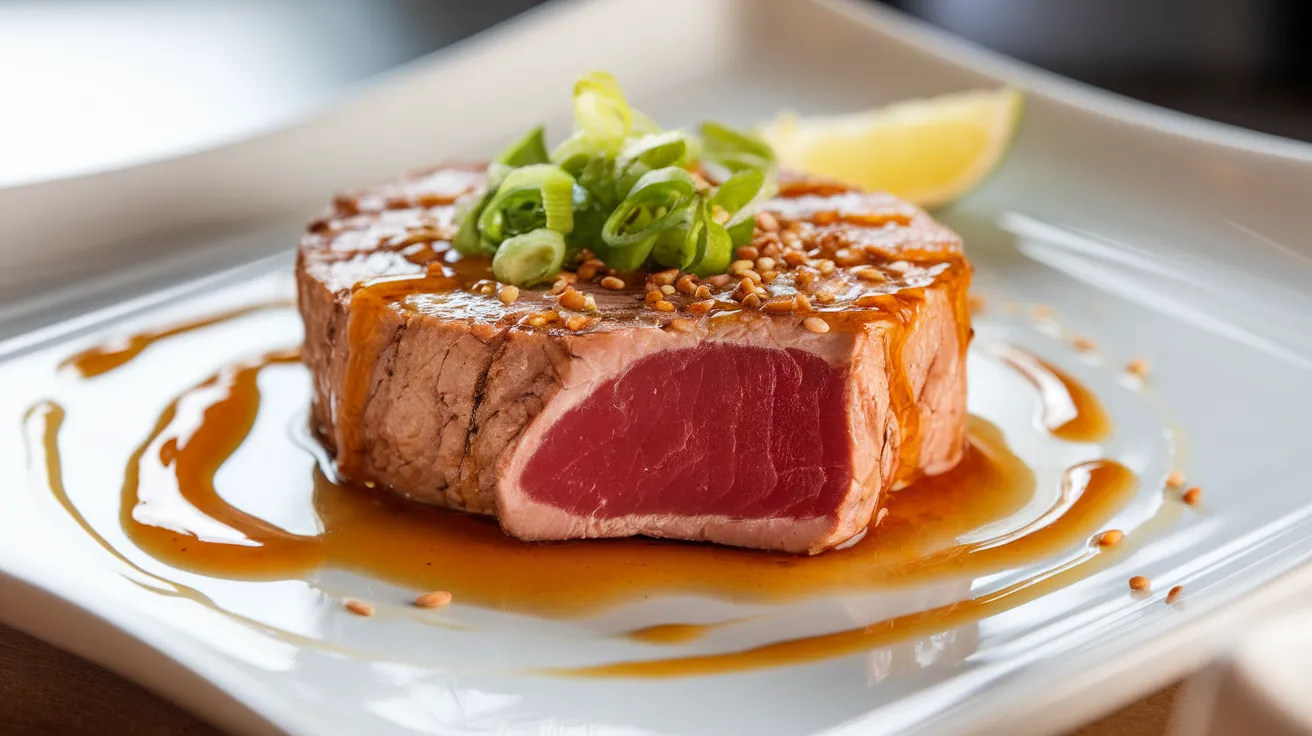
This vibrant sauce for ahi tuna steaks transforms your dinner into restaurant-quality perfection. Our signature sauce for ahi tuna steaks combines Asian-inspired flavors with fresh herbs, creating the ideal complement to seared tuna’s rich, meaty texture. This beginner-friendly recipe delivers professional results every time.
SERVES: 4 | PREP: 15 MIN | COOK: 10 MIN | TOTAL: 25 MIN
Ingredients for Your Sauce for Ahi Tuna Steaks
For the Soy-Ginger Base
| Ingredient | Amount |
|---|---|
| Low-sodium soy sauce | 1/3 cup |
| Fresh ginger, minced | 2 tablespoons |
| Rice wine vinegar | 3 tablespoons |
| Sesame oil | 2 tablespoons |
For the Citrus Brightness
| Ingredient | Amount |
|---|---|
| Fresh lime juice | 2 tablespoons |
| Orange zest | 1 teaspoon |
| Honey | 1 tablespoon |
For the Heat & Texture
| Ingredient | Amount |
|---|---|
| Sriracha sauce | 1-2 teaspoons |
| Garlic cloves, minced | 3 cloves |
| Green onions, sliced thin | 4 stalks |
| Toasted sesame seeds | 2 tablespoons |
Detailed Step-by-Step Instructions for Sauce for Ahi Tuna Steaks
Phase 1: Creating the Foundation (8 minutes)
1. Prepare your workspace and ingredients first. Get out a medium mixing bowl (at least 2-cup capacity), a wire whisk, and measure all your ingredients. Place them on your counter in the order you’ll use them. This mise en place approach prevents mistakes and ensures smooth cooking.
2. Start with the soy sauce base. Pour 1/3 cup low-sodium soy sauce into your mixing bowl. Using low-sodium is crucial because regular soy sauce will make your sauce too salty. The bowl should be large enough that you can whisk vigorously without splashing.
3. Add the fresh ginger properly. Take your 2 tablespoons minced fresh ginger and add it to the soy sauce. Use a spoon to stir it around, breaking up any clumps. Fresh ginger should look moist and smell sharp and spicy. If your ginger looks dry or fibrous, it’s too old and will make your sauce bitter.
4. Pour in the rice wine vinegar slowly. Add 3 tablespoons rice wine vinegar in a thin stream while stirring constantly with your whisk. The vinegar will lighten the color of the soy sauce slightly. You’ll hear a gentle fizzing sound as the acid reacts with the soy sauce – this is normal and means your sauce is building properly.
5. Test your base mixture. Dip a clean spoon into the mixture and taste it. It should taste salty, tangy, and have a gentle ginger bite. If it tastes too sharp, add another tablespoon of soy sauce. If it’s too salty, add another tablespoon of vinegar.
6. Create the emulsion with sesame oil. Here’s the tricky part that beginners often mess up. Add 2 tablespoons sesame oil very slowly – just a few drops at first – while whisking constantly and vigorously. The mixture should start looking slightly creamy and lighter in color. If you add the oil too fast, it will separate and look oily on top.
7. Check your emulsion. Stop whisking and let the mixture sit for 30 seconds. If oil pools on the surface, your emulsion broke. Fix this by whisking vigorously for another minute, or start over with just the soy base and add oil more slowly.
Phase 2: Building Brightness and Sweetness (5 minutes)
8. Prepare your citrus properly. Wash your orange under cold water and dry it completely. Using a microplane grater or the smallest holes on a box grater, carefully zest only the orange part of the peel. Avoid the white pith underneath – it’s bitter and will ruin your sauce.
9. Add orange zest to the mixture. Sprinkle 1 teaspoon fresh orange zest directly into your sauce base. Don’t dump it all in one spot – scatter it evenly. The oils from the zest will immediately start perfuming your sauce. You should smell a bright, citrusy aroma.
10. Juice your lime correctly. Roll your lime on the counter while pressing down firmly – this breaks the internal membranes and releases more juice. Cut it in half and squeeze 2 tablespoons fresh lime juice directly into the bowl. Remove any seeds immediately with a spoon.
11. Incorporate the lime juice. Whisk the sauce immediately after adding lime juice. The acid will brighten the entire mixture and you’ll notice the color becomes more vibrant. The sauce should smell fresh and tangy now.
12. Add honey for complexity. Measure 1 tablespoon honey and add it to the mixture. Honey is thick, so it won’t dissolve immediately. Whisk continuously for about 1 minute until the honey completely disappears into the sauce. The mixture should look glossy and slightly thicker now.
Phase 3: Final Flavor and Texture Elements (7 minutes)
13. Prepare garlic the right way. Take your 3 garlic cloves and remove the papery skin completely. Using a sharp knife, mince the garlic as finely as possible – pieces should be no larger than rice grains. Larger pieces will create harsh bites in your finished sauce.
14. Let garlic develop flavor. Add the minced garlic to your sauce and let it sit for exactly 1 minute without stirring. This resting period allows the garlic to release its oils and develop flavor without becoming too pungent.
15. Add heat carefully. Start with 1 teaspoon sriracha sauce and whisk it in completely. Taste the sauce with a clean spoon. The heat should be gentle and build slowly. If you want more spice, add the remaining teaspoon gradually. Remember – you can always add more heat, but you can’t remove it.
16. Prepare green onions properly. Take your 4 green onion stalks and rinse them under cold water. Pat them completely dry with paper towels. Using a sharp knife, slice them into thin rounds – about 1/8-inch thick. Keep the white and green parts separate as they have different flavors.
17. Add green onions strategically. Add the white parts of the green onions to your sauce first and whisk them in. These have a sharper, more onion-like flavor. Save most of the green parts for garnish, but add about half of them to the sauce now for color and mild onion flavor.
18. Toast sesame seeds for maximum flavor. Heat a small skillet over medium heat – no oil needed. Add 2 tablespoons sesame seeds and stir them constantly with a wooden spoon. They’ll start to turn golden and smell nutty after about 2-3 minutes. Remove them immediately when they’re light golden – they continue cooking even off the heat.
19. Cool and add sesame seeds. Let the toasted seeds cool for 2 minutes, then add half of them to your sauce. Reserve the other half for garnishing your finished tuna steaks. The seeds will add a pleasant crunch and deep nutty flavor.
20. Final rest and adjustment. Let your completed sauce rest for exactly 10 minutes at room temperature. This allows all the flavors to marry together. After resting, taste again and adjust: add more honey for sweetness, lime juice for brightness, or sriracha for heat.
Chef’s Notes for Perfect Sauce for Ahi Tuna Steaks
Consistency Control: This sauce for ahi tuna steaks should coat a spoon but still pour easily. If it’s too thick, add warm water one teaspoon at a time until you reach the perfect consistency.
Make-Ahead Magic: The sauce actually improves when made 2-4 hours ahead. The ginger mellows and the flavors marry beautifully, creating a more complex sauce for ahi tuna steaks.
Temperature Matters: Always serve this sauce at room temperature. Cold sauce on hot tuna creates an unpleasant contrast and dulls all the carefully balanced flavors.
Quality Ingredients: Use the freshest ginger and garlic possible for the best sauce for ahi tuna steaks. The difference in flavor between fresh and old aromatics is remarkable and worth the extra effort.
Nutrition Information (Per Serving)
- Calories: 85
- Protein: 2g
- Carbohydrates: 8g
- Fat: 6g
- Sodium: 890mg
Creative Variations for Your Sauce for Ahi Tuna Steaks
Spicy Mango Version: Add 2 tablespoons finely diced mango and an extra teaspoon of sriracha for tropical heat that pairs beautifully with the meaty texture of tuna steaks.
Wasabi Kick: Replace sriracha with 1 teaspoon wasabi paste for authentic Japanese flavors that complement the traditional preparation of ahi tuna.
Herb-Forward Style: Stir in 2 tablespoons chopped fresh cilantro and 1 tablespoon chopped fresh mint for a bright, herbaceous twist that lightens the rich tuna.
Coconut Fusion: Add 1 tablespoon coconut aminos instead of some soy sauce for a sweeter, more complex flavor profile. This variation pairs wonderfully with our sauce for grilled salmon when serving mixed seafood platters.
Storage & Reheating Your Sauce for Ahi Tuna Steaks
Refrigerator Storage: Keep your sauce covered in an airtight container for up to 5 days. The flavors continue developing and improving over time.
Freezer Option: This sauce freezes well for up to 2 months in freezer-safe containers. Thaw overnight in the refrigerator and whisk vigorously before serving.
Serving Temperature: Always bring refrigerated sauce to room temperature 30 minutes before serving. Cold sauce dulls all the carefully balanced flavors significantly.
Troubleshooting Guide
Problem: Sauce tastes too salty Solution: Add 1 tablespoon rice vinegar and 1 teaspoon honey to balance the saltiness. Mix well and let rest for 5 minutes before tasting again.
Problem: Sauce separates after sitting Solution: Whisk vigorously for 30 seconds to re-emulsify the oil. If that doesn’t work, blend for 10 seconds in a small blender.
Problem: Not enough heat Solution: Add sriracha gradually, 1/4 teaspoon at a time, tasting between additions. Remember, the heat builds over time.
Problem: Ginger flavor too strong Solution: Add more honey and lime juice to balance the ginger’s intensity. You can also add a tablespoon of water to dilute it slightly.
Problem: Sauce too thin Solution: Whisk in 1 teaspoon cornstarch mixed with 1 tablespoon cold water, or add more toasted sesame seeds for body and texture.
Equipment Essentials
- Medium mixing bowl (at least 2-cup capacity) for combining ingredients
- Wire whisk for proper emulsification and mixing
- Microplane grater for zesting citrus cleanly
- Small skillet for toasting sesame seeds perfectly
- Sharp knife for mincing aromatics finely
- Measuring cups and spoons for accurate proportions
Shopping List
Pantry Items
- Low-sodium soy sauce (not regular soy sauce)
- Rice wine vinegar (not white vinegar)
- Pure sesame oil (not blended)
- Raw honey (not processed)
- Sriracha sauce
- Raw sesame seeds
Fresh Produce
- Fresh ginger root (firm and smooth)
- Fresh limes (heavy for their size)
- Fresh orange (organic for zesting)
- Fresh garlic bulb (firm cloves)
- Fresh green onions (bright green tops)
Success Secrets for Perfect Sauce for Ahi Tuna Steaks
1. Use the freshest ginger possible – it should be firm with smooth skin and no wrinkled areas. Old ginger will make your sauce bitter and fibrous.
2. Toast those sesame seeds – this single step elevates the entire sauce from good to exceptional. The nutty aroma is unmistakable when done right.
3. Taste as you build each layer – every ingredient should be balanced before moving to the next step. This prevents having to fix problems later.
4. Let it rest properly – the 10-minute resting period allows flavors to meld and creates the perfect sauce for ahi tuna steaks with balanced complexity.
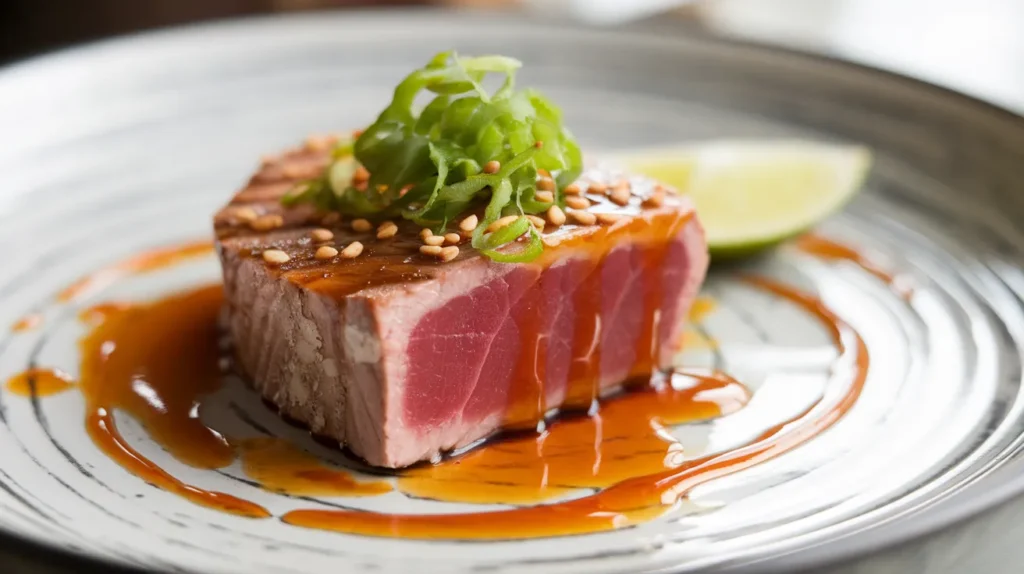
5. Serve at room temperature always – this ensures all the carefully balanced flavors shine through on your perfectly seared tuna steaks.
This versatile sauce works beautifully with other seafood preparations too – try it with our sauce for shrimp tacos for a flavor-packed seafood feast that will impress any dinner guest. The Asian-inspired flavors complement grilled and seared fish perfectly.