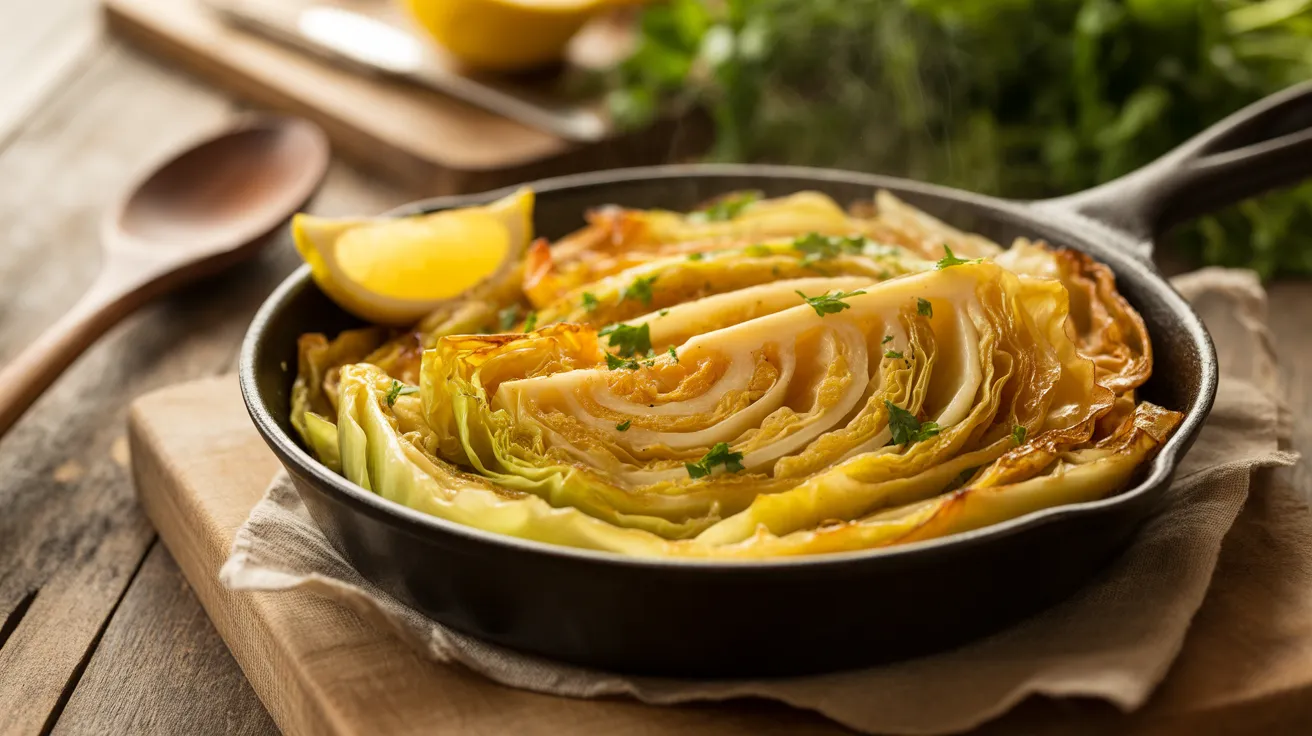
This sautéed cabbage recipe turns a humble head of cabbage into a tender, golden side dish that tastes like you spent way more time on it than you did. The secret? High heat and a little patience. This sautéed cabbage comes together in one pan with just a handful of pantry staples — making it perfect for busy weeknights or when you need an easy vegetable dish that everyone will actually eat.
SERVES: 4 | PREP: 10 MIN | COOK: 15 MIN | TOTAL: 25 MIN
Why You’ll Love This Recipe
Cabbage gets a bad reputation. People think of it as bland or soggy — but that’s only when it’s cooked wrong.
When you sauté cabbage in a hot pan with butter and a little seasoning, something special happens. The edges go golden, the texture stays slightly crisp, and the flavor turns sweet and nutty.
This dish costs almost nothing to make. One head of green cabbage feeds four people with leftovers to spare.
Ingredients for Sautéed Cabbage
Produce
| Ingredient | Amount |
|---|---|
| Green cabbage, cored and sliced thin | 1 small head (about 2 lbs) |
| Garlic cloves, minced | 3 cloves |
| Yellow onion, thinly sliced | 1 medium |
Fats & Oils
| Ingredient | Amount |
|---|---|
| Unsalted butter | 2 tablespoons |
| Olive oil | 1 tablespoon |
Seasonings
| Ingredient | Amount |
|---|---|
| Kosher salt | ¾ teaspoon |
| Black pepper, freshly ground | ½ teaspoon |
| Smoked paprika | ½ teaspoon |
| Crushed red pepper flakes (optional) | ¼ teaspoon |
| Apple cider vinegar | 1 tablespoon |
Garnish (Optional)
| Ingredient | Amount |
|---|---|
| Fresh parsley, chopped | 2 tablespoons |
| Lemon wedges | 4 wedges |
Step-by-Step Instructions
Phase 1: Prep the Cabbage
Step 1: Remove the outer leaves. Peel away the first 2–3 outer leaves of the cabbage. These tend to be tough or damaged. Set them aside and compost or discard them.
Step 2: Cut the cabbage in half. Place the cabbage on a stable cutting board. Use a sharp chef’s knife to cut straight through the center from top to bottom. You’ll now have two halves.
Step 3: Remove the core. Lay each cabbage half flat-side down. Cut a V-shape around the hard, white core at the base. The core is tough and doesn’t soften when cooked — removing it makes your dish much more pleasant to eat.
Step 4: Slice the cabbage thin. Slice each cabbage half into thin strips about ¼ inch wide. Try to keep the slices even so everything cooks at the same rate. If the pieces look too long, cut them in half crosswise. You should end up with about 8 cups of shredded cabbage. Don’t worry if it looks like a lot — it shrinks down dramatically once it hits the pan.
Phase 2: Prep the Aromatics
Step 5: Slice the onion. Cut the onion in half from root to tip. Peel away the skin. Place each half flat-side down and slice into thin half-moon shapes, about ¼ inch thick. Thin slices cook faster and blend better with the cabbage.
Step 6: Mince the garlic. Press the flat side of your knife against each garlic clove and give it a firm press with your palm. The skin will slip right off. Chop the garlic into a fine mince. Set it aside — you’ll add it later in the cooking process so it doesn’t burn.
Phase 3: Cook the Base
Step 7: Heat your pan. Place a large skillet or wide sauté pan (12-inch works best) over medium-high heat. Give it about 60 seconds to heat up before adding anything. A properly hot pan is the #1 key to getting golden, not soggy, cabbage.
Pro tip: Hold your hand 3 inches above the pan. When you feel steady heat radiating up, the pan is ready.
Step 8: Add butter and oil. Add 2 tablespoons of butter and 1 tablespoon of olive oil to the pan. The oil raises the smoke point of the butter so it doesn’t burn. Let the mixture melt and start to foam — about 30 seconds.
Step 9: Cook the onions. Add the sliced onions to the pan. Spread them out in a single layer. Cook for 4–5 minutes, stirring every minute or so. You want them to soften and turn light golden at the edges. If they’re browning too fast, lower the heat slightly.
Step 10: Add the garlic. Push the onions to the side of the pan and add the minced garlic to the center. Cook the garlic for 30–45 seconds, stirring constantly. It will turn fragrant and slightly golden. Be careful here — garlic burns fast and bitter garlic will ruin the whole dish. The moment it smells nutty and toasty, move to the next step.
Phase 4: Sauté the Cabbage
Step 11: Add the cabbage to the pan. Add all of your sliced cabbage at once. It will look like way too much, but it will shrink quickly. Use tongs or a wooden spoon to toss everything together so the onions and garlic get mixed throughout the cabbage.
Step 12: Season right away. Sprinkle in the ¾ teaspoon salt, ½ teaspoon black pepper, and ½ teaspoon smoked paprika (plus the red pepper flakes if using). Toss again to coat the cabbage evenly. Seasoning early helps draw out moisture and speeds up the cooking.
Step 13: Cook, stirring every 2 minutes. Cook the sautéed cabbage over medium-high heat for 10–12 minutes total, stirring every 2 minutes. Here’s what to look for at each stage:
- At 3 minutes: The cabbage has wilted down by half. It looks wet and steamy. Keep going.
- At 6 minutes: The edges start to turn light golden. This is where the flavor really starts to build.
- At 10 minutes: The cabbage is tender, golden in spots, and smells nutty and sweet. This is your target.
Safety tip: Be careful when stirring — the pan and steam are very hot. Use oven mitts or a long-handled spoon.
Step 14: Add the vinegar. Remove the pan from heat. Drizzle 1 tablespoon of apple cider vinegar over the cabbage. Toss to coat. The vinegar cuts through the richness of the butter and brightens the whole dish. It also helps balance any bitterness in the cabbage.
Phase 5: Finish and Serve
Step 15: Taste and adjust. Give it a taste. Does it need more salt? More pepper? Add a little at a time and toss again. This is your dish — make it taste the way you like it.
Step 16: Plate and garnish. Spoon the sautéed cabbage onto a serving platter or divide into four bowls. Top with freshly chopped parsley and a squeeze of lemon juice if desired. Serve hot, right away.
Chef’s Notes
Go hot, not medium. Medium heat will steam the cabbage instead of browning it. You want that deep golden color and slightly caramelized flavor — and that only comes from a properly hot pan.
Don’t skip the vinegar. This single ingredient makes the sautéed cabbage taste bright and balanced instead of flat. If you don’t have apple cider vinegar, fresh lemon juice works just as well.
Dry your cabbage after washing. If your cabbage is wet when it hits the pan, it steams instead of sautéing. Pat it dry with a clean kitchen towel before cooking.
Cast iron works great here. If you have a cast iron skillet, use it. It holds heat evenly and gives the cabbage better color than a standard non-stick pan.
Nutrition Information
Per serving (1 of 4):
| Nutrient | Amount |
|---|---|
| Calories | 118 |
| Total Fat | 8g |
| Saturated Fat | 4g |
| Carbohydrates | 11g |
| Fiber | 4g |
| Sugar | 6g |
| Protein | 2g |
| Sodium | 380mg |
Nutrition values are estimates based on ingredients used.
Variations on Sautéed Cabbage
1. Sautéed Cabbage with Bacon Add 4 slices of chopped bacon to a cold pan and cook until crispy. Remove the bacon and cook the onions in the drippings. Add the cabbage and finish as directed. Top with the crispy bacon pieces before serving. For a true Southern-style version, check out this Southern fried cabbage with bacon — it’s a reader favorite for good reason.
2. Asian-Inspired Sautéed Cabbage Swap the butter for sesame oil. Replace the paprika with 1 teaspoon of soy sauce and ½ teaspoon of ginger. Skip the vinegar and finish with a drizzle of toasted sesame oil and a sprinkle of sesame seeds.
3. Sautéed Red Cabbage Use a head of red cabbage instead of green. Red cabbage takes about 3–4 extra minutes to soften. Add 1 tablespoon of brown sugar along with the vinegar at the end to balance the stronger, earthier flavor.
4. Sautéed Cabbage with Caraway Seeds Add 1 teaspoon of caraway seeds along with the garlic. This gives the dish a warm, slightly anise-like flavor that pairs beautifully with pork chops or sausage. It’s a classic German-style preparation that tastes much more complex than it is.
Love cabbage raw? My classic coleslaw recipe is the perfect companion dish — creamy, tangy, and great for meal prepping ahead.
Storage and Reheating
Refrigerator: Let the sautéed cabbage cool completely before storing. Transfer to an airtight container and refrigerate for up to 4 days.
Freezer: Sautéed cabbage can be frozen, though the texture will soften more after thawing. Store in a freezer-safe bag or container for up to 2 months. Thaw overnight in the fridge before reheating.
Reheating on the stovetop (best method): Add the cabbage to a skillet over medium heat with a small pat of butter. Stir often and heat for 3–4 minutes until warmed through. This brings back some of the original texture.
Reheating in the microwave: Place cabbage in a microwave-safe bowl. Cover loosely with a damp paper towel. Heat in 60-second intervals, stirring between each, until hot. About 2 minutes total for a single portion.
Make-ahead tip: You can slice the cabbage and onions up to 24 hours ahead. Store them in zip-top bags in the fridge until you’re ready to cook.
Troubleshooting Common Problems
Problem 1: My cabbage is soggy, not golden. Your pan wasn’t hot enough, or you had too much cabbage for the pan size. Use a 12-inch or larger skillet and make sure it’s properly preheated. Don’t crowd the pan — soggy cabbage is almost always a crowding problem. If needed, cook in two batches.
Problem 2: My cabbage is dry and not wilting. The heat is too high and the moisture is cooking off too fast. Lower the heat to medium and add 1–2 tablespoons of water or broth to the pan. Cover with a lid for 2 minutes to let the steam help soften it, then remove the lid and let the liquid cook off.
Problem 3: My garlic burned. This happens fast. If your garlic turns very dark brown or black, it’s bitter and needs to come out. Start fresh — wipe the pan, lower the heat, and add the garlic after the onions are already soft. The onions will cushion the heat and protect the garlic.
Problem 4: My sautéed cabbage tastes bland. Salt is the most common fix. Taste the dish and add a little more salt, a pinch at a time. Also check your vinegar — a splash of acid makes flavors pop. A small squeeze of fresh lemon over the top before serving works wonders.
Problem 5: The cabbage is still too tough after 12 minutes. Some cabbages — especially large, very dense ones — take longer. Lower the heat to medium, add a splash of water, and cover the pan for 3–4 more minutes. Check again and continue until it reaches your preferred tenderness.
Equipment Essentials
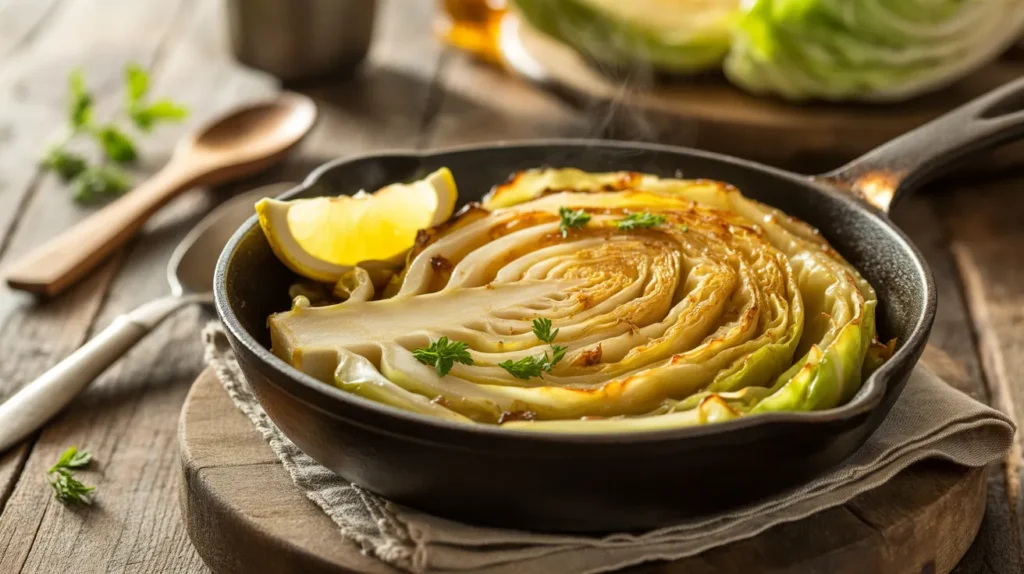
- 12-inch skillet or sauté pan — Bigger is better here. More surface area = more browning.
- Sharp chef’s knife — A dull knife makes cabbage prep frustrating and unsafe.
- Stable cutting board — At least 12 inches wide. Cabbage is bulky and needs space.
- Tongs or wooden spoon — For tossing and stirring without breaking up the cabbage.
- Measuring spoons — For accurate seasoning, especially if you’re new to cooking.
- Colander — If you rinse your cabbage, you’ll need this to drain it well.
No cast iron? Any large, heavy-bottomed pan will do the job. Non-stick works in a pinch but won’t give you as much color.
Shopping List
Produce Section
- [ ] 1 small head green cabbage (about 2 lbs)
- [ ] 1 medium yellow onion
- [ ] 1 head of garlic
- [ ] Fresh flat-leaf parsley (optional)
- [ ] 1 lemon (optional, for serving)
Dairy Section
- [ ] Unsalted butter
Oils & Vinegars Aisle
- [ ] Olive oil
- [ ] Apple cider vinegar
Spices & Seasonings Aisle
- [ ] Kosher salt (if not stocked)
- [ ] Black pepper
- [ ] Smoked paprika
- [ ] Crushed red pepper flakes (optional)
5 Success Secrets for Perfect Sautéed Cabbage
- Preheat the pan before you add anything. A cold pan leads to steamed, mushy cabbage. Give it a full minute over medium-high heat before adding the butter and oil.
- Cut your slices thin and even. Thick pieces stay chewy while thin ones turn soggy — neither is ideal. Aim for ¼-inch strips across the board for even cooking.
- Don’t stir too much. Every time you stir, you interrupt the browning process. Let the cabbage sit undisturbed for 1–2 minutes at a time so the bottom has a chance to turn golden.
- Add vinegar at the end, off the heat. Adding it too early causes it to evaporate before it can brighten the dish. Pull the pan off the burner first, then add the vinegar and toss.
- Season in layers. Season the cabbage when it first goes in, then taste again at the end before serving. Cabbage absorbs salt as it cooks, so what tastes slightly overseasoned at the start will taste just right at the end.
Sautéed cabbage is one of those side dishes that earns a permanent spot in your weekly rotation. It’s fast, it’s cheap, and it goes with almost everything — grilled chicken, pork tenderloin, sausage, or a fried egg on top for a simple vegetarian dinner. Once you make it once, you’ll wonder why you ever skipped past the cabbage at the grocery store.