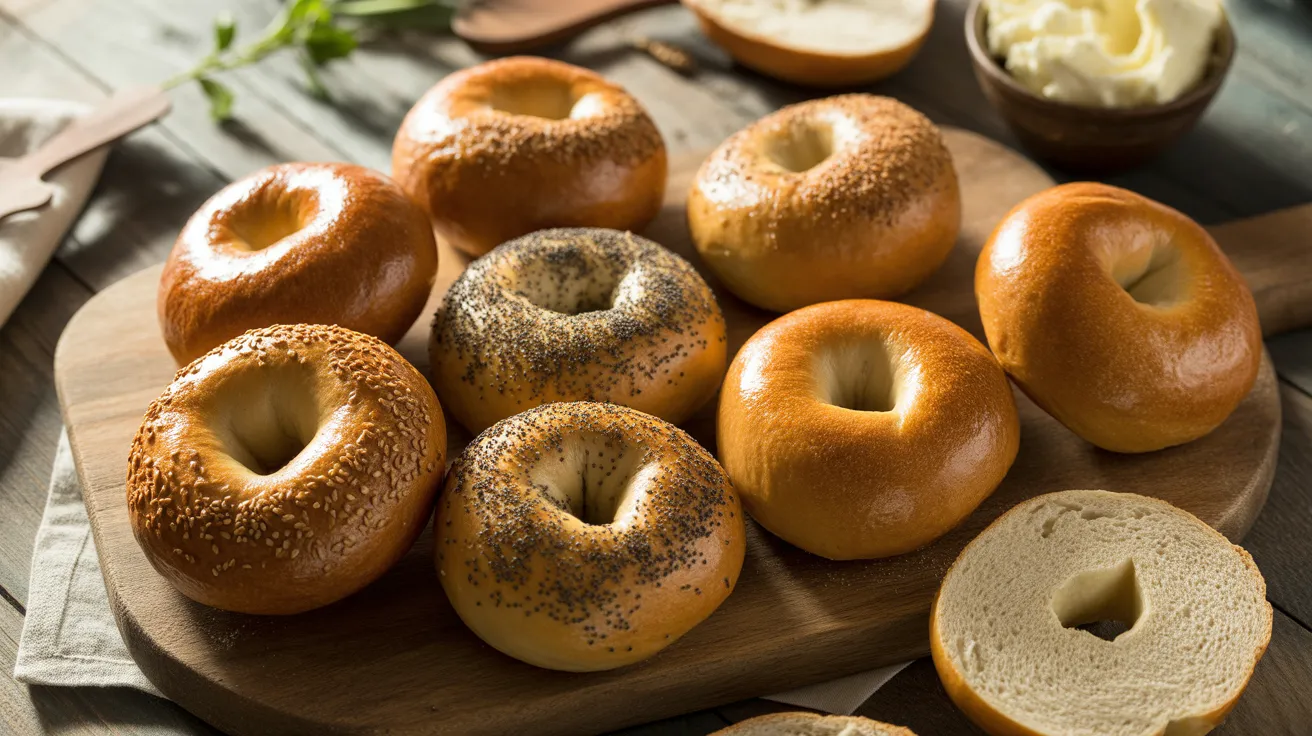
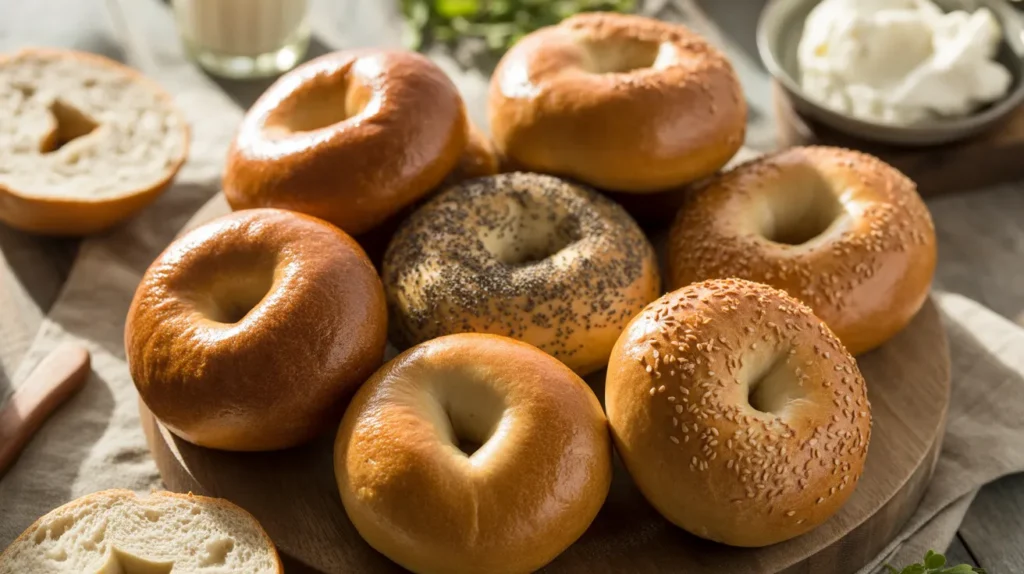
These sourdough bagels bring authentic New York-style texture right to your kitchen with a crispy crust and tender, chewy center. Making sourdough bagels from scratch takes patience, but the tangy flavor and perfect texture make every minute worth it.
SERVES: 4 (8 bagels) | PREP: 30 MIN | REST: 8-12 HRS | COOK: 25 MIN | TOTAL: 9-13 HRS
Ingredients
| Sourdough Starter | Amount |
|---|---|
| Active sourdough starter (100% hydration) | 1 cup (240g) |
| Warm water (80°F) | ¾ cup (180ml) |
| Dough | Amount |
|---|---|
| Bread flour | 4 cups (500g) |
| Warm water | ½ cup (120ml) |
| Honey | 2 tablespoons |
| Fine sea salt | 2 teaspoons |
| Boiling Bath | Amount |
|---|---|
| Water | 10 cups |
| Barley malt syrup (or honey) | 2 tablespoons |
| Baking soda | 1 tablespoon |
| Toppings (Optional) | Amount |
|---|---|
| Sesame seeds | ¼ cup |
| Poppy seeds | ¼ cup |
| Everything bagel seasoning | ¼ cup |
| Coarse sea salt | 2 tablespoons |
Step-by-Step Instructions
Phase 1: Building the Dough (15 minutes active time)
Step 1: Feed your sourdough starter 8-12 hours before making the dough. You want it bubbly, doubled, and passing the float test (a small spoonful should float in water).
Step 2: Mix 1 cup active starter with ¾ cup warm water in a large bowl. Stir until the starter dissolves completely. The water should feel like a warm bath on your wrist.
Step 3: Add 4 cups bread flour to the starter mixture. Stir with a wooden spoon until a shaggy dough forms with no dry flour pockets visible. This takes about 2-3 minutes of mixing.
Step 4: Cover the bowl with a damp kitchen towel and let rest for 30 minutes. This autolyse period allows the flour to absorb water and makes kneading easier.
Step 5: Dissolve 2 tablespoons honey in ½ cup warm water, then pour over the rested dough. Add 2 teaspoons salt on top. The honey feeds the yeast and adds subtle sweetness.
Step 6: Knead the dough by hand in the bowl for 8-10 minutes. The dough should transform from sticky to smooth and elastic. You’ll know it’s ready when it springs back when poked.
Phase 2: Bulk Fermentation (6-8 hours)
Step 7: Cover the dough with a damp towel and let it rise at room temperature (68-72°F) for 6-8 hours. The dough should increase by about 50% but won’t double like regular yeast dough. You want a slow rise for maximum tang.
Step 8: After bulk fermentation, punch down the dough gently to release gas bubbles. Turn it onto a clean work surface without adding flour. The dough should feel puffy but firm.
Phase 3: Shaping the Bagels (15 minutes)
Step 9: Divide the dough into 8 equal pieces (about 110g each). Use a kitchen scale for accuracy. Roll each piece into a tight ball by tucking the edges underneath and rolling against the counter.
Step 10: Let the dough balls rest for 5 minutes under a damp towel. This relaxes the gluten and makes shaping easier.
Step 11: Poke your thumb through the center of each ball to create a hole. Gently stretch the hole to about 2 inches in diameter. The hole shrinks during boiling and baking, so make it bigger than you think.
Step 12: Place shaped bagels on a parchment-lined baking sheet, spacing them 2 inches apart. Cover with a damp towel.
Phase 4: Cold Retardation (8-12 hours)
Step 13: Refrigerate the shaped bagels for 8-12 hours or overnight. This slow fermentation develops that signature tangy flavor and makes the bagels easier to handle when boiling.
Phase 5: Boiling and Baking (25 minutes)
Step 14: Remove bagels from the fridge 30 minutes before boiling. They should feel slightly puffy and pass the poke test (a gentle poke leaves an indent that slowly springs back).
Step 15: Preheat your oven to 425°F. Bring 10 cups water, 2 tablespoons barley malt syrup, and 1 tablespoon baking soda to a rolling boil in a large pot. The malt creates a shiny crust.
Step 16: Gently lower 2-3 bagels at a time into the boiling water. Boil for 45 seconds per side (90 seconds total). The bagels will float and puff up. Don’t overcrowd the pot.
Step 17: Remove boiled bagels with a slotted spoon and place back on the parchment-lined sheet. While still wet, sprinkle with your choice of toppings. The moisture helps toppings stick.
Step 18: Bake for 20-25 minutes until deep golden brown. Rotate the pan halfway through for even browning. The bagels should sound hollow when tapped on the bottom.
Step 19: Cool on a wire rack for 15 minutes before slicing. Cutting too early releases steam and makes the interior gummy.
Chef’s Notes
Starter Strength Matters: Your sourdough bagels will only be as good as your starter. Use a starter that’s been fed regularly for at least two weeks and passes the float test consistently.
Temperature Control: Keep your dough between 68-72°F during bulk fermentation. Warmer temperatures speed up fermentation but reduce tang. Cooler temps take longer but develop better flavor.
The Boil Makes the Bagel: Don’t skip or rush the boiling step. This creates the chewy crust that separates bagels from bread. The barley malt adds authentic flavor and shine.
Scoring Not Required: Unlike bread, sourdough bagels don’t need scoring. The boiling process sets the crust before baking, preventing wild oven spring that would require cuts.
Nutrition Information (Per Bagel)
- Calories: 285
- Protein: 10g
- Carbohydrates: 58g
- Fat: 1g
- Fiber: 2g
- Sugar: 4g
- Sodium: 620mg
Creative Variations
Whole Wheat Sourdough Bagels: Replace 1 cup bread flour with whole wheat flour for a nuttier flavor and denser texture. Add an extra 2 tablespoons water since whole wheat absorbs more liquid. These bagels pair beautifully with cream cheese and smoked salmon.
Cinnamon Raisin Bagels: Knead in 1 tablespoon cinnamon and ¾ cup raisins after the autolyse period. Roll the tops in cinnamon sugar after boiling. These make incredible breakfast sandwiches or French toast. For more sweet sourdough breakfast options, try my sourdough English muffins recipe.
Everything Bagels: Mix 2 tablespoons each of sesame seeds, poppy seeds, dried garlic flakes, dried onion flakes, and 1 tablespoon coarse salt. Sprinkle generously after boiling. These work perfectly for sandwiches and cream cheese spreads.
Jalapeño Cheddar Bagels: Fold in ½ cup shredded sharp cheddar and 3 tablespoons diced pickled jalapeños during the final kneading. Top with extra cheese before baking. For another savory sourdough treat, check out my sourdough pretzels recipe.
Storage & Reheating
Room Temperature: Store bagels in a paper bag for 2 days at room temperature. Paper keeps the crust from getting soggy while plastic makes them soft.
Refrigeration: Don’t refrigerate fresh bagels. The cold temperature makes them stale faster through a process called retrogradation.
Freezing: Slice bagels before freezing in a freezer bag for up to 3 months. This lets you toast individual halves without thawing.
Reheating: Toast frozen bagel halves directly from the freezer for 3-4 minutes. For a crispy crust on whole bagels, sprinkle with water and bake at 350°F for 10 minutes.
Troubleshooting Common Problems
Problem: Bagels are dense and heavy Your starter might be weak or under-fermented. Make sure your starter doubles within 4-6 hours of feeding and passes the float test. Also check your bulk fermentation time – the dough should look puffy with small bubbles on the surface.
Problem: Holes close up during baking Make the holes larger during shaping – about 2 inches in diameter. The dough tightens during the cold retardation and shrinks during boiling. Don’t be shy about stretching that hole.
Problem: Bagels taste like plain bread, not sourdough Extend your cold retardation to the full 12 hours. The tang comes from the long, slow fermentation in the fridge. Also ensure your starter is active and fed with whole grain flour, which creates more acidity.
Problem: Crust is pale and soft Your boiling water needs to be at a rolling boil, not a gentle simmer. The high heat sets the crust quickly. Also increase your oven temperature to 450°F and bake until deep golden brown, not light tan.
Problem: Bagels spread flat instead of staying puffy Your dough is over-proofed. The bagels should increase by only 50% during bulk fermentation, not double. Also make sure you’re using bread flour (not all-purpose) for better structure and gluten development.
Equipment Essentials
- Kitchen scale for accurate measurements
- Large mixing bowl (at least 4-quart capacity)
- Wooden spoon for mixing
- Damp kitchen towel for covering dough
- Bench scraper for dividing dough
- Large pot (at least 6-quart) for boiling
- Slotted spoon for transferring bagels
- Baking sheets (2 half-sheet pans)
- Parchment paper for lining sheets
- Wire cooling rack
- Instant-read thermometer for water temperature
Shopping List
Baking Aisle:
- Bread flour (4 cups)
- Honey (2 tablespoons)
- Barley malt syrup (2 tablespoons) – or substitute honey
- Baking soda (1 tablespoon)
Spices & Seasonings:
- Fine sea salt (2 teaspoons)
- Coarse sea salt (for topping)
- Sesame seeds (optional)
- Poppy seeds (optional)
Refrigerated Section:
- Active sourdough starter (1 cup)
Note: You’ll need a maintained sourdough starter. If you don’t have one, start feeding yours daily for 7-10 days before making this recipe.
Success Secrets
1. Use the float test to check starter readiness. Drop a spoonful of starter in water – it should float within 5 seconds if properly fermented.
2. Don’t add extra flour during shaping. Bagel dough should be smooth but slightly tacky. Additional flour makes them tough and dry.
3. Maintain water temperature at 205-212°F during boiling. Too cool and the crust won’t set properly. Too hot won’t make a difference since water can’t exceed 212°F at sea level.
4. Rotate your baking sheet halfway through baking. Most ovens have hot spots that cause uneven browning. A quick rotation ensures all bagels get that perfect golden color.
5. Listen for the hollow sound when tapping the bottom. This indicates the interior is fully baked and not gummy. The bagels should feel light for their size and have a firm crust.