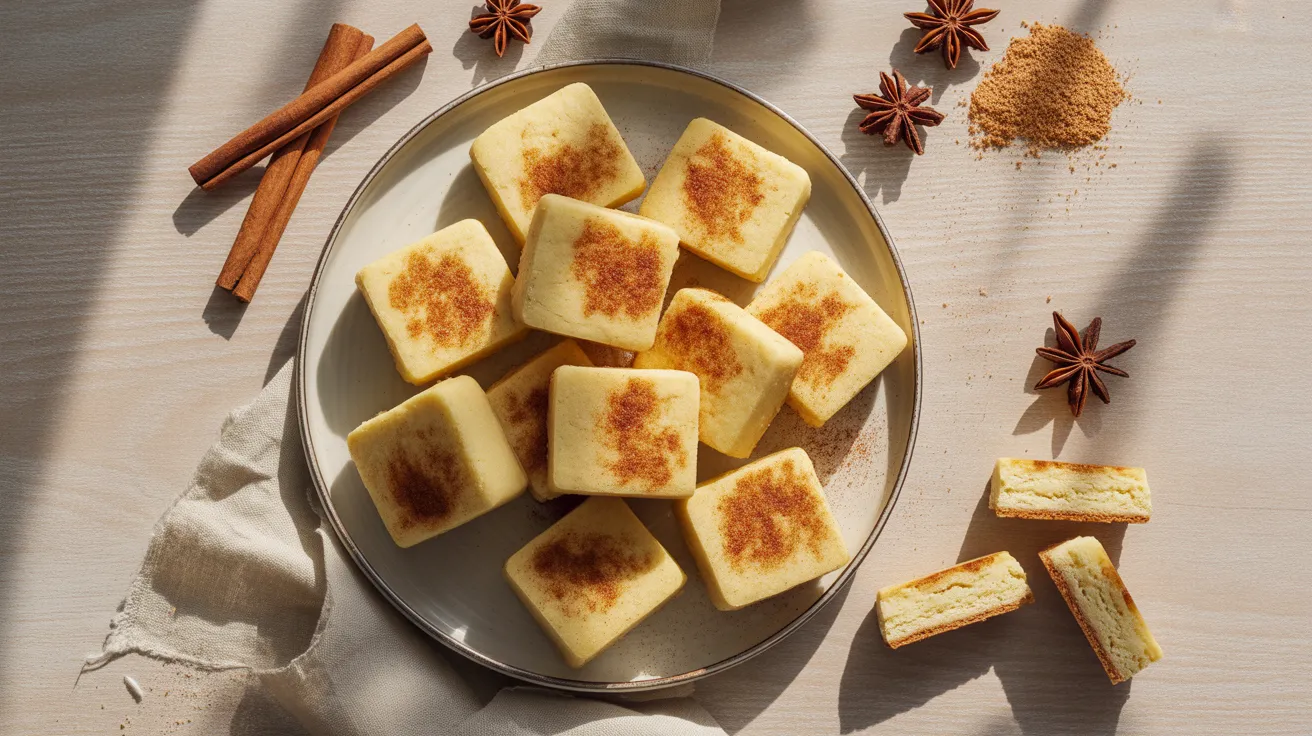
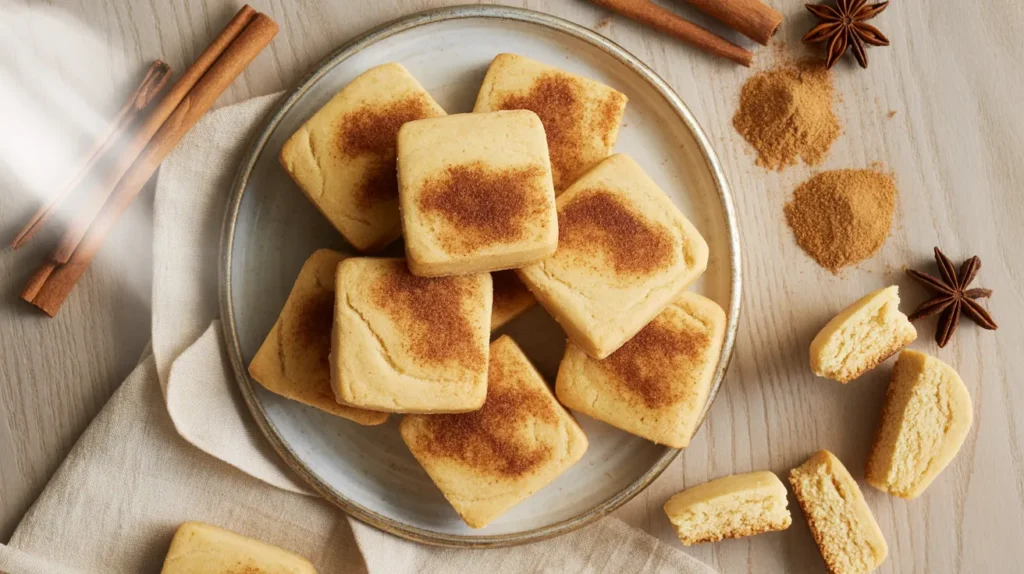
Nothing beats the buttery melt-in-your-mouth texture of homemade spiced shortbread cookies warm from the oven. These aren’t your ordinary cookies – they’re packed with cinnamon, ginger, and just a hint of cardamom that makes your whole kitchen smell like a cozy bakery. I’ve been making this spiced shortbread recipe for years, and it’s become my go-to when I want something special without spending hours in the kitchen. The beauty of shortbread is its simplicity – just a few quality ingredients that come together into something truly magical. Whether you’re baking for the holidays or just treating yourself on a Tuesday afternoon, these cookies deliver that perfect crumbly-yet-tender bite every single time.
SERVES: 4 | PREP: 20 MIN | COOK: 25 MIN | TOTAL: 45 MIN
Ingredients
Dry Ingredients
| Ingredient | Amount |
|---|---|
| All-purpose flour | 2 cups |
| Ground cinnamon | 1½ teaspoons |
| Ground ginger | 1 teaspoon |
| Ground cardamom | ½ teaspoon |
| Ground nutmeg | ¼ teaspoon |
| Fine sea salt | ½ teaspoon |
| Granulated sugar (for dough) | ⅓ cup |
Wet Ingredients
| Ingredient | Amount |
|---|---|
| Unsalted butter (cold, cubed) | 1 cup (2 sticks) |
| Pure vanilla extract | 1 teaspoon |
Topping
| Ingredient | Amount |
|---|---|
| Coarse sugar (or regular granulated) | 2 tablespoons |
| Extra cinnamon | ½ teaspoon |
Step-by-Step Instructions
Phase 1: Preparing Your Workspace (5 minutes)
Step 1: Pull your cold butter from the refrigerator and cut it into ½-inch cubes right away.
Keep the butter cold – this is the secret to getting that perfect crumbly texture in your spiced shortbread. When butter stays cold during mixing, it creates little pockets of air that make the cookies incredibly tender.
Step 2: Line an 8×8-inch baking pan with parchment paper, leaving about 2 inches of overhang on two opposite sides.
This overhang acts like handles when you need to lift the shortbread out later. Press the parchment into the corners so it sits flat against the pan.
Step 3: Preheat your oven to 325°F (163°C) and position the rack in the center.
Shortbread needs gentle, even heat. The middle rack prevents the bottom from browning too quickly while ensuring the top bakes through completely.
Phase 2: Mixing the Dough (10 minutes)
Step 4: In a medium bowl, whisk together 2 cups flour, 1½ teaspoons cinnamon, 1 teaspoon ginger, ½ teaspoon cardamom, ¼ teaspoon nutmeg, and ½ teaspoon salt until the spices are evenly distributed.
You should see no streaks of spice – the flour should look uniformly tan-colored. This ensures every bite of your cookies has balanced flavor.
Step 5: Add ⅓ cup sugar to the spice mixture and whisk again for 30 seconds.
The sugar needs to be completely incorporated before you add the butter. Any clumps now will create sweet spots in your finished cookies.
Step 6: Drop your cold butter cubes into the flour mixture and use a pastry cutter or two forks to work the butter into the dry ingredients.
Cut the butter until the mixture looks like coarse sand with some pea-sized butter chunks remaining. This should take about 3-4 minutes of steady cutting. Your arms might get tired, but those butter chunks are gold for texture.
Step 7: Drizzle in 1 teaspoon vanilla extract and continue mixing with your hands until the dough starts to come together.
The mixture will look dry and crumbly at first – that’s normal. Keep pressing and squeezing it together. After about 2 minutes of kneading, it should hold together when you squeeze a handful.
Step 8: Gather the dough into a ball and knead it gently 5-6 times right in the bowl.
Don’t overwork it or you’ll develop gluten, which makes shortbread tough instead of tender. You just want everything cohesive.
Phase 3: Shaping and Preparing for Baking (5 minutes)
Step 9: Transfer the dough to your prepared pan and press it evenly into the bottom using your hands.
Start from the center and work outward to the edges. The dough should be about ½ inch thick across the entire pan. Use the bottom of a measuring cup to smooth the surface if needed.
Step 10: Prick the entire surface with a fork, making holes about ½ inch apart across the whole pan.
These holes are crucial – they let steam escape during baking so your shortbread stays flat instead of puffing up. Make the holes go all the way through to the pan bottom.
Step 11: In a small bowl, mix 2 tablespoons coarse sugar with ½ teaspoon cinnamon, then sprinkle this mixture evenly over the top of the dough.
Press the sugar topping gently into the surface so it sticks. This creates that beautiful sparkly, spiced crust that makes the cookies extra special.
Step 12: Use a sharp knife to score the dough into 16 squares (4 rows by 4 rows), cutting only halfway through the dough.
Don’t cut all the way through – you’re just marking where you’ll break the cookies apart later. This makes serving so much easier and ensures everyone gets equal-sized pieces.
Phase 4: Baking (25 minutes)
Step 13: Place the pan in your preheated 325°F oven on the center rack and bake for 25-28 minutes.
The shortbread is done when the edges are just starting to turn golden and the center looks set but not browned. The top should still be pale – shortbread shouldn’t get dark or it becomes bitter.
Step 14: Watch for visual cues in the last 5 minutes of baking.
The edges should pull away slightly from the pan sides, and the surface should look dry rather than shiny or wet. If you gently press the center with your finger, it should feel firm, not soft or jiggly.
Phase 5: Cooling and Cutting (15 minutes initial cool, then 1 hour)
Step 15: Remove the pan from the oven and immediately re-cut along your score marks while the shortbread is still hot.
Use a sharp knife and press firmly – the cookies need to be cut now while they’re soft because they’ll be too crumbly once completely cool. Cut all the way through this time.
Step 16: Let the shortbread cool in the pan for 15 minutes without moving it.
This initial cooling period lets the butter solidify slightly so the cookies can support themselves. If you try to remove them too early, they’ll crumble into pieces.
Step 17: Use the parchment paper overhang to lift the entire block of shortbread out of the pan and transfer it to a cooling rack.
Hold both sides of the parchment firmly and lift straight up. Set it gently on the rack and let it cool completely for about 1 hour before separating the individual cookies.
Step 18: Once completely cool, gently break the cookies apart along the cut lines.
They should separate cleanly. If any pieces stick together, use a thin knife to separate them gently.
Chef’s Notes
Butter Temperature is Critical: Your butter must be cold when you start mixing. Room temperature butter creates greasy, dense cookies instead of the crumbly texture that makes spiced shortbread so special. I keep mine in the fridge until the moment I need it.
Spice Freshness Matters: Old spices taste dusty and flat. Check your cinnamon and ginger – if they’ve been in your cabinet for over a year, replace them. Fresh spices make these cookies sing with flavor.
Don’t Skip the Pricking: Those fork holes aren’t decorative. Without them, steam builds up under the surface and creates air pockets that make your shortbread puff up unevenly or even crack.
Low and Slow Wins: The 325°F temperature is intentional. Higher heat browns the outside before the inside cooks through, leaving you with burnt edges and raw centers. Patience pays off with perfectly baked cookies.
Nutrition Information (Per Serving – 4 cookies)
- Calories: 520
- Protein: 5g
- Carbohydrates: 58g
- Fat: 30g
- Saturated Fat: 19g
- Fiber: 2g
- Sugar: 18g
- Sodium: 295mg
Creative Variations
Chocolate-Dipped Spiced Shortbread: Melt 4 ounces dark chocolate and dip half of each cooled cookie into it. Set on parchment paper until the chocolate hardens. The bittersweet chocolate pairs beautifully with the warm spices, similar to how chocolate complements the savory elements in my chestnut and sausage stuffed mushroom caps.
Orange Spiced Shortbread: Add 2 teaspoons orange zest to your dry ingredients and replace the vanilla with ½ teaspoon orange extract. The citrus brightens the spices and creates a flavor profile reminiscent of my cranberry orange shortbread but with a spicier kick.
Maple Pecan Spiced Shortbread: Replace 2 tablespoons of the granulated sugar with pure maple sugar and press ½ cup finely chopped pecans into the top before baking. The nutty sweetness adds another dimension to the spice blend.
Espresso Spiced Shortbread: Whisk 1 tablespoon finely ground espresso powder into your dry ingredients. The coffee doesn’t make it taste like coffee – it deepens all the spice flavors and adds incredible complexity.
Storage & Reheating
Room Temperature Storage: Keep your spiced shortbread in an airtight container at room temperature for up to 2 weeks. Layer them between sheets of parchment paper to prevent sticking.
The cookies actually improve after 2-3 days as the spices meld together. The texture stays perfectly crisp if your container seals well.
Freezing Instructions: Freeze baked cookies in a freezer-safe container for up to 3 months. Separate layers with parchment paper and seal tightly to prevent freezer burn.
Thaw frozen cookies at room temperature for about 30 minutes. They taste just as good as fresh-baked.
Freezing Unbaked Dough: Press the dough into your pan, wrap the entire pan tightly in plastic wrap and then foil, and freeze for up to 2 months. Bake directly from frozen, adding 5-7 minutes to the baking time.
Refreshing Stored Cookies: If your shortbread loses its crispness, pop the cookies in a 300°F oven for 5 minutes. Let them cool completely and they’ll be crisp again.
Troubleshooting Common Problems
Problem: My shortbread spread too thin and looks greasy.
Solution: Your butter was too warm when you mixed the dough. Shortbread needs cold butter to maintain structure. Next time, cube the butter and put it back in the fridge for 10 minutes before mixing. If your kitchen is very warm, chill the mixed dough in the pan for 15 minutes before baking.
Problem: The cookies are rock-hard instead of tender and crumbly.
Solution: You likely overworked the dough, which developed too much gluten. Mix only until the dough just comes together – it should take no more than 2-3 minutes of kneading. Also check your oven temperature with an oven thermometer; overbaking creates hard cookies.
Problem: The bottom is dark brown but the top is still pale.
Solution: Your oven has a hot spot on the bottom. Move your rack up one position and consider placing a baking sheet on the rack below your shortbread pan to shield it from direct bottom heat. An oven thermometer will tell you if your temperature is running too high.
Problem: The shortbread tastes bland or the spices seem weak.
Solution: Check your spice expiration dates – old spices lose potency dramatically. Also make sure you measured correctly – 1½ teaspoons cinnamon might seem like a lot, but shortbread can handle it. If you want even more spice flavor, increase the cinnamon to 2 teaspoons.
Problem: The cookies fell apart when I tried to remove them from the pan.
Solution: You need to let them cool longer in the pan. The initial 15-minute cooling period is crucial – the butter needs time to solidify. If your kitchen is very warm, let them cool for 20-25 minutes instead. Also make sure you’re using the parchment overhang as handles rather than trying to flip or pry the cookies out.
Equipment Essentials
- 8×8-inch square baking pan (metal works better than glass)
- Parchment paper for easy removal
- Pastry cutter or two forks for cutting in butter
- Medium mixing bowl for combining ingredients
- Small mixing bowl for spice topping
- Whisk for dry ingredients
- Sharp knife for scoring and cutting
- Fork for pricking dough
- Cooling rack for proper air circulation
- Measuring cups and spoons (exact measurements matter)
- Oven thermometer (optional but recommended)
Shopping List
Baking Aisle
- All-purpose flour
- Granulated sugar
- Coarse sugar (or extra granulated)
- Vanilla extract
- Ground cinnamon
- Ground ginger
- Ground cardamom
- Ground nutmeg
Dairy Section
- Unsalted butter (2 sticks)
Spice Section
- Fine sea salt (if not already in baking aisle)
- Additional spices if your current ones are old
Paper Products
- Parchment paper
Success Secrets
1. Measure flour correctly: Spoon flour into your measuring cup and level it off with a knife. Don’t scoop directly from the bag or you’ll pack in too much flour, making dry, tough cookies.
2. Use European-style butter if possible: Butter with higher butterfat content (like Kerrygold or Plugra) creates richer, more tender shortbread. Regular butter works fine, but premium butter makes noticeably better cookies.
3. Let the dough rest: If you have time, refrigerate the pressed dough in the pan for 30 minutes before baking. This relaxes the gluten and helps prevent spreading, giving you thicker, more uniform cookies.
4. Invest in fresh spices: The difference between six-month-old cinnamon and fresh cinnamon is night and day. Buy smaller quantities of spices more frequently for the best flavor in your spiced shortbread.
5. Cool completely before storing: Even slightly warm cookies will create condensation in your storage container, turning crisp shortbread soggy. Wait the full hour – I know it’s hard, but your patience will be rewarded with cookies that stay perfect for days.
These spiced shortbread cookies prove that simple ingredients, when treated with care, create extraordinary results. The warm spice blend makes them perfect for fall and winter, but honestly, I bake them year-round because they’re just that good. Each bite delivers buttery richness with a gentle crunch and those cozy spices that make everything feel special.