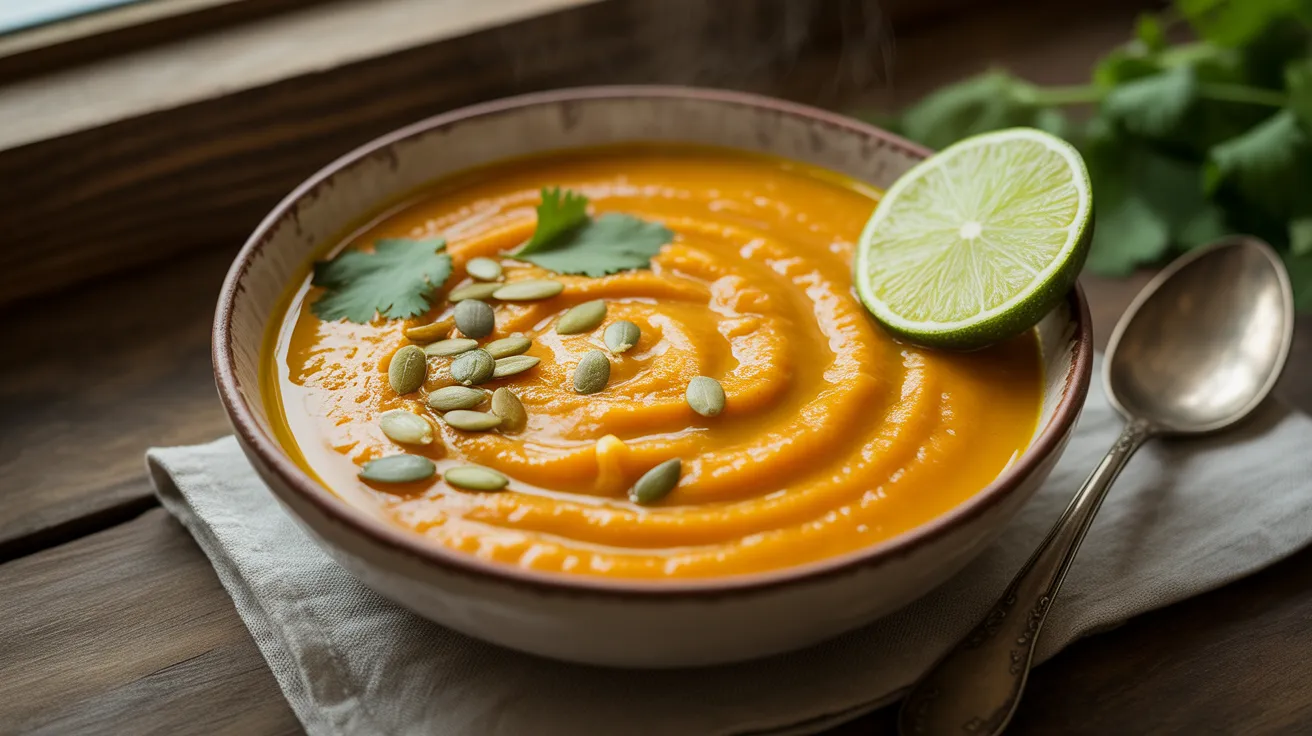
This spicy butternut squash sweet potato soup combines the natural sweetness of roasted vegetables with a bold kick of heat that warms you from the inside out. I’ve been making this spicy butternut squash sweet potato soup every fall for years, and it never fails to impress dinner guests who can’t believe how something so simple tastes so incredibly rich and complex. The secret is roasting the vegetables until they caramelize, which brings out their natural sugars before blending them into silky perfection.
SERVES: 4 | PREP: 20 MIN | COOK: 45 MIN | TOTAL: 65 MIN
Ingredients
| Vegetables | Amount |
|---|---|
| Butternut squash, peeled and cubed | 3 cups |
| Sweet potato, peeled and cubed | 2 cups |
| Yellow onion, chopped | 1 large |
| Garlic cloves, minced | 4 cloves |
| Liquids & Base | Amount |
|---|---|
| Vegetable broth | 4 cups |
| Coconut milk (full-fat) | 1 cup |
| Olive oil | 3 tablespoons |
| Spices & Seasonings | Amount |
|---|---|
| Cayenne pepper | 1 teaspoon |
| Smoked paprika | 1 teaspoon |
| Ground cumin | 1 teaspoon |
| Red pepper flakes | ½ teaspoon |
| Sea salt | 1 teaspoon |
| Black pepper | ½ teaspoon |
| Fresh ginger, grated | 1 tablespoon |
| Garnish | Amount |
|---|---|
| Pumpkin seeds | ¼ cup |
| Fresh cilantro, chopped | 2 tablespoons |
| Lime wedges | 4 wedges |
Step-by-Step Instructions
Phase 1: Preparation (15 minutes)
Step 1: Preheat your oven to 425°F (220°C) and position the rack in the center. This high temperature is critical because it caramelizes the natural sugars in the squash and sweet potato, creating deep flavor that mild roasting at lower temperatures won’t achieve. Line two large baking sheets with parchment paper to prevent sticking and make cleanup easier.
Step 2: Peel the butternut squash by first cutting off both ends, then standing it upright and carefully slicing down the sides with a sharp vegetable peeler or knife. Cut the squash in half lengthwise, scoop out the seeds with a spoon, then cut into 1-inch cubes. Uniform size is important because it ensures even roasting—smaller pieces will burn while larger pieces stay raw.
Step 3: Peel the sweet potatoes using the same technique, then cut into 1-inch cubes that match your squash pieces. Keep the sizes consistent across both vegetables so they finish roasting at the same time.
Step 4: In a large mixing bowl, combine the cubed butternut squash and sweet potato. Drizzle with 2 tablespoons olive oil, then add ½ teaspoon salt and ¼ teaspoon black pepper. Toss everything with your hands until each cube is lightly coated—this ensures even browning. Spread the vegetables in a single layer across your prepared baking sheets, making sure pieces don’t touch or overlap. Crowded vegetables steam instead of roast, which creates mushy texture instead of caramelized edges.
Phase 2: Roasting (30 minutes)
Step 5: Roast the vegetables for 30 minutes, flipping them halfway through with a spatula at the 15-minute mark. You’re looking for deep golden-brown edges and fork-tender centers. The vegetables should pierce easily with a fork but still hold their shape. If some pieces are browning faster than others, move them to the cooler edges of the pan.
Step 6: While the vegetables roast, prepare your aromatics. Peel and finely chop the yellow onion into small, even pieces. Peel the garlic cloves and mince them finely—or use a garlic press if you have one. Grate the fresh ginger using a microplane or the small holes of a box grater. These aromatics form the flavor foundation of your soup, so take your time with proper prep.
Phase 3: Building the Soup Base (10 minutes)
Step 7: When your vegetables have 5 minutes left in the oven, heat 1 tablespoon olive oil in a large soup pot or Dutch oven over medium heat. The oil should shimmer but not smoke—if it starts smoking, reduce the heat slightly.
Step 8: Add the chopped onion to the pot and cook for 5 minutes, stirring occasionally, until it becomes translucent and soft. You’ll know it’s ready when you can see through the onion pieces and they’ve lost their raw sharpness. This step sweetens the onion and removes any harsh bite.
Step 9: Add the minced garlic and grated ginger to the pot and cook for 1 minute, stirring constantly. These aromatics burn quickly, so don’t walk away. You’ll smell a fragrant, slightly spicy aroma when they’re ready—this is the signal that their flavors have bloomed without burning.
Step 10: Add all your spices at once: cayenne pepper, smoked paprika, cumin, red pepper flakes, and the remaining ½ teaspoon salt and ¼ teaspoon black pepper. Stir constantly for 30 seconds to toast the spices. This technique, called blooming, activates the essential oils in dried spices and intensifies their flavor dramatically. The mixture will become very fragrant and slightly darker in color.
Phase 4: Blending and Finishing (10 minutes)
Step 11: Remove the roasted vegetables from the oven and transfer them directly into the soup pot with your spice mixture. Pour in 4 cups vegetable broth, scraping the bottom of the pot with a wooden spoon to release any browned bits stuck to the bottom. These bits (called fond) contain concentrated flavor that enriches your soup.
Step 12: Bring the mixture to a gentle boil over medium-high heat, then reduce to a simmer. Let it simmer for 5 minutes to allow all the flavors to meld. The vegetables should be completely soft and starting to break apart when pressed with a spoon.
Step 13: Remove the pot from heat and let it cool for 3-4 minutes. This safety step prevents dangerous hot soup eruptions when blending. Using an immersion blender, blend the soup directly in the pot until completely smooth and creamy, about 2 minutes. If using a countertop blender, work in batches, filling the blender only halfway and holding the lid down with a kitchen towel to prevent hot liquid from spraying out. Blend each batch for 45 seconds until silky smooth.
Step 14: Return the blended soup to the pot (if using a countertop blender) and stir in 1 cup full-fat coconut milk. The coconut milk adds incredible creaminess and helps balance the heat from the cayenne. Taste and adjust seasoning—you may want more salt, more cayenne for extra heat, or a squeeze of lime juice to brighten the flavors. Reheat gently over low heat for 2 minutes until warmed through but not boiling.
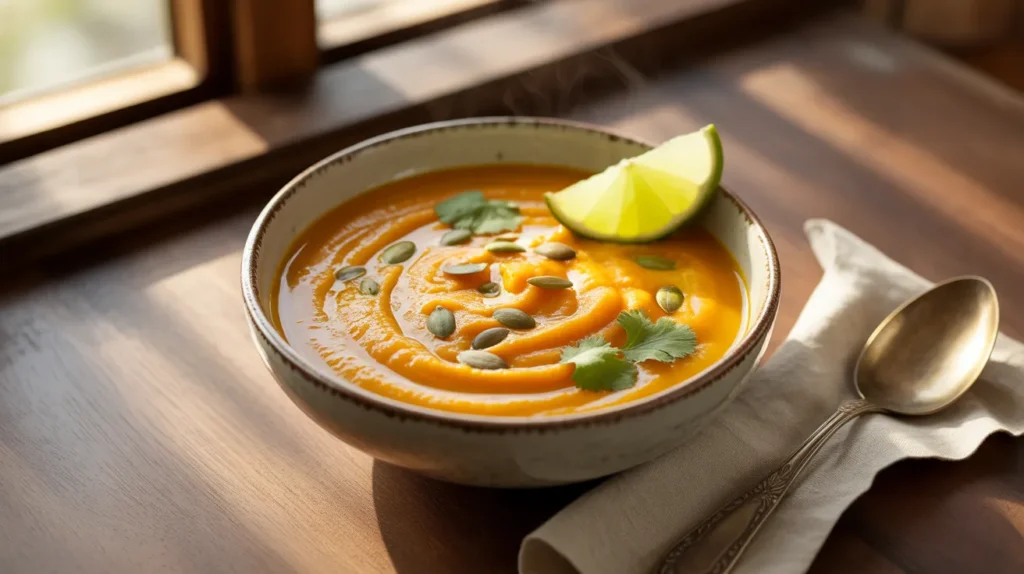
Step 15: Ladle the soup into four serving bowls. Top each with 1 tablespoon toasted pumpkin seeds, a sprinkle of fresh cilantro, and a lime wedge on the side. The lime juice should be squeezed right before eating to add a bright, acidic contrast to the rich, spicy soup.
Chef’s Notes
Spice Control: Start with ½ teaspoon cayenne if you’re sensitive to heat, then taste and add more at the end. Remember that spicy butternut squash sweet potato soup should have a pleasant warmth, not an overwhelming burn. You can always add heat, but you can’t take it away.
Texture Preference: For a chunkier soup, blend only half the mixture and stir it back into the unblended portion. This creates interesting texture while keeping the creamy base intact.
Depth Booster: Add 1 tablespoon maple syrup or honey when blending to enhance the natural sweetness and balance the spice. This trick makes the soup taste more complex without being detectably sweet.
Make-Ahead Magic: This soup actually tastes better the next day after the flavors have had time to develop. Store it in the refrigerator overnight and reheat gently, adding a splash of broth if it’s thickened too much.
Nutrition Information (Per Serving)
Calories: 285
Protein: 5g
Carbohydrates: 38g
Fat: 14g
Fiber: 7g
Sugar: 9g
Sodium: 680mg
Variations
Thai-Inspired Version: Replace the cumin and paprika with 2 teaspoons red curry paste and add lemongrass to the broth while simmering. Garnish with Thai basil and serve with crusty gluten-free bread machine sandwich bread for dipping.
Smoky Chipotle Style: Swap cayenne for 2 chipotle peppers in adobo (blended with the soup) and add 1 teaspoon Mexican oregano. Top with crumbled queso fresco and tortilla strips.
Mild & Creamy: For a less spicy version similar to traditional butternut squash soup, reduce cayenne to ¼ teaspoon and add ½ teaspoon cinnamon and ¼ teaspoon nutmeg for warm, aromatic spice without heat.
Protein-Packed: Stir in 1 can drained chickpeas or 2 cups cooked red lentils before serving to transform this into a complete meal. The legumes absorb the spicy broth beautifully.
Storage & Reheating
Refrigerator: Store cooled soup in an airtight container for up to 5 days. The flavors intensify over time, making leftovers even better than the first day. Stir well before reheating as the coconut milk may separate slightly.
Freezer: This soup freezes beautifully for up to 3 months. Leave 1 inch headspace in containers to allow for expansion. Thaw overnight in the refrigerator, then reheat gently on the stovetop over medium-low heat, stirring occasionally. Add a splash of broth or coconut milk if it’s thickened too much.
Reheating: Warm on the stovetop over medium-low heat for 5-7 minutes, stirring frequently to prevent scorching. Microwave individual portions for 2-3 minutes at 70% power, stirring halfway through. Don’t boil the soup during reheating as it can break the coconut milk emulsion.
Portion Prep: Freeze in individual 2-cup portions for quick weeknight dinners. These smaller portions thaw and reheat faster than a large batch.
Troubleshooting
Problem #1: Soup is too thick
Solution: Thin it out by stirring in ½ cup vegetable broth or coconut milk at a time until you reach your desired consistency. The soup naturally thickens as it cools and after refrigeration, so this is completely normal. Always reheat with extra liquid on hand.
Problem #2: Not spicy enough
Solution: The heat mellows during cooking, so boost it by stirring in ¼ teaspoon cayenne, hot sauce, or sriracha right before serving. Taste after each addition—you want warmth, not pain. A pinch of red pepper flakes as garnish also adds quick heat.
Problem #3: Vegetables didn’t caramelize during roasting
Solution: Your oven wasn’t hot enough or the vegetables were crowded. Next time, increase temperature to 450°F and make sure pieces are spread out with space between them. The sugar in the vegetables needs direct heat contact to brown properly.
Problem #4: Soup tastes flat or one-dimensional
Solution: Add 1 tablespoon lime juice or apple cider vinegar to brighten the flavors. Acid is the missing ingredient in most flat-tasting soups. You can also add ½ teaspoon more salt—underseasoning is a common beginner mistake. Taste as you go.
Problem #5: Coconut milk separated or looks curdled
Solution: This happens when the soup boils after adding coconut milk. The fat separates from the liquid, creating an unappetizing texture. Blend the soup again for 30 seconds to re-emulsify, or whisk vigorously. Going forward, never let the soup boil once coconut milk is added—keep it at a gentle simmer.
Equipment Essentials
- Two large baking sheets (18×13 inches or larger)
- Parchment paper or silicone baking mats
- Large soup pot or Dutch oven (6-quart capacity minimum)
- Immersion blender (or countertop blender)
- Sharp vegetable peeler or Y-peeler
- Chef’s knife and cutting board
- Measuring cups and spoons
- Wooden spoon or heat-resistant spatula
- Mixing bowl for tossing vegetables
- Ladle for serving
Shopping List
Produce Section:
- Butternut squash (1 medium, about 2 pounds)
- Sweet potatoes (2 medium)
- Yellow onion (1 large)
- Fresh garlic (1 bulb)
- Fresh ginger root (1-inch knob)
- Fresh cilantro (1 bunch)
- Limes (2 limes)
Pantry Aisle:
- Olive oil
- Vegetable broth (32 oz carton)
- Coconut milk, full-fat (1 can)
- Cayenne pepper
- Smoked paprika
- Ground cumin
- Red pepper flakes
- Sea salt
- Black pepper
- Pumpkin seeds (raw or roasted)
Success Secrets
1. Don’t Skip the Roasting: Pan-roasting or boiling the vegetables saves time but sacrifices the deep, caramelized flavor that makes this soup special. The dry heat of the oven concentrates the sweetness in ways stovetop cooking can’t match.
2. Cool Before Blending: Hot soup expands rapidly in a blender, creating dangerous pressure that can blow the lid off. Always wait 3-4 minutes after removing from heat, and never fill a blender more than halfway when working with hot liquids.
3. Toast Your Spices: Those 30 seconds of stirring spices in hot oil aren’t optional—they transform the flavor from dusty and flat to aromatic and complex. You’ll smell the difference immediately.
4. Use Full-Fat Coconut Milk: Light coconut milk creates a watery, thin soup that lacks richness. The fat content in full-fat coconut milk is what makes the soup creamy and satisfying. This isn’t the place to cut calories.
5. Season in Layers: Add salt during roasting, again when cooking the onions, and taste for final seasoning at the end. Building flavor in stages creates depth that you can’t achieve by dumping all the salt in at once.