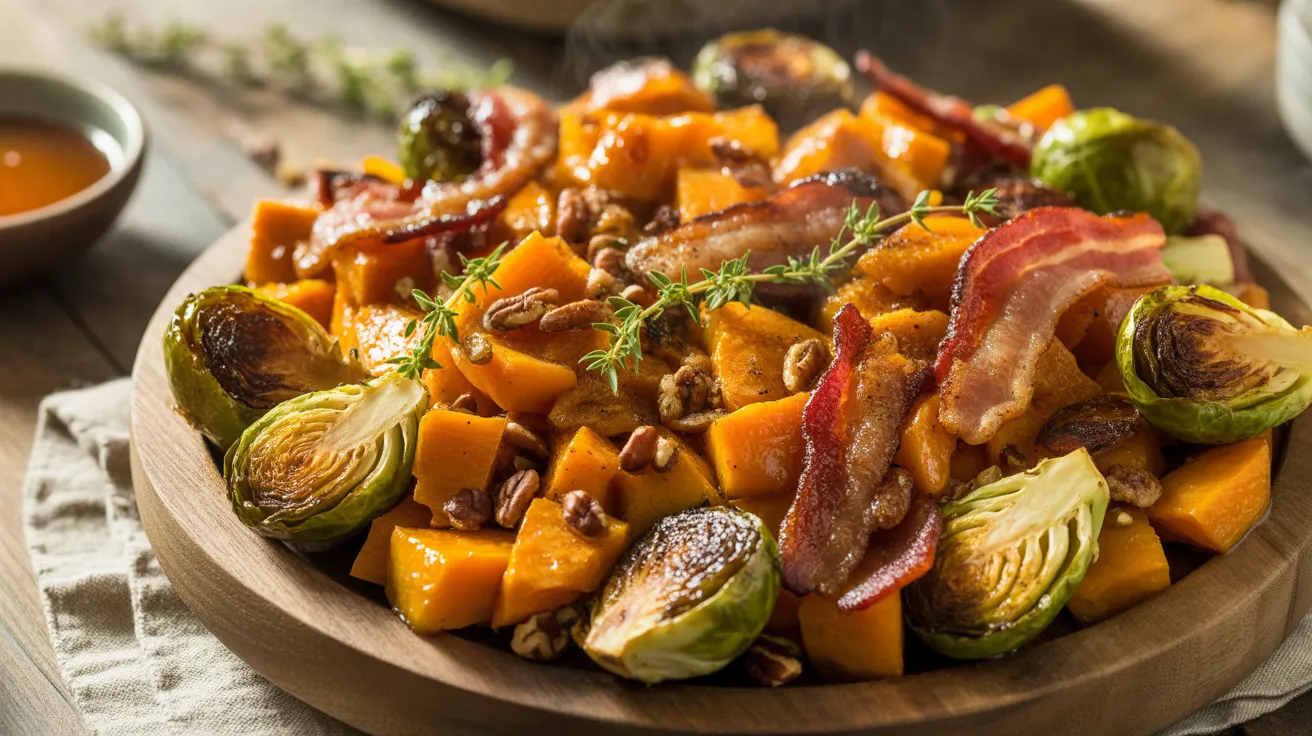
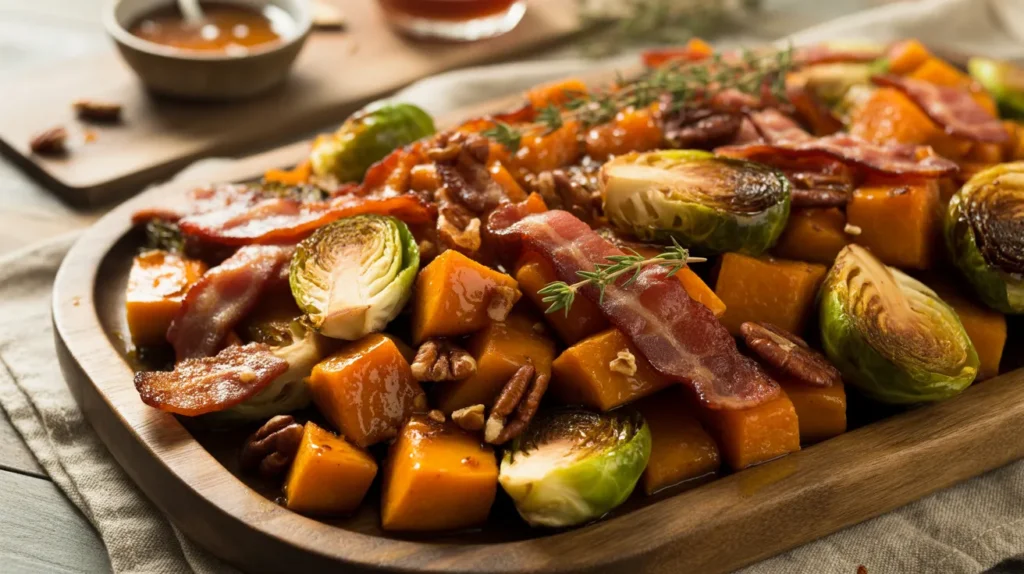
This spicy maple butternut squash with brussels and bacon brings together sweet, smoky, and spicy flavors in one stunning sheet pan dinner. The caramelized edges of roasted butternut squash pair perfectly with crispy bacon and charred brussels sprouts, all tied together with a spicy maple glaze that’ll have everyone asking for seconds.
SERVES: 4 | PREP: 20 MIN | COOK: 35 MIN | TOTAL: 55 MIN
Ingredients
Main Vegetables
| Ingredient | Amount |
|---|---|
| Butternut squash, peeled and cubed (1-inch pieces) | 4 cups (about 2 lbs) |
| Brussels sprouts, trimmed and halved | 3 cups (about 1 lb) |
| Red onion, cut into wedges | 1 medium |
Protein & Fat
| Ingredient | Amount |
|---|---|
| Thick-cut bacon, chopped | 6 slices |
| Olive oil | 3 tablespoons |
Spicy Maple Glaze
| Ingredient | Amount |
|---|---|
| Pure maple syrup | 1/4 cup |
| Apple cider vinegar | 2 tablespoons |
| Crushed red pepper flakes | 1 teaspoon |
| Smoked paprika | 1 teaspoon |
| Garlic powder | 1/2 teaspoon |
| Salt | 1 teaspoon |
| Black pepper | 1/2 teaspoon |
Finishing Touches
| Ingredient | Amount |
|---|---|
| Fresh thyme leaves | 2 tablespoons |
| Toasted pecans, chopped (optional) | 1/3 cup |
Step-by-Step Instructions
Phase 1: Preparation (10 minutes)
Step 1: Preheat your oven to 425°F (220°C) and position the rack in the center. This high temperature creates those beautiful caramelized edges we’re after.
Step 2: Line a large rimmed baking sheet with parchment paper or aluminum foil. I always use parchment because it makes cleanup so much easier and prevents sticking.
Step 3: Peel the butternut squash using a sharp vegetable peeler, working in downward strokes. Cut it in half lengthwise, scoop out the seeds with a spoon, then cut into 1-inch cubes. Keep the pieces uniform so they cook evenly.
Step 4: Trim the woody ends off the brussels sprouts, then slice each one in half from top to bottom. Remove any loose or damaged outer leaves.
Step 5: Cut the red onion into 8 wedges, keeping the root end intact on each wedge. This helps them hold together during roasting.
Phase 2: Making the Spicy Maple Glaze (5 minutes)
Step 6: In a small bowl, whisk together the maple syrup, apple cider vinegar, crushed red pepper flakes, smoked paprika, garlic powder, salt, and black pepper. The vinegar balances the sweetness while the spices add depth and heat.
Step 7: Taste the glaze and adjust the heat level. If you want it spicier, add another 1/4 teaspoon of red pepper flakes. The glaze should taste bold because the vegetables will dilute the flavors.
Phase 3: Assembly and First Roast (20 minutes)
Step 8: Add the butternut squash cubes, brussels sprouts halves, and onion wedges to the prepared baking sheet. Drizzle with 3 tablespoons olive oil and toss everything together with your hands until evenly coated.
Step 9: Spread the vegetables in a single layer, making sure pieces aren’t touching too much. Overcrowding creates steam instead of crispy edges. If needed, use two baking sheets.
Step 10: Scatter the chopped bacon pieces over the vegetables, distributing them evenly. The bacon fat will render and add incredible flavor as everything roasts together.
Step 11: Drizzle half of the spicy maple glaze (about 3 tablespoons) over the vegetables and bacon. Save the rest for later.
Step 12: Roast for 20 minutes without stirring. This allows the vegetables to develop deep caramelization on the bottom.
Phase 4: Finishing and Glazing (15 minutes)
Step 13: Remove the baking sheet from the oven and give everything a good stir with a spatula, scraping up any browned bits. The bacon should be starting to crisp and the squash edges should be golden.
Step 14: Drizzle the remaining spicy maple glaze over everything, tossing to coat. The second application creates a beautiful sticky coating.
Step 15: Return to the oven for another 12-15 minutes, until the butternut squash is fork-tender with caramelized edges and the brussels sprouts are charred and crispy on the outside.
Step 16: Remove from the oven and immediately sprinkle with fresh thyme leaves. The residual heat releases the thyme’s aromatic oils.
Step 17: Let rest for 5 minutes before serving. This allows the glaze to thicken and cling to the vegetables. Top with toasted pecans if using.
Chef’s Notes
Squash Selection: Look for butternut squash with tan, matte skin and no soft spots. A 2-pound squash yields about 4 cups cubed. You can buy pre-cut squash to save time, but fresh tastes better in this spicy maple butternut squash with brussels and bacon recipe.
Bacon Quality: Thick-cut bacon works best because it stays chewy and doesn’t burn. I prefer hickory-smoked or applewood-smoked varieties that complement the maple sweetness.
Heat Control: The crushed red pepper flakes provide moderate heat. If you’re cooking for kids, reduce to 1/2 teaspoon or omit entirely and serve hot sauce on the side.
Make It Sticky: For an extra-thick glaze, simmer the remaining maple mixture in a small saucepan for 2-3 minutes before the final drizzle to reduce it slightly.
Nutrition Information (Per Serving)
Calories: 385 | Protein: 12g | Carbohydrates: 42g | Fat: 20g | Fiber: 7g | Sugar: 18g | Sodium: 780mg
Recipe Variations
Mediterranean Twist: Skip the bacon and maple, and try this Mediterranean honey roasted butternut squash with brussels sprouts for a lighter, herb-forward version with feta cheese.
Elegant Hasselback Style: Transform your presentation with this hasselback garlic maple butternut squash with whipped ricotta that fans the squash into beautiful accordion slices.
Sweet Potato Swap: Replace butternut squash with cubed sweet potatoes for a different flavor profile. Reduce cooking time by 5 minutes since sweet potatoes cook faster.
Vegan Version: Substitute bacon with 1 cup chopped walnuts tossed in 1 tablespoon liquid smoke and 1/2 teaspoon salt. Add them during the last 10 minutes of roasting so they don’t burn.
Storage & Reheating
Refrigerator: Store leftover spicy maple butternut squash with brussels and bacon in an airtight container for up to 4 days. The bacon will soften slightly but still tastes great.
Freezing: I don’t recommend freezing this dish because the brussels sprouts become mushy and the bacon loses its texture. The butternut squash freezes okay but isn’t ideal.
Reheating: Spread leftovers on a baking sheet and reheat at 375°F for 10-12 minutes to restore some crispness. Microwaving works in a pinch (2-3 minutes on high) but vegetables won’t be crispy.
Meal Prep: This dish reheats well for meal prep bowls. Serve over quinoa or rice with a fried egg on top for complete lunches.
Troubleshooting
Problem 1: Mushy Vegetables Your oven temperature might be too low or you overcrowded the pan. Make sure vegetables are in a single layer with space between pieces. If using two pans, rotate them halfway through cooking.
Problem 2: Burnt Bacon The bacon is cooking too fast because it’s too thin or the pan is too crowded. Use thick-cut bacon and spread it out more. You can also add bacon during the last 15 minutes of roasting instead of at the beginning.
Problem 3: Bland Flavor The glaze needs more salt or the vegetables weren’t seasoned enough. Always taste your glaze before adding it and don’t skip the salt in the seasoning blend. Remember that roasting concentrates flavors, so season boldly.
Problem 4: Squash Won’t Soften Your cubes might be too large or cut unevenly. Keep pieces at 1 inch maximum and make sure they’re all similar sizes. If some pieces are still hard after the full cooking time, remove the tender vegetables and roast the hard pieces for 5-10 minutes longer.
Problem 5: Glaze Won’t Stick You added the glaze too early or your vegetables released too much moisture. Always add the first glaze application after the vegetables have started caramelizing (20 minutes in). Pat vegetables dry before roasting if they seem wet.
Equipment Essentials
- Large rimmed baking sheet (18×13 inches) – essential for proper roasting
- Parchment paper or aluminum foil – prevents sticking
- Sharp chef’s knife – for cutting squash safely
- Vegetable peeler – makes quick work of squash skin
- Small mixing bowl – for whisking glaze
- Whisk – to combine glaze ingredients
- Spatula – for stirring vegetables during roasting
- Measuring cups and spoons – accuracy matters with maple syrup
Shopping List
Produce Section
- Butternut squash (2 lbs)
- Brussels sprouts (1 lb)
- Red onion (1 medium)
- Fresh thyme (1 bunch)
Meat Counter
- Thick-cut bacon (6 slices)
Pantry/Baking Aisle
- Pure maple syrup
- Apple cider vinegar
- Crushed red pepper flakes
- Smoked paprika
- Garlic powder
- Olive oil
- Salt
- Black pepper
Optional Items
- Pecans (for toasting)
Success Secrets
1. Cut Uniform Pieces: This is the single most important tip. All vegetable pieces should be the same size so they finish cooking at the same time. I use a ruler when teaching beginners!
2. Don’t Skip the High Heat: The 425°F temperature is crucial for caramelization. Lower temperatures steam the vegetables instead of roasting them, giving you soft, bland results instead of crispy, sweet edges.
3. Use Real Maple Syrup: Pancake syrup won’t work here. Pure maple syrup has complex flavors that complement the spicy heat. Grade A Dark Amber works best for this recipe.
4. Give Space Between Vegetables: Crowding causes steaming. If pieces are touching, they’ll never get those crispy, caramelized edges that make this dish special. Use two pans if needed.
5. Time the Glaze Right: Adding all the glaze at once causes burning. The two-stage glazing technique ensures the first application caramelizes while the second creates a sticky, flavorful coating that clings to every piece.
This spicy maple butternut squash with brussels and bacon has become my go-to fall and winter side dish. The combination of sweet maple, smoky bacon, and spicy heat creates layers of flavor that work beautifully with roasted chicken, grilled steak, or even as a vegetarian main course over grains. Make it once and it’ll become part of your regular rotation!