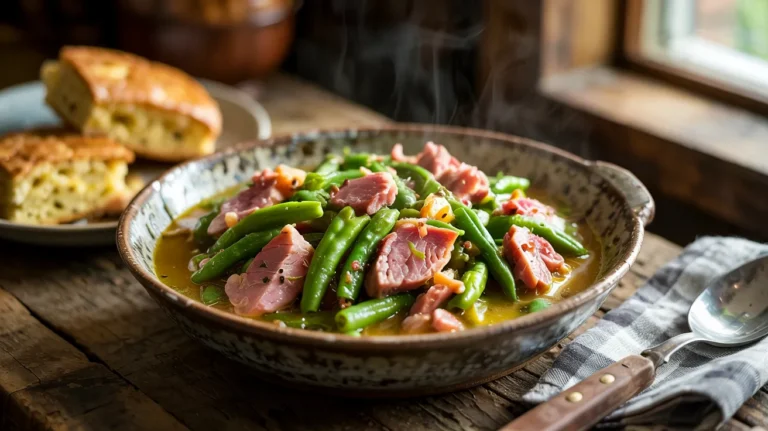
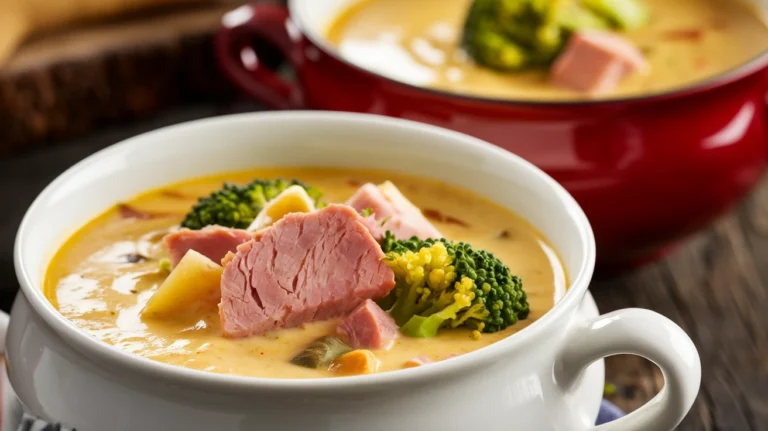
There’s something magical about transforming yesterday’s ham dinner into a hearty bowl of split pea soup leftover ham that fills your kitchen with the most incredible aroma. This classic comfort food takes that precious leftover ham and turns it into a thick, creamy soup that tastes like you’ve been simmering it all day—but comes together in just about an hour.
SERVES: 4 | PREP: 15 MIN | COOK: 55 MIN | TOTAL: 1 HR 10 MIN
Ingredients
For the Soup Base
| Ingredient | Amount |
|---|---|
| Dried green split peas | 2 cups |
| Leftover ham, diced | 2 cups (about 12 oz) |
| Chicken or ham broth | 6 cups |
| Yellow onion, diced | 1 large |
| Carrots, diced | 2 medium |
| Celery stalks, diced | 2 ribs |
| Garlic cloves, minced | 4 cloves |
| Bay leaves | 2 leaves |
| Dried thyme | 1 teaspoon |
| Black pepper | ½ teaspoon |
| Olive oil | 2 tablespoons |
| Salt | To taste |
Optional Finishing Touches
| Ingredient | Amount |
|---|---|
| Fresh parsley, chopped | ¼ cup |
| Lemon juice | 1 tablespoon |
| Sour cream | For serving |
Step-by-Step Instructions
Phase 1: Prep Work (5 minutes)
Step 1: Rinse 2 cups of dried split peas in a fine-mesh strainer under cold water. Pick through them and remove any small stones or debris. This step prevents any unwanted crunch in your finished soup.
Step 2: Dice your leftover ham into ½-inch cubes. I like keeping some pieces slightly larger for texture. Set aside about ¼ cup of the nicest looking pieces to add at the end—this gives you tender chunks rather than everything breaking down.
Step 3: Chop your 1 large onion, 2 carrots, and 2 celery ribs into ¼-inch dice. Try to keep them uniform so everything cooks at the same rate. Mince 4 garlic cloves finely.
Phase 2: Building Flavor (10 minutes)
Step 4: Heat 2 tablespoons olive oil in a large, heavy-bottomed pot or Dutch oven over medium heat. The oil should shimmer but not smoke—that tells you it’s ready.
Step 5: Add your diced onion, carrots, and celery to the pot. Sauté for 6-8 minutes, stirring every minute or so. You want the onions to turn translucent and the vegetables to soften slightly. The edges should just start to get a tiny bit of color.
Step 6: Toss in the minced garlic and stir constantly for 30 seconds. Garlic burns quickly, so keep it moving. You’ll smell it immediately when it’s ready—it should smell sweet and fragrant, not bitter.
Step 7: Add most of your diced ham (remember, you saved some for later). Stir it around for 2 minutes to let it warm through and pick up those flavors from the bottom of the pot.
Phase 3: The Main Simmer (40 minutes)
Step 8: Pour in the rinsed split peas and stir everything together for 1 minute. This coats the peas with the flavorful oil and helps them absorb more taste as they cook.
Step 9: Add 6 cups of broth, 2 bay leaves, 1 teaspoon dried thyme, and ½ teaspoon black pepper. Stir well to combine. Don’t add salt yet—your ham and broth already contain sodium, and the soup will concentrate as it cooks.
Step 10: Crank the heat to high and bring the pot to a rolling boil. You’ll see big bubbles breaking the surface. This should take about 5 minutes.
Step 11: Once boiling, reduce the heat to medium-low. You want a gentle simmer—small bubbles should occasionally break the surface, but it shouldn’t be violently bubbling. Partially cover the pot with the lid slightly askew to let steam escape.
Step 12: Simmer for 35-40 minutes, stirring every 10 minutes. The split peas will start to break down and thicken the soup. Scrape the bottom of the pot when you stir to prevent sticking. The soup is ready when the peas have completely broken down and the soup coats the back of a spoon.
Step 13: Check the thickness. If your split pea soup leftover ham looks too thick (it should be creamy but pourable), add ½ cup more broth or water. If it’s too thin, let it simmer uncovered for another 5-10 minutes.
Phase 4: Final Touches (5 minutes)
Step 14: Fish out and discard the bay leaves. Taste the soup carefully—it will be hot! Add salt ¼ teaspoon at a time until it tastes just right. I usually need about ½ teaspoon, but it depends on your ham and broth.
Step 15: Stir in the reserved ham cubes and let them warm through for 2 minutes. These will stay tender and chunky instead of breaking apart.
Step 16: For brightness, stir in 1 tablespoon fresh lemon juice. This cuts through the richness and wakes up all the flavors. Taste again and adjust seasoning if needed.
Step 17: Ladle into bowls and top with chopped fresh parsley and a dollop of sour cream if you like. The cool sour cream creates a beautiful contrast with the hot soup.
Chef’s Notes
Ham Bone Gold: If you saved the ham bone from your roast, throw it in at Step 9 and remove it before serving. The bone adds incredible depth and body to your split pea soup leftover ham—it’s like getting a free flavor upgrade.
Texture Control: For a completely smooth soup, use an immersion blender for 15-20 seconds after Step 13. For something in between, blend just half the soup and stir it back in. I prefer leaving mine chunky with some whole peas visible.
Smoke Matters: If your leftover ham was smoked, your soup will have that gorgeous smoky flavor. If it wasn’t, add ½ teaspoon smoked paprika in Step 9 to recreate that depth.
The Stir Rule: Split peas love to stick to the bottom of the pot. Set a timer and stir every 10 minutes without fail. A stuck bottom means burned flavor throughout the entire batch.
Nutrition Information (Per Serving)
| Nutrient | Amount |
|---|---|
| Calories | 385 |
| Protein | 28g |
| Carbohydrates | 52g |
| Fat | 8g |
| Fiber | 19g |
| Sodium | 920mg |
Variations to Try
Spicy Cajun Version: Add 1 teaspoon cayenne pepper, 1 teaspoon smoked paprika, and ½ teaspoon dried oregano in Step 9. Finish with a dash of hot sauce. This pairs beautifully with the ham’s saltiness.
Vegetable-Loaded: Double the carrots and celery, and add 1 cup diced potatoes in Step 9. The extra vegetables make it even heartier. If you’re looking for more ways to use leftover ham, try this leftover ham stromboli for a completely different meal.
German-Style: Replace 1 cup of the broth with 1 cup dark beer, and add 1 teaspoon caraway seeds. Use 2 tablespoons whole grain mustard as a garnish. The mustard cuts through the richness perfectly.
Creamy Comfort: Stir in ½ cup heavy cream in Step 16 for an ultra-rich version. You can also make this leftover ham corn chowder when you want something even creamier with a sweet corn twist.
Storage & Reheating
Refrigerator: Cool completely and transfer to airtight containers. Your split pea soup leftover ham keeps for 4-5 days in the fridge. The soup will thicken as it sits—this is normal as the starches continue absorbing liquid.
Freezer: Freeze in portions for up to 3 months. Leave 1 inch of headspace in containers since the soup expands when frozen. Freeze in 2-cup portions for easy single meals.
Reheating: Warm on the stovetop over medium-low heat, stirring frequently. Add ¼-½ cup broth or water to thin it back out—split pea soup always thickens overnight. Microwave individual portions for 2-3 minutes, stirring halfway through.
Make-Ahead: This soup actually tastes better the next day after the flavors marry. Make it up through Step 16, then refrigerate overnight. Reheat and serve.
Troubleshooting Common Problems
Problem: Soup is too thin and watery Your split peas might not have broken down enough. Keep simmering uncovered, stirring every 5 minutes, until it thickens. You can also mash some of the peas against the side of the pot with your spoon to release their starch. If you’re in a hurry, mix 2 tablespoons cornstarch with 3 tablespoons cold water and stir it in, then simmer for 5 more minutes.
Problem: Soup is way too thick (like paste) This happens when the soup sits or if it cooks too long uncovered. Simply whisk in broth or water ¼ cup at a time until it reaches your preferred consistency. Warm it gently while adding liquid so everything incorporates smoothly.
Problem: Peas aren’t getting soft Old split peas take forever to cook, and hard water can prevent them from softening. If your peas still feel firm after 45 minutes, add ¼ teaspoon baking soda and cook for another 15 minutes. Check the date on your split pea bag—anything over a year old might not soften properly.
Problem: Soup tastes flat or bland Your ham might not have been salty or smoky enough. Fix this by adding 1-2 teaspoons soy sauce for depth, 1 tablespoon apple cider vinegar for brightness, or 1 teaspoon chicken bouillon paste for more savory punch. The lemon juice in Step 16 is crucial—don’t skip it.
Problem: Bottom of pot is burning Heat is too high or you’re not stirring often enough. Immediately transfer the soup to a clean pot, leaving the burned bottom behind. Lower your heat to barely simmering and stir every 8-10 minutes. A heavy-bottomed pot helps prevent this issue.
Equipment Essentials

- Large Dutch oven or heavy-bottomed pot (at least 5-quart capacity)
- Wooden spoon for stirring without scratching
- Sharp chef’s knife for chopping vegetables
- Cutting board
- Fine-mesh strainer for rinsing split peas
- Measuring cups and spoons
- Ladle for serving
- Immersion blender (optional, for smoother texture)
Shopping List by Section
Produce Section
- Yellow onion (1 large)
- Carrots (2 medium)
- Celery (1 bunch—you need 2 ribs)
- Garlic (1 head)
- Fresh parsley (1 bunch)
- Lemon (1, for juice)
Dried Goods/Baking Aisle
- Green split peas (1-pound bag)
- Bay leaves
- Dried thyme
- Black pepper
Refrigerated Section
- Leftover ham (you need 2 cups diced)
- Sour cream (optional, for topping)
Canned/Boxed Goods
- Chicken or ham broth (48-ounce container)
Oils/Condiments
- Olive oil
Success Secrets
1. Start with Quality Ham: The better your leftover ham tastes, the better your soup will be. Honey-glazed or maple-glazed ham adds subtle sweetness that balances the earthy peas perfectly.
2. Don’t Skip the Sauté: Those 6-8 minutes of cooking the vegetables in Step 5 build the flavor foundation. Rushing this step means less depth in your final soup.
3. Trust the Process: Split pea soup leftover ham looks worryingly thin for the first 25 minutes of cooking, then suddenly thickens in the last 10-15 minutes. Don’t panic and add thickeners too early.
4. Season at the End: Since the soup reduces and concentrates, salting early often leads to an overly salty soup. Wait until Step 14 when you can actually taste the true flavor.
5. Embrace Leftovers: This soup transforms completely after sitting overnight. The flavors deepen, the texture smooths out, and somehow it tastes even more comforting the second day. Make extra on purpose.
This split pea soup leftover ham recipe proves that the best meals come from using what you already have. That ham sitting in your fridge becomes something completely new—thick, satisfying, and packed with protein and fiber. Serve it with crusty bread and a simple salad for a meal that feels like a warm hug in a bowl.