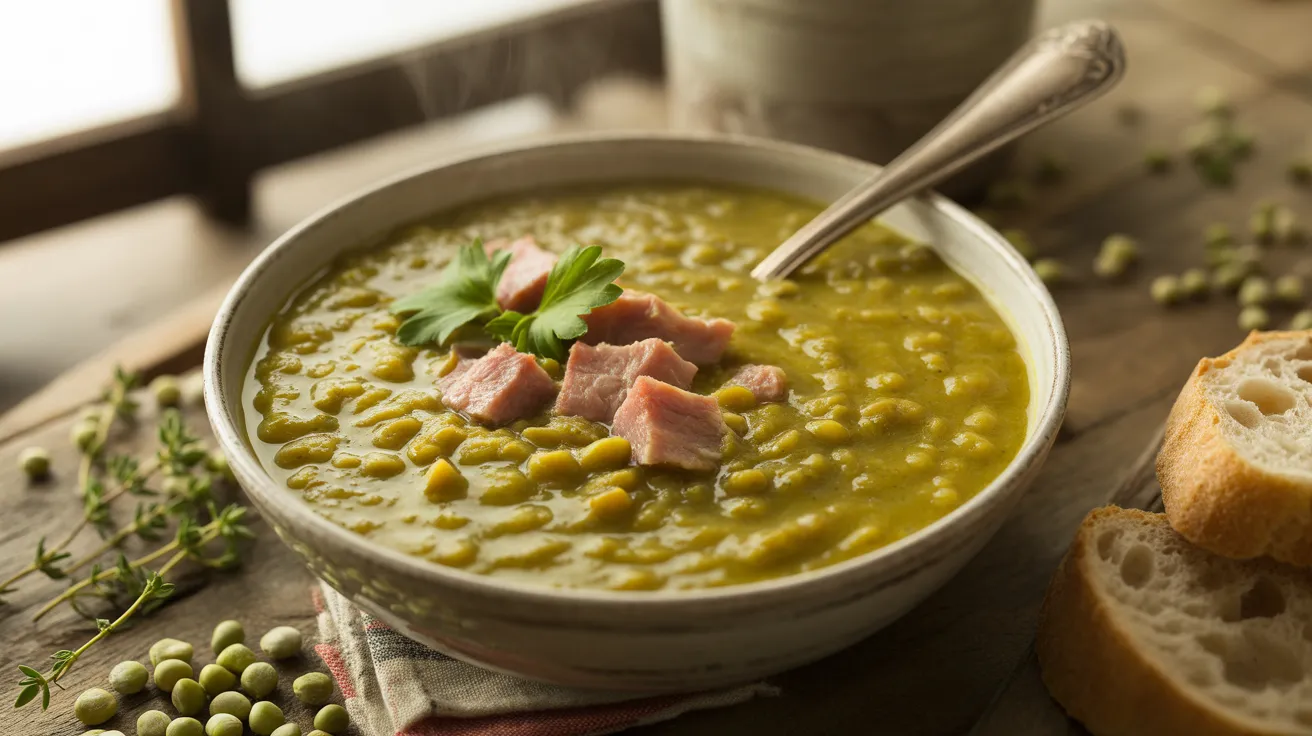
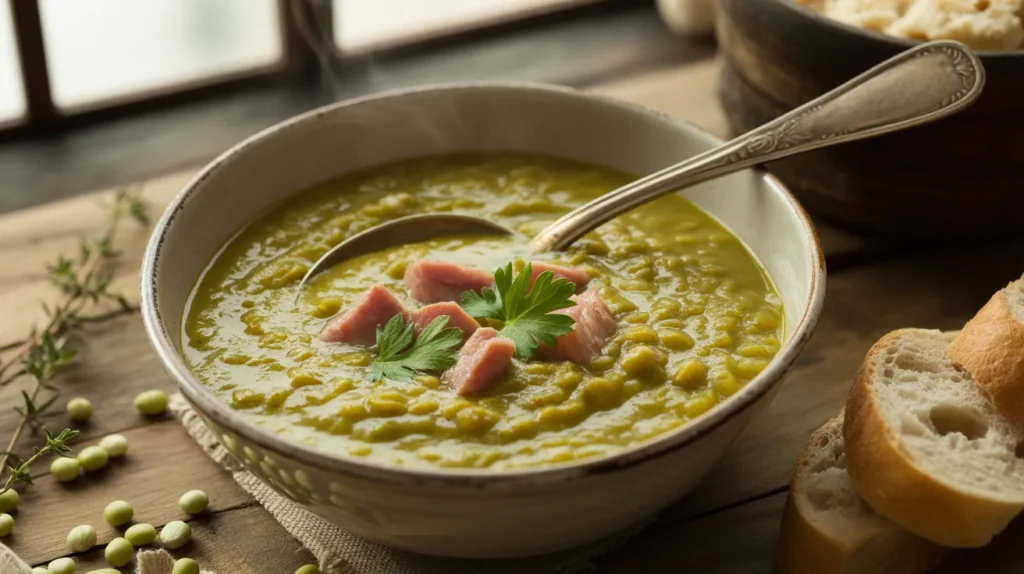
Forget watery, bland versions—this split pea soup delivers restaurant-quality thickness and depth of flavor that’ll have everyone asking for seconds. Master the simple technique that transforms humble split peas into the most comforting bowl of soup you’ll make all winter.
SERVES: 4 | PREP: 15 MIN | COOK: 75 MIN | TOTAL: 90 MIN
Why This Split Pea Soup Recipe Works
I spent years making thin, tasteless split pea soup before figuring out the secret.
The game-changer? Proper browning and the right liquid ratio. Most recipes drown the peas in too much broth, leaving you with green-tinted water instead of that thick, velvety texture you’re craving.
This version builds flavor in layers. We brown the vegetables first, toast the peas to unlock their nutty sweetness, then simmer everything at the perfect ratio until you’ve got a soup so thick your spoon practically stands up in it.
No soaking required. No fancy ingredients. Just 90 minutes from start to finish for a soup that tastes like it simmered all day.
Ingredients
Aromatics & Base
| Ingredient | Amount |
|---|---|
| Yellow onion, diced | 1 large |
| Carrots, diced | 2 medium |
| Celery stalks, diced | 2 ribs |
| Garlic cloves, minced | 4 cloves |
| Olive oil | 2 tablespoons |
Main Components
| Ingredient | Amount |
|---|---|
| Dried green split peas | 1½ cups |
| Smoked ham hock | 1 pound |
| Bay leaves | 2 |
| Fresh thyme sprigs | 3 |
| Low-sodium chicken broth | 6 cups |
| Water | 1 cup |
Finishing Touches
| Ingredient | Amount |
|---|---|
| Kosher salt | 1 teaspoon |
| Black pepper, freshly ground | ½ teaspoon |
| Apple cider vinegar | 1 tablespoon |
| Fresh parsley, chopped | ¼ cup |
Step-by-Step Instructions
Phase 1: Building the Flavor Base (15 minutes)
Step 1: Heat 2 tablespoons olive oil in a large Dutch oven or heavy-bottomed pot over medium-high heat for 2 minutes. The oil should shimmer but not smoke—that’s your visual cue it’s ready.
Step 2: Add the diced onion and cook for 5 minutes, stirring every minute or so. You want golden-brown edges, not pale and translucent. This caramelization adds sweetness that balances the earthiness of the peas.
Step 3: Toss in the diced carrots and celery. Cook for 4 minutes, stirring occasionally. The vegetables should soften slightly and pick up some color from the browned bits on the pan bottom.
Step 4: Add the minced garlic and stir constantly for 30 seconds. Garlic burns quickly, so watch it like a hawk—you want it fragrant, not bitter.
Step 5: Push all the vegetables to the sides of the pot, creating a clear space in the center. Add the split peas directly to this hot spot and let them toast for 2 minutes without stirring. You’ll hear them start to crackle—that’s the natural sugars caramelizing.
Phase 2: Simmering to Perfection (60 minutes)
Step 6: Pour in the 6 cups chicken broth and 1 cup water. Use a wooden spoon to scrape up all those browned bits stuck to the bottom—that’s pure flavor you don’t want to waste.
Step 7: Nestle the ham hock into the liquid, making sure it’s mostly submerged. Drop in the 2 bay leaves and 3 thyme sprigs. These aromatics infuse the soup as it cooks.
Step 8: Crank the heat to high and bring everything to a rolling boil—you’ll see large bubbles breaking the surface rapidly. This should take about 5 minutes.
Step 9: Once boiling, reduce the heat to medium-low until you achieve a gentle simmer. You want small bubbles occasionally breaking the surface, not a vigorous boil that’ll turn your soup into mush.
Step 10: Partially cover the pot with the lid—leave about a 2-inch gap for steam to escape. This prevents overflow while still concentrating the flavors. Set a timer for 60 minutes.
Step 11: Every 20 minutes, give the soup a good stir from the bottom. The peas will start breaking down and thickening the liquid—this is exactly what you want. If it looks too thick, add ½ cup water at a time.
Step 12: After 45 minutes of simmering, check a few peas by pressing them against the side of the pot with your spoon. They should completely dissolve with gentle pressure. If they’re still firm, continue cooking.
Phase 3: Finishing Touches (10 minutes)
Step 13: Remove the ham hock with tongs and set it on a cutting board to cool for 5 minutes. Fish out and discard the bay leaves and thyme sprigs—they’ve done their job.
Step 14: Once the ham hock is cool enough to handle, pull off all the meat using two forks. Shred it into bite-sized pieces and discard the bone, skin, and fatty bits.
Step 15: Stir the shredded ham back into the soup. Add 1 teaspoon salt and ½ teaspoon black pepper. Taste and adjust—you might need more salt depending on your broth’s saltiness.
Step 16: For the final magic touch, stir in 1 tablespoon apple cider vinegar. This brightens all the flavors and cuts through the richness. The soup should taste balanced, not flat.
Step 17: Let the split pea soup rest off the heat for 5 minutes. This allows it to thicken even more as it cools slightly. Stir in the fresh parsley right before serving.
Chef’s Notes
Ham Selection: A smoked ham hock delivers the best depth of flavor, but you can substitute 1 cup diced ham or 6 slices chopped bacon. Add bacon at the beginning with the onions.
Consistency Control: This soup continues thickening as it sits. If it becomes too thick upon reheating, thin it with broth or water until you reach your preferred consistency.
Vegetarian Version: Skip the ham hock and use vegetable broth instead. Add 1 tablespoon smoked paprika and 1 teaspoon liquid smoke for that smoky depth.
Make-Ahead Strategy: The split pea soup actually tastes better the next day after the flavors meld. Make it up to 3 days ahead and reheat gently on the stovetop.
Nutrition Information (Per Serving)
| Nutrient | Amount |
|---|---|
| Calories | 385 |
| Protein | 28g |
| Carbohydrates | 42g |
| Fat | 11g |
| Fiber | 16g |
| Sodium | 890mg |
Creative Variations
Curried Split Pea: Add 2 tablespoons curry powder and 1 cup coconut milk in the last 10 minutes of cooking. This creates an entirely different flavor profile that pairs beautifully with naan bread.
Split Pea Soup with Sausage: Replace the ham hock with 1 pound sliced smoked sausage added during the last 15 minutes. The sausage adds a completely different smoky character.
Lemon-Herb Version: Swap the apple cider vinegar for 2 tablespoons fresh lemon juice and add 2 tablespoons fresh dill. This bright variation works great in spring.
Hearty Winter Bowl: For something even heartier like our black bean soup, add 1 cup diced potatoes halfway through cooking. Or try our Moroccan lentil soup for Middle Eastern-inspired flavors.
Storage & Reheating
Refrigerator: Store cooled split pea soup in an airtight container for up to 5 days. The soup will thicken considerably in the fridge—that’s normal.
Freezing: This soup freezes beautifully for up to 3 months. Portion it into freezer-safe containers, leaving 1 inch of headspace for expansion.
Reheating: Warm on the stovetop over medium-low heat, stirring frequently. Add broth or water ¼ cup at a time until you reach your desired consistency. Microwave individual portions for 2-3 minutes, stirring halfway through.
Texture Fix: If your reheated soup is too thick, whisk in warm broth until smooth. If it’s too thin, simmer uncovered for 10 minutes to reduce.
Troubleshooting Common Problems
Problem 1: Soup is Too Watery Your liquid ratio was too high or you didn’t simmer long enough. Remove the lid completely and simmer for an additional 15-20 minutes to evaporate excess liquid. The peas need time to break down and release their natural starches.
Problem 2: Peas Won’t Soften Old split peas take forever to cook—sometimes they never fully soften. Check your peas’ expiration date. If they’re more than 1 year old, toss them and buy fresh. Hard water can also prevent softening—try using filtered water instead.
Problem 3: Soup Tastes Bland You skipped the browning steps or didn’t season adequately. Add 1 teaspoon salt at a time, tasting between additions. Finish with that tablespoon of vinegar—acid is often the missing component in flat-tasting soups.
Problem 4: Soup Stuck to the Bottom The heat was too high during simmering, or you didn’t stir enough. Reduce the heat until you see just a gentle bubble. Stir every 15-20 minutes to prevent sticking. If it’s already stuck, don’t scrape—pour the unstuck portion into a new pot.
Problem 5: Too Thick After Refrigeration Split peas absorb liquid as they sit, turning your soup into a near-solid mass. This is completely normal. Reheat with ½ to 1 cup additional broth stirred in gradually until you reach the right consistency again.
Equipment Essentials
- Large Dutch oven or heavy-bottomed pot (6-8 quart capacity)
- Sharp chef’s knife for vegetable prep
- Cutting board
- Wooden spoon for stirring
- Measuring cups and spoons
- Ladle for serving
- Tongs for removing ham hock
Shopping List
Produce Section
- 1 large yellow onion
- 2 medium carrots
- 2 celery stalks
- 1 garlic bulb (need 4 cloves)
- 1 bunch fresh parsley
- 1 bunch fresh thyme
Dry Goods Aisle
- 1 bag dried green split peas
- 2 bay leaves (if not in spice cabinet)
Meat Department
- 1 pound smoked ham hock
Refrigerated Section
- 1 container low-sodium chicken broth (48 oz)
Pantry Staples
- Olive oil
- Kosher salt
- Black pepper
- Apple cider vinegar
Success Secrets
1. Don’t skip toasting the split peas in the hot pot before adding liquid—this 30-second step unlocks nutty, complex flavors that make all the difference.
2. Keep the simmer gentle and steady. A rolling boil breaks down peas unevenly, leaving you with some mushy and some rock-hard.
3. That tablespoon of apple cider vinegar at the end isn’t optional—it brightens every flavor and prevents the soup from tasting one-dimensional.
4. Let the soup rest for 5 minutes after cooking. The peas continue absorbing liquid and thickening, giving you that perfect spoon-coating consistency.
5. Always taste and adjust seasoning at the end. Split pea soup needs more salt than you think because the peas absorb so much during cooking.
The beauty of this split pea soup lies in its simplicity. No exotic ingredients, no complicated techniques—just proper timing and attention to building layers of flavor. Make a big batch on Sunday, and you’ll have comforting lunches ready all week long.