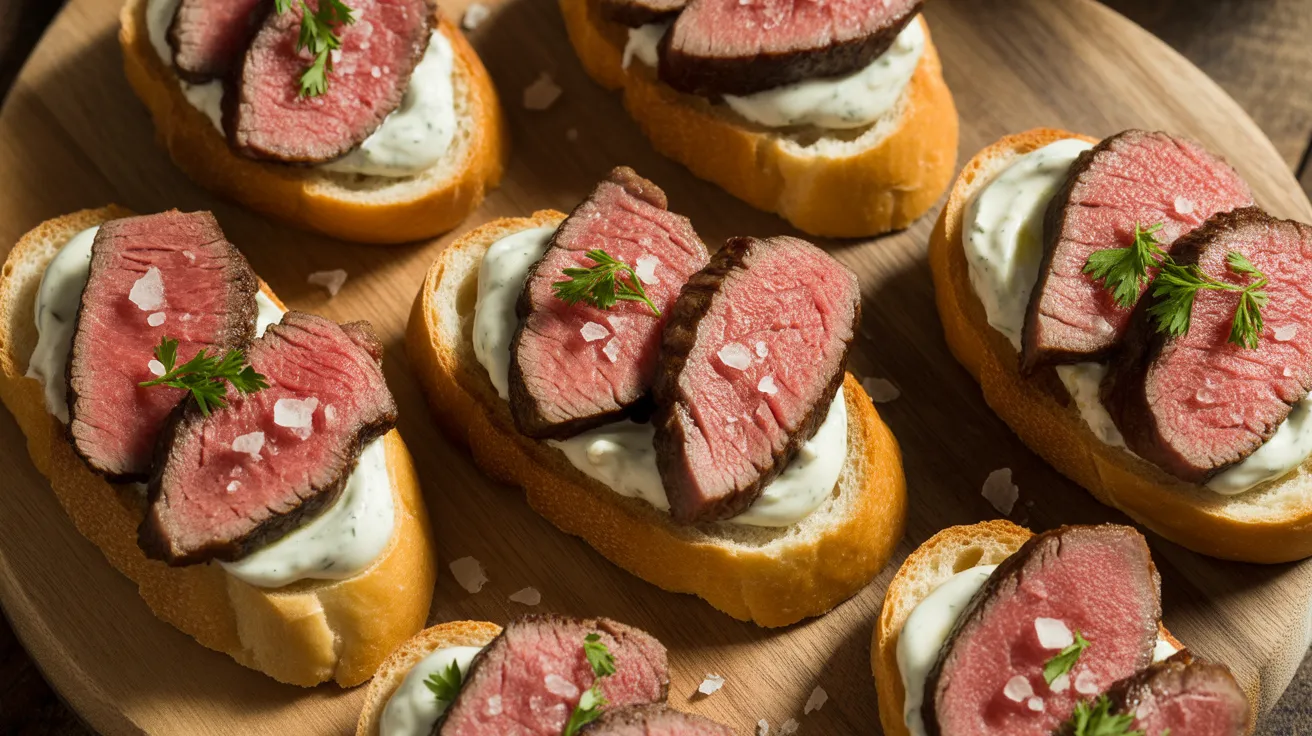
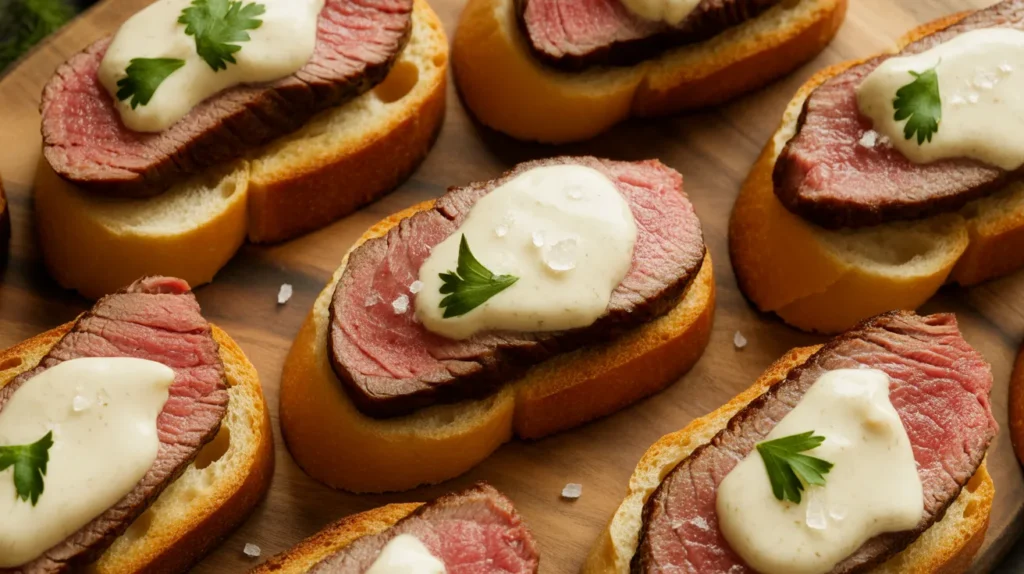
This steak crostini with horseradish sauce brings steakhouse elegance to your appetizer spread with tender beef, crispy bread, and a creamy kick. These steak crostini with horseradish sauce turn simple ingredients into restaurant-quality bites that’ll have everyone asking for the recipe.
SERVES: 4 | PREP: 20 MIN | COOK: 25 MIN | TOTAL: 45 MIN
Ingredients
For the Crostini Base
| Ingredient | Amount |
|---|---|
| French baguette | 1 loaf (about 12 oz) |
| Olive oil | 3 tablespoons |
| Garlic powder | ½ teaspoon |
| Salt | ¼ teaspoon |
For the Steak
| Ingredient | Amount |
|---|---|
| Sirloin steak | 12 oz |
| Kosher salt | 1 teaspoon |
| Black pepper | ½ teaspoon |
| Vegetable oil | 1 tablespoon |
| Butter | 2 tablespoons |
| Fresh thyme | 2 sprigs |
For the Horseradish Sauce
| Ingredient | Amount |
|---|---|
| Sour cream | ½ cup |
| Prepared horseradish | 2 tablespoons |
| Fresh lemon juice | 1 teaspoon |
| Dijon mustard | 1 teaspoon |
| Worcestershire sauce | ½ teaspoon |
| Salt | ¼ teaspoon |
| Black pepper | ⅛ teaspoon |
For Assembly
| Ingredient | Amount |
|---|---|
| Fresh parsley | 2 tablespoons, chopped |
| Flaky sea salt | for finishing |
Step-by-Step Instructions
Phase 1: Preparing the Crostini (10 minutes)
Step 1: Preheat your oven to 400°F and position the rack in the middle. This temperature creates perfectly crispy crostini without burning the edges. Line a large baking sheet with parchment paper to prevent sticking.
Step 2: Slice the baguette into ¼-inch thick rounds at a slight diagonal. You should get about 16-20 slices depending on your baguette size. Cutting at an angle gives you larger surface area for toppings. Make sure your slices are even thickness so they toast uniformly.
Step 3: Arrange the bread slices in a single layer on your prepared baking sheet. They can touch slightly but shouldn’t overlap. Overlapping prevents even browning and creates soggy spots.
Step 4: Mix 3 tablespoons olive oil with ½ teaspoon garlic powder and ¼ teaspoon salt in a small bowl. Use a pastry brush or spoon to lightly coat one side of each bread slice. This seasoned oil adds flavor and helps achieve that golden crunch.
Step 5: Bake for 8-10 minutes, flipping halfway through, until both sides turn golden brown and crispy. Watch them carefully after 6 minutes because they can go from perfect to burnt quickly. You’ll hear them getting crispy and smell the toasted bread. Remove from oven and let cool on the baking sheet.
Phase 2: Making the Horseradish Sauce (5 minutes)
Step 6: Combine ½ cup sour cream, 2 tablespoons prepared horseradish, 1 teaspoon lemon juice, 1 teaspoon Dijon mustard, and ½ teaspoon Worcestershire sauce in a medium bowl. The horseradish is the star here—it provides that signature sharp, sinus-clearing bite that cuts through the rich steak.
Step 7: Season with ¼ teaspoon salt and ⅛ teaspoon black pepper. Whisk everything together until completely smooth with no lumps. Taste and adjust—if you want more heat, add another ½ tablespoon of horseradish. If it’s too spicy, add more sour cream.
Step 8: Cover the bowl with plastic wrap and refrigerate while you cook the steak. Chilling allows the flavors to blend and the sauce to thicken slightly. This can be made up to 2 days ahead.
Phase 3: Cooking the Steak (15 minutes)
Step 9: Remove the 12 oz sirloin steak from the refrigerator and let it sit at room temperature for 10 minutes. This step is crucial—cold steak won’t cook evenly and tends to tense up when it hits the hot pan. Pat both sides completely dry with paper towels. Any moisture will steam the meat instead of searing it.
Step 10: Season both sides generously with 1 teaspoon kosher salt and ½ teaspoon black pepper. Press the seasoning into the meat with your fingers so it adheres properly. Don’t be shy with salt—much of it will stay in the pan.
Step 11: Heat a cast iron or heavy-bottomed skillet over high heat for 3 minutes until very hot. Add 1 tablespoon vegetable oil and swirl to coat the pan. The oil should shimmer and almost smoke. This high heat creates the caramelized crust that makes steak amazing.
Step 12: Carefully place the steak in the pan—it should sizzle loudly immediately. If it doesn’t, your pan isn’t hot enough. Cook without moving for 3-4 minutes until a dark brown crust forms. Resist the urge to peek or flip early.
Step 13: Flip the steak once and add 2 tablespoons butter and 2 sprigs fresh thyme to the pan. The butter will foam and brown, creating nutty flavors. Tilt the pan slightly and use a spoon to continuously baste the steak with the melted butter for 3-4 minutes for medium-rare (internal temperature 130-135°F). For medium, cook another 2 minutes until it reaches 140-145°F.
Step 14: Transfer the steak to a cutting board and tent loosely with aluminum foil. Let it rest for 10 minutes minimum. This resting period is non-negotiable—it allows the juices to redistribute throughout the meat. If you cut too soon, all those flavorful juices run out onto the board instead of staying in your steak.
Phase 4: Assembly (5 minutes)
Step 15: While the steak rests, arrange your cooled crostini on a serving platter. Layout matters for presentation—slightly overlapping circles or neat rows both work well.
Step 16: After the steak has rested fully, slice it against the grain into thin strips, about ⅛-inch thick. Look at the steak and find the direction the muscle fibers run, then cut perpendicular to those lines. This makes each bite tender instead of chewy. You should get about 16-20 thin slices.
Step 17: Spread about ½-1 teaspoon of horseradish sauce on each crostini. Don’t skimp here—the sauce is what ties everything together and provides that punch of flavor that makes these special.
Step 18: Top each crostini with 1-2 slices of steak, depending on size. The meat should cover most of the bread but can drape casually—perfection isn’t required.
Step 19: Drizzle a tiny bit more horseradish sauce over the steak if desired. Sprinkle with fresh chopped parsley and finish with a pinch of flaky sea salt. The flaky salt adds little bursts of salinity and a professional touch.
Step 20: Serve immediately while the steak is still warm and the crostini are crispy. These are best enjoyed fresh but can sit at room temperature for up to 30 minutes before serving.
Chef’s Notes
Steak Selection: Sirloin offers excellent flavor at a reasonable price for steak crostini with horseradish sauce, but ribeye or NY strip work beautifully too. Look for steaks with good marbling (thin white lines of fat throughout) for maximum flavor and tenderness.
Horseradish Power: Prepared horseradish varies wildly in strength between brands. Start with 2 tablespoons and taste—you can always add more but can’t take it away. Fresh grated horseradish root provides even more intense flavor if you can find it.
Bread Matters: A crusty French baguette with a tight crumb works best for crostini. Avoid soft sandwich bread or very airy ciabatta—they won’t hold up under the weight of the toppings and tend to get soggy.
Temperature Control: Use a meat thermometer to check steak doneness. Medium-rare (130-135°F) gives you the most tender, juicy results. Remember the temperature will rise another 5 degrees while resting.
Nutrition Information (Per Serving)
Calories: 385 | Protein: 24g | Carbohydrates: 28g | Fat: 19g | Saturated Fat: 7g | Fiber: 2g | Sugar: 2g | Sodium: 680mg
Creative Variations
Blue Cheese Steak Crostini: Replace the horseradish sauce with a blue cheese spread made from ¼ cup crumbled blue cheese, ¼ cup sour cream, and 1 tablespoon milk. The pungent cheese pairs beautifully with beef. Add caramelized onions for extra sweetness. If you love cheese-forward appetizers, check out this whipped ricotta crostini for another crowd-pleasing option.
Mediterranean Style: Swap horseradish sauce for a garlic aioli made with mayo, minced garlic, and lemon. Top with arugula, shaved Parmesan, and a balsamic reduction drizzle. The peppery arugula adds a nice contrast to the rich steak.
Caramelized Onion & Mushroom: Sauté thinly sliced mushrooms and onions in butter until deeply golden. Layer under the steak slices and top with the horseradish sauce. This adds an earthy, sweet dimension that feels very steakhouse.
Spicy Chimichurri Version: Replace horseradish sauce with fresh chimichurri (parsley, cilantro, garlic, red pepper flakes, olive oil, and red wine vinegar). This brings bright, herbaceous heat. For more dip-based inspiration that works great with crostini, try this bruschetta dip concept with different toppings.
Storage & Reheating
Storing Components Separately: Keep leftover steak, crostini, and horseradish sauce in separate airtight containers in the refrigerator. The crostini will last 3-4 days but may lose some crispness. Store steak for 3-4 days tightly wrapped. The sauce keeps for up to 1 week.
Refreshing Crostini: If your crostini have gone soft, pop them back in a 350°F oven for 3-5 minutes to crisp up again. Don’t toast them at higher heat or they’ll burn.
Reheating Steak: Never microwave the steak—it turns rubbery. Instead, bring it to room temperature for 20 minutes, then warm gently in a 250°F oven for 5-7 minutes. You can also serve it cold, which actually works well for these appetizers.
Assembling Make-Ahead: Don’t assemble these more than 1 hour before serving. The sauce will make the bread soggy. Prepare all components ahead, then assemble just before guests arrive.
Freezing: The toasted crostini freeze well for up to 1 month in a freezer bag. Thaw at room temperature and re-crisp in the oven. Don’t freeze the assembled appetizers or the sauce.
Troubleshooting Common Problems
Problem: Steak is tough and chewy
Solution: You likely cut with the grain instead of against it. The grain refers to the direction of muscle fibers. Always slice perpendicular to these lines. Also, overcooking makes steak tough—aim for medium-rare and use a thermometer. Finally, make sure you let the steak rest the full 10 minutes before cutting.
Problem: Crostini are burnt on the edges but soft in the middle
Solution: Your oven runs hot or you sliced the bread too thick. Reduce temperature to 375°F and slice bread thinner, no more than ¼-inch. Also, flip the crostini halfway through baking to ensure even browning on both sides.
Problem: Horseradish sauce is too runny
Solution: Use full-fat sour cream, not low-fat or Greek yogurt—they have different consistencies. If your sauce is still runny, add 1 tablespoon of mayonnaise to thicken it. Also, make sure you’re using prepared horseradish (thick and creamy) not horseradish sauce (thin and vinegary).
Problem: Steak didn’t get a good crust
Solution: The pan wasn’t hot enough or the meat was too wet. Heat your pan for a full 3 minutes on high before adding oil. Pat the steak completely dry with paper towels—any moisture creates steam instead of a sear. Don’t move the steak around once it’s in the pan. Give it time to develop that crust.
Problem: Bread gets soggy quickly after assembly
Solution: Make sure your crostini are completely cooled before adding sauce—warm bread absorbs moisture faster. Don’t over-sauce the bread; a thin layer is enough. You can also brush the bread with a tiny bit of melted butter after toasting to create a moisture barrier. Assemble right before serving, not hours ahead.
Equipment Essentials
- Large baking sheet
- Parchment paper
- Sharp serrated bread knife
- Pastry brush
- Small mixing bowls (2-3)
- Whisk
- Cast iron or heavy-bottomed skillet
- Instant-read meat thermometer
- Cutting board
- Sharp chef’s knife
- Tongs
- Spoon for basting
- Aluminum foil
- Serving platter
Shopping List
Bakery Section
- French baguette (1 loaf, about 12 oz)
Meat Department
- Sirloin steak (12 oz)
Dairy Section
- Sour cream (½ cup)
- Butter (2 tablespoons)
Produce Section
- Fresh thyme (2 sprigs)
- Fresh parsley (2 tablespoons)
- Fresh lemon (for 1 teaspoon juice)
Condiments & Spices
- Prepared horseradish (2 tablespoons)
- Dijon mustard (1 teaspoon)
- Worcestershire sauce (½ teaspoon)
- Olive oil (3 tablespoons)
- Vegetable oil (1 tablespoon)
Pantry Basics
- Kosher salt
- Black pepper
- Garlic powder
- Flaky sea salt
Success Secrets
1. Temperature is everything when cooking steak. Let the meat come to room temperature before cooking and let your pan get screaming hot. A properly seared steak makes all the difference in steak crostini with horseradish sauce.
2. Don’t skip the resting period after cooking. Those 10 minutes allow the juices to redistribute throughout the meat. Cut too early and you’ll lose all that flavorful moisture onto your cutting board.
3. Make your horseradish sauce at least 30 minutes ahead. The flavors need time to blend and marry together. The sauce will also thicken slightly as it chills, giving you better control when spreading.
4. Slice your steak as thin as possible against the grain. Thin slices are easier to bite through on crostini and provide better meat-to-bread ratio. Use your sharpest knife and take your time.
5. Serve these at room temperature or just slightly warm. The contrast between cool, tangy horseradish sauce and warm steak is what makes these appetizers special. Too hot and the bread gets soggy; too cold and the flavors don’t pop.
These steak crostini with horseradish sauce bring steakhouse quality to your home kitchen. The combination of crispy bread, tender beef, and that sharp, creamy sauce creates the perfect bite every time.