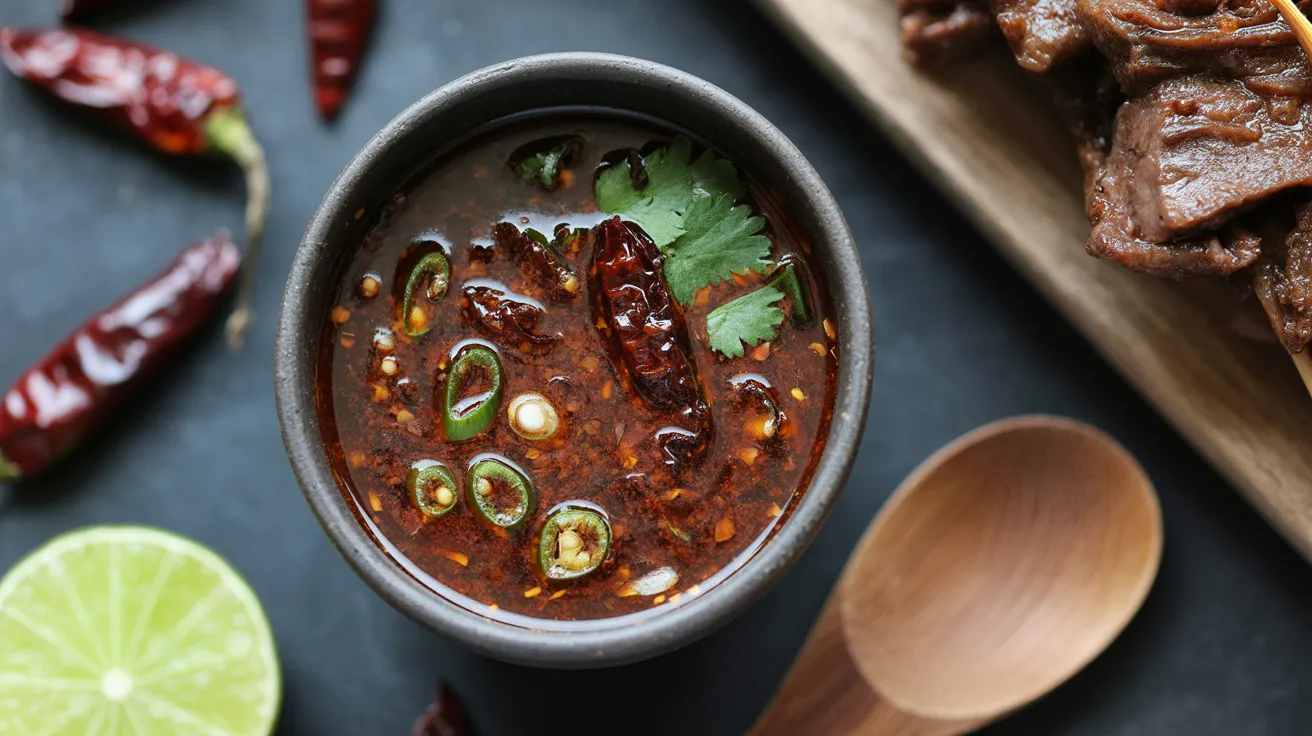
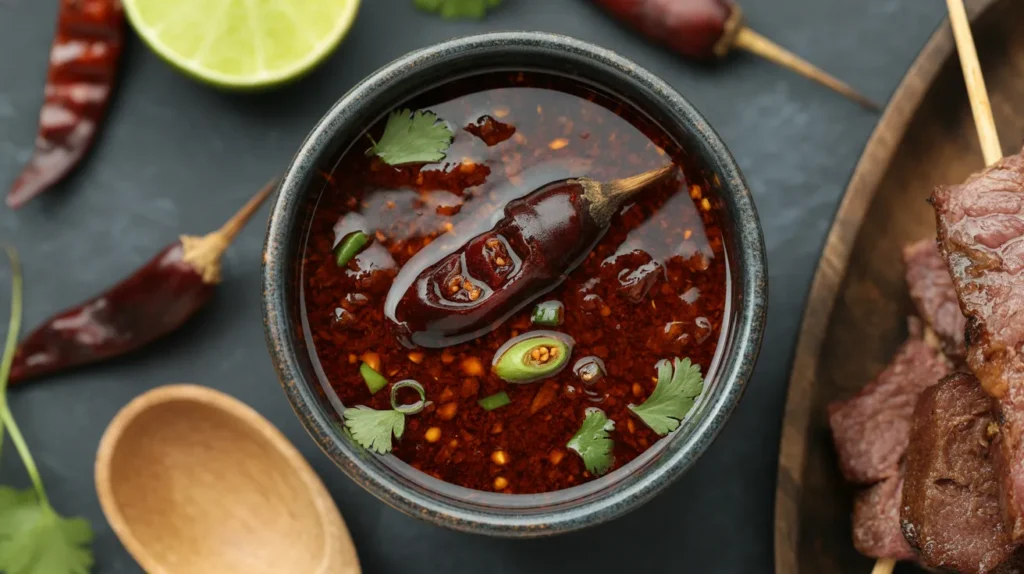
If you love bold, smoky, and spicy Thai flavors, this Thai Isaan dipping sauce nam jim jaew recipe is exactly what your kitchen needs. This fire-roasted chili sauce from Northeast Thailand packs a punch of heat, tang, and savory depth — and I’m going to show you how to make it perfectly at home. You’ll use the Thai Isaan dipping sauce nam jim jaew for grilled meats, sticky rice, and so much more.
SERVES: 4 | PREP: 15 MIN | COOK: 10 MIN | TOTAL: 25 MIN
What Is Nam Jim Jaew?
Nam Jim Jaew is a classic dipping sauce from the Isaan region of Northeast Thailand. Isaan food is known for its bold, rustic flavors — and this sauce is no exception.
It’s smoky from fire-roasted dried chilies, tangy from tamarind and lime, savory from fish sauce, and nutty from toasted rice powder. Every bite hits all four flavors at once.
This sauce is the classic partner for grilled meats like moo ping (pork skewers), gai yang (grilled chicken), and neua yang (grilled beef). It also makes an amazing dip for fresh vegetables and crispy spring rolls.
Ingredients
Main Sauce Ingredients
| Ingredient | Amount |
|---|---|
| Dried Thai chilies (medium heat) | 8–10 whole |
| Shallots, peeled | 3 medium |
| Garlic cloves, peeled | 4 cloves |
| Fish sauce | 3 tablespoons |
| Tamarind paste (seedless) | 2 tablespoons |
| Fresh lime juice | 2 tablespoons |
| Palm sugar (or brown sugar) | 1 tablespoon |
| Toasted rice powder (khao khua) | 1 tablespoon |
| Fresh cilantro, roughly chopped | 2 tablespoons |
| Green onions, thinly sliced | 2 stalks |
For Toasting the Rice Powder
| Ingredient | Amount |
|---|---|
| Raw jasmine rice (uncooked) | 2 tablespoons |
Step-by-Step Instructions
Phase 1: Make the Toasted Rice Powder (Khao Khua)
Step 1 — Toast the raw rice in a dry pan. Put a small skillet or wok over medium heat. Do not add any oil. Add 2 tablespoons of raw jasmine rice directly to the dry pan. This step takes about 5–7 minutes.
Keep stirring constantly so the rice doesn’t burn. You’re looking for each grain to turn a golden brown color — similar to the color of light brown sugar. The kitchen will start to smell nutty and toasty. That smell tells you it’s working.
Why do this? Toasted rice powder adds a nutty, smoky texture to the Thai Isaan dipping sauce nam jim jaew. It’s a classic Isaan technique that thickens the sauce slightly and gives it that authentic flavor you can’t get any other way.
Step 2 — Cool the toasted rice completely. Pour the toasted rice onto a small plate. Spread it out in a single layer and let it cool for 5 minutes. Do not grind it while hot — it will clump.
Step 3 — Grind the rice into a coarse powder. Add the cooled toasted rice to a mortar and pestle or a small spice grinder. Grind until it becomes a coarse, sandy powder — not a fine flour. You should still see tiny pieces. Set aside. You need 1 tablespoon for this recipe; save the rest in an airtight container for up to 2 weeks.
Phase 2: Char the Chilies, Shallots, and Garlic
Step 4 — Prepare your heat source. You can char the ingredients one of three ways:
- Gas flame — hold directly over the burner with tongs
- Dry skillet — use a cast iron or heavy pan over high heat
- Oven broiler — set to high, position rack at the top
For best results, use a dry cast iron skillet over medium-high heat for 3–4 minutes until very hot.
Step 5 — Char the dried chilies. Add the 8–10 whole dried Thai chilies to the dry hot skillet. Press them down gently with a spatula. Toast for 1–2 minutes per side, turning once.
You want them to be darkened and slightly blistered — not completely black. Some charring is the goal because it gives the sauce its smoky backbone. Watch closely because dried chilies can burn fast.
Safety Tip: Charring dried chilies releases capsaicin into the air. Turn on your kitchen ventilation fan and open a window. Avoid leaning over the pan and breathing in directly.
Step 6 — Remove the chilies and let them cool. Put the charred chilies onto a cutting board. Let them cool for 3–4 minutes so you can handle them safely.
Step 7 — Char the shallots. Add the 3 peeled shallots to the same hot skillet. Don’t move them for 2 minutes. Let them get dark brown and blistered on one side, then flip. Total time: about 4–5 minutes. The outside should look dark and slightly burnt; the inside will be soft and sweet.
Step 8 — Char the garlic. Add the 4 peeled garlic cloves to the skillet. Keep the heat at medium-high. Let them char for 2–3 minutes, turning every minute. The outside will be dark golden brown with some black spots. That’s exactly right.
Step 9 — Cool all charred ingredients. Remove the shallots and garlic from the heat. Let everything cool on a cutting board for 5 minutes before the next step.
Phase 3: Build the Sauce
Step 10 — Roughly chop the charred chilies. Once cooled, remove the stems from the dried chilies. You can remove most of the seeds if you want less heat — leave them in if you want full Isaan-style spice. Roughly chop the chilies into small pieces.
Step 11 — Pound the aromatics in a mortar and pestle. Add the charred garlic first to the mortar. Pound it into a rough paste — about 30 seconds. Add the charred shallots next and pound again until both are broken down but not completely smooth. Add the chopped chilies and pound until everything is coarsely combined.
No mortar and pestle? Use a mini food processor or blender. Pulse 3–4 times — you want a chunky paste, not a smooth puree. The texture of Thai Isaan dipping sauce nam jim jaew should be slightly coarse, not silky smooth.
Step 12 — Mix in the wet seasonings. Transfer the pounded mixture to a medium mixing bowl. Add:
- 3 tablespoons fish sauce
- 2 tablespoons tamarind paste
- 2 tablespoons fresh lime juice
- 1 tablespoon palm sugar (or brown sugar)
Stir everything together well. Taste as you go.
Step 13 — Add the toasted rice powder. Stir in 1 tablespoon of toasted rice powder. Mix well. Watch how the sauce thickens slightly. The powder also adds a beautiful nutty aroma.
Step 14 — Add fresh herbs. Fold in 2 tablespoons chopped cilantro and 2 sliced green onion stalks. These go in last so they stay fresh and bright.
Step 15 — Taste and adjust the balance. This is the most important step. Thai Isaan dipping sauce nam jim jaew should hit four flavor notes:
- Spicy — from the chilies. Add more if needed.
- Sour — from lime and tamarind. Add a squeeze of lime if too flat.
- Salty — from fish sauce. Add a few drops more if too bland.
- Sweet — from palm sugar. Add a pinch more if too sharp.
Take your time here. Keep tasting and adjusting until the sauce feels balanced but bold.
Phase 4: Final Check and Serve
Step 16 — Check the consistency. The sauce should be thick enough to coat a spoon but still pourable. If it feels too thick, add 1 teaspoon of water at a time and stir.
Step 17 — Let the sauce rest for 5 minutes. Before serving, let it sit for 5 minutes at room temperature. This short rest allows all the flavors to come together. You’ll notice the sauce tastes richer after resting.
Step 18 — Serve with your favorite grilled meats or vegetables. Pour the Thai Isaan dipping sauce nam jim jaew into a small bowl. Serve alongside grilled chicken, grilled pork, sticky rice, or raw vegetables like cucumber and cabbage.
Chef’s Notes
1. Use real tamarind paste, not concentrate. Tamarind paste made from a block gives the best flavor for Thai Isaan dipping sauce nam jim jaew. Tamarind concentrate can be overly sour and sharp. Soak a tablespoon of tamarind block in warm water for 10 minutes, then squeeze and strain to get clean paste.
2. Don’t skip the charring step. The smoky flavor from charred shallots and garlic is what makes nam jim jaew taste different from every other Thai dipping sauce. Skipping this step will give you a flat, one-dimensional sauce.
3. Palm sugar is worth finding. Palm sugar has a deeper, more caramel-like sweetness than regular white sugar. Look for it at Asian grocery stores. Brown sugar works as a substitute, but palm sugar gives the most authentic taste.
4. Fresh herbs go in last. Always add cilantro and green onions at the very end. If you add them too early — especially when mixing with warm ingredients — they’ll wilt and lose their fresh flavor.
Nutrition Information (Per Serving)
| Nutrient | Amount |
|---|---|
| Calories | 52 kcal |
| Total Fat | 0.5 g |
| Saturated Fat | 0 g |
| Sodium | 890 mg |
| Total Carbohydrates | 10 g |
| Sugars | 5 g |
| Protein | 1.5 g |
| Fiber | 1 g |
Note: Nutrition values are estimates based on standard ingredient amounts. Sodium content is from fish sauce — reduce fish sauce slightly if you’re watching sodium intake.
Variations
1. Extra Smoky Nam Jim Jaew
Toast everything directly over a charcoal flame instead of a skillet. This is how street vendors in Isaan make it. The charcoal gives the sauce an outdoor grilled flavor that’s incredible with beef.
2. Mild Version for Sensitive Palates
Replace the dried Thai chilies with dried guajillo or ancho chilies. These have much less heat but still give you that roasted depth. This version is perfect if you’re serving guests who don’t love spicy food.
3. Seafood Nam Jim Jaew
Add 1 teaspoon of minced lemongrass and 1 teaspoon of kaffir lime zest to the basic recipe. This version pairs beautifully with grilled shrimp, fish, and squid. You can also check out this Thai spicy lime garlic seafood sauce for another great dipping sauce to pair with your seafood spread.
4. Roasted Rice Powder Upgrade
Double the amount of toasted rice powder to 2 tablespoons for a thicker, nuttier sauce. This version is especially good as a dipping sauce for sticky rice dumplings. If you enjoy roasted rice powder in your dipping sauces, you’ll also love this Thai tamarind chili dipping sauce with roasted rice powder — it’s a close cousin to nam jim jaew with its own wonderful character.
Storage and Reheating
Refrigerator Storage: Store leftover Thai Isaan dipping sauce nam jim jaew in a sealed glass jar or airtight container. It keeps well in the fridge for up to 5 days. The flavors actually deepen and improve after the first day.
Freezer Storage: You can freeze this sauce for up to 1 month. Pour into ice cube trays, freeze until solid, then transfer the cubes to a freezer bag. Thaw in the fridge overnight before using.
Before Serving Leftovers: Always taste the sauce before serving again. The lime juice can fade in the fridge. Add a fresh squeeze of lime and a small splash of fish sauce to brighten it back up.
Do Not Heat This Sauce: Nam Jim Jaew is served at room temperature. Do not microwave or heat on the stove — heat will wilt the fresh herbs and kill the bright flavors. Just pull it from the fridge 15 minutes before serving.
Troubleshooting
Problem 1: My sauce is too sour. You added too much lime juice or tamarind. Fix it by stirring in a small pinch of palm sugar or brown sugar. Add a little at a time — ¼ teaspoon — and taste after each addition until the sharpness softens.
Problem 2: My sauce isn’t spicy enough. You need more dried chilies. Toast 2–3 extra dried chilies in a dry pan, chop them finely, and stir them in. You can also add ½ teaspoon of Thai chili flakes for quick heat.
Problem 3: The sauce tastes flat or bland. This almost always means you need more fish sauce. Add 1 teaspoon at a time and taste. Fish sauce adds the salty umami base that makes everything pop. A tiny extra splash of lime juice also helps lift flat flavors.
Problem 4: My sauce is too thin. Add more toasted rice powder — ½ teaspoon at a time. Stir well and let sit for 2 minutes. The powder absorbs moisture and thickens the sauce naturally.
Problem 5: The charred ingredients taste too bitter. You burned them past the dark-golden stage into fully black. Next time, watch more carefully and keep the heat at medium-high rather than high. For this batch, you can reduce the bitterness by adding ½ teaspoon extra palm sugar and a tiny squeeze of fresh orange juice.
Equipment Essentials
- Mortar and pestle — The traditional tool for the job. A heavy granite one works best.
- Cast iron skillet or heavy wok — For charring without sticking.
- Small spice grinder — Great for making the toasted rice powder fast.
- Mixing bowl — Medium size for combining all the sauce ingredients.
- Citrus squeezer — Gets every drop of lime juice out.
- Sharp knife and cutting board — For chopping chilies and herbs.
- Glass jar with tight lid — For storing leftovers.
Shopping List
Produce Section
- Shallots (3 medium)
- Garlic bulb (1 small)
- Fresh limes (2)
- Fresh cilantro (1 bunch)
- Green onions (1 bunch)
Asian Grocery / International Aisle
- Dried Thai chilies (1 small bag)
- Tamarind paste or block (1 small package)
- Fish sauce (1 bottle — Tiparos or Megachef brand recommended)
- Palm sugar (1 small block or bag)
- Raw jasmine rice (already in your pantry if you cook Thai food regularly)
Spice Aisle
- Thai chili flakes (optional, for extra heat)
5 Success Secrets for Nam Jim Jaew
1. Always char, never just sauté. Sautéed garlic and shallots taste sweet and mild. Charred garlic and shallots taste smoky and deep. The char is what makes Thai Isaan dipping sauce nam jim jaew taste like it came from an Isaan kitchen — not a western one.
2. Make the toasted rice powder fresh every time. Pre-ground rice powder from a bag doesn’t have the same aroma. Toasting fresh rice takes 7 minutes and makes a huge difference in flavor and texture.
3. Balance is everything — taste as you go. Don’t follow any recipe blindly, including this one. Every lime is different. Every brand of fish sauce has different salt levels. Taste at every step and trust your palate.
4. Let the sauce rest before serving. Five minutes makes a real difference. The tamarind and fish sauce need a few minutes to fully absorb into the charred chili paste. Rushing this step means a less harmonious sauce.
5. Use a mortar and pestle over a blender when you can. A blender will give you a smooth, uniform sauce. A mortar and pestle gives you a coarser, more textured sauce with better flavor depth. The pounding bruises the ingredients differently than blending — and in Thai cooking, that difference matters.