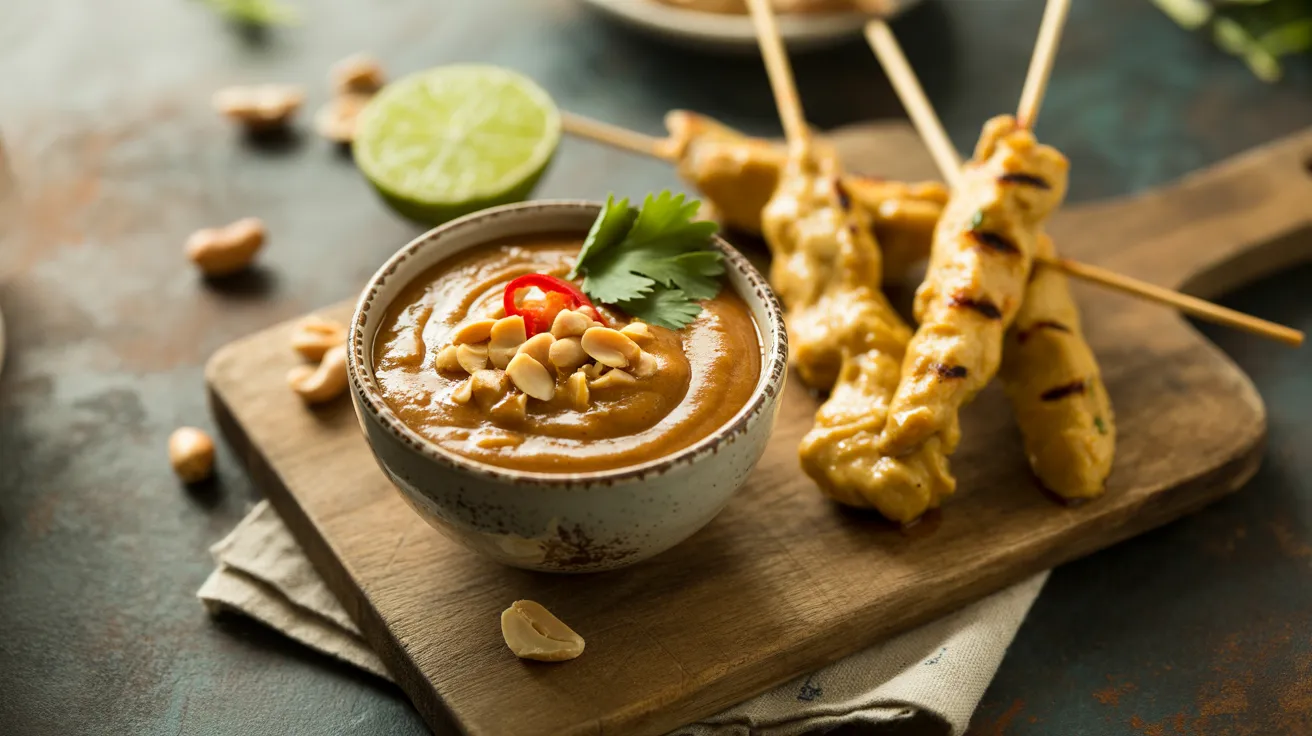
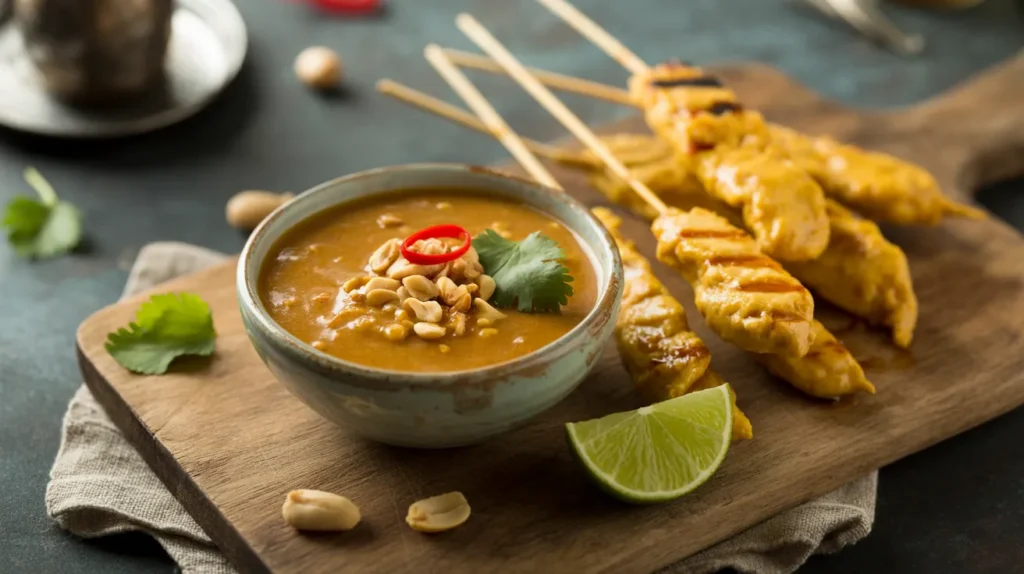
If you’ve been searching for the perfect Thai peanut sauce for chicken satay recipe, your search ends right here. This sauce is thick, creamy, a little spicy, and packed with that deep nutty flavor you get at your favorite Thai restaurant. The best part? You can make this Thai peanut sauce for chicken satay at home in about 15 minutes with pantry staples you probably already have on hand.
SERVES: 4 | PREP: 10 MIN | COOK: 15 MIN | TOTAL: 25 MIN
What Makes This Thai Peanut Sauce So Good
This sauce hits every note. It’s savory from peanut butter and soy sauce. It’s sweet from brown sugar and coconut milk. And it has just the right kick from red curry paste and fresh garlic.
You get a restaurant-quality dipping sauce without leaving your kitchen.
Ingredients for Thai Peanut Sauce for Chicken Satay
The Sauce Base
| Ingredient | Amount |
|---|---|
| Creamy peanut butter (natural, unsweetened) | ½ cup |
| Full-fat coconut milk | ⅓ cup |
| Water | 2–3 tablespoons (to thin as needed) |
The Flavor Builders
| Ingredient | Amount |
|---|---|
| Thai red curry paste | 1½ tablespoons |
| Soy sauce (low-sodium) | 2 tablespoons |
| Fish sauce | 1 tablespoon |
| Brown sugar (packed) | 1 tablespoon |
| Fresh lime juice | 1 tablespoon |
| Garlic cloves, minced | 2 cloves |
| Fresh ginger, grated | 1 teaspoon |
| Sesame oil | 1 teaspoon |
Optional Garnish
| Ingredient | Amount |
|---|---|
| Crushed roasted peanuts | 2 tablespoons |
| Fresh cilantro, chopped | 1 tablespoon |
| Red chili flakes | A pinch |
| Lime wedges | 4 pieces |
Step-by-Step Instructions
Phase 1: Prep Your Ingredients (5 Minutes)
Step 1 — Mince the garlic. Peel 2 cloves of garlic. Use the flat side of your knife to press down on each clove — this makes the skin slip right off. Then chop the garlic into very small pieces. The smaller you cut it, the better it blends into the sauce without any harsh raw garlic chunks.
Step 2 — Grate the ginger. Peel a small piece of fresh ginger using a spoon (yes, a regular spoon works perfectly and wastes less ginger than a knife). Then grate it using the fine side of a box grater. You need about 1 teaspoon. Fresh ginger gives this Thai peanut sauce a bright, warm zing that ground ginger simply can’t match.
Step 3 — Juice the lime. Cut one lime in half. Squeeze both halves over a small bowl. Pick out any seeds with a fork. Set aside. Fresh lime juice brightens the whole sauce and balances the richness of the peanut butter.
Step 4 — Measure everything out before you start cooking. This sauce moves fast once it hits heat. Having all your ingredients pre-measured in small bowls means you won’t scramble or accidentally burn anything. Chefs call this “mise en place” — it just means having everything ready before you cook.
Phase 2: Build the Sauce (10 Minutes)
Step 5 — Heat the pan. Set a small saucepan over medium-low heat. Don’t rush this step by cranking the heat too high. Peanut butter burns fast, and you want gentle, even heat to bring this sauce together smoothly.
Step 6 — Sauté the garlic and ginger. Add the 1 teaspoon of sesame oil to the pan. Once it shimmers (about 30 seconds), add your minced garlic and grated ginger. Stir constantly with a wooden spoon or silicone spatula. Cook for just 60 seconds. You’re looking for the garlic to turn very light golden and become fragrant. The moment you smell that toasty garlic aroma, move on to the next step — don’t let it brown or it will taste bitter.
Step 7 — Add the red curry paste. Spoon in 1½ tablespoons of Thai red curry paste. Stir it directly into the garlic and ginger. Press the paste against the bottom of the pan and mix it around for about 30 seconds. This step “blooms” the curry paste — it wakes up all the dried spices inside it and deepens the flavor of your Thai peanut sauce for chicken satay recipe.
Step 8 — Add the peanut butter. Scoop in your ½ cup of peanut butter. Stir it into the curry paste mixture. It will look thick and clumpy at first — that’s completely normal. Keep stirring over medium-low heat until the peanut butter loosens up and starts blending with the paste, about 1–2 minutes.
🔑 Why natural peanut butter? Natural peanut butter (just peanuts and salt) gives a cleaner, more intense peanut flavor. Regular commercial peanut butter works too, but the sauce may be slightly sweeter.
Step 9 — Pour in the coconut milk. Add your ⅓ cup of full-fat coconut milk slowly while stirring. Full-fat coconut milk is key here — it gives the sauce that silky, rich body. Low-fat coconut milk makes the sauce too thin and watery. Stir everything together until the mixture becomes smooth and creamy.
Step 10 — Season the sauce. Add the following, stirring after each one:
- 2 tablespoons soy sauce
- 1 tablespoon fish sauce
- 1 tablespoon brown sugar
- 1 tablespoon fresh lime juice
Stir everything well. Taste the sauce now. It should be savory, slightly sweet, a little tangy, and mildly spicy. This is your moment to adjust.
Step 11 — Adjust the consistency. Your Thai peanut sauce should flow off a spoon like thick honey. If it’s too thick, add water one tablespoon at a time, stirring after each addition. If it’s too thin, let it simmer on low heat for another 2–3 minutes, stirring often, until it thickens.
⚠️ Safety tip: Keep the heat at medium-low the whole time. High heat makes peanut butter stick to the bottom of the pan and scorch quickly.
Step 12 — Final taste test. Take a clean spoon and taste the sauce again. Need more salt? Add a tiny splash of soy sauce. Need more sweetness? Add a pinch more brown sugar. Need more heat? Add a few red chili flakes. Need more tang? Squeeze in extra lime juice. Trust your taste buds here.
Phase 3: Serve and Garnish (2 Minutes)
Step 13 — Transfer to a serving bowl. Pour the warm Thai peanut sauce for chicken satay into a small serving bowl. Use a spatula to scrape every last bit from the pan.
Step 14 — Add garnishes. Scatter crushed roasted peanuts over the top for crunch. Add a few leaves of fresh cilantro for color. Place lime wedges on the side so guests can squeeze more juice to taste.
Step 15 — Serve immediately or cool down. This sauce is wonderful warm or at room temperature. If you’re serving it with chicken satay skewers straight off the grill, serve it warm right away. If you’re prepping ahead, let it cool completely before covering and refrigerating.
Chef’s Notes
1. Use Thai red curry paste, not Indian curry powder. They are completely different ingredients. Thai red curry paste is a moist, fragrant blend of chili, lemongrass, and spices. Indian curry powder is a dry spice blend. Only Thai red curry paste gives this Thai peanut sauce for chicken satay its authentic flavor.
2. Don’t skip the fish sauce. It sounds intimidating, but fish sauce adds a deep, savory umami backbone that soy sauce alone can’t give you. If you’re cooking for someone who avoids fish, substitute with an extra teaspoon of soy sauce — but the flavor will be slightly different.
3. Make it the night before. This sauce tastes even better the next day after the flavors have had time to meld together in the fridge. Make a double batch and keep it on hand all week.
4. Warm it up gently. If the sauce thickens in the fridge, reheat it in a small saucepan over low heat with a splash of water or coconut milk, stirring until smooth. Don’t microwave it in a thick chunk — it can heat unevenly.
Nutrition Information (Per Serving)
| Nutrient | Amount |
|---|---|
| Calories | 210 kcal |
| Total Fat | 17g |
| Saturated Fat | 6g |
| Carbohydrates | 10g |
| Sugars | 5g |
| Protein | 7g |
| Sodium | 580mg |
| Fiber | 1.5g |
Based on sauce divided into 4 equal portions. Does not include chicken satay or garnishes.
Variations
1. Spicy Thai Peanut Sauce
Love heat? Double the red curry paste to 3 tablespoons and add ½ teaspoon of sambal oelek (Indonesian chili paste) at the end. This version pairs beautifully with grilled chicken and also doubles as a bold noodle sauce.
2. Lighter Thai Peanut Sauce
Swap full-fat coconut milk for light coconut milk and reduce peanut butter to ⅓ cup. Add 2 tablespoons of water to keep the consistency right. The sauce will be thinner but still full of flavor — great if you’re watching calories.
3. Tamarind-Kissed Peanut Sauce
Add 1 tablespoon of tamarind paste along with the lime juice for a deeper, more sour-fruity layer of flavor. Tamarind is a classic Thai ingredient that adds a complexity you just can’t get from lime alone. For more Thai dipping sauce ideas built around tamarind, check out this Thai tamarind chili dipping sauce with roasted rice powder recipe — it’s a fantastic companion sauce to serve alongside this peanut sauce.
4. Coconut Milk Thai Peanut Sauce (Richer Version)
Increase the coconut milk to ½ cup and add 1 extra tablespoon of brown sugar. This gives you a richer, creamier sauce that clings beautifully to chicken skewers. It’s very close to a traditional Thai restaurant-style sauce. For a version specifically built around coconut milk as the star ingredient, this Thai satay peanut sauce with coconut milk recipe is worth bookmarking.
Storage & Reheating
Refrigerator: Pour cooled sauce into an airtight container. It keeps well for up to 5 days in the fridge. The sauce will thicken as it cools — this is normal.
Freezer: This Thai peanut sauce for chicken satay freezes well. Pour it into a freezer-safe container or zip-lock bag. It keeps for up to 2 months. Lay the bag flat in the freezer for easy stacking.
Reheating from fridge: Transfer to a small saucepan over low heat. Add 1–2 tablespoons of water or coconut milk and stir gently until smooth and warmed through. Don’t rush this with high heat.
Reheating from frozen: Thaw overnight in the fridge, then reheat as above. Stir well before serving since the sauce may separate slightly after freezing.
Make-ahead tip: You can make this sauce up to 3 days ahead of a dinner party. It actually gets better overnight as the flavors deepen.
Troubleshooting
Problem 1: My sauce is too thick. This happens if the heat was too high or the sauce cooked too long. Fix it by whisking in warm water, one tablespoon at a time, over low heat until you reach the right consistency. The sauce should flow like thick honey.
Problem 2: My sauce tastes bitter. Bitter flavor usually means the garlic or curry paste burned in the pan. Unfortunately, burnt garlic is hard to fix. Start fresh with a clean pan and lower heat. Garlic should turn light golden — not brown.
Problem 3: My sauce is too thin. Let it simmer on medium-low heat, stirring constantly, for 3–5 more minutes. Peanut butter thickens fast once heated long enough. You can also add an extra tablespoon of peanut butter to help.
Problem 4: The sauce separated (looks oily). This can happen if the heat was too high or if the coconut milk was low-fat. Remove the pan from heat and whisk vigorously. Add a splash of warm water and keep whisking until it comes back together.
Problem 5: It doesn’t taste like the restaurant version. The most common reason is skipping the fish sauce. Fish sauce is the secret weapon in authentic Thai peanut sauce. It adds a savory depth that makes the flavor pop. Add it one teaspoon at a time, tasting as you go, until the flavor clicks into place.
Equipment Essentials
- Small saucepan (1–2 quart size works perfectly)
- Wooden spoon or silicone spatula for stirring
- Box grater or microplane for fresh ginger
- Knife and cutting board for garlic
- Citrus juicer or fork for lime
- Measuring cups and spoons (accurate measurements matter here)
- Small serving bowl for presentation
- Airtight container for storage
No blender needed for this recipe — it all comes together by hand on the stovetop.
Shopping List
Produce
- Fresh garlic (1 head, or 2 pre-peeled cloves)
- Fresh ginger (small 2-inch knob)
- Limes (2, for juice and garnish)
- Fresh cilantro (small bunch, optional garnish)
Pantry / International Aisle
- Creamy natural peanut butter (1 jar)
- Thai red curry paste (small can or jar — Mae Ploy or Maesri brands are great)
- Soy sauce, low-sodium (1 bottle)
- Fish sauce (1 bottle — Tiparos or Megachef brand)
- Brown sugar (1 bag)
- Sesame oil (small bottle)
Canned Goods
- Full-fat coconut milk (1 can — Chaokoh or Aroy-D are reliable)
Bulk / Nuts Section
- Roasted salted peanuts, for garnish (small bag)
5 Success Secrets for Perfect Thai Peanut Sauce
1. Use full-fat coconut milk every single time. Lite coconut milk is mostly water. Full-fat coconut milk has the fat content that gives this Thai peanut sauce for chicken satay recipe its signature creamy texture. Don’t substitute here.
2. Bloom the curry paste before adding anything else. That 30-second step where you cook the curry paste in the sesame oil wakes up its spices. It takes your sauce from flat to deeply flavored.
3. Add liquids gradually, not all at once. Pouring in all the coconut milk at once can shock the peanut butter and cause it to seize up. Add it slowly while stirring to keep the sauce smooth.
4. Always taste and adjust at the end. Every brand of peanut butter, curry paste, and fish sauce is slightly different. Your final taste test is what takes this Thai peanut sauce from good to great. Be bold with adjustments.
5. Let it rest for 10 minutes before serving. Just like a good steak, this sauce benefits from a short rest off the heat. The flavors settle and come together in those last few minutes before it hits the table.