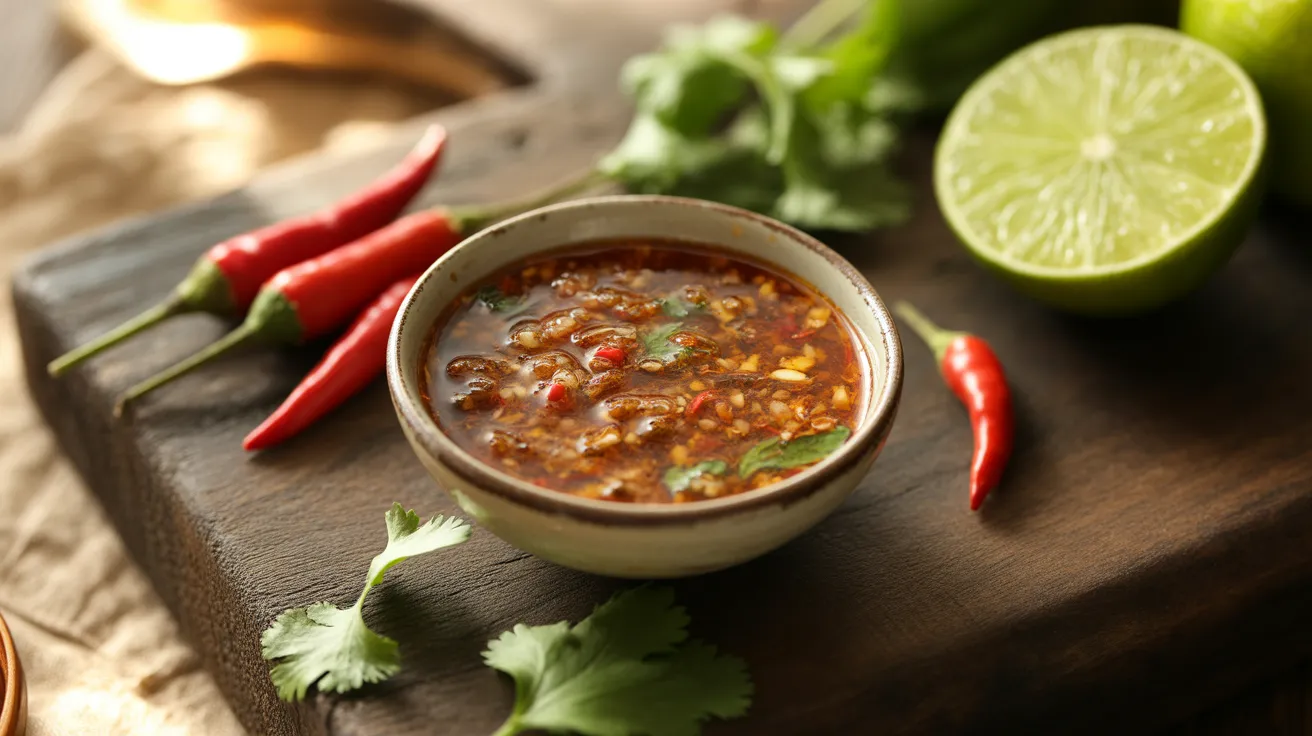
If you’ve ever sat down to a plate of grilled shrimp or steamed fish and felt like something was missing, this Thai seafood dipping sauce nam jim seafood recipe is exactly what you need. This bold, punchy sauce hits every flavor at once — spicy, sour, salty, and just a little sweet — and you can make it in under 10 minutes with zero cooking. This Thai seafood dipping sauce nam jim seafood recipe is built from scratch with fresh ingredients that deliver real, restaurant-quality Thai flavor at home.
SERVES: 4 | PREP: 10 MIN | COOK: 0 MIN | TOTAL: 10 MIN
Nam jim seafood — or น้ำจิ้มซีฟู้ด in Thai — is the backbone of Thai seafood culture. Walk into any seafood restaurant in Bangkok or Phuket, and this sauce is already on the table before you even order.
It’s not just a condiment. It’s the reason the seafood tastes so good.
The sauce balances five key flavors at once: spicy from fresh Thai chilies, sour from lime juice, salty from fish sauce, savory from garlic, and sweet from palm sugar. Get those five flavors right, and you’ve nailed it.
What You Need: Ingredients for Thai Seafood Dipping Sauce Nam Jim Seafood Recipe
Main Ingredients
| Ingredient | Amount |
|---|---|
| Fresh Thai bird’s eye chilies (red or green) | 6–8 chilies |
| Garlic cloves, peeled | 4 large cloves |
| Fresh lime juice | 3 tablespoons |
| Fish sauce | 2 tablespoons |
| Palm sugar (or white sugar) | 1 tablespoon |
| Fresh cilantro roots or stems | 2 tablespoons, roughly chopped |
| Water (optional, to adjust thickness) | 1 tablespoon |
Optional Add-Ins
| Ingredient | Amount |
|---|---|
| Galangal, thinly sliced | 1 teaspoon |
| Lemongrass, finely minced | 1 teaspoon |
Step-by-Step Instructions
Phase 1: Prepare Your Ingredients
Step 1: Wash and dry your chilies. Rinse your Thai bird’s eye chilies under cold running water. Pat them completely dry with a paper towel. Wet chilies will water down your sauce and throw off the flavor balance. Every ingredient in this sauce should be as dry as possible before you start.
Step 2: Remove the chili stems. Snap or cut off the green stem from each chili. You don’t need to remove the seeds — they carry most of the heat in this recipe. If you want a milder sauce, slice the chilies in half lengthwise and scrape out the seeds with the tip of a small knife. Use 6 chilies for medium heat, or up to 8 for a hot sauce that really burns.
⚠️ Safety note: Thai bird’s eye chilies are very hot. After handling them, don’t touch your face or eyes. Wash your hands thoroughly with soap and water right away.
Step 3: Peel and crush your garlic. Use the flat side of a large knife to gently press down on each garlic clove. The skin will slip right off. You need 4 large cloves. Don’t chop or mince them yet — you’ll pound everything together in the next phase. Crushing first breaks down the cell walls and releases more flavor.
Step 4: Prep your cilantro roots or stems. If your cilantro bunch still has the roots attached, use them. Cilantro roots carry a deeper, earthier flavor than the stems or leaves. Roughly chop 2 tablespoons of roots or stems into small pieces. Save the cilantro leaves for garnish at the very end.
Step 5: Measure out your liquids and sugar. Squeeze 3 tablespoons of fresh lime juice into a small bowl — that’s about 1.5 medium limes. Fresh lime juice is non-negotiable here. Bottled lime juice has a flat, slightly bitter flavor that will make the whole sauce taste off. Measure out 2 tablespoons of fish sauce and 1 tablespoon of palm sugar (or plain white sugar as a backup). Set everything to the side.
Phase 2: Build the Sauce
Step 6: Choose your tool — mortar and pestle or food processor. The traditional method for this Thai seafood dipping sauce nam jim seafood recipe uses a stone mortar and pestle. Pounding creates a rough, slightly chunky paste that clings to seafood and packs serious flavor. If you don’t have a mortar, a mini food processor or small blender works fine. The texture will be smoother, but the taste is just as good.
Step 7: Pound the cilantro roots first. Add your chopped cilantro roots or stems to the mortar. Pound them firmly for about 30 seconds until they break down into a rough paste. Starting with cilantro gets the flavor oils into the base of your sauce right away.
Step 8: Add the garlic and pound again. Drop in your 4 crushed garlic cloves. Pound everything together for another 30 to 45 seconds until the garlic breaks down and fully mixes with the cilantro. You’ll smell a strong, savory aroma — that means it’s working.
Step 9: Add the chilies and keep pounding. Add your 6–8 Thai bird’s eye chilies to the mortar. Pound for 1 to 2 minutes until you have a rough, slightly chunky paste. You don’t want a completely smooth paste here — small pieces of chili and garlic give the sauce texture and little bursts of heat when you eat it.
💡 Tip: Work with firm, steady downward strokes. Rotate the mortar a little after each pound so everything breaks down evenly.
Step 10: Add the sugar and mix it in. Add 1 tablespoon of palm sugar to the paste. Pound and stir it in for about 20 to 30 seconds until the sugar dissolves into the mixture. Palm sugar has a light caramel flavor that white sugar doesn’t have, which is why it’s used in Thai cooking. White sugar works as a substitute — the sauce just tastes slightly cleaner and less complex.
Step 11: Pour in the fish sauce and lime juice. Add 2 tablespoons of fish sauce and 3 tablespoons of fresh lime juice to the mortar. Switch from pounding to stirring with a spoon. You’re mixing the wet ingredients into the paste now, not breaking anything down further.
Step 12: Taste and adjust — this step is the most important one. Dip a clean spoon into the sauce and taste it carefully.
- Too salty? Add a little more lime juice and a pinch of sugar.
- Too sour? Stir in a little more sugar or a few drops more fish sauce.
- Not spicy enough? Pound in one more fresh chili.
- Too spicy? Add a teaspoon of water and a tiny bit more sugar.
The goal is a sauce that hits all five flavors at once — sour and salty upfront, then spicy, then a gentle sweetness at the finish.
Phase 3: Final Adjustments and Serving
Step 13: Check the consistency. Your Thai seafood dipping sauce nam jim seafood recipe should be slightly loose and easy to spoon or dip into. It shouldn’t be a thick paste. If it feels too heavy, stir in 1 tablespoon of water. If it seems too thin, pound in a little more garlic and chili to build the body back up.
Step 14: Transfer to a serving bowl. Scoop the sauce from the mortar into a small dipping bowl or ramekin. A shallow bowl works best — it makes dipping shrimp or spooning sauce over grilled fish easy and mess-free.
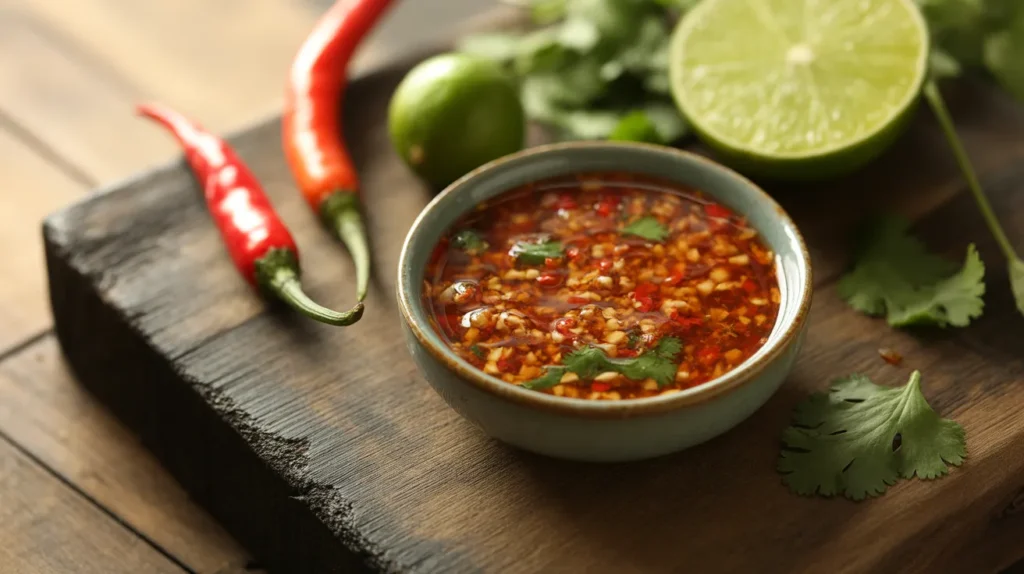
Step 15: Garnish and serve. Scatter a few fresh cilantro leaves over the top. Add a thin lime slice on the side of the bowl for a clean, finished look. Serve right away alongside your grilled shrimp, steamed fish, fried squid, or any seafood you love.
Chef’s Notes
1. Always use fresh lime juice. Bottled lime juice is the most common shortcut that quietly ruins this Thai seafood dipping sauce nam jim seafood recipe. Fresh limes take 30 extra seconds to squeeze. That’s all. Do it.
2. Fish sauce brands matter. Not all fish sauce tastes the same. Tiparos and Megachef are solid everyday picks. Tra Chang (the bottle with the scale logo) is considered one of the best in Thailand — clean, balanced, with a slightly sweet edge. Skip the very cheapest bottles, which tend to taste sharp and overpowering.
3. Adjust the heat for your crowd. Six chilies is a good medium heat for most people. For a mixed group, make two small batches — one with 4 chilies, one with 8. Label them so nobody gets caught off guard.
4. Don’t skip the cilantro root. A lot of recipes leave the cilantro root out because it’s harder to find in regular supermarkets. But it adds an earthy, slightly woody depth that the stems and leaves alone can’t match. Check an Asian grocery store, or ask your produce section to stock it.
Nutrition Information (Per Serving)
| Nutrient | Amount |
|---|---|
| Calories | 28 kcal |
| Protein | 1 g |
| Carbohydrates | 5 g |
| Fat | 0 g |
| Sodium | 580 mg |
| Sugar | 3 g |
Nutrition values are estimates based on standard ingredient measurements. Sodium content will vary by fish sauce brand.
Variations: 4 Ways to Change This Recipe
1. Nam Jim with Roasted Garlic Roast your garlic cloves in a dry pan over medium heat for 3 to 4 minutes before pounding. The heat brings out a sweeter, nuttier flavor that works especially well with grilled lobster tails or large king prawns.
2. All-Green Nam Jim Swap in all green bird’s eye chilies instead of red. Green chilies are slightly more herbal and sharp. This version is the traditional choice for raw oysters and steamed clams at Thai seafood restaurants.
3. Extra-Garlicky Version Double the garlic to 8 full cloves for a deeply savory, pungent sauce that pairs beautifully with fried calamari or crispy fish. For another Thai sauce built around big garlic flavor, check out this homemade Thai garlic chili sauce for stir-fry — it uses a lot of the same ingredients in a totally different way.
4. Mild and Sweet Nam Jim Cut the chilies back to 3 or 4 and raise the palm sugar to 2 tablespoons. Stir in 1 teaspoon of finely minced lemongrass for a floral sweetness. This version is great for kids or guests who don’t handle spice well. You can also bookmark the full Thai seafood dipping sauce nam jim seafood recipe guide for more tips on building your own version.
Storage & Reheating
Refrigerator: Store leftover sauce in an airtight glass jar for up to 5 days. The lime juice softens a little over time, so give it a fresh squeeze before serving again.
Freezer: This sauce does not freeze well. The lime juice and raw garlic break down badly when frozen and thawed. Make it fresh each time — it’s only 10 minutes of work.
Make-Ahead Tip: You can pound the garlic, cilantro, and chili paste up to 24 hours ahead and store it covered in the fridge. Add the fish sauce, lime juice, and sugar right before serving so the flavors stay sharp and bright.
Storage safety: Don’t leave this sauce out at room temperature for more than 2 hours. The fish sauce and fresh ingredients can spoil quickly in warm conditions.
Troubleshooting: 5 Common Problems
Problem 1: My sauce is way too salty. Fix: Add more fresh lime juice, 1 teaspoon at a time, tasting after each addition. A small pinch of extra sugar also helps balance things out. Don’t add water first — it thins the sauce without actually fixing the flavor.
Problem 2: My sauce is too sour. Fix: Stir in ½ teaspoon of palm sugar and wait 30 seconds for it to dissolve before tasting again. If the sourness is still strong, add a small splash of fish sauce. The umami from the fish sauce pushes back against sharp acidity really well.
Problem 3: No heat at all — the sauce tastes mild. Fix: This usually means the chilies were old. Fresh Thai bird’s eye chilies should be firm, brightly colored, and smell sharp when you break one open. Add 1 to 2 more fresh chilies and pound them in. If you’re completely out, a pinch of dried chili flakes can help in a pinch.
Problem 4: The sauce is too smooth and thin. Fix: Pound in 1 to 2 more garlic cloves and one fresh chili. The extra fiber from fresh ingredients brings the body back. You can also add 1 teaspoon of very finely minced lemongrass to bulk it up a little.
Problem 5: The sauce tastes flat — no depth or punch. Fix: This almost always comes from bottled lime juice or low-quality fish sauce. If you used fresh lime, the issue might be that you skipped the cilantro root or didn’t pound the garlic fully. Add one more garlic clove, pound it in well, then add a small extra squeeze of lime and a tiny pinch of sugar. Taste again — it should come alive.
Equipment Essentials
- Stone mortar and pestle — The traditional tool for this recipe. A medium to large size (6 to 8 inches) is best for a sauce this size.
- Mini food processor or blender — A solid backup if you don’t own a mortar. Use the pulse function for better texture control.
- Citrus juicer or hand reamer — Makes squeezing limes fast and easy.
- Small dipping bowls or ramekins — A 3 to 4 oz bowl per person is the right size for serving.
- Measuring spoons — Precision matters here, especially with fish sauce and lime juice.
- Sharp knife and cutting board — For prepping chilies, garlic, and cilantro.
Shopping List
Produce Section
- [ ] Fresh Thai bird’s eye chilies (red or green) — 1 small bag or about 10 chilies
- [ ] Garlic — 1 full head
- [ ] Fresh limes — 2 medium limes
- [ ] Fresh cilantro with roots if available — 1 bunch
Asian Foods / International Aisle
- [ ] Fish sauce (Tra Chang, Tiparos, or Megachef brand) — 1 bottle
- [ ] Palm sugar — 1 small package (or substitute white sugar from the baking aisle)
Optional / Specialty
- [ ] Fresh or frozen galangal — small piece
- [ ] Lemongrass — 1 to 2 stalks
5 Success Secrets for the Best Thai Seafood Dipping Sauce Nam Jim Seafood Recipe
1. Taste as you build — not just at the end. Add the lime juice and fish sauce a little at a time. Tasting at each stage helps you understand how the flavors are developing and lets you catch problems before they’re hard to fix.
2. Buy the freshest chilies you can find. Old or wrinkled chilies are less spicy and have weaker flavor. A fresh Thai bird’s eye chili should be firm, bright in color, and smell sharp and slightly floral when you break one open.
3. Pound your ingredients — don’t just blend them. Blending makes an ultra-smooth sauce that looks polished but loses the rustic, chunky texture that makes this Thai seafood dipping sauce nam jim seafood recipe so good. The rough texture from pounding gives the sauce more surface area so it clings to shrimp, fish, and everything else.
4. Balance all five flavors before you’re done. Salty, sour, spicy, sweet, and savory — all five need to show up and none of them should overpower the rest. Keep adjusting until no single flavor is louder than the others.
5. Serve it right away. This sauce is at its absolute best within 30 minutes of making it. The lime is brightest, the garlic sharpest, and the chilies most vibrant. If you make it ahead, stir in a fresh squeeze of lime right before it hits the table.