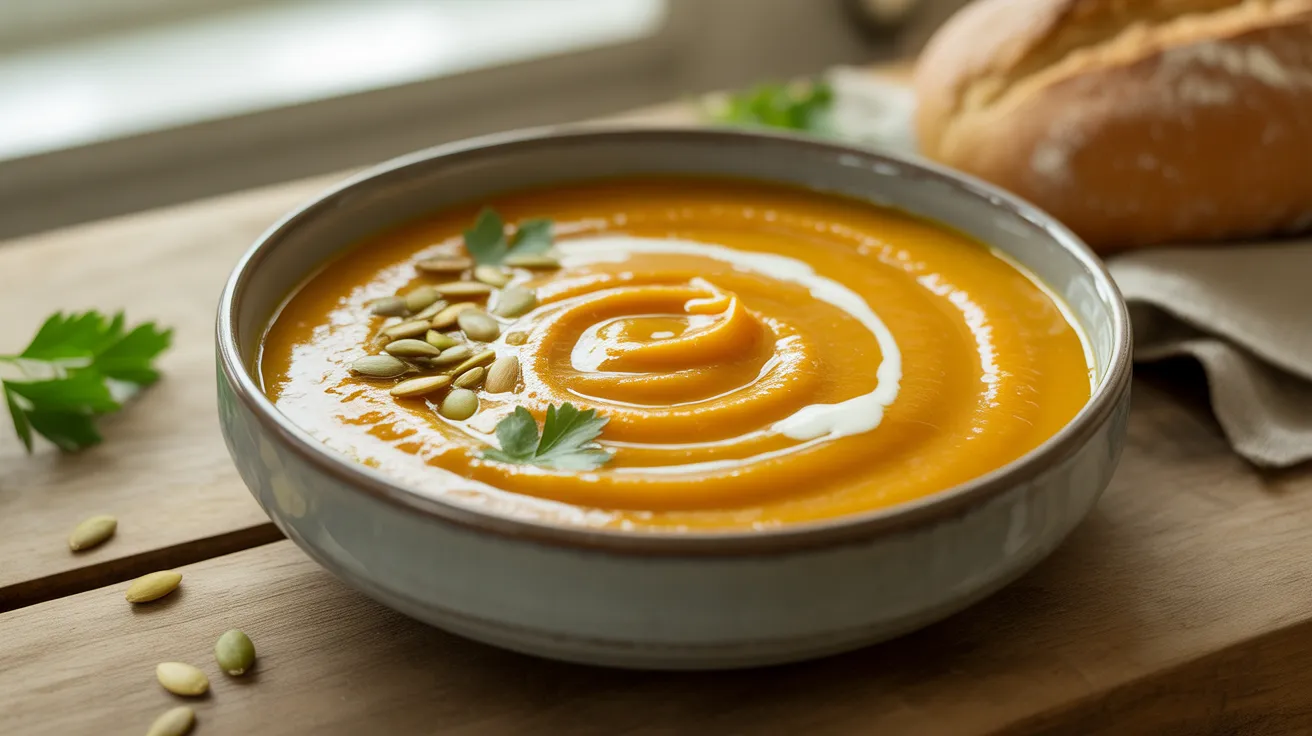
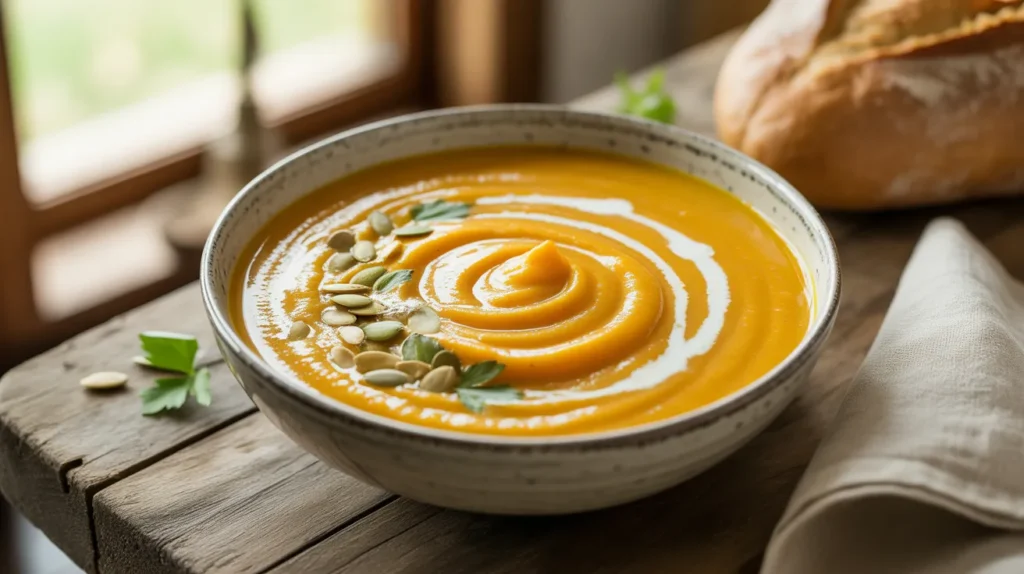
This vegan butternut squash soup delivers creamy, restaurant-quality comfort in every spoonful. I’ve perfected this plant-based version that rivals any dairy-loaded recipe, and you won’t believe how silky smooth this vegan butternut squash soup becomes with just a few simple ingredients.
SERVES: 4 | PREP: 15 MIN | COOK: 35 MIN | TOTAL: 50 MIN
Ingredients
| Produce | Amount |
|---|---|
| Butternut squash | 3 lbs (about 1 medium), peeled and cubed |
| Yellow onion | 1 large, diced |
| Garlic cloves | 4, minced |
| Fresh ginger | 1 tbsp, grated |
| Fresh thyme | 2 sprigs |
| Pantry | Amount |
|---|---|
| Olive oil | 3 tbsp |
| Vegetable broth | 4 cups |
| Coconut milk (full-fat) | 1 cup |
| Maple syrup | 2 tbsp |
| Ground nutmeg | ¼ tsp |
| Salt | 1 tsp (adjust to taste) |
| Black pepper | ½ tsp |
| Optional Garnish | Amount |
|---|---|
| Toasted pumpkin seeds | ¼ cup |
| Fresh parsley | 2 tbsp, chopped |
| Coconut cream | Drizzle |
Instructions
Phase 1: Preparation (10 minutes)
1. Prep your butternut squash properly.
Cut the squash in half lengthwise and scoop out all seeds with a spoon. Use a sturdy vegetable peeler to remove the tough skin, working from top to bottom. Cube the flesh into 1-inch pieces so they cook evenly—smaller pieces will turn mushy, larger ones won’t soften properly.
2. Dice your aromatics uniformly.
Chop the onion into ½-inch pieces and mince the garlic finely. The onion pieces should be similar in size to ensure even caramelization. Grate fresh ginger using the small holes of your box grater—this releases maximum flavor compared to chopping.
3. Gather and measure all ingredients.
Line up everything on your counter before you start cooking. This prevents scrambling mid-recipe and helps you catch any missing ingredients early. Shake your coconut milk can well before opening to recombine the separated cream and liquid.
Phase 2: Building the Flavor Base (12 minutes)
4. Heat your Dutch oven to the right temperature.
Place a large Dutch oven or heavy-bottomed pot over medium heat. Add 3 tablespoons olive oil and let it shimmer for about 30 seconds—you’ll see gentle ripples across the surface when it’s ready. Too hot and your vegetables will burn; too cool and they’ll steam instead of caramelize.
5. Sauté the onion until golden.
Add the diced onion and ½ teaspoon salt. Cook for 6-8 minutes, stirring every minute or so. You’re looking for edges that turn light golden brown with a sweet aroma—this caramelization creates depth that makes the soup taste like it simmered for hours.
6. Add garlic and ginger at the right moment.
Stir in minced garlic and grated ginger. Cook for just 60-90 seconds, stirring constantly. These aromatics burn quickly, so watch for a fragrant smell that fills your kitchen—that’s your signal to move to the next step immediately.
Phase 3: Simmering the Soup (20 minutes)
7. Add butternut squash with proper seasoning.
Toss in your cubed squash, remaining ½ teaspoon salt, black pepper, and nutmeg. Stir everything together for 2 minutes so the squash absorbs the aromatic flavors. The edges of the squash should glisten with oil and spices.
8. Pour in broth and add thyme sprigs.
Add 4 cups vegetable broth and drop in the fresh thyme sprigs. The liquid should just cover the squash—add an extra ½ cup water if needed. Fresh thyme releases earthy notes that dried thyme can’t match, but if using dried, use only 1 teaspoon.
9. Bring to a proper boil, then reduce heat.
Turn heat to high until you see active bubbling across the entire surface, about 3-4 minutes. Then reduce to medium-low so you maintain a gentle simmer—small bubbles should break the surface every few seconds. Violent boiling makes the soup cloudy and breaks down vegetables too quickly.
10. Simmer until squash is fork-tender.
Cover partially (leave a small gap for steam to escape) and cook for 18-20 minutes. Test doneness by piercing the largest cube with a fork—it should slide through with zero resistance, like piercing warm butter. Undercooked squash creates a grainy soup texture.
Phase 4: Blending and Finishing (8 minutes)
11. Remove thyme sprigs before blending.
Use tongs to fish out the thyme sprigs—those woody stems will damage your blender and create unpleasant bits in the soup. Let the soup cool for 3-4 minutes to prevent dangerous steam explosions when blending hot liquid.
12. Blend in batches for safety.
Working with 2 cups at a time, blend on low speed for 5 seconds, then increase to high for 30-45 seconds until completely smooth. Never fill your blender more than halfway with hot liquid, and hold the lid down with a folded kitchen towel. Return blended soup to the pot.
If you have an immersion blender, you can skip the batch method and blend directly in the pot for 2-3 minutes, moving the blender around to catch all chunks.
13. Stir in coconut milk and maple syrup.
Add 1 cup coconut milk and 2 tablespoons maple syrup to the blended soup. Stir over low heat for 2-3 minutes until heated through. The coconut milk adds silky body while the maple syrup balances the squash’s natural earthiness. Taste and adjust salt—you’ll probably want another ¼-½ teaspoon.
14. Check consistency and adjust.
Your soup should coat the back of a spoon but still pour easily. Too thick? Whisk in broth ¼ cup at a time. Too thin? Simmer uncovered for 5 minutes to reduce. The soup thickens as it cools, so err on the slightly thinner side.
Chef’s Notes
Roasting deepens flavor complexity. Toss cubed squash with oil and roast at 400°F for 25 minutes before adding to the soup. This caramelizes natural sugars and creates a more complex vegan butternut squash soup with subtle smoky notes.
Coconut milk quality matters significantly. Full-fat coconut milk creates restaurant-level creaminess. Light versions produce watery, thin soup. Look for brands with coconut cream listed first on the ingredient label.
Make it a complete meal. Serve with crusty sourdough bread or pair with a simple arugula salad dressed with lemon vinaigrette. The soup’s richness needs something bright and acidic alongside it.
Spice level customization works well. Add ¼ teaspoon cayenne pepper with the nutmeg for gentle warmth, or swirl in 1 teaspoon harissa paste per bowl for Middle Eastern flair. The sweet squash handles heat beautifully.
Nutrition Information (Per Serving)
Calories: 285
Protein: 4g
Carbohydrates: 38g
Fat: 15g
Fiber: 6g
Sugar: 9g
Sodium: 650mg
Recipe Variations
Thai-Inspired Coconut Version: Replace maple syrup with 1 tablespoon brown sugar and add 2 teaspoons red curry paste when sautéing garlic. Finish with fresh Thai basil and lime juice for brightness that transforms the base recipe entirely.
Smoky Chipotle Style: Stir in 1-2 chipoiles in adobo (minced) during the simmering phase. This creates a completely different flavor profile with deep, smoky heat. If you enjoy bold soups, try my butternut squash soup for another warming option.
Apple-Sage Autumn Bowl: Add 2 diced Granny Smith apples with the squash and replace thyme with 8 fresh sage leaves. The tart apples cut through richness while sage adds earthy fall flavor. For a roasted version, check out my classic roasted butternut squash soup which uses similar techniques.
Curried Turmeric Golden Soup: Add 1 tablespoon curry powder and 1 teaspoon turmeric when sautéing onions. Finish with a squeeze of lime juice. This variation turns the soup brilliant golden-orange and adds anti-inflammatory properties.
Storage & Reheating
Refrigerator: Store cooled soup in airtight containers for 4-5 days. The flavors actually improve overnight as everything melds together. Separate soup from garnishes—store those separately to maintain texture.
Freezer: Freeze in portion-sized containers for up to 3 months. Leave 1 inch headspace since liquid expands when frozen. Thaw overnight in the refrigerator before reheating.
Reheating: Warm on the stovetop over medium-low heat, stirring occasionally until heated through, about 8-10 minutes. Add a splash of broth or coconut milk if the soup thickened during storage. Microwave individual portions for 2-3 minutes, stirring halfway through.
Make-Ahead Tip: Prepare through step 13, then refrigerate. This actually tastes better the next day when flavors have married. Just reheat gently and add fresh garnishes before serving.
Troubleshooting
Problem: Soup tastes bland or flat.
You likely under-salted or skipped caramelizing the onions properly. Add salt ¼ teaspoon at a time until flavors pop. A squeeze of lemon juice or splash of apple cider vinegar also brightens flat soup instantly. The acidity wakes up all the other flavors.
Problem: Texture is grainy instead of silky.
Your squash wasn’t cooked long enough before blending. Return soup to the pot and simmer 10 more minutes, then re-blend. Always test squash tenderness with a fork before blending—it should completely fall apart with zero resistance.
Problem: Soup is too thin and watery.
Simmer uncovered over medium heat for 10-15 minutes to reduce liquid and concentrate flavors. Stir occasionally to prevent sticking. The soup should coat a spoon thickly. Next time, use less broth initially—you can always thin it out but can’t easily thicken without reducing.
Problem: Coconut milk separated or looks curdled.
You added cold coconut milk to boiling soup. Always add coconut milk to soup that’s been removed from high heat and stir it in gently over low heat. If it’s already curdled, blend the soup again for 30 seconds to re-emulsify everything smoothly.
Problem: Soup tastes too sweet.
The maple syrup or natural squash sugars are overpowering. Balance sweetness with 2 teaspoons apple cider vinegar or 1 tablespoon lemon juice. Add ¼ teaspoon more salt as well. Acidity and salt both counteract excessive sweetness. Serve with savory garnishes like toasted pumpkin seeds.
Equipment Essentials
- Large Dutch oven or heavy-bottomed pot (5-6 quart capacity)
- High-powered blender or immersion blender
- Sturdy vegetable peeler for tough squash skin
- Chef’s knife and cutting board
- Box grater for fresh ginger
- Wooden spoon for stirring
- Measuring cups and spoons
- Ladle for serving
- Kitchen towel (for safe blending)
Shopping List
Produce Section:
- 1 medium butternut squash (3 lbs)
- 1 large yellow onion
- 1 head garlic
- Fresh ginger root
- Fresh thyme
- Fresh parsley (optional)
Pantry/Baking Aisle:
- Vegetable broth (32 oz carton)
- Full-fat coconut milk (1 can)
- Olive oil
- Maple syrup
- Ground nutmeg
- Salt
- Black pepper
Optional Toppings:
- Raw pumpkin seeds
- Coconut cream
Success Secrets
1. Choose the right squash for best results. Look for butternut squash that feels heavy for its size with matte, tan skin free of soft spots. A 3-pound squash yields perfect proportions for this recipe. Avoid shiny skin or green undertones—that means it’s underripe.
2. Don’t skip the caramelization step. Those 6-8 minutes spent browning onions create deep, sweet flavor that makes this soup taste like it cooked all day. Rush this step and your soup will taste one-dimensional and boring.
3. Temperature control prevents blender disasters. Let soup cool for 3-4 minutes before blending and never fill your blender more than halfway with hot liquid. Hot soup expands rapidly and can blow the lid off, causing severe burns.
4. Coconut milk transforms texture completely. Full-fat coconut milk is non-negotiable for creamy, velvety soup. This is what makes the soup luxurious without any dairy—light coconut milk produces thin, disappointing results.
5. Taste and adjust before serving. Your soup needs final seasoning after blending. Add salt gradually, taste after each addition, and finish with a small squeeze of lemon juice to make all flavors sing. This final adjustment separates okay soup from restaurant-quality soup.