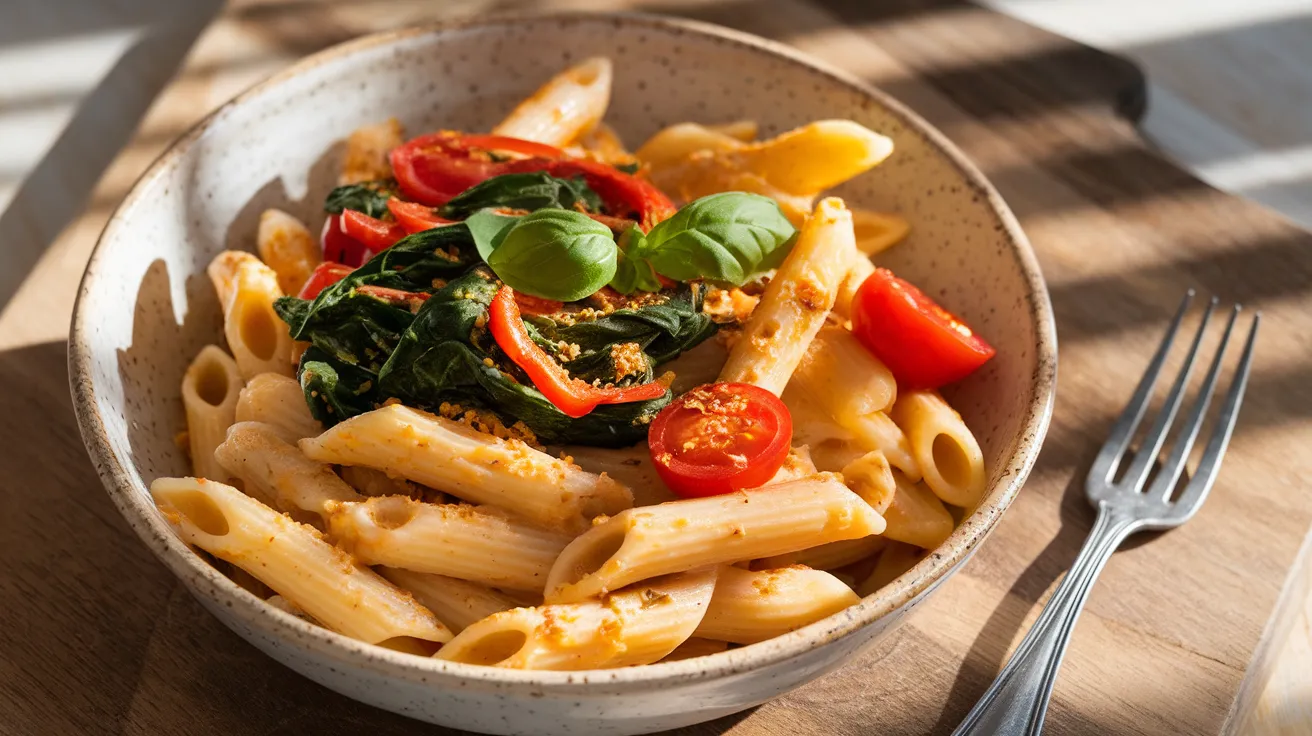
This beginner-friendly vegan pasta recipe transforms simple ingredients into restaurant-quality comfort food. Our creamy vegan pasta features a rich cashew-based sauce that rivals any dairy version, proving that plant-based cooking can be both delicious and satisfying. Perfect for those new to vegan pasta making, this recipe includes detailed steps and helpful tips for guaranteed success.
SERVES: 4 | PREP: 20 MIN | COOK: 25 MIN | TOTAL: 45 MIN
Ingredients
For the Vegan Pasta Base
| Ingredient | Amount |
|---|---|
| Penne or rigatoni pasta | 12 oz |
| Raw cashews (unsalted) | 1 cup |
| Unsweetened almond milk | 1½ cups |
| Nutritional yeast | ¼ cup |
| Garlic cloves | 4 large |
| Fresh lemon juice | 2 tablespoons |
For the Vegetables
| Ingredient | Amount |
|---|---|
| Cherry tomatoes | 2 cups, halved |
| Fresh spinach | 4 cups, packed |
| Yellow onion | 1 medium, diced |
| Red bell pepper | 1 large, sliced |
| Extra virgin olive oil | 3 tablespoons |
Seasonings & Herbs
| Ingredient | Amount |
|---|---|
| Sea salt | 1 teaspoon |
| Fresh black pepper | ½ teaspoon |
| Italian seasoning blend | 1 tablespoon |
| Fresh basil leaves | ¼ cup, chopped |
| Red pepper flakes | ¼ teaspoon |
Detailed Step-by-Step Vegan Pasta Instructions
Phase 1: Essential Preparation (15 minutes)
Step 1: Prepare Your Cashews Place 1 cup of raw cashews in a medium bowl. Pour very hot tap water over them until completely covered by 2 inches. Let them soak for 15-20 minutes. Why this matters: Soaking softens the cashews so they blend into a perfectly smooth cream for your vegan pasta sauce. Hard cashews will create a grainy, unpleasant texture.
Step 2: Set Up Your Pasta Water Fill your largest pot (at least 6 quarts) with water, leaving 3 inches from the rim. Add 1 tablespoon of salt per gallon of water. Beginner tip: The water should taste like mild seawater – this is how pasta gets properly seasoned. Cover and bring to a rolling boil over high heat. Visual cue: You’ll see large, vigorous bubbles breaking the surface consistently.
Step 3: Prepare All Vegetables (Mise en Place)
- Onion: Peel and dice into ¼-inch pieces. How-to: Cut onion in half, lay flat side down, make horizontal cuts, then vertical cuts.
- Bell pepper: Remove stem and seeds, slice into ¼-inch strips lengthwise.
- Cherry tomatoes: Wash and cut each one in half through the equator.
- Spinach: Remove any thick stems, roughly chop large leaves. Safety tip: Wash spinach thoroughly in cold water, even if pre-washed.
- Garlic: Peel and roughly chop – don’t worry about perfect mincing since it’s going in the blender.
- Fresh basil: Stack leaves, roll tightly, and slice thinly (called chiffonade).
Step 4: Gather Your Equipment Set out: high-speed blender, large skillet, wooden spoon, measuring cups, fine-mesh strainer, and serving bowls. Organization tip: Having everything within arm’s reach prevents overcooking while you search for tools.
Phase 2: Cooking the Perfect Vegan Pasta (12 minutes)
Step 5: Test Your Water When water reaches a full rolling boil (large bubbles continuously breaking surface), it’s ready. Temperature check: Water should be at 212°F if you have a thermometer, but visual cues work perfectly.
Step 6: Add Pasta Properly Add all 12 oz of pasta at once to prevent sticking. Technique: Pour pasta in slowly while stirring with a long spoon. The water will stop boiling momentarily – this is normal. Timing tip: Start your timer when the water returns to a boil, not when you first add the pasta.
Step 7: Cook Pasta to Almost Perfect Cook pasta for 1 minute LESS than package directions state. Example: If package says 10 minutes, cook for 9 minutes. Why: The pasta will finish cooking in the sauce, preventing mushy vegan pasta. Stir occasionally to prevent sticking.
Step 8: Test for Doneness At the 1-minute-early mark, fish out one piece with a fork. Texture check: It should be tender but still have a slight firmness when you bite it (al dente). The center should look slightly opaque, not translucent.
Step 9: Reserve Pasta Water (Critical Step) Before draining, use a heatproof measuring cup to scoop out 1 full cup of the starchy pasta cooking water. Why this is crucial: This liquid gold contains starches that help bind your vegan pasta sauce and create silky texture. Set aside – don’t skip this step!
Step 10: Drain Pasta Correctly Pour pasta into a large colander in the sink. Important: Do NOT rinse the pasta. The surface starch helps sauce adhere better. Give the colander 2-3 gentle shakes to remove excess water, then set aside.
Phase 3: Creating the Creamy Cashew Sauce (8 minutes)
Step 11: Prepare Your Blender Drain the soaked cashews completely using a fine-mesh strainer. Quality check: Cashews should feel soft when pressed between your fingers. If still hard, soak 5 more minutes in hot water.
Step 12: Blend the Cashew Cream Base Add to blender in this order: drained cashews, 1½ cups almond milk, ¼ cup nutritional yeast, chopped garlic, 2 tablespoons lemon juice, and 1 teaspoon salt. Order matters: Liquids first help the blender work more efficiently.
Step 13: Achieve Perfect Smoothness Blend on high speed for 60-90 seconds until completely smooth. Visual check: The mixture should look like heavy cream with no visible cashew pieces. Texture test: Pour a small amount on a spoon – it should feel silky, not gritty. If grainy, blend 30 more seconds.
Step 14: Taste and Adjust the Base Pour a small amount into a spoon and taste. Flavor balance: You should taste mild nuttiness, slight tang from lemon, and savory notes from nutritional yeast. Adjustments: Add more lemon juice for brightness, nutritional yeast for cheesiness, or salt for overall flavor boost.
Phase 4: Building the Vegan Pasta Sauce (10 minutes)
Step 15: Heat Your Pan Properly Place your large skillet or sauté pan over medium heat. Size matters: Use the same pot you cooked pasta in, or a skillet large enough to hold all the pasta comfortably. Let it heat for 1 minute before adding oil.
Step 16: Start with Aromatics Add 3 tablespoons olive oil and swirl to coat the pan. Temperature test: Oil should shimmer but not smoke. Immediately add diced onions in a single layer. Sound cue: You should hear gentle sizzling, not aggressive spattering.
Step 17: Cook Onions to Perfection Sauté onions for 4-5 minutes, stirring every 60 seconds. Visual progression: They’ll go from white to translucent to lightly golden. Aroma cue: Your kitchen should smell sweet and fragrant. Don’t rush: Properly cooked onions create the flavor foundation for great vegan pasta.
Step 18: Add Bell Peppers Add sliced bell peppers to the pan with onions. Technique: Spread them in an even layer, don’t overcrowd. Cook for 3-4 minutes, stirring every minute. Target texture: Peppers should be tender-crisp, not soft and mushy. They’ll continue cooking in the sauce.
Step 19: Incorporate Tomatoes and Seasonings Add halved cherry tomatoes, 1 tablespoon Italian seasoning, and ¼ teaspoon red pepper flakes. Timing: Cook for 2-3 minutes until tomatoes start releasing their juices. Visual cue: You’ll see liquid pooling in the pan and tomatoes beginning to break down slightly.
Phase 5: Bringing Your Vegan Pasta Together (8 minutes)
Step 20: Add the Cashew Cream Sauce Pour the blended cashew mixture into the vegetable pan. Technique: Pour slowly while stirring to prevent separation. Heat level: Keep at medium-low to prevent scorching. Visual check: The sauce should coat the vegetables evenly.
Step 21: Heat Through Gently Warm the sauce for 2-3 minutes, stirring constantly. Important: Don’t let it boil or the cashew cream may separate. Target temperature: Hot enough that you see gentle steam rising, but no bubbling.
Step 22: Add Pasta and Combine Add the drained pasta to the sauce pan. Technique: Use tongs or a large spoon to toss everything together gently. Coating check: Every piece of pasta should be coated with the creamy sauce. If sauce seems thick, add reserved pasta water 2 tablespoons at a time.
Step 23: Adjust Consistency Too thick? Add pasta water gradually until you reach a creamy consistency that coats pasta without being gluey. Too thin? Cook uncovered for 1-2 more minutes to reduce slightly. Perfect consistency: Sauce should cling to pasta without pooling heavily in the bottom of the pan.
Step 24: Add Fresh Greens Add the 4 cups of fresh spinach to the pan. Technique: Don’t stir immediately – let the leaves sit on top for 30 seconds to start wilting. Then gently fold in with tongs. Timing: Spinach should be just wilted, still bright green, not dark and mushy.
Step 25: Final Seasoning and Herbs Remove pan from heat. Add chopped fresh basil and freshly ground black pepper. Taste test: Try a forkful and adjust seasonings. Common adjustments: More salt for overall flavor, lemon juice for brightness, or nutritional yeast for cheesiness.
Step 26: Serve Your Vegan Pasta Divide immediately among 4 warmed bowls. Garnish options: Extra fresh basil, a sprinkle of nutritional yeast, or a drizzle of good olive oil. Serving tip: Vegan pasta is best enjoyed immediately while the sauce is at perfect consistency.
Professional Chef’s Notes for Vegan Pasta Success
Cashew Cream Perfection: For the smoothest vegan pasta sauce, soak cashews overnight in the refrigerator if you have time. This creates an even creamier base than the quick hot water method.
Nutritional Yeast Selection: Choose flakes over powder for better flavor distribution in your vegan pasta. Store in the refrigerator after opening to maintain its nutty, cheese-like taste.
Pasta Water Strategy: That starchy pasta water is liquid gold for vegan pasta dishes. It helps bind dairy-free sauces better than plain water and adds silky texture.
Make-Ahead Magic: Prepare the cashew cream sauce up to 3 days ahead and refrigerate. This vegan pasta component actually improves in flavor as it sits.
Vegan Pasta Nutrition Information (Per Serving)
- Calories: 485
- Protein: 18g
- Carbohydrates: 72g
- Fat: 16g
- Fiber: 8g
- Sodium: 380mg
- Calcium: 120mg (from nutritional yeast and almond milk)
Creative Vegan Pasta Variations
Mediterranean Vegan Pasta: Transform this base recipe by adding sun-dried tomatoes, kalamata olives, and marinated artichoke hearts. Finish with fresh oregano and a splash of white wine vinegar for authentic Mediterranean flavors.
Protein-Rich Vegan Pasta: Boost the protein content by stirring in white beans or chickpeas during the final assembly phase. This creates a hearty, satisfying meal similar to our protein-packed vegan potato salad.
Herb Garden Vegan Pasta: Replace basil with a combination of fresh parsley, oregano, and thyme. For extra richness, swirl in a spoonful of our homemade vegan pesto just before serving.
Southwest Spiced Vegan Pasta: Give this vegan pasta a completely different personality by adding jalapeños, corn kernels, and black beans. Season with cumin and chili powder instead of Italian herbs for a fusion twist.
Storage & Reheating Your Vegan Pasta
Refrigerator Storage: Store leftover vegan pasta in airtight containers for up to 4 days. The cashew cream will naturally thicken as it chills, which is completely normal and expected.
Gentle Reheating Method: Add 2-3 tablespoons of plant milk or reserved pasta water when reheating. Warm over medium-low heat, stirring frequently to prevent sticking. Temperature tip: Heat just until steaming, don’t boil.
Freezer Storage: This vegan pasta freezes beautifully for up to 2 months. Cool completely before freezing in portion-sized containers. Thaw overnight in the refrigerator before reheating.
Meal Prep Success: If preparing this vegan pasta for meal prep, slightly undercook the pasta initially. It will finish cooking perfectly during the reheating process without becoming mushy.
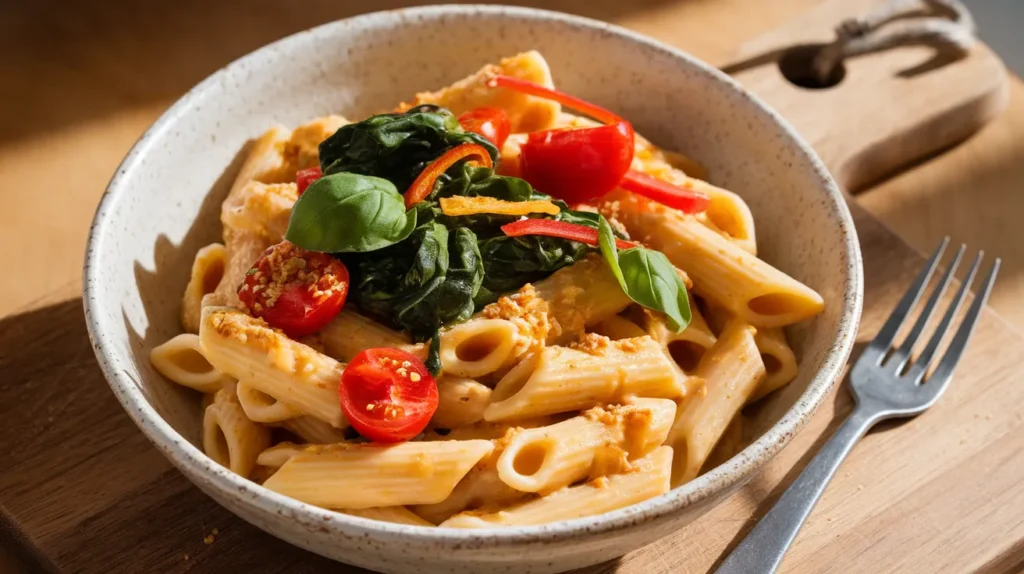
Troubleshooting Common Vegan Pasta Problems
Grainy Cashew Sauce: If your cashew cream isn’t perfectly smooth, your blender may need more power or the cashews need longer soaking. Try adding hot water gradually while blending, or soak cashews for several hours next time.
Vegan Pasta Sauce Too Thick: Thin gradually with reserved pasta water or additional plant milk. Add liquid slowly while stirring over low heat until you reach the desired creamy consistency.
Bland Flavor in Vegan Pasta: Plant-based dishes need bold seasoning to shine. Increase nutritional yeast for cheesiness, lemon juice for brightness, and salt for overall flavor enhancement. Taste and adjust multiple times.
Overcooked Vegetables: Add delicate greens like spinach at the very end of cooking. They’ll wilt perfectly from residual heat without becoming dark and soggy in your vegan pasta.
Pasta Sticking Together: Toss drained pasta immediately with a drizzle of olive oil if you’re not adding it to sauce right away. Never let pasta sit naked in the colander, as it will clump together.
Essential Equipment for Perfect Vegan Pasta
- High-speed blender or food processor (for silky cashew cream)
- Large pasta pot (6-8 quart capacity minimum)
- Fine-mesh strainer (for draining cashews and pasta)
- Large skillet or sauté pan (12-inch diameter ideal)
- Wooden spoon or silicone spatula (for gentle stirring)
- Tongs (for tossing pasta with sauce)
- Measuring cups and spoons (dry and liquid)
- Sharp chef’s knife and cutting board
- Heatproof measuring cup (for pasta water)
Organized Shopping List for Vegan Pasta
Fresh Produce Section
- 4 large garlic cloves
- 1 medium yellow onion
- 1 large red bell pepper
- 2 cups cherry tomatoes
- 4 cups fresh spinach
- ¼ cup fresh basil leaves
- 1 fresh lemon
Pantry/Dry Goods Aisle
- 12 oz penne or rigatoni pasta
- 1 cup raw unsalted cashews
- ¼ cup nutritional yeast flakes
- 1 tablespoon Italian seasoning blend
- Sea salt and black pepper
- Red pepper flakes
- Extra virgin olive oil
Refrigerated Section
- 1½ cups unsweetened almond milk
Five Success Secrets for Amazing Vegan Pasta
1. Invest in Quality Cashews: Choose whole, raw cashews without broken pieces for your vegan pasta sauce. They blend smoother and create better texture than pieces or cashew meal.
2. Never Skip the Acid: Lemon juice is crucial in vegan pasta – it brightens flavors and prevents the cashew cream from tasting flat or overly rich.
3. Master Your Timing: Have all ingredients prepped and ready before you start cooking. This vegan pasta recipe moves quickly once you begin the cooking process.
4. Season Boldly: Vegan pasta needs confident seasoning to reach its full potential. Build flavors gradually, tasting after each addition until the dish sings.
5. Serve Immediately: Unlike traditional dairy-based pasta dishes, vegan pasta is at its absolute best when served hot and fresh. The cashew cream can thicken and lose its silky texture as it cools.
This comprehensive vegan pasta recipe proves that plant-based cooking can be both accessible and incredibly satisfying. With detailed instructions perfect for beginners and professional tips for success, you’ll create restaurant-quality vegan pasta in your own kitchen. The creamy cashew sauce and perfectly cooked vegetables make this dish a true crowd-pleaser that even non-vegans will request again and again.