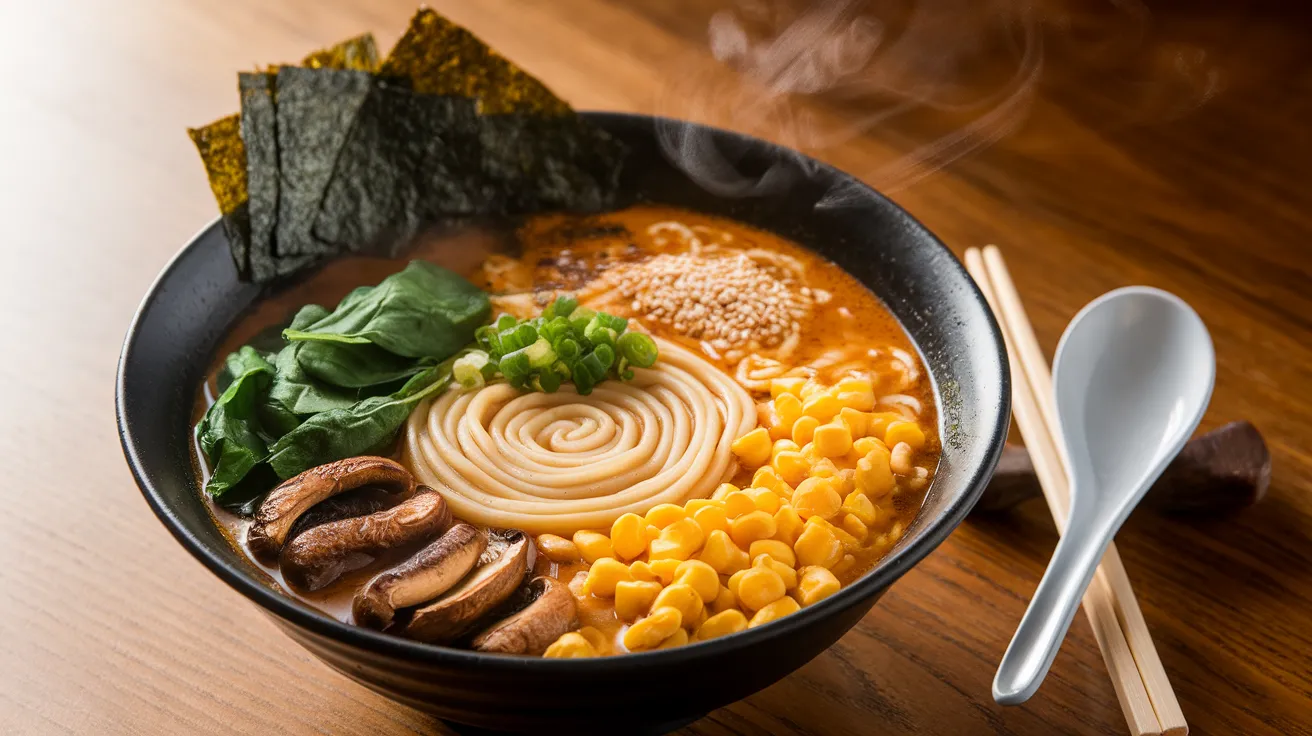
This comforting vegan ramen brings restaurant-quality flavors to your kitchen with simple plant-based ingredients. Our step-by-step vegan ramen recipe creates a rich, savory broth that’s perfect for beginners wanting to master this beloved comfort food.
SERVES: 4 | PREP: 20 MIN | COOK: 25 MIN | TOTAL: 45 MIN
Ingredients for Your Vegan Ramen
For the Broth Base
| Ingredient | Amount | Notes |
|---|---|---|
| Vegetable stock | 6 cups | Low-sodium preferred |
| White miso paste | 3 tablespoons | Found in refrigerated section |
| Soy sauce | 2 tablespoons | Use low-sodium if preferred |
| Sesame oil | 1 tablespoon | Toasted variety for best flavor |
| Fresh ginger, minced | 2 teaspoons | About 1-inch piece |
| Garlic cloves, minced | 3 cloves | Medium-sized cloves |
| Rice vinegar | 1 teaspoon | Adds brightness to broth |
For the Vegan Ramen Toppings
| Ingredient | Amount | Notes |
|---|---|---|
| Fresh ramen noodles | 4 portions | Or 12 oz dried ramen |
| Shiitake mushrooms, sliced | 8 oz | Remove tough stems |
| Baby spinach | 2 cups | Packed measurement |
| Green onions, chopped | 4 stalks | Both white and green parts |
| Corn kernels | 1 cup | Fresh or frozen works |
| Nori sheets, cut into strips | 2 sheets | Optional but traditional |
| Sesame seeds | 2 tablespoons | White or black varieties |
Detailed Step-by-Step Vegan Ramen Instructions
Phase 1: Setting Up Your Kitchen (5 minutes)
- Gather all ingredients on your counter before starting. This French cooking technique called “mise en place” prevents mistakes and ensures smooth cooking. Check that your miso paste hasn’t separated – give it a stir if needed.
- Fill a large pot with water and bring to boil for noodles. Place this on your back burner since you’ll need it later. Use about 6 cups of water – enough so noodles can move freely without sticking together.
- Prepare your vegetables by washing the spinach thoroughly and patting dry. Remove any thick stems. Slice mushrooms about 1/4-inch thick – they’ll shrink during cooking. Chop green onions, keeping white and green parts separate since they cook at different rates.
Phase 2: Building the Vegan Ramen Broth Foundation (8 minutes)
- Heat your largest soup pot over medium heat for 30 seconds. Add sesame oil and swirl to coat the bottom evenly. The oil should shimmer but not smoke – this temperature is perfect for sautéing without burning.
- Add minced garlic and ginger to the heated oil. Stir constantly with a wooden spoon for exactly 30 seconds. You’ll smell the aromatics becoming fragrant – this is called “blooming” the spices. Don’t let them turn brown or they’ll become bitter.
- Pour in vegetable stock slowly to prevent splashing. The liquid will sizzle when it hits the hot oil – this is normal. Bring the mixture to a gentle simmer over medium heat. You’ll see small bubbles forming around the edges, not a rolling boil.
Phase 3: Creating the Perfect Miso Base (7 minutes)
- Remove 1/2 cup of hot stock using a ladle and place in a small bowl. This step is crucial – never add miso directly to the pot or it will clump and create an uneven texture in your vegan ramen.
- Whisk miso paste into the warm stock vigorously until completely smooth. Use a small whisk or fork to break up any lumps. The mixture should look like chocolate milk – uniform and creamy without any visible chunks.
- Return the miso mixture to the pot slowly, stirring constantly with a large spoon. This gradual addition prevents the miso from shocking and curdling. Add soy sauce and rice vinegar now for depth and brightness.
- Simmer the broth gently for 5 minutes, stirring occasionally. The surface should barely bubble – aggressive boiling destroys miso’s beneficial probiotics and can make the broth cloudy. Taste and adjust seasoning if needed.
Phase 4: Preparing Your Vegan Ramen Toppings (10 minutes)
- Heat a dry skillet over medium-high heat for 1 minute. No oil needed – mushrooms release their own moisture. Add sliced shiitakes in a single layer without overlapping. Don’t move them for 2 minutes to develop golden color.
- Flip mushrooms when edges look golden brown. Cook another 2 minutes until both sides are caramelized. Season lightly with salt. Remove to a plate – they’ll continue cooking slightly from residual heat.
- Cook the ramen noodles in your boiling water according to package directions. Fresh noodles take 2-3 minutes, dried take 3-4 minutes. Test for doneness by tasting – they should be tender but still have slight bite (al dente).
- Drain noodles immediately in a colander and rinse briefly with cool water to stop cooking. This prevents overcooking and keeps them from getting mushy in the hot broth. Shake off excess water.
Phase 5: Assembling Your Perfect Vegan Ramen Bowl (5 minutes)
- Warm your serving bowls by filling them with hot water, then emptying. This keeps your vegan ramen hot longer. Divide the cooked noodles evenly among the four bowls, creating a neat nest in the center.
- Add spinach directly to the simmering broth for exactly 30 seconds. Use tongs to lift it out immediately – it should be bright green and wilted but not overcooked. Distribute evenly among bowls.
- Ladle hot broth over noodles carefully, filling each bowl about 3/4 full. The broth should be steaming hot to properly warm all ingredients. Pour slowly to avoid splashing.
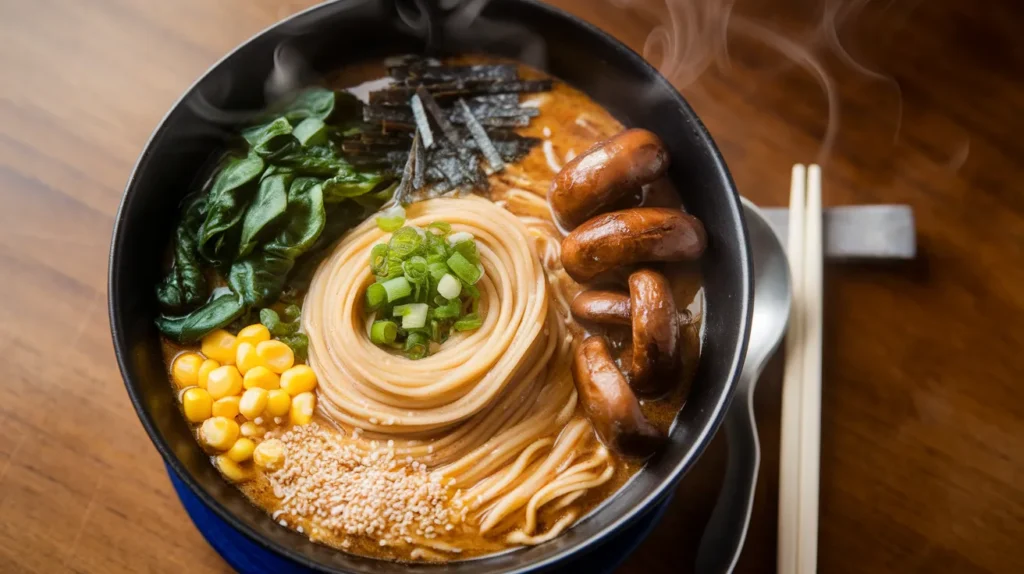
- Arrange toppings artfully around each bowl: place mushrooms on one side, corn kernels scattered throughout, and chopped green onions over everything. Add nori strips and sesame seeds as final garnishes.
- Serve immediately while everything is hot. Provide chopsticks and soup spoons for authentic eating experience. Encourage diners to mix ingredients as they eat for best flavor distribution.
Professional Chef’s Notes for Vegan Ramen Success
Miso Quality Matters: Choose white (shiro) miso for milder flavor or red (aka) miso for deeper intensity. Store opened miso in the refrigerator for up to one year – it won’t spoil but may darken.
Noodle Perfection: Fresh ramen noodles have superior texture but cost more. If using dried, look for ones labeled “chukamen” for authenticity. Never leave cooked noodles sitting in broth or they’ll become soggy.
Mushroom Mastery: Don’t wash mushrooms – brush off dirt with paper towels. Washing makes them waterlogged and prevents proper browning in your vegan ramen toppings.
Temperature Control: Keep finished broth between 160-180°F (71-82°C). Use an instant-read thermometer if unsure. This range preserves miso’s beneficial properties while staying food-safe.
Nutrition Information Per Serving
- Calories: 420
- Protein: 18g
- Carbohydrates: 65g
- Fat: 12g
- Fiber: 8g
- Sodium: 1,240mg
- Iron: 4mg
- Vitamin C: 12mg
Creative Vegan Ramen Variations
Spicy Korean-Style Bowl
Transform your basic vegan ramen by adding 2 teaspoons gochujang (Korean chili paste) to the broth. Top with kimchi and sliced jalapeños for authentic heat and fermented flavors.
Rich Coconut Vegan Ramen
Replace 2 cups vegetable stock with full-fat coconut milk for creamy richness. Reduce miso to 2 tablespoons and add lime juice for balance. Perfect for those wanting indulgent comfort food.
Protein-Packed Version
Add cubed extra-firm tofu, edamame beans, or hemp hearts for additional protein. For more plant-based meal ideas, try this satisfying vegan sandwich recipe.
Mediterranean-Inspired Bowl
Swap shiitakes for sun-dried tomatoes and add fresh basil leaves. Include artichoke hearts and serve with this creamy vegan ranch dressing on the side.
Storage and Reheating Your Vegan Ramen
Proper Refrigeration: Store broth and solid ingredients separately in airtight containers for up to 3 days. Never store cooked noodles in broth – they’ll absorb liquid and become mushy.
Freezing Instructions: Freeze broth alone in freezer-safe containers for up to 3 months. Leave 1-inch headspace for expansion. Thaw overnight in refrigerator before reheating.
Reheating Method: Warm broth gently on stovetop over medium-low heat, stirring occasionally. Don’t microwave – it heats unevenly and can curdle the miso.
Fresh Assembly: For best results, cook fresh noodles and prepare new toppings when reheating. The investment in time creates restaurant-quality results.
Troubleshooting Common Vegan Ramen Problems
Lumpy, Grainy Broth: Always mix miso with warm liquid first, never add directly to pot. If lumps persist, strain broth through fine-mesh sieve before serving.
Bland, Flat Flavor: Increase miso gradually, tasting between additions. Add extra soy sauce or a pinch of salt. Remember that miso saltiness varies between brands.
Mushy, Overcooked Noodles: Cook noodles separately from broth and add just before serving. Use timer religiously – overcooked noodles can’t be fixed.
Cloudy, Murky Broth: Avoid vigorous boiling which breaks down ingredients. Gentle simmering keeps your vegan ramen broth clear and appetizing.
Lacking Richness and Body: Add extra tablespoon of sesame oil or splash of coconut milk. Consider using mushroom stock instead of vegetable for deeper umami flavor.
Essential Equipment for Vegan Ramen Making
- Large heavy-bottomed pot (6-quart minimum) for even heat distribution
- Medium saucepan for cooking noodles separately
- Sharp chef’s knife for precise vegetable prep
- Small whisk specifically for mixing miso smoothly
- Large ladle for serving hot broth without splashing
- Deep bowls (at least 2-cup capacity) for proper presentation
- Fine-mesh strainer for removing any lumps if needed
Organized Shopping List for Vegan Ramen
Produce Section
- Fresh ginger root (buy extra for other recipes)
- Garlic bulb (choose firm, heavy bulbs)
- Green onions (look for bright green tops)
- Baby spinach (pre-washed saves time)
- Fresh shiitake mushrooms (avoid slimy or dark spots)
Refrigerated Section
- White miso paste (check expiration date)
- Fresh ramen noodles (usually near tofu)
Pantry Items
- Vegetable stock (low-sodium preferred)
- Soy sauce (tamari for gluten-free option)
- Sesame oil (small bottles stay fresher)
- Rice vinegar (unseasoned variety)
- Sesame seeds (toasted taste better)
Frozen Section
- Corn kernels (if not using fresh)
- Nori sheets (sometimes frozen, sometimes shelf-stable)
Expert Success Secrets for Perfect Vegan Ramen
- Invest in quality miso – Look for unpasteurized, naturally fermented varieties in the refrigerated section. They provide more complex flavors and beneficial probiotics than shelf-stable versions.
- Master temperature control – Keep your vegan ramen broth at gentle simmer throughout cooking. Boiling destroys delicate flavors and creates cloudy, unappetizing broth.
- Use fresh noodles when possible – They have superior texture and don’t fall apart like dried varieties. Check Asian grocery stores for best selection and prices.
- Prepare mise en place – Have absolutely everything prepped and ready before starting. Hot broth and perfectly timed noodles wait for no one in successful vegan ramen making.
- Taste constantly and adjust – Every brand of miso and soy sauce varies in saltiness and intensity. Build flavors gradually, tasting after each addition until perfect balance is achieved.
This comprehensive vegan ramen recipe transforms simple plant-based ingredients into restaurant-quality comfort food. The rich, umami-packed broth combined with perfectly prepared toppings creates a satisfying meal that proves vegan cooking can be both delicious and deeply satisfying.