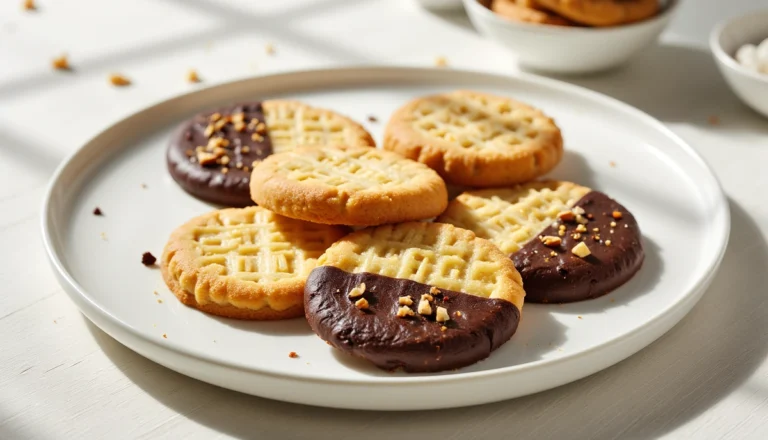
These festive peppermint shortbread cookies bring together buttery, crumbly texture with refreshing mint flavor. Perfect for holiday cookie exchanges or cozy winter afternoons, this peppermint shortbread recipe delivers classic elegance with minimal effort. Each bite combines the rich simplicity of traditional shortbread with a bright peppermint twist that makes these cookies absolutely irresistible.
SERVES: 4 | PREP: 20 MIN | COOK: 12 MIN | TOTAL: 32 MIN
Ingredients
Shortbread Base
| Ingredient | Measurement |
|---|---|
| Unsalted butter, softened | 1 cup (2 sticks) |
| Granulated sugar | ½ cup |
| All-purpose flour | 2 cups |
| Cornstarch | ¼ cup |
| Salt | ¼ teaspoon |
Peppermint Enhancement
| Ingredient | Measurement |
|---|---|
| Peppermint extract | 1 teaspoon |
| Vanilla extract | ½ teaspoon |
| Crushed candy canes | 3 tablespoons |
Optional Topping
| Ingredient | Measurement |
|---|---|
| White chocolate chips | ½ cup |
| Additional crushed candy canes | 2 tablespoons |
Step-by-Step Instructions
Phase 1: Preparing the Dough (8 minutes)
Step 1: Take your softened butter out and place it in a large mixing bowl. The butter should leave a slight indent when pressed but not be greasy or melted. This temperature matters because cold butter won’t cream properly, and melted butter will make your cookies spread too much.
Step 2: Add the ½ cup granulated sugar to the butter. Using a hand mixer or stand mixer, beat these together for 2-3 minutes until the mixture looks pale yellow and fluffy. You’ll know it’s ready when you can see tiny air pockets throughout and the texture resembles whipped frosting.
Step 3: Pour in the 1 teaspoon peppermint extract and ½ teaspoon vanilla extract. Mix for another 30 seconds until the extracts are completely incorporated. The peppermint smell should be strong but pleasant at this stage.
Step 4: In a separate bowl, whisk together the 2 cups all-purpose flour, ¼ cup cornstarch, and ¼ teaspoon salt. The cornstarch is your secret weapon here—it creates that signature shortbread texture that’s tender and crumbly rather than tough.
Step 5: Gradually add the flour mixture to the butter mixture in three additions, mixing on low speed after each addition. Stop mixing as soon as you don’t see dry flour anymore. Overmixing at this stage develops gluten, which makes tough cookies instead of tender ones.
Step 6: Fold in 2 tablespoons of the crushed candy canes using a spatula. The dough should look slightly crumbly but hold together when squeezed. If it seems too dry, that’s normal for shortbread dough.
Phase 2: Shaping and Chilling (10 minutes + chill time)
Step 7: Turn the dough out onto a clean countertop. Using your hands, gently knead it 3-4 times until it comes together into a smooth ball. Don’t overwork it—you just want everything cohesive.
Step 8: Shape the dough into a flat disk about 1 inch thick. This shape helps it chill evenly and makes rolling easier later. Wrap it tightly in plastic wrap.
Step 9: Refrigerate the wrapped dough for 30 minutes. This step is crucial because cold dough holds its shape better during baking and produces cookies with cleaner edges. Set a timer so you don’t forget about it.
Step 10: While the dough chills, preheat your oven to 325°F. Line two baking sheets with parchment paper. The lower temperature is intentional—shortbread should bake gently without browning too much.
Phase 3: Rolling and Cutting (5 minutes)
Step 11: Remove the chilled dough from the refrigerator. On a lightly floured surface, roll it out to ¼ inch thickness. Use gentle, even pressure with your rolling pin, working from the center outward. If the dough cracks at the edges, that’s fine—just press it back together.
Step 12: Cut out shapes using 2-inch cookie cutters. For this batch size, you’ll get approximately 16 cookies. Press straight down with the cutter without twisting, then lift straight up. Twisting creates ragged edges that don’t bake as evenly.
Step 13: Place cut cookies on prepared baking sheets, spacing them 1 inch apart. Shortbread doesn’t spread much, so they won’t need as much room as other cookies. Gather scraps, re-roll once, and cut more shapes.
Phase 4: Baking and Finishing (12 minutes)
Step 14: Bake for 12-14 minutes until the bottoms are just barely golden and the tops look set but still pale. The edges should feel firm when gently touched. These cookies continue cooking slightly after you remove them, so don’t wait for browning on top.
Step 15: Let cookies cool on the baking sheet for 5 minutes. They’re fragile when hot and will firm up as they cool. After 5 minutes, transfer them to a wire cooling rack using a thin spatula.
Step 16 (Optional): If adding white chocolate topping, melt the ½ cup white chocolate chips in the microwave in 20-second intervals, stirring between each, until smooth. Drizzle over cooled cookies and immediately sprinkle with the remaining 1 tablespoon crushed candy canes.
Chef’s Notes
Butter temperature is everything. Your butter should be soft enough to blend easily but still hold its shape. Leave it at room temperature for 45-60 minutes before starting, or cut it into cubes to speed up softening.
Cornstarch creates the signature texture. This ingredient absorbs moisture and prevents gluten development, giving you that tender, sandy texture that defines perfect peppermint shortbread cookies.
Don’t skip the chill time. Cold dough maintains sharp edges during baking. If you’re short on time, freeze the dough for 15 minutes instead of refrigerating for 30.
Low and slow baking wins. The 325°F temperature prevents excessive browning while allowing the cookies to dry out slightly for that crisp, snappy texture we’re after.
Nutrition Information (Per Cookie)
- Calories: 165
- Protein: 2g
- Carbohydrates: 19g
- Fat: 9g
- Fiber: 0.5g
- Sugar: 8g
- Sodium: 45mg
Creative Variations
Chocolate-Mint Delight
Add ¼ cup mini chocolate chips to the dough along with the candy canes. The chocolate pairs beautifully with peppermint for a flavor combination similar to our chocolate dipped shortbread, creating a double-chocolate experience.
Almond Peppermint
Replace the vanilla extract with ½ teaspoon almond extract. This creates a more complex flavor profile that reminds you of fancy European bakeries.
Citrus-Mint Fusion
Add 1 tablespoon fresh orange zest to the dough. The bright citrus notes complement the mint without overwhelming it, creating a surprisingly refreshing twist.
Decorative Holiday Style
Cut dough using festive shapes like snowflakes or stars, similar to our snowflake shortbread, and dust with powdered sugar before serving for an elegant presentation.
Storage and Reheating
Room Temperature: Store cooled cookies in an airtight container with parchment paper between layers. They’ll stay fresh for 7 days at room temperature.
Freezing: These cookies freeze beautifully for up to 3 months. Layer them between parchment paper in a freezer-safe container. Thaw at room temperature for 30 minutes before serving.
Dough Storage: Unbaked dough can be refrigerated for 5 days or frozen for 2 months. Wrap tightly in plastic wrap, then place in a freezer bag. Thaw frozen dough overnight in the refrigerator before rolling.
Crisp Revival: If cookies soften over time, place them on a baking sheet in a 300°F oven for 3-4 minutes to restore their snap.
Troubleshooting Common Problems
Problem 1: Cookies Spread Too Much During Baking
Solution: Your butter was too warm or the dough wasn’t chilled long enough. Always refrigerate shaped cookies for 10 minutes before baking if you notice spreading. The dough should feel firm and cold to the touch when it goes in the oven.
Problem 2: Dry, Crumbly Dough That Won’t Hold Together
Solution: Add 1 tablespoon cold water to the dough, one teaspoon at a time, kneading gently after each addition. Sometimes humidity levels affect flour absorption, so slight adjustments are normal.
Problem 3: Cookies Are Too Hard or Tough
Solution: You likely overmixed the dough after adding flour or overbaked the cookies. Watch carefully during the last 2 minutes of baking. Cookies should still look slightly underdone when you remove them.
Problem 4: Peppermint Flavor Is Too Weak
Solution: Peppermint extract brands vary in strength. If your cookies taste bland, increase the extract to 1½ teaspoons next time. You can also brush warm cookies lightly with additional extract using a pastry brush.
Problem 5: Cookies Brown Too Much on the Bottom
Solution: Your oven might run hot, or you’re baking on a dark pan. Use light-colored baking sheets and reduce temperature to 315°F. You can also double-pan by placing one sheet inside another for insulation.
Equipment Essentials

- Stand mixer or hand mixer – For creaming butter properly
- Rolling pin – Preferably with thickness guides
- Cookie cutters – 2-inch shapes work best
- Parchment paper – Prevents sticking and ensures even baking
- Wire cooling rack – Allows air circulation for crisp texture
- Mixing bowls – At least 2 medium-sized bowls
- Measuring cups and spoons – For accurate measurements
- Plastic wrap – For chilling dough
- Thin metal spatula – For transferring delicate cookies
Shopping List by Store Section
Dairy Section
- Unsalted butter (2 sticks)
Baking Aisle
- All-purpose flour
- Granulated sugar
- Cornstarch
- Peppermint extract
- Vanilla extract
- Parchment paper
Candy/Seasonal Aisle
- Candy canes (you’ll need about 6 standard-size canes)
- White chocolate chips (optional)
Spice/Salt Section
- Table salt
Success Secrets
1. Room temperature matters more than you think. Butter at 65-68°F creates the ideal texture. Too cold and it won’t incorporate properly; too warm and your cookies will spread. When you press the butter, it should leave an indent without being greasy.
2. Measure flour correctly by spooning and leveling. Scooping directly from the bag packs the flour down, giving you up to 25% more flour than the recipe needs. This makes dry, tough cookies. Spoon flour into your measuring cup, then level with a knife.
3. Crush candy canes the easy way. Place them in a sealed plastic bag and crush with a rolling pin or meat mallet. For the finest texture, pulse briefly in a food processor. Aim for pieces about the size of coarse salt.
4. Use parchment paper, not just flour. While flouring your work surface prevents sticking, too much flour toughens the dough. Parchment paper gives you a non-stick surface without adding extra flour.
5. The toothpick test doesn’t work for shortbread. Unlike cakes, these cookies are done when the edges feel set and the bottoms just barely begin to color. The tops should still look pale. Trust the visual cues and timing more than any doneness test.
These peppermint shortbread cookies bring festive cheer without complicated techniques. The buttery base provides the perfect canvas for refreshing mint flavor, and the simple ingredient list means you can whip up a batch whenever the craving strikes. Whether you’re filling holiday cookie tins or just treating yourself to something special, this recipe delivers bakery-quality results every single time.