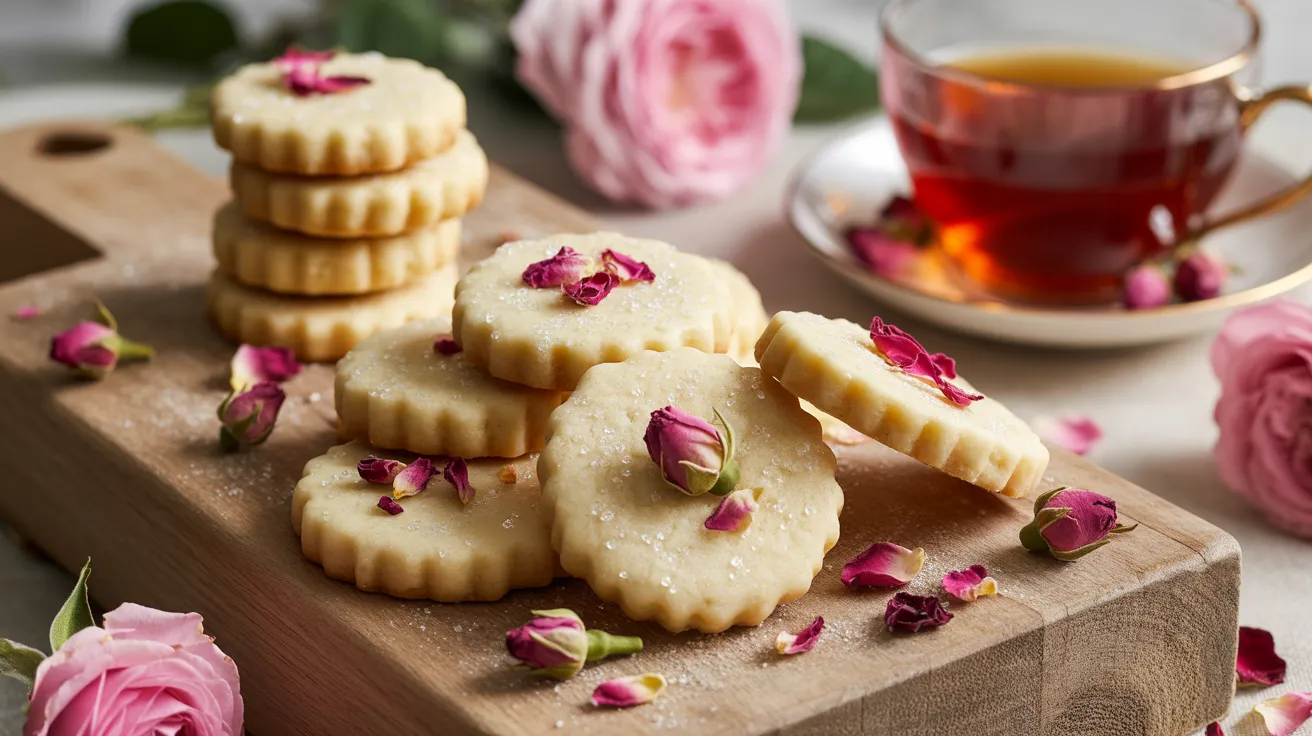
These delicate rose shortbread cookies bring floral elegance to classic buttery shortbread. With just a hint of rose water and optional dried rose petals, this rose shortbread recipe transforms simple ingredients into sophisticated treats perfect for afternoon tea or special celebrations. The tender, crumbly texture melts in your mouth while subtle rose flavor creates an unforgettable experience.
SERVES: 4 | PREP: 15 MIN | COOK: 18 MIN | TOTAL: 33 MIN
Ingredients
Dry Ingredients
| Ingredient | Amount |
|---|---|
| All-purpose flour | 1 cup |
| Powdered sugar | ¼ cup |
| Salt | ⅛ teaspoon |
| Dried culinary rose petals (optional) | 1 tablespoon |
Wet Ingredients
| Ingredient | Amount |
|---|---|
| Unsalted butter (cold) | ½ cup (1 stick) |
| Rose water | ½ teaspoon |
| Vanilla extract | ¼ teaspoon |
For Finishing
| Ingredient | Amount |
|---|---|
| Granulated sugar | 2 tablespoons |
| Dried rose petals (for garnish) | 1 teaspoon |
Step-by-Step Instructions
Phase 1: Preparing the Dough (5 minutes)
Step 1: Take your cold butter straight from the refrigerator and cut it into small ½-inch cubes. Cold butter is essential here because it creates those signature crumbly pockets in shortbread. I keep mine in the fridge until the exact moment I need it.
Step 2: In a medium mixing bowl, whisk together 1 cup flour, ¼ cup powdered sugar, and ⅛ teaspoon salt. Make sure the powdered sugar has no lumps by sifting it first if needed. These dry ingredients need to be evenly distributed before you add the butter.
Step 3: If you’re using dried rose petals, crush them gently between your fingers to release their oils and aroma. Add them to the flour mixture now. The petals will distribute throughout the dough and create beautiful flecks in your finished rose shortbread.
Step 4: Add your cold butter cubes to the flour mixture. Using a pastry cutter or two forks, cut the butter into the flour until the mixture looks like coarse crumbs with some pea-sized pieces of butter remaining. This takes about 2-3 minutes of cutting. Don’t rush this step—those butter pieces create the flaky, melt-in-your-mouth texture.
Step 5: Drizzle ½ teaspoon rose water and ¼ teaspoon vanilla extract over the mixture. Start with just the rose water amount listed because too much makes the cookies taste soapy rather than floral. I learned this the hard way when I got overly enthusiastic with my first batch.
Step 6: Use a wooden spoon to stir everything together until the mixture starts to clump. It will look dry and crumbly at first, but that’s exactly right. Press a handful together—if it holds its shape, you’re ready to move forward.
Phase 2: Shaping the Cookies (5 minutes)
Step 7: Turn the crumbly dough out onto a clean work surface. Using your hands, press and knead it gently 8-10 times until it comes together into a cohesive ball. The warmth from your hands will help bind everything without overworking the dough. Stop as soon as it forms a ball—overworking makes tough cookies instead of tender ones.
Step 8: Shape the dough into a thick disk about 1 inch tall. You can either roll this out with a rolling pin to ½-inch thickness for traditional round cookies, or shape it into a 6-inch log for slice-and-bake cookies. I prefer the log method because it gives you perfectly uniform cookies every time.
Step 9: If you made a log, wrap it in plastic wrap and refrigerate for 30 minutes. This chilling time isn’t included in the cook time above because you can skip it if you’re pressed for time, though chilled dough slices cleaner. If you rolled out the dough, use a 2-inch round cutter to cut out cookies and place them on your prepared baking sheet.
Step 10: While the dough chills (or right after cutting), preheat your oven to 325°F (163°C). Shortbread bakes at a lower temperature than most cookies because you want it to dry out and become crisp without browning too much. Line a baking sheet with parchment paper.
Phase 3: Baking (18 minutes)
Step 11: If you chilled a log, slice it into ½-inch thick rounds using a sharp knife. Place each round on your prepared baking sheet, spacing them 1 inch apart. They don’t spread much, but you want air to circulate around each cookie.
Step 12: Mix 2 tablespoons granulated sugar with 1 teaspoon crushed dried rose petals in a small bowl. Sprinkle this mixture lightly over the top of each cookie. The sugar creates a slight sparkle and crunch while the rose petals add visual appeal.
Step 13: Bake for 16-18 minutes, rotating the pan halfway through at the 9-minute mark. The cookies are done when the edges just barely start to turn golden and the centers look set but still pale. They’ll seem soft when you first take them out, but they firm up as they cool.
Step 14: Let the cookies cool on the baking sheet for 5 minutes before transferring them to a cooling rack. This cooling time is critical—if you move them too soon, they’ll break. After 5 minutes, use a thin spatula to carefully transfer each cookie to a wire rack.
Phase 4: Cooling and Finishing (10 minutes)
Step 15: Allow the rose shortbread to cool completely on the wire rack, about 10 more minutes. As they cool, you’ll notice them becoming firmer and developing that classic shortbread snap when you break them.
Chef’s Notes
Rose Water Quality Matters: Not all rose water is created equal. Look for culinary-grade rose water without added alcohol or synthetic fragrances. Middle Eastern or Indian grocery stores typically carry the best quality. A little goes a long way—start with less than you think you need.
Temperature Control: The secret to perfect rose shortbread is keeping that butter cold until it hits the oven. If your kitchen is warm, pop your bowl in the freezer for 5 minutes between mixing steps. Cold butter creates steam pockets during baking that give you that signature crumbly texture.
Flour Matters: I always use regular all-purpose flour, not self-rising. Shortbread depends on a specific flour-to-fat ratio, and self-rising flour with its added leavening agents will throw that off. You want dense, buttery cookies, not cakey ones.
Don’t Overbake: Shortbread should be pale with just a hint of color at the edges. If it turns golden brown all over, it’s overbaked and will taste dry instead of buttery. Set a timer and check early—every oven runs differently.
Nutrition Information (Per Serving – 3 cookies)
- Calories: 285
- Protein: 2g
- Carbohydrates: 28g
- Fat: 18g
- Saturated Fat: 11g
- Fiber: 1g
- Sugar: 10g
- Sodium: 85mg
Creative Variations
Lavender Rose Shortbread: Add ½ teaspoon dried culinary lavender along with the rose petals. The combination creates a French-inspired flavor that reminds me of walking through a Provence garden. This variation pairs beautifully with Earl Grey tea.
Chocolate-Dipped Rose: Once your cookies cool completely, melt 4 ounces dark chocolate and dip half of each cookie. Place them on parchment paper until the chocolate sets. The bitter chocolate balances the floral sweetness perfectly.
Lemon Rose Shortbread: Add 1 teaspoon lemon zest to the dough and replace the vanilla with ¼ teaspoon lemon extract. The citrus brightens the rose flavor and creates a more refreshing cookie. If you enjoyed our snowflake shortbread with citrus notes, you’ll love this variation.
Berry Rose Shortbread: Fold in 2 tablespoons finely chopped dried strawberries to the finished dough. The fruity-floral combination is stunning, and it’s a beautiful companion to our strawberry shortbread recipe.
Storage & Reheating
Room Temperature: Store rose shortbread in an airtight container at room temperature for up to 2 weeks. Place parchment paper between layers to prevent sticking. The cookies actually improve after a day or two as the rose flavor mellows and distributes evenly.
Freezing Baked Cookies: These freeze beautifully for up to 3 months. Layer them between parchment paper in a freezer-safe container. Thaw at room temperature for 30 minutes before serving—they’ll taste freshly baked.
Freezing Dough: Shape the dough into a log, wrap tightly in plastic wrap, then aluminum foil. Freeze for up to 3 months. When you’re ready to bake, slice the frozen log and add 2-3 extra minutes to the baking time. No need to thaw first.
Refreshing: If your cookies lose their crispness, place them on a baking sheet in a 300°F (149°C) oven for 5 minutes. Let them cool completely and they’ll be crisp again.
Troubleshooting Common Problems
Problem: Cookies spread too much during baking
Your butter was too warm when you mixed the dough. Shortbread needs cold butter to maintain its shape. Chill your shaped cookies for 15-30 minutes before baking, and make sure your oven is fully preheated. If the problem continues, your oven temperature might be running low—use an oven thermometer to check.
Problem: Cookies taste soapy instead of floral
You used too much rose water. Rose water is incredibly potent, and even ¼ teaspoon extra can ruin the batch. Start with ¼ teaspoon next time and add more only if you can barely taste it. Also check your rose water brand—some are more concentrated than others.
Problem: Dough is too crumbly and won’t come together
Your butter might have been too cold, or you didn’t mix enough after adding the liquids. Add ½ teaspoon cold water at a time, mixing gently between additions. Don’t add more than 2 teaspoons total or the cookies will be tough. Press and knead the dough more firmly to help it bind.
Problem: Cookies are hard instead of tender
You overworked the dough or overbaked the cookies. Shortbread should be mixed just until combined and baked until barely golden at the edges. The cookies continue cooking on the hot pan after you remove them from the oven, so take them out when they still look slightly underdone in the center.
Problem: Rose flavor is barely noticeable
Your rose water might be old or low quality. Rose water loses potency over time—check the date on your bottle. Buy fresh, culinary-grade rose water from a Middle Eastern market. You can also increase the amount to ¾ teaspoon, but do this gradually and taste the dough (it’s safe to eat) before baking to avoid going too far.
Equipment Essentials
- Mixing bowls (medium and small)
- Whisk for combining dry ingredients
- Pastry cutter or two forks
- Wooden spoon
- Rolling pin (if making traditional rounds)
- 2-inch round cookie cutter (optional)
- Sharp knife (for slicing log)
- Baking sheet
- Parchment paper
- Wire cooling rack
- Plastic wrap (for chilling dough)
- Thin metal spatula
- Oven thermometer (highly recommended)
Shopping List
Baking Aisle
- All-purpose flour
- Powdered sugar
- Granulated sugar
- Vanilla extract
Refrigerated Section
- Unsalted butter (1 stick)
Specialty/International Aisle
- Rose water (culinary grade)
- Dried culinary rose petals
Staples
- Salt
5 Success Secrets for Perfect Rose Shortbread
1. Cold Butter is Non-Negotiable
Keep your butter in the refrigerator until the moment you need it, and cut it into small cubes so it incorporates quickly. If you’re working in a warm kitchen, freeze your butter cubes for 5 minutes before mixing. The cold butter creates steam as it melts during baking, forming air pockets that give shortbread its signature tender, crumbly texture.
2. Measure Flour Correctly
Spoon flour into your measuring cup and level it off with a knife—never scoop directly from the bag. Scooping packs too much flour into the cup, resulting in dry, tough cookies. Proper measuring ensures your rose shortbread has the right ratio of flour to butter for that melt-in-your-mouth quality.
3. Less is More with Rose Water
Start conservatively with the rose water amount in the recipe. You can’t remove it once it’s mixed in, but you can always add a few more drops if needed. Taste your dough before baking—it should have a subtle floral hint, not an overwhelming perfume flavor.
4. Low and Slow Baking
Resist the urge to increase oven temperature to speed things up. Shortbread needs gentle heat to dry out properly without browning too much. At 325°F (163°C), the butter melts slowly and evenly, creating tender cookies with minimal color. Higher temperatures cause the outsides to brown before the insides finish cooking.
5. Cool Completely Before Storing
I know they smell amazing straight from the oven, but let your rose shortbread cool completely on the wire rack before storing. Warm cookies release steam, and if you seal that steam in a container, your crisp cookies turn soft and potentially soggy. Patience here means perfect texture for days.
This rose shortbread brings together classic shortbread techniques with delicate floral notes that elevate simple ingredients into something special. The key is respecting traditional methods—cold butter, gentle mixing, low baking temperature—while adding just enough rose flavor to intrigue without overwhelming. Whether you’re serving these at a tea party or packaging them as gifts, their elegant appearance and sophisticated flavor never fail to impress.